• Home
  • Latest
  • Fortune 500
  • Finance
  • Tech
  • Leadership
  • Lifestyle
  • Rankings
  • Multimedia
CommentaryLeadership

Here’s Who Gets Left Behind Corporate America’s Quest To Do Good

By
Rick Wartzman
Rick Wartzman
Down Arrow Button Icon
By
Rick Wartzman
Rick Wartzman
Down Arrow Button Icon
October 27, 2016, 4:46 PM ET
US-LABOR-PROTEST-FASTFOOD-WAGE
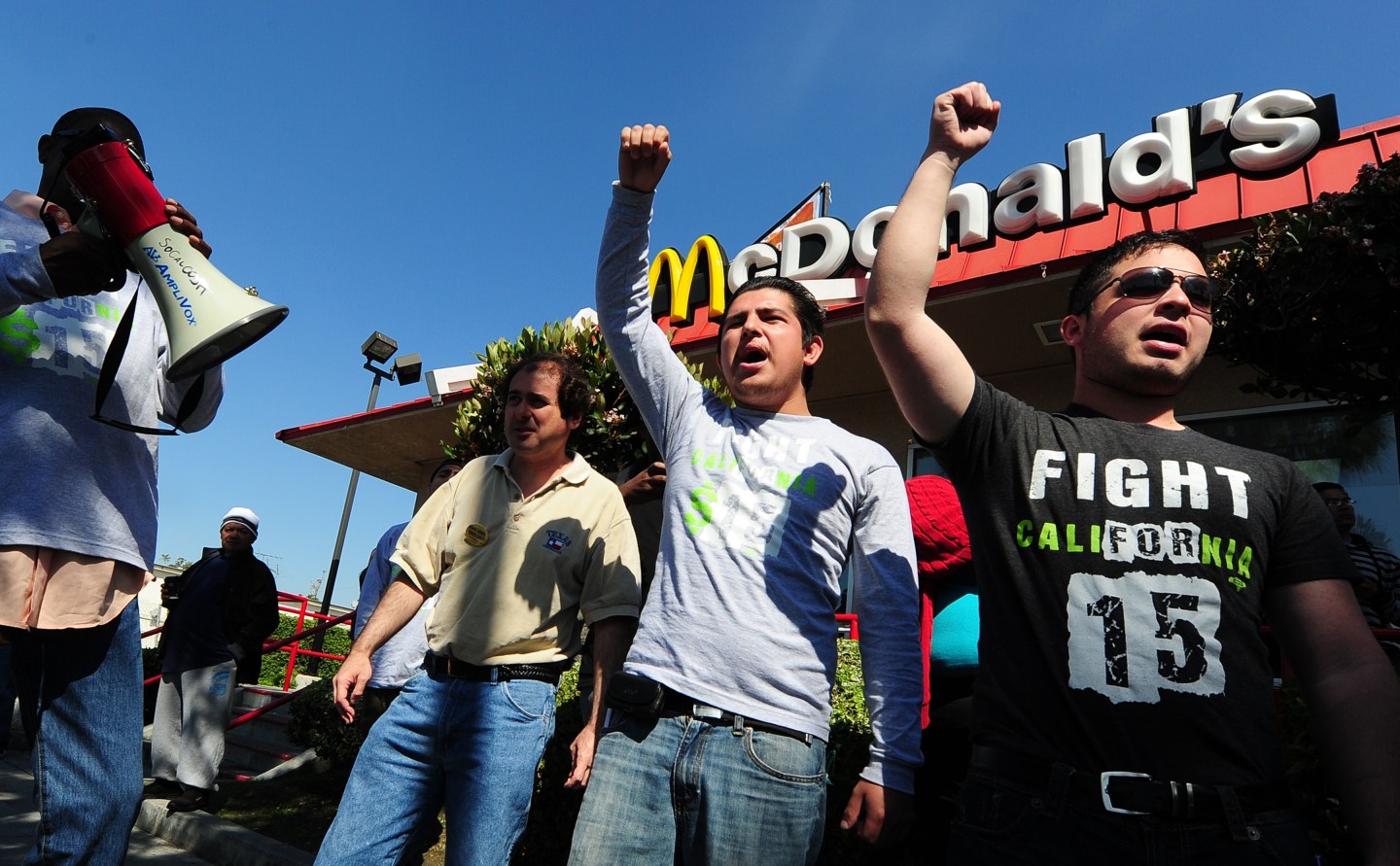
Protesters shout slogans in front of a McDonald's restaurant in south Los Angeles where fast-food workers and their suporters gathered to protest wage theft on April 3, 2014 in California. Fast-food workers were joined by elected officials, community allies and faith leaders to protest systemic and illegal labor abuses in the fast food industry, coming just days after a first-ever national poll of fast-food workers found that 89 percent of employees surveyed at companies like McDonalds, Burger King and Wendys reported having wages stolen from them. AFP PHOTO/Frederic J. BROWN (Photo credit should read FREDERIC J. BROWN/AFP/Getty Images)Photograph by Frederic J. Brown — AFP/Getty Images

If so much of corporate America is now committed to doing good, how come so many workers still have it so bad, at least with respect to long-stagnant wages, declining benefits, and poor training?

“Doing good” goes by all sorts of names: corporate social responsibility, conscious capitalism, shared value, and, most generally, claiming a higher purpose. In fact, “judging by the number of books on the subject, there’s a whole ‘purpose industry’ out there,” consultant Graham Kenny has remarked.

And yet, even with all that, it feels like most employees are being left out of the equation.

Some companies talk about how being socially minded will assist them in attracting better talent—especially among millennials—but there is relatively little attention on helping workers themselves. Labor is, all too frequently, thought of as a cost to squeeze, not as an asset to nurture. This is especially true for those in low-end service jobs, which constitute most of the nation’s biggest occupations.

Some see Wells Fargo as part of this pattern. The company touts its commitment to diversity and social inclusion, economic empowerment, and environmental sustainability. But at the root of the scandal now engulfing the bank— for opening 2 million deposit and credit card accounts without its customers’ knowledge — is the way that many front-line employees in the financial sector are pushed to the breaking point.

They “not only often make paltry wages and rely on public assistance, but also say they were forced to work late, without overtime pay, to meet impossible sales goals,” as one observer has described it.

There are exceptions to this, like the fast-food chain Shake Shack, which pays well above the industry average. Notably, founder Danny Meyer saw something missing in how the sector thought about what it means to be socially conscious.

“We looked at the food world and said, ‘Over the last 20 to 30 years, America has moved so far in terms of caring how animals are raised, in terms of caring how vegetables are grown, in terms of the environment,” Meyer explained in a recent interview. “Isn’t it time to think about people as well and how people are paid?”

In many cases, of course, CSR is more for show than anything else. “It’s often just lip service,” says Rick Frazier, a founding partner at Concinnity Advisors, which has created an index aimed at tracking companies that have demonstrated they are truly looking out for the interests of all—shareholders, yes, but also employees, customers, suppliers, and communities.

Yet even among those companies whose intentions are sincere, the worker tends to be the forgotten stakeholder.

Raj Sisodia, a professor at Babson College and the co-author of Conscious Capitalism, Firms of Endearment, and Everybody Matters, says most companies that do have a sense of purpose limit it to a “product-centered purpose.” They should also have a “people-centered purpose,” which is about improving the well-being of those whose lives they touch directly as an employer. Typically, though, the latter gets shortchanged.

“It’s like the two engines of a plane,” Sisodia told me. “You want both, but most companies are operating only on the one.”

One reason this is happening may be a lack of information. Sites such as Payscale, where one can access compensation data based on more than 50 million employee surveys, and Glassdoor, which features employee reviews of their workplaces, have made things more transparent. By and large, however, the emphasis has been on rating employers for their environmental record, rather than how they treat those within their own ranks.

“There are very few windows into employee relations,” says Linda-Eling Lee, who runs global research on environmental, social, and governance factors at MSCI, a provider of equity indexes and risk analytics. “It’s really a black box.”

Jim Hawley, a business professor at St. Mary’s College of California, suggests that a large number of companies have convinced themselves that strong environmental stewardship is worth it because being resource-efficient saves them money. “A lot of firms say, ‘Oh, it pays for itself—and it brands us as green,’” says Hawley, who is also head of ESG Research at TruValue Labs, a supplier of sustainability data.

But they’ve had a tougher time making the connection between investing in their workers and higher profits—even though plenty of evidence exists that the link is there.

Telling is Fortune’s own Change the World list. Of the 50 companies recognized this year for “taking on society’s biggest problems,” more than 70% were singled out for activities not related to workers, including reducing environmental impact and more effectively delivering medicine to the poor.

Of the 14 on the list that are helping workers, the majority of those are aiding women entrepreneurs, small farmers, and others in the developing world. Just a few companies were applauded for their focus on employees at home.

One was Starbucks, which is opening stores in low-income urban areas, like Jamaica, Queens, and Ferguson, Missouri, as part of a broader effort to hire disadvantaged youth. Another was Salesforce.com, which has been trying to end pay disparities between men and women. And another was Wal-Mart for raising worker pay and teaching new job skills—though critics say that the retail giant hasn’t gone nearly far enough.

“A substantial sector of the American public feels, with some justification, that the rising tide is no longer lifting all boats,” Alan Murray, the editor of Fortune, has written. “This is the pressing issue of our times.”

Given that reality, business leaders need to acknowledge this particular challenge—and tackle it in a direct way—as they consider what it really means to be socially responsible.

Taking care of the planet is imperative. But so, too, is lifting up one’s own people.

Rick Wartzman is senior advisor to the Drucker Institute at Claremont Graduate University.

About the Author
By Rick Wartzman
See full bioRight Arrow Button Icon

Latest in Commentary

Finance
Lorem ipsum dolor sit amet, consectetur adipiscing elit, sed do eiusmod tempor incididunt ut labore et dolore magna aliqua. Ut enim ad minim veniam
By Fortune Editors
October 20, 2025
Finance
Lorem ipsum dolor sit amet, consectetur adipiscing elit, sed do eiusmod tempor incididunt ut labore et dolore magna aliqua. Ut enim ad minim veniam
By Fortune Editors
October 20, 2025
Finance
Lorem ipsum dolor sit amet, consectetur adipiscing elit, sed do eiusmod tempor incididunt ut labore et dolore magna aliqua. Ut enim ad minim veniam
By Fortune Editors
October 20, 2025
Finance
Lorem ipsum dolor sit amet, consectetur adipiscing elit, sed do eiusmod tempor incididunt ut labore et dolore magna aliqua. Ut enim ad minim veniam
By Fortune Editors
October 20, 2025
Finance
Lorem ipsum dolor sit amet, consectetur adipiscing elit, sed do eiusmod tempor incididunt ut labore et dolore magna aliqua. Ut enim ad minim veniam
By Fortune Editors
October 20, 2025
Finance
Lorem ipsum dolor sit amet, consectetur adipiscing elit, sed do eiusmod tempor incididunt ut labore et dolore magna aliqua. Ut enim ad minim veniam
By Fortune Editors
October 20, 2025

Most Popular

Finance
Lorem ipsum dolor sit amet, consectetur adipiscing elit, sed do eiusmod tempor incididunt ut labore et dolore magna aliqua. Ut enim ad minim veniam
By Fortune Editors
October 20, 2025
Finance
Lorem ipsum dolor sit amet, consectetur adipiscing elit, sed do eiusmod tempor incididunt ut labore et dolore magna aliqua. Ut enim ad minim veniam
By Fortune Editors
October 20, 2025
Finance
Lorem ipsum dolor sit amet, consectetur adipiscing elit, sed do eiusmod tempor incididunt ut labore et dolore magna aliqua. Ut enim ad minim veniam
By Fortune Editors
October 20, 2025
Finance
Lorem ipsum dolor sit amet, consectetur adipiscing elit, sed do eiusmod tempor incididunt ut labore et dolore magna aliqua. Ut enim ad minim veniam
By Fortune Editors
October 20, 2025
Finance
Lorem ipsum dolor sit amet, consectetur adipiscing elit, sed do eiusmod tempor incididunt ut labore et dolore magna aliqua. Ut enim ad minim veniam
By Fortune Editors
October 20, 2025
Finance
Lorem ipsum dolor sit amet, consectetur adipiscing elit, sed do eiusmod tempor incididunt ut labore et dolore magna aliqua. Ut enim ad minim veniam
By Fortune Editors
October 20, 2025
Fortune Secondary Logo
Rankings
  • 100 Best Companies
  • Fortune 500
  • Global 500
  • Fortune 500 Europe
  • Most Powerful Women
  • Future 50
  • World’s Most Admired Companies
  • See All Rankings
Sections
  • Finance
  • Fortune Crypto
  • Features
  • Leadership
  • Health
  • Commentary
  • Success
  • Retail
  • Mpw
  • Tech
  • Lifestyle
  • CEO Initiative
  • Asia
  • Politics
  • Conferences
  • Europe
  • Newsletters
  • Personal Finance
  • Environment
  • Magazine
  • Education
Customer Support
  • Frequently Asked Questions
  • Customer Service Portal
  • Privacy Policy
  • Terms Of Use
  • Single Issues For Purchase
  • International Print
Commercial Services
  • Advertising
  • Fortune Brand Studio
  • Fortune Analytics
  • Fortune Conferences
  • Business Development
  • Group Subscriptions
About Us
  • About Us
  • Editorial Calendar
  • Press Center
  • Work At Fortune
  • Diversity And Inclusion
  • Terms And Conditions
  • Site Map
  • About Us
  • Editorial Calendar
  • Press Center
  • Work At Fortune
  • Diversity And Inclusion
  • Terms And Conditions
  • Site Map
  • Facebook icon
  • Twitter icon
  • LinkedIn icon
  • Instagram icon
  • Pinterest icon

Latest in Commentary

assis
CommentaryIBM
The digital sovereignty dilemma is a false choice — here’s how enterprises can have both
By Ana Paula AssisApril 9, 2026
24 hours ago
housing
CommentaryHousing
The housing market has been frozen for 3 years. Here’s why this spring could finally change that
By Jessica LautzApril 8, 2026
2 days ago
curtin
CommentaryInfrastructure
TE Connectivity CEO: the real promise of AI is long-term transformation, not short-term efficiency gains
By Terrence CurtinApril 7, 2026
3 days ago
philip
CommentaryEducation
I just became CEO of one of education’s Big 3. Here’s why AI will never replace a great teacher
By Philip MoyerApril 7, 2026
3 days ago
omar
Commentarydisruption
Pearson CEO: the AI job apocalypse is a Silicon Valley story. The data tells a different one
By Omar AbboshApril 6, 2026
4 days ago
no kings
CommentaryLeadership
America’s CEOs have become reluctant guardians of democracy
By Jeffrey Sonnenfeld and Stephen HenriquesApril 6, 2026
4 days ago

Most Popular

The U.S. government is spending $88 billion a month in interest on national debt—equal to spending on defense and education combined
Economy
The U.S. government is spending $88 billion a month in interest on national debt—equal to spending on defense and education combined
By Fortune EditorsApril 9, 2026
21 hours ago
A Meta employee created a dashboard so coworkers can compete to be the company's No. 1 AI token user—and Zuckerberg doesn't even rank in the top 250
AI
A Meta employee created a dashboard so coworkers can compete to be the company's No. 1 AI token user—and Zuckerberg doesn't even rank in the top 250
By Fortune EditorsApril 9, 2026
24 hours ago
Gen Z doesn't want your full-time job. They want several part-time roles, and it's reshaping the entire workforce
Success
Gen Z doesn't want your full-time job. They want several part-time roles, and it's reshaping the entire workforce
By Fortune EditorsApril 9, 2026
1 day ago
White-collar workers are quietly rebelling against AI as 80% outright refuse adoption mandates
AI
White-collar workers are quietly rebelling against AI as 80% outright refuse adoption mandates
By Fortune EditorsApril 9, 2026
23 hours ago
Gen Z workers are so fearful AI will take their job they’re intentionally sabotaging their company’s AI rollout
AI
Gen Z workers are so fearful AI will take their job they’re intentionally sabotaging their company’s AI rollout
By Fortune EditorsApril 8, 2026
2 days ago
2 years ago, Saudi Arabia quietly canceled the ‘petrodollar’ deal with America that wired the world economy for 50 years. Then war broke out in Iran
Energy
2 years ago, Saudi Arabia quietly canceled the ‘petrodollar’ deal with America that wired the world economy for 50 years. Then war broke out in Iran
By Fortune EditorsApril 7, 2026
3 days ago

© 2026 Fortune Media IP Limited. All Rights Reserved. Use of this site constitutes acceptance of our Terms of Use and Privacy Policy | CA Notice at Collection and Privacy Notice | Do Not Sell/Share My Personal Information
FORTUNE is a trademark of Fortune Media IP Limited, registered in the U.S. and other countries. FORTUNE may receive compensation for some links to products and services on this website. Offers may be subject to change without notice.










