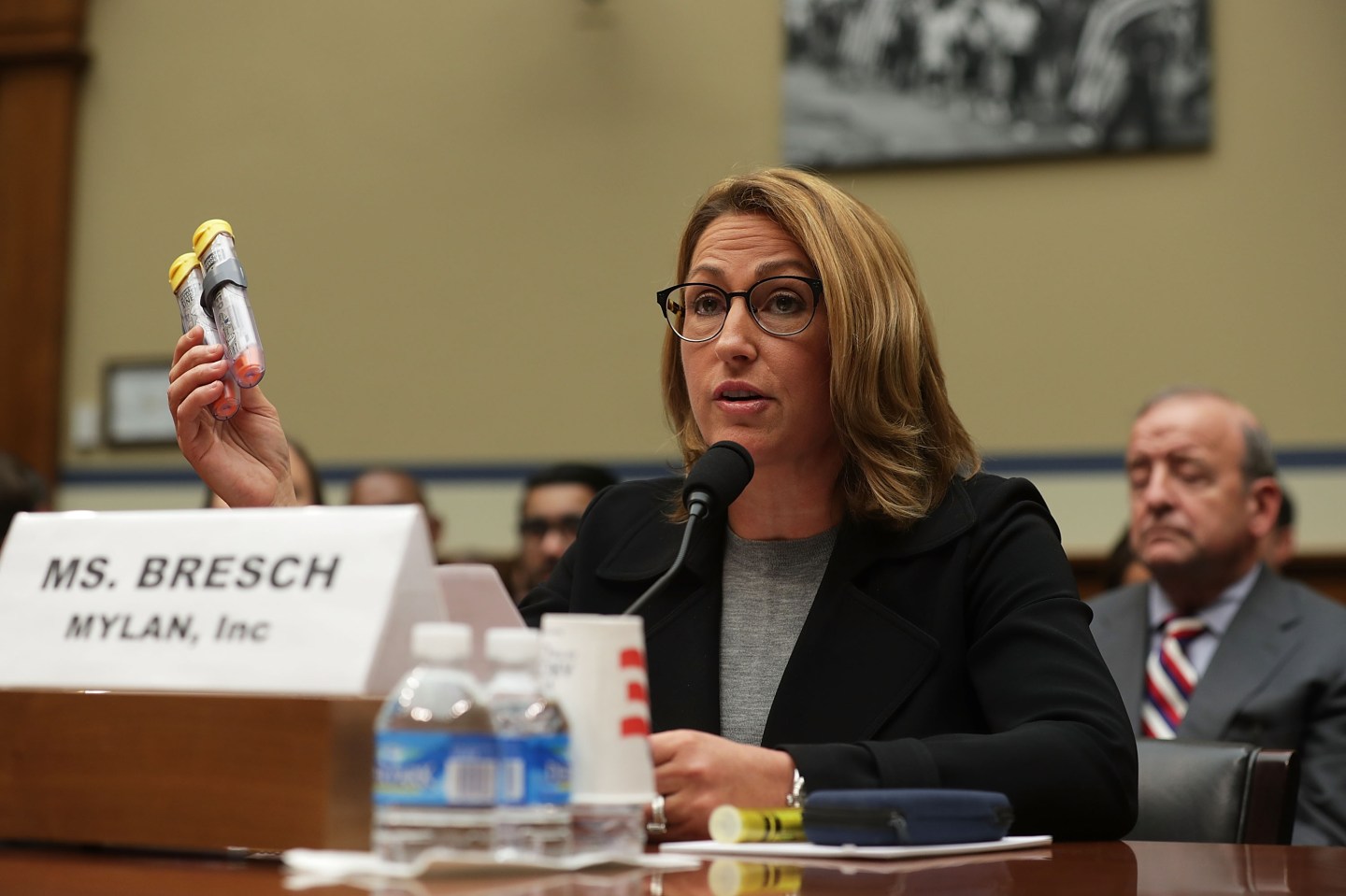
As the CEO of the drug maker that sells the EpiPen allergy-reaction injector defended the company’s six-fold price increases before Congress last week, it’s appalling to see that Heather Bresch took no fault. The company’s price hikes on a life-saving drug is clearly unethical if we take a closer look.
EpiPen has gone from $100 for a two-pack in 2009 to $608 today. Usually, companies would be applauded for the ability to create revenue through such pricing power. But when it comes to life-saving drugs, consumers interpret these significant increases as the producer profiteering off a person’s life or death need.
This is (not) unlike what happened at Turing Pharmaceuticals last year when the company increased the price of Daraprim from roughly $15 to $750.
Like many, I had to ask: are these prices ethical?
In the book, The Strategy and Tactics of Pricing: A Guide to Growing More Profitably, the authors present a five-step test to determine if a price is ethical. Here’s a look at how Mylan’s Epipens would perform under the test:
Test #1: the exchange (transaction) is ethical when the price is paid voluntarily. The buyer is aware of how much the item costs and voluntarily completes the transaction. For this level, Mylan has passed at an elementary understanding. People are still buying EpiPens.
Test #2: The buyer is provided ample information about the product. This expectation comes with any purchase. The seller is not misleading consumers or omitting crucial information. Smokers still purchase cigarettes, despite the full disclosure of health risks. For this level, Mylan still passes the test.
Test #3 and #4 are not as simple, so let’s come back to them later in this article.
Test #5: The exchange must present equal access to goods regardless of ability to cover the cost. Consumers have access to discounts based on financial need and Mylan also provides free EpiPens to schools and funds activities related to allergy awareness. They continue to pass the test for now.
OK, now let’s get back to Test #3 and #4. Here is where consumer outrage and the case for unethical behavior becomes stronger.
Test #3: This stipulates that sellers cannot exploit a buyer’s essential needs. Test #4: This states the price must be justified by costs.
There should be no excessive, unjustified profits on essentials. For example, if a person was having a heart attack and needed emergency treatment, hospitals would first treat the patient before collecting a deposit upfront to ensure the patient can pay for their services.
In 2011, the list price for the EpiPen was $165. At that time, there were no competitors in the market and the product was off patent, meaning the patent protection had expired. Further, there was consistent demand due to the product’s shelf life of one year. Customers had to replace their EpiPens annually.
In 2012, the list price increased 32% with no new competitors entering the market. However, this increase could have resulted from more R&D spending or an increase in raw materials costs. Regardless, the price was elastic and consumers continued to purchase the drug.
By 2013, Sanofi announced its entry into the market. Their price hovered near that of Mylan’s, so it would appear the price was justified by cost. Had Sanofi entered with a lower or higher price, this justification would have been tougher to sell. Mylan responded by increasing their price a little more, which likely came from a desire to differentiate themselves as the premier brand with superior products.
At this point, Mylan was still within the ethical constraints put forth above. This changed when Sanofi, Mylan’s sole competitor, was forced into a product recall and left the market. Mylan once again had a monopoly.
Typically, in this situation, the price would remain the same or increase nominally with inflation and other standard considerations. Instead, Mylan increased the price from $300 to $600 over two years. In 2015, Mylan reported a net profit margin of 8.9%, but some speculate the margin for the EpiPen was closer to 55%, thus breaking the ethical constraints of Test #3 and #4.
While individual consumers may not have had a voice or recourse, the market did. Mylan may have improved its margins and ultimately driven higher returns and shareholder value, but within a week the price increase cost the company $3 billion in market cap and a stock tank of over 12% in 5 days.
They attempted to rectify the issue and announced a generic brand of the EpiPen with a list price of $300. Because of this misstep, though, every price change now will come under extreme scrutiny.
The ethics of pricing is a minefield for any company to navigate. Nominal price increases are annoyances to customers and consumers, but they—for the most part—will not be met with extreme criticism. As long as a company is transparent about price increases and can demonstrate that such a change is justified—or at least has the consumers’ faith that this is true—they should be able to avoid a public maelstrom.
If the Mylan debacle demonstrates anything, it shows that even in markets that have little pricing regulation and transparency, pricing moves must be carefully considered and communicated in a way that demonstrates ethical behavior in the best interest of both the consumer and the company.
Daniel Kozarich is a senior pricing consultant for Vendavo, a Mountain View, CA-based company that advises companies on pricing their products.











