• Home
  • Latest
  • Fortune 500
  • Finance
  • Tech
  • Leadership
  • Lifestyle
  • Rankings
  • Multimedia
Commentaryturkish politics

What Turkey’s Political Mess Means for Relations With the U.S.

By
Cengiz Gunes
Cengiz Gunes
and
Bethany Cianciolo
Bethany Cianciolo
Down Arrow Button Icon
By
Cengiz Gunes
Cengiz Gunes
and
Bethany Cianciolo
Bethany Cianciolo
Down Arrow Button Icon
July 26, 2016, 11:50 AM ET
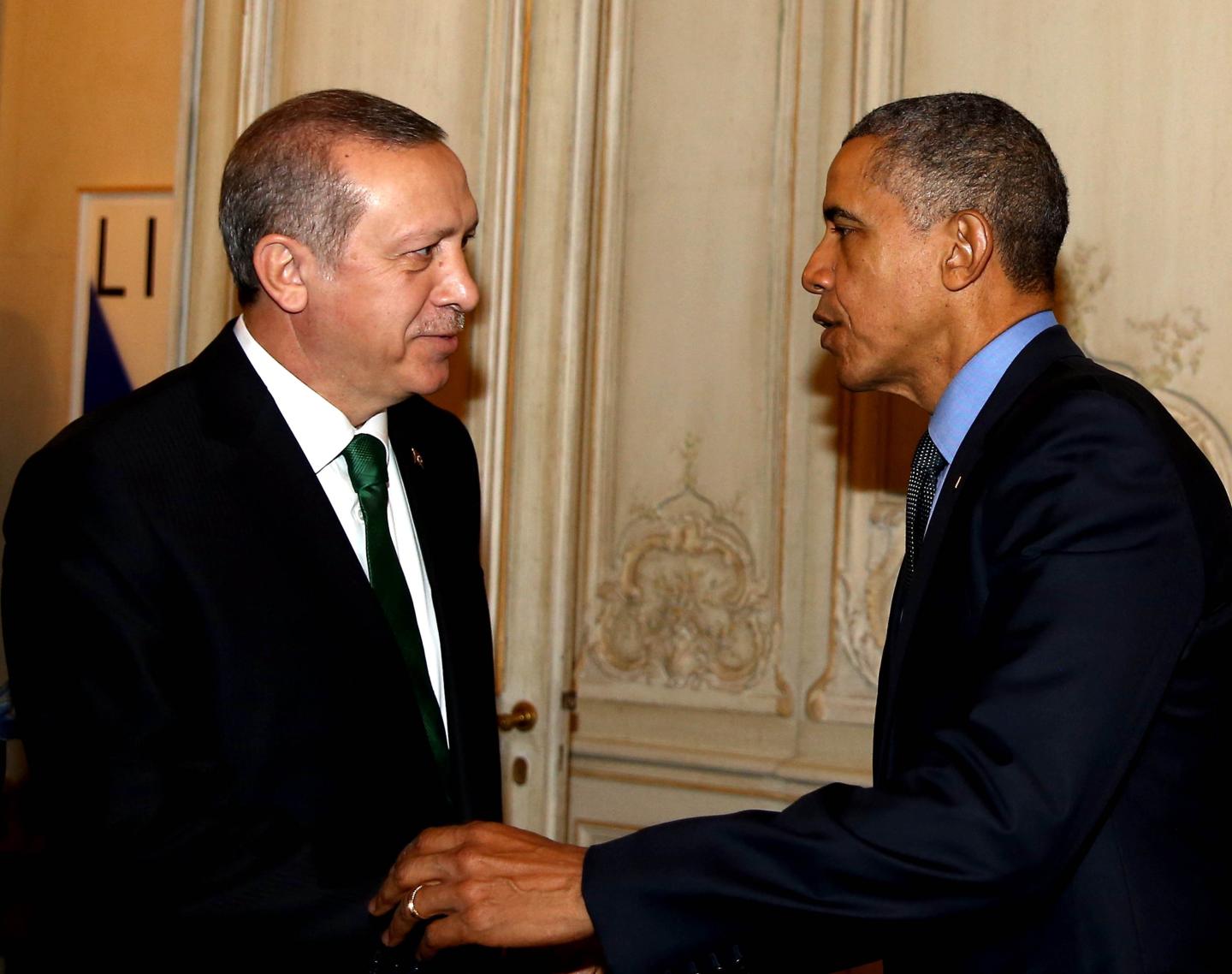
Recep Tayyip Erdogan - Barack Obama meeting in Paris
PARIS, FRANCE - DECEMBER 01: President of Turkey Recep Tayyip Erdogan (L) meets with US President Barack Obama (R) at the OECD Headquarters in Paris, France, on December 01, 2015. (Photo by Yasin Bulbul/Turkish Presidency Press Office/Anadolu Agency/Getty Images)Photograph by Yasin Bulbul — Anadolu Agency/Getty Images

Cengiz Gunes holds a PhD in politics from the Ideology and Discourse Analysis Programme, Department of Government at the University of Essex, U.K. He is the author of The Kurdish National Movement in Turkey: From Protest to Resistance.

The attempted coup d’état in Turkey earlier this month led by a section of Turkish Armed Forces may have failed, but the repercussions for the country are expected to last a long time. It shook the political establishment to the core and has set Turkey on course for a prolonged period of political instability, and that’s really bad news for the U.S.

The Justice and Development Party (AKP) government sees the failed coup as an existential threat, not only against itself, but against the whole country, and a danger unseen in Turkey’s modern history. Civil-military relations have always been difficult, and elected governments have been overthrown in coup d’états before. But this time was different. The failed attempt was orchestrated by a small section of the military aimed at not just overthrowing the elected government, but at overhauling the army’s hierarchy. As a step to thwart this threat, President Recep Tayyip Erdoğan declared a nationwide state of emergency for an initial period of three months.

Most in Turkey believe that the failed attempt was masterminded by the cleric Fethullah Gülen, who is living in self-imposed exile in Pennsylvania. Previously, through the well-publicized Ergenekon and Sladgehammer cases, the followers of Gülen—organized within the judiciary—targeted the secular generals in the army, who were allegedly planning a coup against the government. But since late 2013, when the Gülenist network’s alliance with the AKP came to an end, it has been increasingly in conflict with the government. The followers of Gülen insist they are a popular peaceful movement involved mainly in education and promoting interfaith dialogue. The government argues that Gülenists have infiltrated the institutions of the state in the past 30 years with the ultimate aim of conquering state power. The government has carried out purges of Gülenists in the past three years, but is now broadening the scope to include all state institutions targeting especially the army, the police force, and the judiciary. So far, around 50,000 people have been removed from their positions, including army generals, police officers, and judges. Many educational institutions and charitable trusts thought to be controlled by Gülenists, including 15 universities, have been closed down.

The mood has stiffened in Turkey to such an extent that Prime Minister Binali Yıldırım has discussed the possibility of re-introducing the death penalty. Erdoğan has even promised to sign the death-penalty legislation if the parliament passes it. The opposition fears that the government will use the failed coup as a pretext to get rid of its opponents and further erode the country’s ailing democratic institutions.

Both the U.S. and the EU have urged Turkey to exercise caution and respect the rule of law. The Turkish government’s actions are not seen in isolation as a reaction against the failed coup, but within Turkey’s slide toward authoritarianism. In recent years, the state has frequently used disproportionate force to suppress peaceful protests and legitimate dissent, and there has been a visible increase in government control over the media and restriction of the freedom of the press. Jailing critical journalists has been a widely applied aspect of Turkish government’s policy, which has long been a concern to the U.S. and Turkey’s other western allies.

Consequently, the authoritarian narrative regarding Turkey’s conduct has been gaining more ground in the West. The ongoing purges are likely to add to the view that Turkey, under AKP rule, is moving closer to an authoritarian state. Erdoğan’s personal ambitions and drive to achieve an executive-style presidency adds to the unease those in Turkey and abroad feel about the government’s actions. Those within Turkey’s government see it as evidence that Turkey’s western allies refuse to fully recognize its security needs or threats it faces.

Such disputes are also behind the weakening trust in U.S.-Turkish relations. President Obama has had to emphasize that the U.S. did not have any prior knowledge of the coup attempt, nor did it support it.

The current state of U.S.-Turkish relations is a far cry from the days that the U.S. was promoting Turkey as a role model in 2011 for the aspiring Arab democracies in the region, and as proof that a predominantly Muslim country can successfully combine democratic rule and market economy while maintaining its Islamic identity.

The tense period in the U.S-Turkey relations is not new, but is expected to continue. The U.S. base in Incirlik plays a key role in its military presence in the region and is heavily used in the air campaign against ISIS in Syria. Turkey’s NATO membership and alliance with the U.S. is essential for its security. But despite this mutual need, there’s been some divergence between Turkey and the U.S. regarding what needs to be done in the ongoing Syrian conflict and the rise of a de facto autonomous Kurdish entity in Northern Syria. For Turkey, the rise of Kurds in Syria is perceived as the main threat. But for the U.S., the focus has been on fighting ISIS, and the Kurdish forces in Syria have become one of the main effective U.S. allies on the ground. The U.S. is keen to maintain its ties with the Kurdish forces, but Turkey vehemently opposes it. Turkey fears that the consolidation of Kurdish self-rule in Syria will increase the Kurds’ power as a regional actor, and permanently change the game in their favor.


There are other issues that will strain U.S.-Turkish relations in future. The case of Turkish-born Iranian businessman Reza Zarrab, who is awaiting trial in the U.S. on charges of fraud, money laundering, and helping to evade the U.S. sanctions against Iran, can potentially implicate Erdoğan’s inner circles. Another issue is the likely legal tussle involving Gülen’s extradition case, which is likely to drag on. Turkey may not be able to produce credible evidence to secure his extradition.

The recent developments once again highlight the ongoing tensions in U.S.-Turkish relations, and could even have an adverse impact on the U.S. campaign against ISIS in Syria, as Turkey may not be as cooperative as it has been recently. The ongoing political instability in Turkey will be a major concern for the U.S., and for that reason, the two countries must work harder to find a mutually satisfactory outcome. However, the U.S. is right to point at the dangers of authoritarianism, and many people in Turkey share the same sentiments: The fight against coup plotters must not be at the expense of democracy.

About the Authors
By Cengiz Gunes
See full bioRight Arrow Button Icon
By Bethany Cianciolo
See full bioRight Arrow Button Icon

Latest in Commentary

Finance
Lorem ipsum dolor sit amet, consectetur adipiscing elit, sed do eiusmod tempor incididunt ut labore et dolore magna aliqua. Ut enim ad minim veniam
By Fortune Editors
October 20, 2025
Finance
Lorem ipsum dolor sit amet, consectetur adipiscing elit, sed do eiusmod tempor incididunt ut labore et dolore magna aliqua. Ut enim ad minim veniam
By Fortune Editors
October 20, 2025
Finance
Lorem ipsum dolor sit amet, consectetur adipiscing elit, sed do eiusmod tempor incididunt ut labore et dolore magna aliqua. Ut enim ad minim veniam
By Fortune Editors
October 20, 2025
Finance
Lorem ipsum dolor sit amet, consectetur adipiscing elit, sed do eiusmod tempor incididunt ut labore et dolore magna aliqua. Ut enim ad minim veniam
By Fortune Editors
October 20, 2025
Finance
Lorem ipsum dolor sit amet, consectetur adipiscing elit, sed do eiusmod tempor incididunt ut labore et dolore magna aliqua. Ut enim ad minim veniam
By Fortune Editors
October 20, 2025
Finance
Lorem ipsum dolor sit amet, consectetur adipiscing elit, sed do eiusmod tempor incididunt ut labore et dolore magna aliqua. Ut enim ad minim veniam
By Fortune Editors
October 20, 2025

Most Popular

Finance
Lorem ipsum dolor sit amet, consectetur adipiscing elit, sed do eiusmod tempor incididunt ut labore et dolore magna aliqua. Ut enim ad minim veniam
By Fortune Editors
October 20, 2025
Finance
Lorem ipsum dolor sit amet, consectetur adipiscing elit, sed do eiusmod tempor incididunt ut labore et dolore magna aliqua. Ut enim ad minim veniam
By Fortune Editors
October 20, 2025
Finance
Lorem ipsum dolor sit amet, consectetur adipiscing elit, sed do eiusmod tempor incididunt ut labore et dolore magna aliqua. Ut enim ad minim veniam
By Fortune Editors
October 20, 2025
Finance
Lorem ipsum dolor sit amet, consectetur adipiscing elit, sed do eiusmod tempor incididunt ut labore et dolore magna aliqua. Ut enim ad minim veniam
By Fortune Editors
October 20, 2025
Finance
Lorem ipsum dolor sit amet, consectetur adipiscing elit, sed do eiusmod tempor incididunt ut labore et dolore magna aliqua. Ut enim ad minim veniam
By Fortune Editors
October 20, 2025
Finance
Lorem ipsum dolor sit amet, consectetur adipiscing elit, sed do eiusmod tempor incididunt ut labore et dolore magna aliqua. Ut enim ad minim veniam
By Fortune Editors
October 20, 2025
Fortune Secondary Logo
Rankings
  • 100 Best Companies
  • Fortune 500
  • Global 500
  • Fortune 500 Europe
  • Most Powerful Women
  • World's Most Admired Companies
  • See All Rankings
  • Lists Calendar
Sections
  • Finance
  • Fortune Crypto
  • Features
  • Leadership
  • Health
  • Commentary
  • Success
  • Retail
  • Mpw
  • Tech
  • Lifestyle
  • CEO Initiative
  • Asia
  • Politics
  • Conferences
  • Europe
  • Newsletters
  • Personal Finance
  • Environment
  • Magazine
  • Education
Customer Support
  • Frequently Asked Questions
  • Customer Service Portal
  • Privacy Policy
  • Terms Of Use
  • Single Issues For Purchase
  • International Print
Commercial Services
  • Advertising
  • Fortune Brand Studio
  • Fortune Analytics
  • Fortune Conferences
  • Business Development
  • Group Subscriptions
About Us
  • About Us
  • Press Center
  • Work At Fortune
  • Terms And Conditions
  • Site Map
  • About Us
  • Press Center
  • Work At Fortune
  • Terms And Conditions
  • Site Map
  • Facebook icon
  • Twitter icon
  • LinkedIn icon
  • Instagram icon
  • Pinterest icon

Latest in Commentary

francis
CommentaryFlorida
Former Miami Mayor Francis Suarez: Why I’m joining Stephen Ross and Ken Griffin in betting big on ambitious business leaders
By Francis SuarezMay 1, 2026
15 hours ago
valerie
CommentaryLayoffs
Tesla’s former HR chief: the AI layoff panic Is built on a false premise—here’s what most workers need to know
By Valerie Capers WorkmanMay 1, 2026
17 hours ago
tamas
CommentaryPolymarket
SEON CEO: Prediction markets can forecast the future. Can they survive their own manipulation problem?
By Tamas KadarMay 1, 2026
20 hours ago
sundar
Commentary250 Years of Innovation
America at 250: immigration and the making of an innovative nation
By Nasser KazeminyMay 1, 2026
21 hours ago
Derek Kilmer
CommentaryEconomics
The U.S. economy is booming — just not where 50 million Americans live
By Derek KilmerMay 1, 2026
21 hours ago
hegseth
CommentaryMilitary
America shot its arsenal empty in 2 wars. Now it needs Beijing’s permission to reload
By Steve H. Hanke and Jeffrey WengApril 30, 2026
2 days ago

Most Popular

Scott Bessent on financial literacy: 'it drives me crazy' to see young men in blue-collar construction jobs playing the lottery
Personal Finance
Scott Bessent on financial literacy: 'it drives me crazy' to see young men in blue-collar construction jobs playing the lottery
By Fatima Hussein and The Associated PressMay 1, 2026
17 hours ago
China dominates the world's lithium supply. The U.S. just found 328 years' worth in its own backyard
North America
China dominates the world's lithium supply. The U.S. just found 328 years' worth in its own backyard
By Jake AngeloApril 30, 2026
1 day ago
The U.S. economy is booming — just not where 50 million Americans live
Commentary
The U.S. economy is booming — just not where 50 million Americans live
By Derek KilmerMay 1, 2026
21 hours ago
Apple cofounder Ronald Wayne—whose stake would be worth up to $400 billion had he not sold it in 1976—says that at 91, he has no regrets
Success
Apple cofounder Ronald Wayne—whose stake would be worth up to $400 billion had he not sold it in 1976—says that at 91, he has no regrets
By Preston ForeApril 27, 2026
5 days ago
Accenture's Julie Sweet blew up 50 years of company history. She says the hardest part is still ahead
Conferences
Accenture's Julie Sweet blew up 50 years of company history. She says the hardest part is still ahead
By Nick LichtenbergApril 29, 2026
3 days ago
Current price of oil as of May 1, 2026
Personal Finance
Current price of oil as of May 1, 2026
By Joseph HostetlerMay 1, 2026
17 hours ago

© 2026 Fortune Media IP Limited. All Rights Reserved. Use of this site constitutes acceptance of our Terms of Use and Privacy Policy | CA Notice at Collection and Privacy Notice | Do Not Sell/Share My Personal Information
FORTUNE is a trademark of Fortune Media IP Limited, registered in the U.S. and other countries. FORTUNE may receive compensation for some links to products and services on this website. Offers may be subject to change without notice.