• Home
  • Latest
  • Fortune 500
  • Finance
  • Tech
  • Leadership
  • Lifestyle
  • Rankings
  • Multimedia

Trendingnow

1

After forcing workers back to the office, Goldman Sachs and JPMorgan Chase are now letting their staff work remotely—but only for the World Cup

2

The Pentagon said Iran War costs $29 billion, but the real cost is closer to $200 billion—and counting

3

Current price of oil as of June 23, 2026

1

After forcing workers back to the office, Goldman Sachs and JPMorgan Chase are now letting their staff work remotely—but only for the World Cup

2

The Pentagon said Iran War costs $29 billion, but the real cost is closer to $200 billion—and counting

3

Current price of oil as of June 23, 2026
LeadershipAI

The 7 Skills You’ll Need to Manage Smart Machines at Work

By
July 23, 2016, 10:30 AM ET
DARPA Robotics Challenge Showcases Cutting Edge In Artificial Intelligence
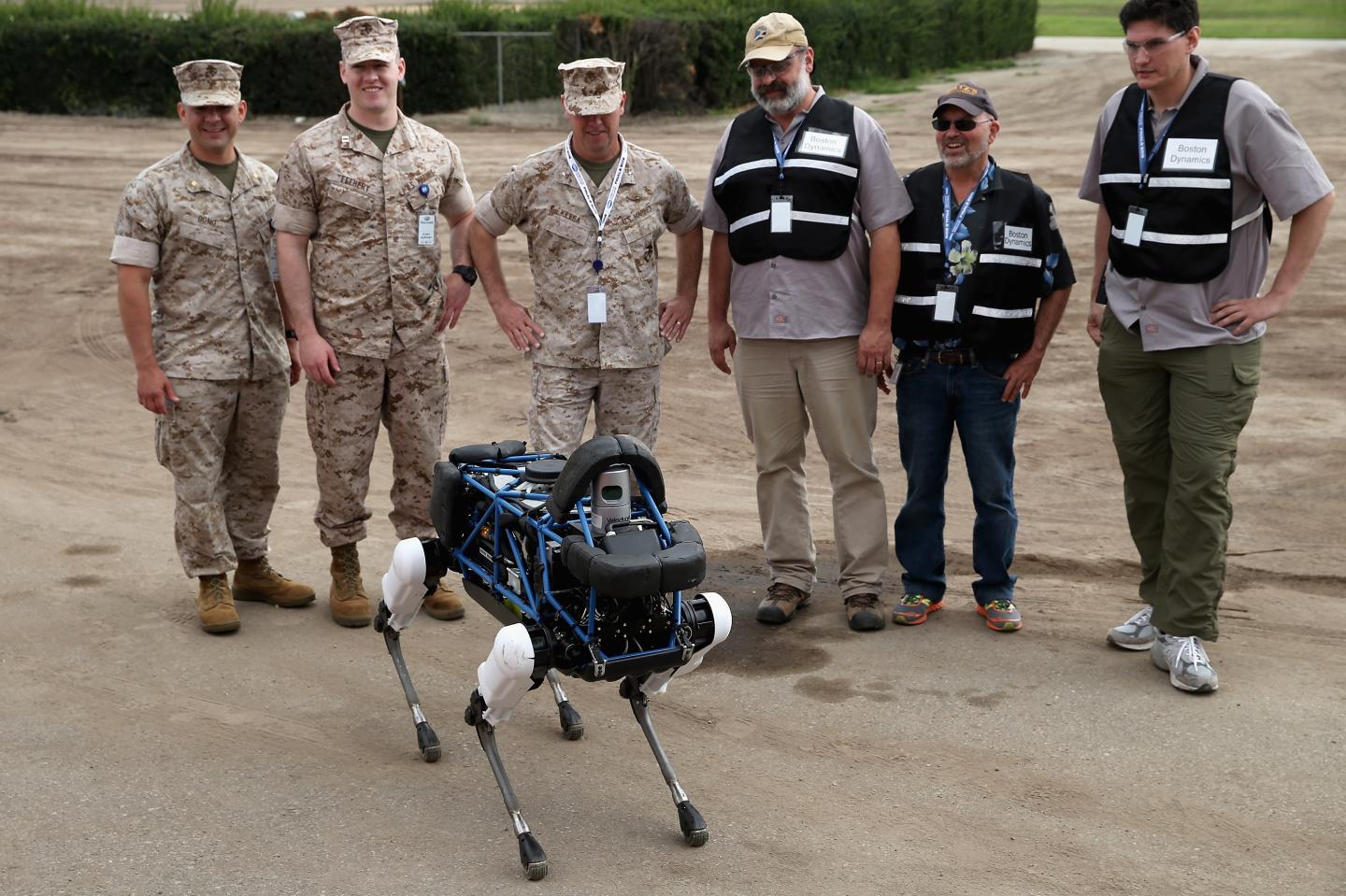
POMONA, CA - JUNE 05: United States Marines and representatives from Boston Dynamics look at Spot, a four-legged robot designed for indoor and outdoor operation, during the Defense Advanced Research Projects Agency Robotics Challenge at the Fairplex June 5, 2015 in Pomona, California. Organized by DARPA, the Pentagon's science research group, 24 teams from around the world are competing for $3.5 million in prize money that will be awarded to the humanoid robots that best respond to natural and man-made disasters. (Photo by Chip Somodevilla/Getty Images)Photograph by Chip Somodevilla, Getty Images
Add Fortune on Google for similar content.

Dear Annie: I’ve been following Fortune’s recent articles about artificial intelligence, and how it will transform the business world, with great interest. I’m in my first management job, after going back to school for an MBA four years ago. Since I’m 34 now, I figure my career probably has at least three decades to go, and I’m wondering if the skills I learned in B-school will be obsolete before too long. For example, does emotional intelligence (EQ) still count if your “employees” have no emotions? What skills will managers need to develop instead? — Curious in Cupertino

Dear C.C.: Interesting questions, and all the more so because, at this moment, no one can be entirely sure of the answers. It seems, though, that human leadership skills won’t fade into obsolescence anytime soon—if ever. “Organizations will probably evolve into a two-part structure,” says Thomas Davenport. “People with high EQ will still lead the remaining humans, while other people with expertise in artificial intelligence will ‘manage’ the machines.”

Davenport, a professor of information technology and management at Babson College, teaches analytics and data science in executive programs at Harvard Business School and MIT’s Sloan School. He also co-wrote (with Julia Kirby) a fascinating book you might want to check out, Only Humans Need Apply: Winners and Losers in the Age of Smart Machines.

Even when they have more people than robots reporting to them, Davenport says, managers will increasingly have to oversee some smart machines and make decisions about how to deploy them. So you’ll need some knowledge and understanding of how artificial intelligence works, especially what it can and can’t do. Beyond that, Only Humans Need Apply identifies seven skills that managers can start developing now:

—Design and create machine “thinking.” Despite rapid leaps forward in automated programming—like the new Google (GOOGL) system that is even “learning” how to recognize tones of voice and swear words—humans will continue to drive and oversee the creation process, Davenport notes.

—Provide “big picture” perspective. Humans are adept at skills like seeing how a particular solution fits into the whole, knowing that the world has changed in significant ways, and comparing multiple solutions to the same problem. “We also know (usually) whether something ‘makes sense’ or not,” Davenport writes. “Because this type of thinking is not very structured, computers aren’t good at it.”

—Synthesize information across multiple systems. “We humans know that any one system or decision approach is not likely to provide the only possible answer,” says Davenport, adding that some machines can now be programmed to try out multiple methods of solving a problem to see which works best. “But humans do it more often,” he says. So far, we’re better at it, too.

—Monitor how well a machine is working. Davenport points out that A.I. systems are designed to work best in particular contexts and, when circumstances change, are likely to work less well. They don’t know that, however, and “even if they do, they don’t retire themselves from the job,” he writes. Only humans can tell when a system needs to be updated or replaced.

—Know a machine’s weaknesses and strengths. Many cognitive systems, like people, are better at some tasks than others. “An automated commercial underwriting system in an insurance company, for example, might do a great job on florists but be weak in assessing the risks of beauty salons,” Davenport writes. In that case, making sure policies are priced correctly will still be an underwriting manager’s job.

—Gather the information the system needs. Using the example of automated financial planning systems, Davenport notes that some tasks, like mapping someone’s retirement, require data inputs that can only come from human clients, and coaxing them to provide it can be tricky. “A human financial advisor can help,” he writes. “And there are many other settings in which humans can play the same type of role.”

—Persuade fellow humans to take action. Computers can be programmed to make good decisions, but getting people to act on them is something else again. For instance, Davenport writes, A.I. can come up with a perfectly accurate medical diagnosis and treatment plan—but understanding it, explaining it to the patient, and encouraging the patient to, say, lose 20 pounds will still require high-EQ humans.

If you don’t already have one or more of these skills, you’ve probably got time to learn. “No one can afford to be complacent, of course, but it always takes a while for machines to replace people,” says Davenport. He notes that, despite the proliferation of ATMs, the U.S. still has about 500,000 human bank tellers, or roughly the same number as in 1980 (albeit fewer per capita). “There are lots of automated checkout lanes in stores, but there are still plenty of checkout people too,” he adds. “And when we get those automated voicemail systems on the phone, we still punch ‘O’ and yell ‘Representative!’”

The single most crucial ability that managers will need to cultivate in an ever more automated world, Davenport believes, is one you probably tackled in B-school: Making smart judgment calls, in response to what’s happening in the business and the larger world. That includes being able to evaluate how well artificial-intelligence systems are working for you, or even whether it makes sense to use them at all. “If the financial collapse of 2008 taught companies anything,” Davenport observes, “it’s that there are few faster ways to lose a whole lot of money than by relying on a bad algorithm.”

Talkback: If you “manage” an automated system (or more than one), what new skills have you had to pick up or develop? Leave a comment below.

Add Fortune on Google for similar content.

Latest in Leadership

Finance
Lorem ipsum dolor sit amet, consectetur adipiscing elit, sed do eiusmod tempor incididunt ut labore et dolore magna aliqua. Ut enim ad minim veniam
By Fortune Editors
October 20, 2025
Finance
Lorem ipsum dolor sit amet, consectetur adipiscing elit, sed do eiusmod tempor incididunt ut labore et dolore magna aliqua. Ut enim ad minim veniam
By Fortune Editors
October 20, 2025
Finance
Lorem ipsum dolor sit amet, consectetur adipiscing elit, sed do eiusmod tempor incididunt ut labore et dolore magna aliqua. Ut enim ad minim veniam
By Fortune Editors
October 20, 2025
Finance
Lorem ipsum dolor sit amet, consectetur adipiscing elit, sed do eiusmod tempor incididunt ut labore et dolore magna aliqua. Ut enim ad minim veniam
By Fortune Editors
October 20, 2025
Finance
Lorem ipsum dolor sit amet, consectetur adipiscing elit, sed do eiusmod tempor incididunt ut labore et dolore magna aliqua. Ut enim ad minim veniam
By Fortune Editors
October 20, 2025
Finance
Lorem ipsum dolor sit amet, consectetur adipiscing elit, sed do eiusmod tempor incididunt ut labore et dolore magna aliqua. Ut enim ad minim veniam
By Fortune Editors
October 20, 2025

Most Popular

Finance
Lorem ipsum dolor sit amet, consectetur adipiscing elit, sed do eiusmod tempor incididunt ut labore et dolore magna aliqua. Ut enim ad minim veniam
By Fortune Editors
October 20, 2025
Finance
Lorem ipsum dolor sit amet, consectetur adipiscing elit, sed do eiusmod tempor incididunt ut labore et dolore magna aliqua. Ut enim ad minim veniam
By Fortune Editors
October 20, 2025
Finance
Lorem ipsum dolor sit amet, consectetur adipiscing elit, sed do eiusmod tempor incididunt ut labore et dolore magna aliqua. Ut enim ad minim veniam
By Fortune Editors
October 20, 2025
Finance
Lorem ipsum dolor sit amet, consectetur adipiscing elit, sed do eiusmod tempor incididunt ut labore et dolore magna aliqua. Ut enim ad minim veniam
By Fortune Editors
October 20, 2025
Finance
Lorem ipsum dolor sit amet, consectetur adipiscing elit, sed do eiusmod tempor incididunt ut labore et dolore magna aliqua. Ut enim ad minim veniam
By Fortune Editors
October 20, 2025
Finance
Lorem ipsum dolor sit amet, consectetur adipiscing elit, sed do eiusmod tempor incididunt ut labore et dolore magna aliqua. Ut enim ad minim veniam
By Fortune Editors
October 20, 2025
Fortune Secondary Logo
Rankings
  • 100 Best Companies
  • Fortune 500
  • Global 500
  • Fortune 500 Europe
  • Most Powerful Women
  • World's Most Admired Companies
  • See All Rankings
  • Lists Calendar
Sections
  • Finance
  • Fortune Crypto
  • Features
  • Leadership
  • Health
  • Commentary
  • Success
  • Retail
  • Mpw
  • Tech
  • Lifestyle
  • CEO Initiative
  • Asia
  • Politics
  • Conferences
  • Europe
  • Newsletters
  • Personal Finance
  • Environment
  • Magazine
  • Education
Customer Support
  • Frequently Asked Questions
  • Customer Service Portal
  • Privacy Policy
  • Terms Of Use
  • Single Issues For Purchase
  • International Print
Commercial Services
  • Advertising
  • Fortune Brand Studio
  • Fortune Analytics
  • Fortune Conferences
  • Business Development
  • Group Subscriptions
About Us
  • About Us
  • Press Center
  • Work At Fortune
  • Terms And Conditions
  • Site Map
  • About Us
  • Press Center
  • Work At Fortune
  • Terms And Conditions
  • Site Map
  • Facebook icon
  • Twitter icon
  • LinkedIn icon
  • Instagram icon
  • Pinterest icon

Latest in Leadership

How Home Depot is rebuilding retailing with AI
NewslettersCIO Intelligence
How Home Depot is rebuilding retailing with AI
By John KellJune 24, 2026
3 hours ago
bob
AIbooks
Robert Wright sees an ‘earthquake’ coming from AI that goes far beyond jobs: ‘cultural, political, personal, family, psychological’
By Nick LichtenbergJune 24, 2026
3 hours ago
Matt Garman
Successthe future of work
Amazon exec says AI won’t wipe out white-collar jobs—and is hiring 11,000 grads and interns, and has more developers than 2 years ago to prove it
By Preston ForeJune 24, 2026
5 hours ago
t
CommentaryWhite House
Trump mistakes the bully pulpit for bullying leadership — history’s villains were never heroes
By Jeffrey Sonnenfeld and Steven TianJune 24, 2026
8 hours ago
mg
CommentaryHealth
The ‘tech neck’ time bomb: why 43 million young Americans could cripple U.S. health care within a generation
By Michael GerlingJune 24, 2026
8 hours ago
Sarah Youngwood, EVP and CFO at Nasdaq.
C-SuiteFinance
Inside Nasdaq CFO Sarah Youngwood’s AI playbook
By Sheryl EstradaJune 24, 2026
9 hours ago

Most Popular

After forcing workers back to the office, Goldman Sachs and JPMorgan Chase are now letting their staff work remotely—but only for the World Cup
Success
After forcing workers back to the office, Goldman Sachs and JPMorgan Chase are now letting their staff work remotely—but only for the World Cup
By Orianna Rosa RoyleJune 23, 2026
1 day ago
The Pentagon said Iran War costs $29 billion, but the real cost is closer to $200 billion—and counting
Economy
The Pentagon said Iran War costs $29 billion, but the real cost is closer to $200 billion—and counting
By Jacqueline MunisJune 24, 2026
13 hours ago
Current price of oil as of June 23, 2026
Personal Finance
Current price of oil as of June 23, 2026
By Joseph HostetlerJune 23, 2026
1 day ago
Current price of gold as of June 23, 2026
Personal Finance
Current price of gold as of June 23, 2026
By Danny BakstJune 23, 2026
1 day ago
Texas and Charlotte used to build huge McMansions—now they're copying the California design tricks they once mocked
Real Estate
Texas and Charlotte used to build huge McMansions—now they're copying the California design tricks they once mocked
By Sydney LakeJune 22, 2026
2 days ago
Markets tumble worldwide as Fed resets expectations: $400 billion wiped off SpaceX stock
Banking
Markets tumble worldwide as Fed resets expectations: $400 billion wiped off SpaceX stock
By Jim EdwardsJune 23, 2026
1 day ago

© 2026 Fortune Media IP Limited. All Rights Reserved. Use of this site constitutes acceptance of our Terms of Use and Privacy Policy | CA Notice at Collection and Privacy Notice | Do Not Sell/Share My Personal Information
FORTUNE is a trademark of Fortune Media IP Limited, registered in the U.S. and other countries. FORTUNE may receive compensation for some links to products and services on this website. Offers may be subject to change without notice.