• Home
  • Latest
  • Fortune 500
  • Finance
  • Tech
  • Leadership
  • Lifestyle
  • Rankings
  • Multimedia
CommentaryTheresa May

Here’s How the U.K. Can Expect Theresa May to Lead

By
Euel Elliott
Euel Elliott
and
Bethany Cianciolo
Bethany Cianciolo
Down Arrow Button Icon
By
Euel Elliott
Euel Elliott
and
Bethany Cianciolo
Bethany Cianciolo
Down Arrow Button Icon
July 14, 2016, 12:00 PM ET
BRITAIN-EU-POLITICS
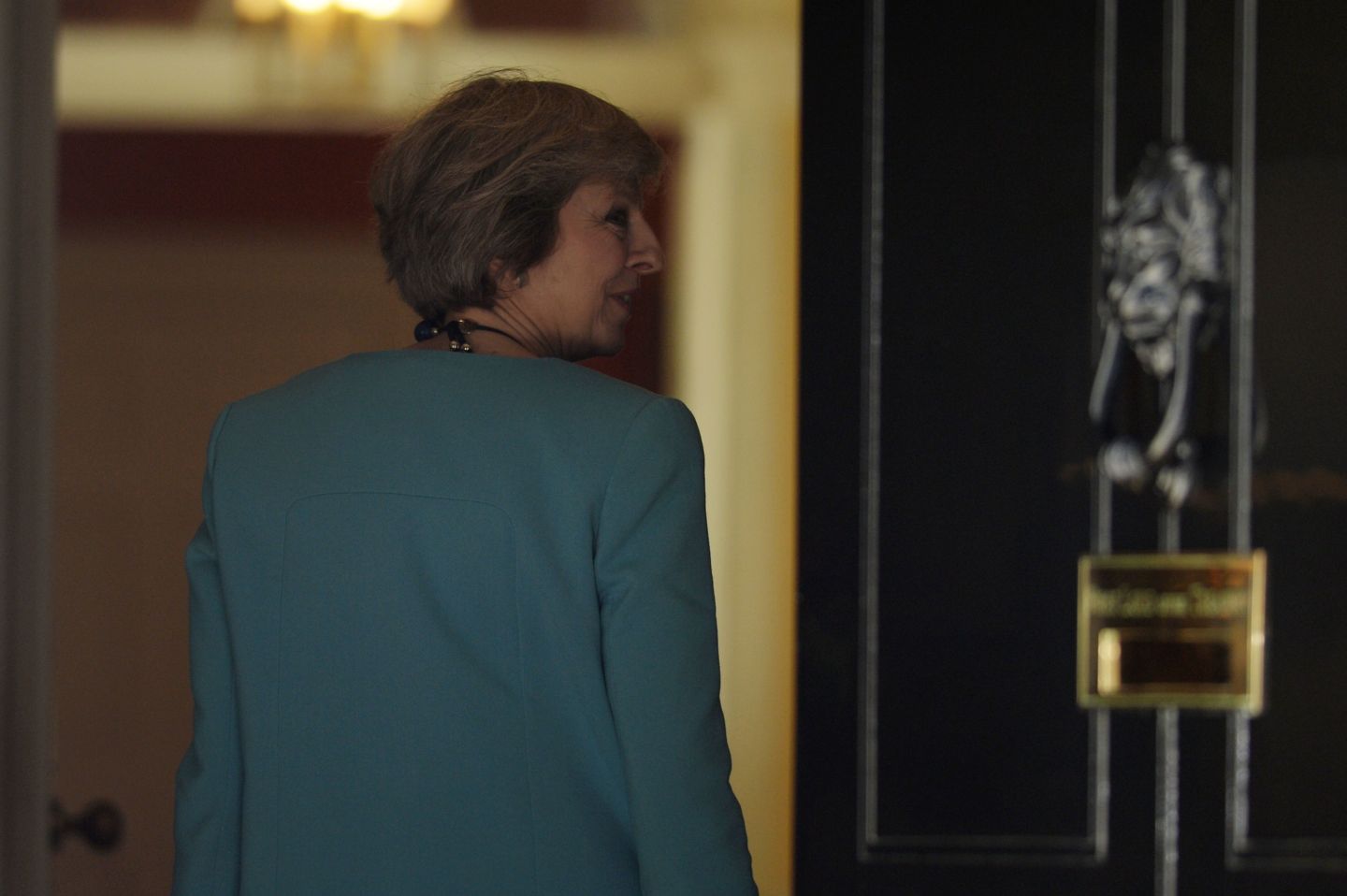
British Prime Minister Theresa May arrives at 10 Downing Street in central London on July 14, 2016 as further cabinet appointments are expected at the start of her first full day in office. Theresa May came under immediate pressure on July 14 on her first full day as Britain's new prime minister after a series of surprise appointments to her cabinet, including the gaffe-prone Boris Johnson as foreign minister. / AFP / OLI SCARFF (Photo credit should read OLI SCARFF/AFP/Getty Images)Photograph by Oli Scarff — AFP via Getty Images

Euel Elliott is a professor of public policy and political economy and associate dean in the School of Economic, Political and Policy Sciences at the University of Texas at Dallas.

Who could have predicted in February that, come July 13, David Cameron would be out as British prime minister and Theresa May would be on her way to meet Queen Elizabeth, where she was asked to form another Conservative government? After all, when Cameron first called for a referendum to determine whether Britain would stay in the European Union, few observers gave Brexit supporters much chance of success. But what seemed at the time among many to be a smart decision proved to be one of the greatest political miscalculations of all time. The stunning Brexit victory sent political and economic shockwaves around the world, and are still reverberating today. But May, who take her place yesterday on the Tory front bench as the new British prime minister—the second woman in British politics, the first being Margaret Thatcher, to be prime minister—is more than qualified to lead the U.K. through Brexit.

The Brexit victory has certainly upended British politics. Cameron, fresh off a stunning general election victory in May of last year when he led the Tories to a comfortable governing majority in the House of Commons, seemed set for another four or five years as prime minister (general elections in Britain are required to be held no longer than five years from the previous election, but the government can always call an election before that deadline). His miscalculation on Brexit shattered those plans, and immediately following the vote, announced his resignation as prime minister, pending the Conservative Party’s selection of a new leader, who by virtue of his or her party’s being in the majority in parliament, would automatically become prime minister.

The contest for Conservative Party leader turned out to be short-lived. Boris Johnson, who was clearly the favorite to become prime minister in the wake of Cameron’s resignation, stunned the political world by withdrawing from the contest. Michael Gove, the justice minister who, along with Johnson and Nigel Farage of the British United Kingdom Independence Party (UKIP), had led the Brexit campaign, was damaged by his own (successful) effort to force Johnson out of the race, producing the inevitable claims that Gove had been engaging in backstabbing. With Johnson sidelined and Gove crippled, the stage was set for May, a centrist with a relatively ill-defined ideology, but one who had campaigned with Cameron for staying in the EU.

In the end, it was anticlimactic. May, and Energy Secretary Andrea Leadsom—clearly identified as more on the right wing of the party and an enthusiastic supporter of Brexit—had emerged as the two finalists following a series of votes by the Conservative parliamentary caucus. May and Leadsom were slated to campaign among the Tory rank-and-file, with the final decision being in the hands of Tory Party members, where Leadsom was popular, and might have had an edge. However, she stunned the political world by announcing at the end of last week that it was time for the party to unify behind May, and that she was withdrawing from the contest.

May brings considerable political skills to the job. She has served in the House of Commons since 1997, and has been home secretary since 2010, when Cameron became prime minister following the May 2010 general election (which saw the Conservatives and Liberal Democrats forming a coalition government). As home secretary, often described as the “political graveyard” for political ambition, May has navigated the treacherous political waters of British politics with considerable acumen, and has had to deal with politically contentious issues, ranging from the treatment of terrorists to the always politically divisive education policy, and cultural issues such as gay marriage (which she supported). What may have secured her position as prime minister, however, had been her statement following Brexit that, even though she supported staying, she would work diligently to negotiate Britain’s withdrawal from the EU. In effect, “Brexit means Brexit.” This may have helped her with many Tories who might otherwise have been suspicious of her candidacy.


May takes the prime ministership at a time when, in addition to the critical issue of managing the withdrawal from the EU, she may need to navigate the always-perilous waters of electoral politics. Jeremy Corbyn, the leader of the Labour Party, has called for a snap election, something that has horrified many Labourites, and especially given the fact that the party’s leadership is being challenged by those distinctly unhappy with his own performance during the referendum, when his tepid support for “remain” may have contributed to many Labour “remain” supporters staying home. But while a snap election offers the enticing possibility for May to increase the Tory majority in Parliament, there is always a risk that it could backfire.

May seems to be a good fit for the immense job of prime minister, and if her choices for her cabinet are any indication, she will likely seek to govern through the formation of consensus within the fractious Tory Party. George Osborne, chancellor of the exchequer (the equivalent to the U.S. treasury secretary), is out, and has been replaced by Philip Hammond, who had served as foreign secretary, and a Euroskeptic who advocated for staying in the EU—but only if it was reformed. Hammond is balanced by Boris Johnson, named foreign secretary, and who had led the “leave” campaign, and David Davis, a longtime Euroskeptic who will, for all practical purposes, be in charge of the negotiations with the EU over British withdrawal. May appears to be moving to appointing women to high positions in the cabinet, as evidenced by Amber Rudd’s elevation from the energy and climate change portfolio to home secretary, where she may be groomed as a possible successor to May. Additional announcements will likely be forthcoming over the next few days.

The next several months will be fascinating indeed, as the new prime minister has to negotiate the promise of Brexit with the ever-shifting electoral tides.


About the Authors
By Euel Elliott
See full bioRight Arrow Button Icon
By Bethany Cianciolo
See full bioRight Arrow Button Icon

Latest in Commentary

Finance
Lorem ipsum dolor sit amet, consectetur adipiscing elit, sed do eiusmod tempor incididunt ut labore et dolore magna aliqua. Ut enim ad minim veniam
By Fortune Editors
October 20, 2025
Finance
Lorem ipsum dolor sit amet, consectetur adipiscing elit, sed do eiusmod tempor incididunt ut labore et dolore magna aliqua. Ut enim ad minim veniam
By Fortune Editors
October 20, 2025
Finance
Lorem ipsum dolor sit amet, consectetur adipiscing elit, sed do eiusmod tempor incididunt ut labore et dolore magna aliqua. Ut enim ad minim veniam
By Fortune Editors
October 20, 2025
Finance
Lorem ipsum dolor sit amet, consectetur adipiscing elit, sed do eiusmod tempor incididunt ut labore et dolore magna aliqua. Ut enim ad minim veniam
By Fortune Editors
October 20, 2025
Finance
Lorem ipsum dolor sit amet, consectetur adipiscing elit, sed do eiusmod tempor incididunt ut labore et dolore magna aliqua. Ut enim ad minim veniam
By Fortune Editors
October 20, 2025
Finance
Lorem ipsum dolor sit amet, consectetur adipiscing elit, sed do eiusmod tempor incididunt ut labore et dolore magna aliqua. Ut enim ad minim veniam
By Fortune Editors
October 20, 2025

Most Popular

Finance
Lorem ipsum dolor sit amet, consectetur adipiscing elit, sed do eiusmod tempor incididunt ut labore et dolore magna aliqua. Ut enim ad minim veniam
By Fortune Editors
October 20, 2025
Finance
Lorem ipsum dolor sit amet, consectetur adipiscing elit, sed do eiusmod tempor incididunt ut labore et dolore magna aliqua. Ut enim ad minim veniam
By Fortune Editors
October 20, 2025
Finance
Lorem ipsum dolor sit amet, consectetur adipiscing elit, sed do eiusmod tempor incididunt ut labore et dolore magna aliqua. Ut enim ad minim veniam
By Fortune Editors
October 20, 2025
Finance
Lorem ipsum dolor sit amet, consectetur adipiscing elit, sed do eiusmod tempor incididunt ut labore et dolore magna aliqua. Ut enim ad minim veniam
By Fortune Editors
October 20, 2025
Finance
Lorem ipsum dolor sit amet, consectetur adipiscing elit, sed do eiusmod tempor incididunt ut labore et dolore magna aliqua. Ut enim ad minim veniam
By Fortune Editors
October 20, 2025
Finance
Lorem ipsum dolor sit amet, consectetur adipiscing elit, sed do eiusmod tempor incididunt ut labore et dolore magna aliqua. Ut enim ad minim veniam
By Fortune Editors
October 20, 2025
Fortune Secondary Logo
Rankings
  • 100 Best Companies
  • Fortune 500
  • Global 500
  • Fortune 500 Europe
  • Most Powerful Women
  • Future 50
  • World’s Most Admired Companies
  • See All Rankings
Sections
  • Finance
  • Fortune Crypto
  • Features
  • Leadership
  • Health
  • Commentary
  • Success
  • Retail
  • Mpw
  • Tech
  • Lifestyle
  • CEO Initiative
  • Asia
  • Politics
  • Conferences
  • Europe
  • Newsletters
  • Personal Finance
  • Environment
  • Magazine
  • Education
Customer Support
  • Frequently Asked Questions
  • Customer Service Portal
  • Privacy Policy
  • Terms Of Use
  • Single Issues For Purchase
  • International Print
Commercial Services
  • Advertising
  • Fortune Brand Studio
  • Fortune Analytics
  • Fortune Conferences
  • Business Development
About Us
  • About Us
  • Editorial Calendar
  • Press Center
  • Work At Fortune
  • Diversity And Inclusion
  • Terms And Conditions
  • Site Map
Fortune Secondary Logo
  • About Us
  • Editorial Calendar
  • Press Center
  • Work At Fortune
  • Diversity And Inclusion
  • Terms And Conditions
  • Site Map
  • Facebook icon
  • Twitter icon
  • LinkedIn icon
  • Instagram icon
  • Pinterest icon

Latest in Commentary

heitmann
CommentaryEntrepreneurship
Here’s how to build something that lasts, from the founder of a $300 million bootstrapped company that’s been growing for 28 years straight
By Tim HeitmannMarch 1, 2026
18 hours ago
world's fair
CommentaryRobots
Something big is happening in AI, but panic is the wrong reaction
By Peter CappelliFebruary 28, 2026
2 days ago
putin
CommentaryRussia
Exclusive analysis: we looked at the 400 western firms still in Russia. Their paltry size strips Putin’s bluff bare naked
By Jeffrey Sonnenfeld, Stephen Henriques, Jake Waldinger and Giuseppe ScottoFebruary 27, 2026
3 days ago
roth
CommentaryLeadership
The AI resource reallocation challenge: How can companies capture the value of time?
By Erik RothFebruary 27, 2026
3 days ago
will
CommentaryAdvertising
I’m one of America’s top pollsters and I’ve got a warning for the AI companies: customers aren’t sold on ads
By Will JohnsonFebruary 27, 2026
3 days ago
the pitt
CommentaryDEI
‘The Pitt’: a masterclass display of DEI in action 
By Robert RabenFebruary 26, 2026
4 days ago

Most Popular

placeholder alt text
Economy
Your grandparents are the reason the U.S. isn't in a recession right now. That won't last forever
By Eleanor PringleMarch 1, 2026
18 hours ago
placeholder alt text
Success
MacKenzie Scott's close relationship with Toni Morrison long before Amazon put her on the path give more than $1 billion to HBCUs
By Sasha RogelbergMarch 1, 2026
11 hours ago
placeholder alt text
Personal Finance
Trump's universal 401(k) architect on why lower-income people distrust retirement accounts: 'they want to know what the catch is'
By Jacqueline MunisFebruary 28, 2026
2 days ago
placeholder alt text
Middle East
As Iran attacks Dubai, the tax-free haven for the global elite could see 'catastrophic' fallout — 'this can also send shockwaves globally'
By Jason MaMarch 1, 2026
10 hours ago
placeholder alt text
AI
The week the AI scare turned real and America realized maybe it isn't ready for what's coming
By Nick LichtenbergFebruary 28, 2026
2 days ago
placeholder alt text
Success
Japanese companies are paying older workers to sit by a window and do nothing—while Western CEOs demand super-AI productivity just to keep your job
By Orianna Rosa RoyleFebruary 27, 2026
3 days ago

© 2026 Fortune Media IP Limited. All Rights Reserved. Use of this site constitutes acceptance of our Terms of Use and Privacy Policy | CA Notice at Collection and Privacy Notice | Do Not Sell/Share My Personal Information
FORTUNE is a trademark of Fortune Media IP Limited, registered in the U.S. and other countries. FORTUNE may receive compensation for some links to products and services on this website. Offers may be subject to change without notice.