Walking across the border from Hong Kong to Shenzhen, China, in 1991, I found a city transitioning from market town to bustling metropolis. Most of the people were poor, and the technology companies I visited consisted of engineers in warehouses with old metal desks and outdated computers. But you could see that the seeds of an economic hub had been planted and China’s first experiment in capitalism was well on its way.
Years later, I gave a speech on the future of computing to hundreds of engineering students at Peking University. I was surprised that translators were not used; everyone knew the language of technology, English. But what impressed me most was that they kept me there for an hour after the presentation, hungry to learn more about how to succeed in a brave new business world they would soon be joining.
Today, Shenzhen and Beijing are sophisticated cities, financial powerhouses, and growing entrepreneurial hubs where new startups are born every day and venture capital flows in and out of investment portfolios, some as big as those on Silicon Valley’s legendary Sand Hill Road in Menlo Park.
Related: 5 Industries That Are Actually Ripe for Disruption
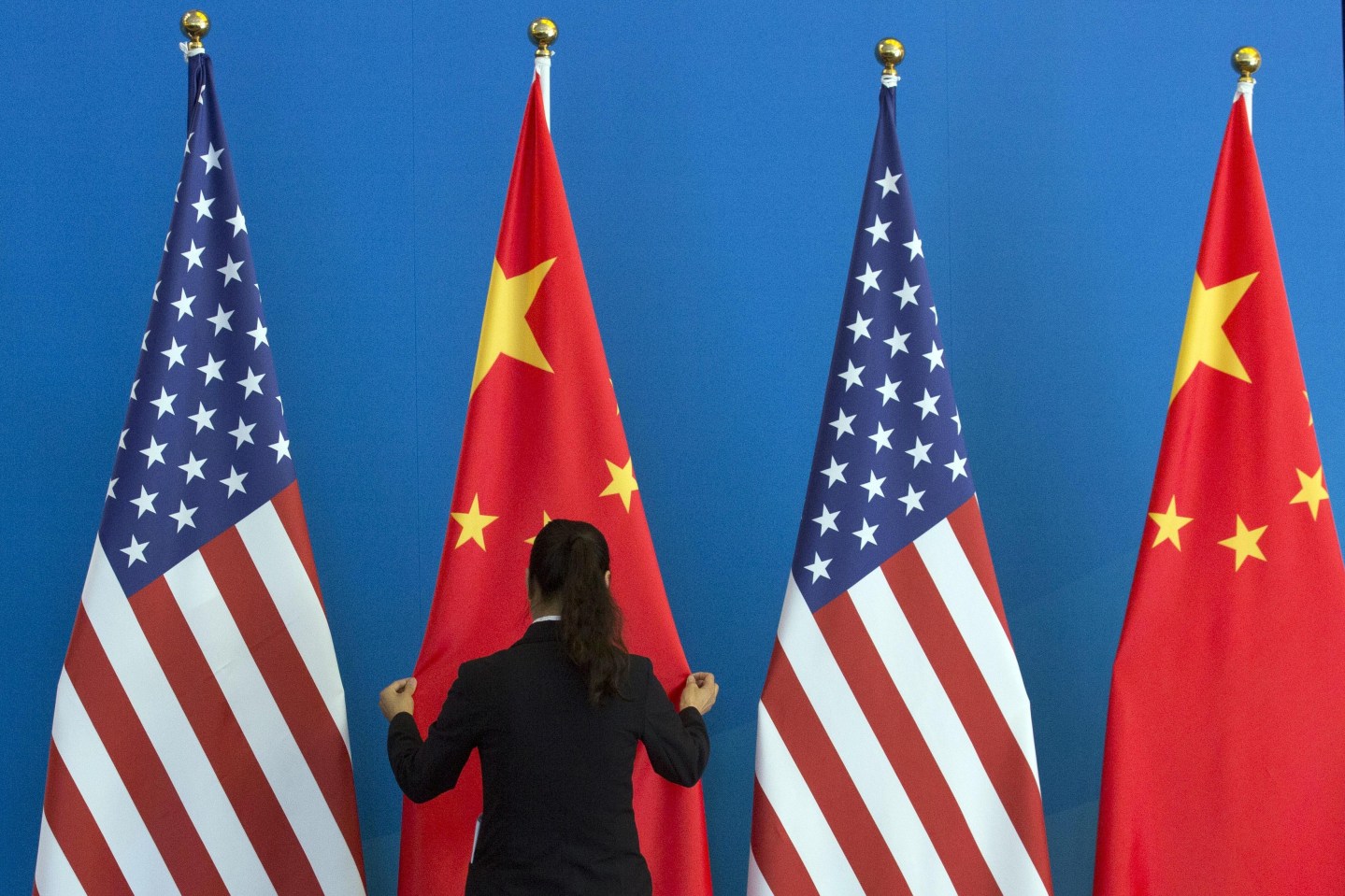
Many say that China represents a real competitive threat to the Valley. They say its entrepreneurs and VCs are hungrier, more focused and more competitive than we are. They say that Chinese startups have more aggressive and harder-working cultures that achieve scale faster than ours do.
You may not want to hear this, but much of that is true. The question is, is that a bad thing? In many ways, American entrepreneurship has gone soft. And competition from China may be the best thing to happen to us – the proverbial brick-to-the-head that we need to wake up and smell our competitive advantage slipping away.
I know that may be hard to believe when the most valuable brands in the world are Apple, Google and Microsoft; there are more $100 million-plus startups and $1 billion-plus unicorns in the U.S. than the rest of the world combined; and the same is true of venture capital investments. But there are plenty of signs that we are becoming overconfident and losing our edge.
For one thing, our tech culture is living in a bubble – in more ways than one. The private equity bubble that spawned an era of overinflated valuations, unbridled unicorns, ludicrous burn-rates, outrageous perks and mega-late stage funding rounds is finally letting out some air and coming back down to Earth. While that’s a good thing, I’m afraid that our perception remains overly myopic.
Related: Tesla and Theranos Are Pushing the Limits of Silicon Valley’s Hype Machine
What do you say we play a little game of association?
If I say “electric cars,” what comes to mind? Elon Musk and luxury electric vehicle (EV) maker Tesla (TSLA), of course. But Chinese car-makers are producing far more EVs than all American car makers combined. Granted, they’re of the lower-speed, limited range and lower-cost variety, but they are scaling much faster and arguably having greater impact on cleantech than Tesla.
Now, if I say “online retailer,” I bet you’ll immediately think of Jeff Bezos and Amazon. But Chinese ecommerce giant Alibaba (BABA) sold $394 billion in merchandise last year, more than twice that of Amazon (AMZN). And while Alibaba is a much smaller company in terms of revenue and employees, it’s far more profitable and growing at a much faster rate.
Not to mention that Alibaba was founded in a tiny apartment by former English teacher Jack Ma, his wife, 17 friends and their collective savings of $60,000. Fifteen years later, Ma became the richest man in China on the heels of the biggest IPO in world history. Entrepreneurial success stories don’t get any better than that, do they?
And yet, if you Google Jack Ma, you’ll get 461,000 results to Elon Musk’s 48 million. Let me tell you something: nobody reacts to what they don’t see. It’s time we recognize China as the competitive threat it really is.
Meanwhile, a growing number of Americans identify as entrepreneurs, but they’re not. They may call themselves entrepreneurs, serial entrepreneurs, solopreneurs, investors or CEOs, but in reality, many are just self-employed gig workers with no real aspirations to start a business with real products, employees and customers.
That’s why our labor-force participation rate is at its lowest level in decades: millions have dropped out of the workforce to become independent workers. More important, they produce less than half the GDP per capita of their full–time employee counterparts.
The way I see it, American entrepreneurship has three problems: 1) an institutionalized entrepreneurial class living in an isolated bubble of overinflated valuations, excess spending and short-sighted perception; 2) a growing underclass of under-producing wantrepreneurs; and 3) a shrinking middle class with little hope of achieving the American Dream.
In contrast, China has growing, upwardly mobile middle and entrepreneurial classes that are hungry and aggressive like we used to be. If that’s a sobering thought, then maybe competition from China is just what we need to burst our bubble.