• Home
  • Latest
  • Fortune 500
  • Finance
  • Tech
  • Leadership
  • Lifestyle
  • Rankings
  • Multimedia
Commentaryclimate change

This Is the Only Way to Fight Global Climate Change

By
Michael Shank
Michael Shank
and
Carolyn Kissane
Carolyn Kissane
Down Arrow Button Icon
By
Michael Shank
Michael Shank
and
Carolyn Kissane
Carolyn Kissane
Down Arrow Button Icon
April 30, 2016, 2:00 PM ET
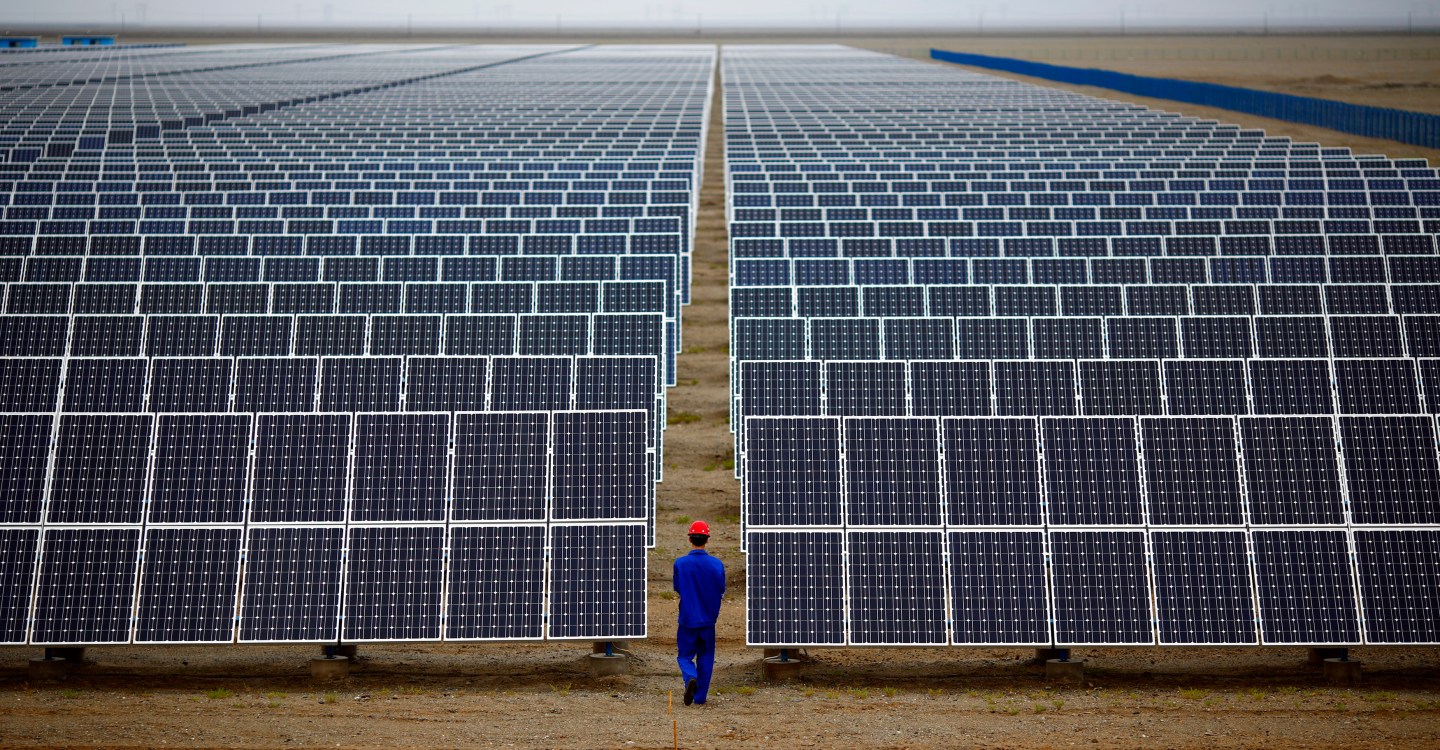
A worker inspects solar panels at a solar farm in Dunhuang, 950km northwest of Lanzhou, Gansu Province
Photograph by Carlos Barria — Reuters

After 170-plus nations signed the Paris climate agreement last week and now with trans-Atlantic trade talks back on President Obama’s agenda, it’s clear that the international community’s trade rules will need to be rethought, revamped, and rewritten if we’re going to be successful in curbing climate change. When the top emitting countries – United States, China and India, for example – are busying taking each other to court for supporting renewable energy investments, and effectively preventing them from going forward, this significantly hampers our ability to tackle global warming and ramp up the necessary renewable energy to transition the grid.

While India appeals to the World Trade Organization – which ruled in the U.S. government’s favor and demanded a level playing field for foreign solar companies – dangerous precedents are being set, post-Paris climate agreement, that bode ill for countries keen to curb their emissions. The idea that the U.S. – or any of these big three emitters – is serious about a level playing field when it comes to their energy industries holds little merit.

Worldwide, based on the latest figures from the International Energy Agency, the fossil fuel industry – specifically coal, oil, and gas industries – were subsidized to the tune of $550 billion annually. This is four times what the renewable energy industry received. In the United States, the government is subsidizing coal, oil and gas industries at $20 billion a year. And it’s worth noting that President Obama increased these subsidies by 35% since taking office in 2009.

If the United States – or any other country – genuinely wants a WTO-brokered level playing field then it must stop subsidizing the energy industry and that includes oil, coal, and gas. It’s likely Washington D.C. legislators are keeping quiet because oil and gas firms are among the top three biggest lobbying industries contributing to Congress, ranked beside the pharmaceutical and insurance industries, paying hundreds of millions of dollars annually to ensure taxpayer subsidies continue.

See also: How Corporate America Can Support the Paris Climate Deal

This has got to stop if we care at all about our national carbon footprint. There is nothing sustainable about this agenda, especially if you consider all the costs countries have to cover when considering fossil fuel’s negative externalities. According to the International Monetary Fund, $5.5 trillion is being paid by governments globally in order to “fully reflect the environmental damage associated with energy consumption”. What a devastating sum that could be spent in substantially more constructive ways. For Washington and Beijing and Delhi to show serious commitment to their climate targets, a new agenda is necessary.

First, stop the finger pointing. It’s unhelpful and disingenuous of the United States government – and, frankly, the myriad environmental nongovernmental organizations that backup the administration – to use any kind of stick when instigating a conversation about China’s and India’s climate commitment when the U.S. is equally guilty of undermining an energy transition.

Second, stop fortifying fossil fuels. Mindful of the White House’s own report this month connecting health impacts to climate change, something similarly identified in a Lancet report last year, any subsidies to oil, coal, and gas are a direct hit to public health, a bill which taxpayers should refuse to support. It’s illogical, bordering on the absurd, to financially support a practice that simultaneously undermines one’s health. And as long as we continue to prop up methane-heavy natural gas, carbon dioxide-heavy oil, and toxic-laden coal, that is exactly what we’re doing.

Third, start enforcing change. Big promises came out of Paris on the climate front. Big pledges to cut greenhouse gas emissions. Big targets to tackle. And just in time. This month’s study that sea levels are rising much faster than previously thought, and will hit six feet by the end of this century if we don’t act fast, shows that we don’t have much time. We need to move now. Not in 2050.

Fourth, start rapidly ramping up investments in the energy infrastructure of the future. It’s poor planning to build more oil and gas pipelines when we clearly can’t be relying on them in 10, 20, or 30 years. Renewable energy infrastructure should be the sole focus for U.S., China, and India going forward and nations should support each other’s efforts, rather than undermining them within the WTO. The price point is behind us on this. There’s no good argument anymore for weak investments or laissez-faire strategies. This is where the economic growth opportunity is and it comes with an immediate health and climate co-benefit.

The planet does not have time to witness more stalled sustainability measures, scuttled by trade texts and WTO tribunals. Revise the trade language now to be more climate-friendly – including investor-state dispute settlement mechanisms which rarely come down on the side of the environment – before more hottest year and highest carbon records are broken. Globalization at the price of global warming and its increasingly raucous extreme weather helps no one. The time to tweak our trade texts, so they’re 100% more climate-friendly, is now.

Michael Shank, is an adjunct assistant professor of sustainable development at NYU’s Center for Global Affairs graduate program. Carolyn Kissane is the academic director of the NYU’s Center for Global Affairs.


About the Authors
By Michael Shank
See full bioRight Arrow Button Icon
By Carolyn Kissane
See full bioRight Arrow Button Icon

Latest in Commentary

Finance
Lorem ipsum dolor sit amet, consectetur adipiscing elit, sed do eiusmod tempor incididunt ut labore et dolore magna aliqua. Ut enim ad minim veniam
By Fortune Editors
October 20, 2025
Finance
Lorem ipsum dolor sit amet, consectetur adipiscing elit, sed do eiusmod tempor incididunt ut labore et dolore magna aliqua. Ut enim ad minim veniam
By Fortune Editors
October 20, 2025
Finance
Lorem ipsum dolor sit amet, consectetur adipiscing elit, sed do eiusmod tempor incididunt ut labore et dolore magna aliqua. Ut enim ad minim veniam
By Fortune Editors
October 20, 2025
Finance
Lorem ipsum dolor sit amet, consectetur adipiscing elit, sed do eiusmod tempor incididunt ut labore et dolore magna aliqua. Ut enim ad minim veniam
By Fortune Editors
October 20, 2025
Finance
Lorem ipsum dolor sit amet, consectetur adipiscing elit, sed do eiusmod tempor incididunt ut labore et dolore magna aliqua. Ut enim ad minim veniam
By Fortune Editors
October 20, 2025
Finance
Lorem ipsum dolor sit amet, consectetur adipiscing elit, sed do eiusmod tempor incididunt ut labore et dolore magna aliqua. Ut enim ad minim veniam
By Fortune Editors
October 20, 2025

Most Popular

Finance
Lorem ipsum dolor sit amet, consectetur adipiscing elit, sed do eiusmod tempor incididunt ut labore et dolore magna aliqua. Ut enim ad minim veniam
By Fortune Editors
October 20, 2025
Finance
Lorem ipsum dolor sit amet, consectetur adipiscing elit, sed do eiusmod tempor incididunt ut labore et dolore magna aliqua. Ut enim ad minim veniam
By Fortune Editors
October 20, 2025
Finance
Lorem ipsum dolor sit amet, consectetur adipiscing elit, sed do eiusmod tempor incididunt ut labore et dolore magna aliqua. Ut enim ad minim veniam
By Fortune Editors
October 20, 2025
Finance
Lorem ipsum dolor sit amet, consectetur adipiscing elit, sed do eiusmod tempor incididunt ut labore et dolore magna aliqua. Ut enim ad minim veniam
By Fortune Editors
October 20, 2025
Finance
Lorem ipsum dolor sit amet, consectetur adipiscing elit, sed do eiusmod tempor incididunt ut labore et dolore magna aliqua. Ut enim ad minim veniam
By Fortune Editors
October 20, 2025
Finance
Lorem ipsum dolor sit amet, consectetur adipiscing elit, sed do eiusmod tempor incididunt ut labore et dolore magna aliqua. Ut enim ad minim veniam
By Fortune Editors
October 20, 2025
Fortune Secondary Logo
Rankings
  • 100 Best Companies
  • Fortune 500
  • Global 500
  • Fortune 500 Europe
  • Most Powerful Women
  • Future 50
  • World’s Most Admired Companies
  • See All Rankings
Sections
  • Finance
  • Fortune Crypto
  • Features
  • Leadership
  • Health
  • Commentary
  • Success
  • Retail
  • Mpw
  • Tech
  • Lifestyle
  • CEO Initiative
  • Asia
  • Politics
  • Conferences
  • Europe
  • Newsletters
  • Personal Finance
  • Environment
  • Magazine
  • Education
Customer Support
  • Frequently Asked Questions
  • Customer Service Portal
  • Privacy Policy
  • Terms Of Use
  • Single Issues For Purchase
  • International Print
Commercial Services
  • Advertising
  • Fortune Brand Studio
  • Fortune Analytics
  • Fortune Conferences
  • Business Development
  • Group Subscriptions
About Us
  • About Us
  • Editorial Calendar
  • Press Center
  • Work At Fortune
  • Diversity And Inclusion
  • Terms And Conditions
  • Site Map
  • About Us
  • Editorial Calendar
  • Press Center
  • Work At Fortune
  • Diversity And Inclusion
  • Terms And Conditions
  • Site Map
  • Facebook icon
  • Twitter icon
  • LinkedIn icon
  • Instagram icon
  • Pinterest icon

Latest in Commentary

assis
CommentaryIBM
The digital sovereignty dilemma is a false choice — here’s how enterprises can have both
By Ana Paula AssisApril 9, 2026
2 days ago
housing
CommentaryHousing
The housing market has been frozen for 3 years. Here’s why this spring could finally change that
By Jessica LautzApril 8, 2026
2 days ago
curtin
CommentaryInfrastructure
TE Connectivity CEO: the real promise of AI is long-term transformation, not short-term efficiency gains
By Terrence CurtinApril 7, 2026
3 days ago
philip
CommentaryEducation
I just became CEO of one of education’s Big 3. Here’s why AI will never replace a great teacher
By Philip MoyerApril 7, 2026
4 days ago
omar
Commentarydisruption
Pearson CEO: the AI job apocalypse is a Silicon Valley story. The data tells a different one
By Omar AbboshApril 6, 2026
4 days ago
no kings
CommentaryLeadership
America’s CEOs have become reluctant guardians of democracy
By Jeffrey Sonnenfeld and Stephen HenriquesApril 6, 2026
4 days ago

Most Popular

The U.S. government is spending $88 billion a month in interest on national debt—equal to spending on defense and education combined
Economy
The U.S. government is spending $88 billion a month in interest on national debt—equal to spending on defense and education combined
By Fortune EditorsApril 9, 2026
2 days ago
A Meta employee created a dashboard so coworkers can compete to be the company's No. 1 AI token user—and Zuckerberg doesn't even rank in the top 250
AI
A Meta employee created a dashboard so coworkers can compete to be the company's No. 1 AI token user—and Zuckerberg doesn't even rank in the top 250
By Fortune EditorsApril 9, 2026
2 days ago
Mark Cuban admits he made a mistake letting go of the Mavericks: 'I don't regret selling. I regret who I sold to'
Investing
Mark Cuban admits he made a mistake letting go of the Mavericks: 'I don't regret selling. I regret who I sold to'
By Fortune EditorsApril 9, 2026
1 day ago
Schools across America are quietly admitting that screens in classrooms made students worse off and are reversing years of tech-first policies
Innovation
Schools across America are quietly admitting that screens in classrooms made students worse off and are reversing years of tech-first policies
By Fortune EditorsApril 10, 2026
17 hours ago
'I hate working 5 days': Zoom CEO says traditional work schedules are becoming obsolete—and predicts a 3-day workweek by 2031
Success
'I hate working 5 days': Zoom CEO says traditional work schedules are becoming obsolete—and predicts a 3-day workweek by 2031
By Fortune EditorsApril 9, 2026
1 day ago
 The world's 500 richest people made more than a quarter trillion yesterday as volatile markets react to fragile Iran war ceasefire
Economy
 The world's 500 richest people made more than a quarter trillion yesterday as volatile markets react to fragile Iran war ceasefire
By Fortune EditorsApril 9, 2026
1 day ago

© 2026 Fortune Media IP Limited. All Rights Reserved. Use of this site constitutes acceptance of our Terms of Use and Privacy Policy | CA Notice at Collection and Privacy Notice | Do Not Sell/Share My Personal Information
FORTUNE is a trademark of Fortune Media IP Limited, registered in the U.S. and other countries. FORTUNE may receive compensation for some links to products and services on this website. Offers may be subject to change without notice.