• Home
  • Latest
  • Fortune 500
  • Finance
  • Tech
  • Leadership
  • Lifestyle
  • Rankings
  • Multimedia
CommentaryPersian Gulf

What Obama’s Gulf Meeting Says About Future U.S.-Gulf Relations

By
Daniel Serwer
Daniel Serwer
and
Bethany Cianciolo
Bethany Cianciolo
Down Arrow Button Icon
By
Daniel Serwer
Daniel Serwer
and
Bethany Cianciolo
Bethany Cianciolo
Down Arrow Button Icon
April 25, 2016, 4:23 PM ET
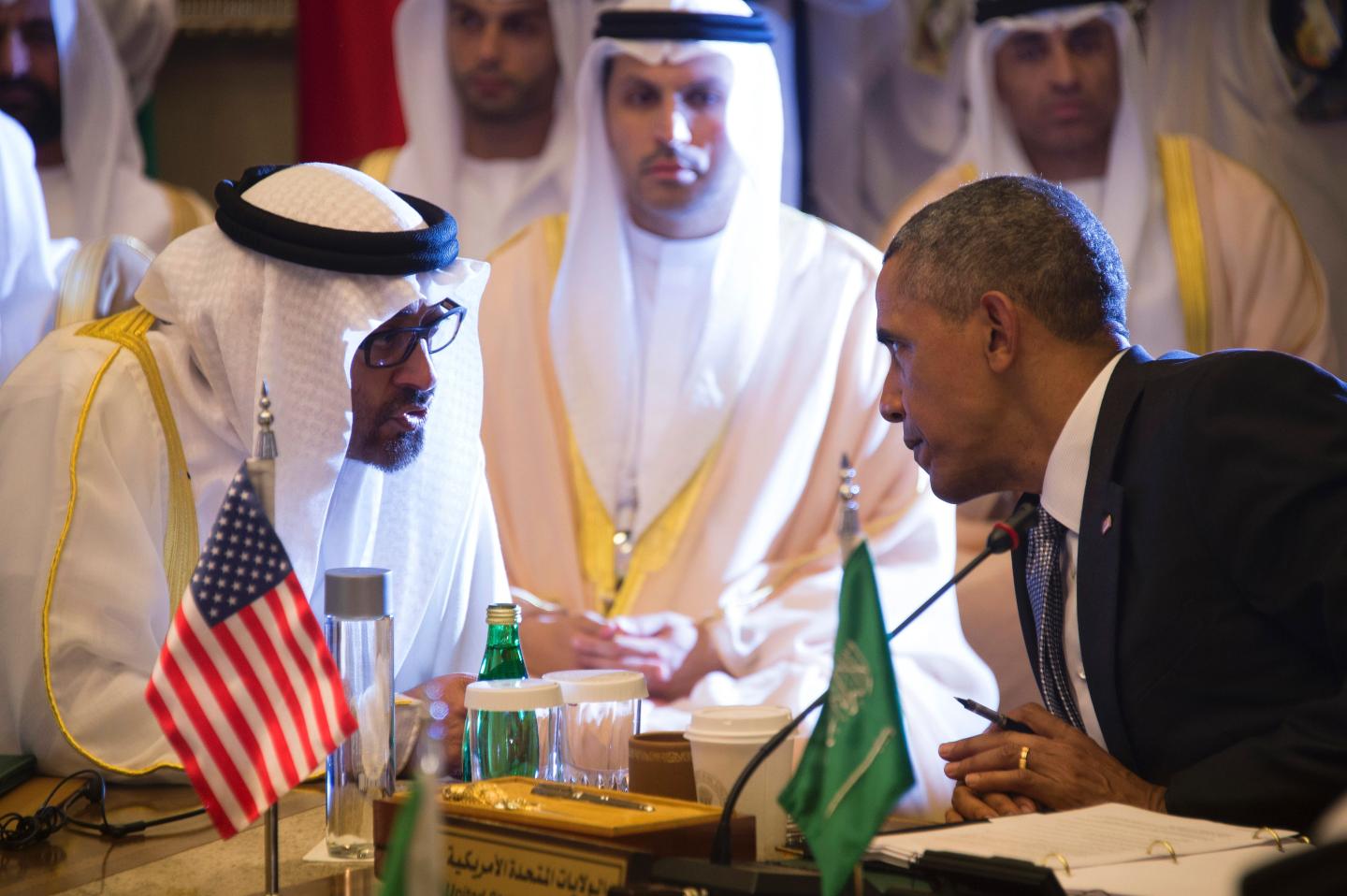
SAUDI-US-GULF-SUMMIT
JIM WATSON AFP/Getty Images

Last week, President Obama visited Riyadh with the Sunni Arab Gulf leaders, and the usual façade of amity of the Middle East monarchies prevailed. Washington says it supports Gulf security, in particular with massive arms sales and a U.S. military presence that absorbs 15% or so of the Pentagon’s budget. The Gulf countries say they oppose the Islamic State, in particular in Syria and Iraq. But underneath the façade, tectonic plates are moving apart. Both Washington and the Sunni Arab monarchies know it.

America is far less vulnerable to a cutoff of Middle East oil supplies than it once was. It is producing more and importing less. Its economy is less dependent on energy than 20 years ago, it has a Strategic Petroleum Reserve of more than 90 days of imports, and has eliminated price controls that aggravated past shortages. A cutoff of supplies coming from the Gulf would still bump up world oil prices, causing worldwide economic damage, but China and India are the big and growing consumers of Middle Eastern oil, not the U.S.

Terrorism remains a major American concern, but 15 years of whack-a-mole with its various protagonists—Al Qaeda, Al Qaeda in Iraq, Al Qaeda in the Arabian Peninsula, and the Islamic State in Syria, Iraq, Libya, Afghanistan, and Yemen—have done nothing to make extremism shrink, and may even have helped it recruit and grow. The Americans think extremists will thrive until Middle Eastern countries learn to govern in more orderly, inclusive, and open ways.

None of the Gulf countries is much inclined in that direction. Saudi Arabia has incubated the Wahabi ideology that Islamist extremists now espouse. The Kingdom’s experiments with women voting and local elections have been minimalist. With the modest exception of Kuwait, which owes its restoration to Washington, the Gulf monarchies are at best uninterested in American support for inclusive and open societies. Some actively oppose it.

The split is even more dramatic on Iran. The United States has prioritized blocking the Iranian nuclear program, which looked likely to produce nuclear weapons in less than five years. The nuclear deal postpones that possibility for as many as 15 years. But the Gulf monarchies are far more worried about Iran’s subversion of Arab states in the region: Lebanon, Yemen, Iraq, and Syria. The U.S. doesn’t like that either, but at least some in the U.S. administration hope Iran will at least make common cause against Sunni extremism.


Notably muted among Arab Gulf concerns is the Palestinian cause, which in the past was a major source of friction with the U.S. President Obama has continued to provide unconditional security support to Israel. But now the Arab Gulf states and Israel share a preoccupation with Iran that overshadows Israel’s wars against Iran-supported Hamas in Gaza and expanding settlements on the West Bank.

Tectonic plates move slowly. It may still be a long time before there is a major change in America’s relations with the Arab Gulf states. The Administration and Congress still seem determined to keep any Saudi role in the 9/11 attacks secret and to block legislation that would allow lawsuits against the Kingdom for the 9/11 attacks. Washington is not pressing the Gulf monarchies hard on human rights issues and has given up conditioning aid to Egypt on its human rights performance, largely because of pressure from the Gulf. There is no sign of American reluctance to sell arms in the Gulf or to support Israel’s security with high-technology weapons and funding.

But the Americans are already trying hard to shift burdens to others and reduce their own. President Obama believes the Sunni Arab countries are free riders on the large American security presence in the Gulf. He wants them not only arming themselves but also trying to reach an accommodation with Iran on regional security issues. The Administration thinks both the Arab and Persian sides of the Gulf would benefit from some sort of regional security architecture that reduces sectarian frictions and avoids proxy wars.

That would in turn allow the U.S. to withdraw more from the Middle East, without leaving a vacuum that extremists would be glad to fill. Tectonic plates move slowly, but they move and cause earthquakes. More big shifts in America’s Middle East policy are still to come.

Daniel Serwer is professor and director of conflict management at the Johns Hopkins School of Advanced International Studies and a scholar at the Middle East Institute. He tweets @DanielSerwer.

About the Authors
By Daniel Serwer
See full bioRight Arrow Button Icon
By Bethany Cianciolo
See full bioRight Arrow Button Icon

Latest in Commentary

Finance
Lorem ipsum dolor sit amet, consectetur adipiscing elit, sed do eiusmod tempor incididunt ut labore et dolore magna aliqua. Ut enim ad minim veniam
By Fortune Editors
October 20, 2025
Finance
Lorem ipsum dolor sit amet, consectetur adipiscing elit, sed do eiusmod tempor incididunt ut labore et dolore magna aliqua. Ut enim ad minim veniam
By Fortune Editors
October 20, 2025
Finance
Lorem ipsum dolor sit amet, consectetur adipiscing elit, sed do eiusmod tempor incididunt ut labore et dolore magna aliqua. Ut enim ad minim veniam
By Fortune Editors
October 20, 2025
Finance
Lorem ipsum dolor sit amet, consectetur adipiscing elit, sed do eiusmod tempor incididunt ut labore et dolore magna aliqua. Ut enim ad minim veniam
By Fortune Editors
October 20, 2025
Finance
Lorem ipsum dolor sit amet, consectetur adipiscing elit, sed do eiusmod tempor incididunt ut labore et dolore magna aliqua. Ut enim ad minim veniam
By Fortune Editors
October 20, 2025
Finance
Lorem ipsum dolor sit amet, consectetur adipiscing elit, sed do eiusmod tempor incididunt ut labore et dolore magna aliqua. Ut enim ad minim veniam
By Fortune Editors
October 20, 2025

Most Popular

Finance
Lorem ipsum dolor sit amet, consectetur adipiscing elit, sed do eiusmod tempor incididunt ut labore et dolore magna aliqua. Ut enim ad minim veniam
By Fortune Editors
October 20, 2025
Finance
Lorem ipsum dolor sit amet, consectetur adipiscing elit, sed do eiusmod tempor incididunt ut labore et dolore magna aliqua. Ut enim ad minim veniam
By Fortune Editors
October 20, 2025
Finance
Lorem ipsum dolor sit amet, consectetur adipiscing elit, sed do eiusmod tempor incididunt ut labore et dolore magna aliqua. Ut enim ad minim veniam
By Fortune Editors
October 20, 2025
Finance
Lorem ipsum dolor sit amet, consectetur adipiscing elit, sed do eiusmod tempor incididunt ut labore et dolore magna aliqua. Ut enim ad minim veniam
By Fortune Editors
October 20, 2025
Finance
Lorem ipsum dolor sit amet, consectetur adipiscing elit, sed do eiusmod tempor incididunt ut labore et dolore magna aliqua. Ut enim ad minim veniam
By Fortune Editors
October 20, 2025
Finance
Lorem ipsum dolor sit amet, consectetur adipiscing elit, sed do eiusmod tempor incididunt ut labore et dolore magna aliqua. Ut enim ad minim veniam
By Fortune Editors
October 20, 2025
Rankings
  • 100 Best Companies
  • Fortune 500
  • Global 500
  • Fortune 500 Europe
  • Most Powerful Women
  • Future 50
  • World’s Most Admired Companies
  • See All Rankings
Sections
  • Finance
  • Leadership
  • Success
  • Tech
  • Asia
  • Europe
  • Environment
  • Fortune Crypto
  • Health
  • Retail
  • Lifestyle
  • Politics
  • Newsletters
  • Magazine
  • Features
  • Commentary
  • Mpw
  • CEO Initiative
  • Conferences
  • Personal Finance
  • Education
Customer Support
  • Frequently Asked Questions
  • Customer Service Portal
  • Privacy Policy
  • Terms Of Use
  • Single Issues For Purchase
  • International Print
Commercial Services
  • Advertising
  • Fortune Brand Studio
  • Fortune Analytics
  • Fortune Conferences
  • Business Development
About Us
  • About Us
  • Editorial Calendar
  • Press Center
  • Work At Fortune
  • Diversity And Inclusion
  • Terms And Conditions
  • Site Map

Latest in Commentary

Sridhar Ramaswamy is CEO of Snowflake, the AI Data Cloud company.
CommentarySoftware
Snowflake CEO: Big Tech’s grip on AI will loosen in 2026 — plus 6 more predictions that will define the year
By Sridhar RamaswamyDecember 28, 2025
1 day ago
Federal Reserve Gov. Chris Waller engages 200 top CEOs at the Yale CEO Summit in December, 2025. (Photo courtesy of the Yale Chief Executive Leadership Institute/Photographer Donovan Marks)
CommentaryFederal Reserve
Why over 80% of America’s top CEOs think Trump would be wrong not to pick Chris Waller for Fed chair
By Jeffrey Sonnenfeld and Steven TianDecember 27, 2025
2 days ago
Kence Anderson is the founder and CEO of AMESA 
CommentarySoftware
I pioneered machine teaching at Microsoft. Building AI agents is like building a basketball team, not drafting a player 
By Kence AndersonDecember 27, 2025
2 days ago
Butch Meily
Commentaryempathy
The global empathy crisis that confronts us this Christmas
By Butch MeilyDecember 25, 2025
4 days ago
economy
CommentaryGDP
Why 4.3% GDP growth proves the ‘vibecession’ theory is historically wrong
By Brian HamiltonDecember 24, 2025
5 days ago
students
CommentaryEducation
Why restricting graduate loans will bankrupt America’s talent supply chain
By Katica RoyDecember 23, 2025
6 days ago

Most Popular

placeholder alt text
Future of Work
Malcolm Gladwell tells young people if they want a STEM degree, 'don’t go to Harvard.' You may end up at the bottom of your class and drop out
By Sasha RogelbergDecember 27, 2025
2 days ago
placeholder alt text
Success
MacKenzie Scott's close relationship with Toni Morrison long before Amazon put her on the path give more than $1 billion to HBCUs
By Sasha RogelbergDecember 28, 2025
1 day ago
placeholder alt text
Arts & Entertainment
Gen Zers and millennials flock to so-called analog islands 'because so little of their life feels tangible'
By Michael Liedtke and The Associated PressDecember 28, 2025
1 day ago
placeholder alt text
Banking
Russian official warns a banking crisis is possible amid nonpayments. 'I don’t want to think about a continuation of the war or an escalation'
By Jason MaDecember 27, 2025
2 days ago
placeholder alt text
Success
Billionaire philanthropy's growing divide: Mark Zuckerberg stops funding immigration reform as MacKenzie Scott doubles down on DEI
By Ashley LutzDecember 22, 2025
7 days ago
placeholder alt text
AI
'Godfather of AI' Geoffrey Hinton predicts 2026 will see the technology get even better and gain the ability to 'replace many other jobs'
By Jason MaDecember 28, 2025
1 day ago

© 2025 Fortune Media IP Limited. All Rights Reserved. Use of this site constitutes acceptance of our Terms of Use and Privacy Policy | CA Notice at Collection and Privacy Notice | Do Not Sell/Share My Personal Information
FORTUNE is a trademark of Fortune Media IP Limited, registered in the U.S. and other countries. FORTUNE may receive compensation for some links to products and services on this website. Offers may be subject to change without notice.