• Home
  • Latest
  • Fortune 500
  • Finance
  • Tech
  • Leadership
  • Lifestyle
  • Rankings
  • Multimedia

Trendingnow

1

Bolt CEO says he let go of his entire HR team for creating problems that didn’t exist: ‘Those problems disappeared when I let them go’ 

2

Meet a 21-year-old community college student who's going to China as the first American woman welder in the trades Olympics

3

Despite a $500 million net worth, Shaq just finished his fourth degree. He warns graduates: 'Your character will take you further than your resume'

1

Bolt CEO says he let go of his entire HR team for creating problems that didn’t exist: ‘Those problems disappeared when I let them go’ 

2

Meet a 21-year-old community college student who's going to China as the first American woman welder in the trades Olympics

3

Despite a $500 million net worth, Shaq just finished his fourth degree. He warns graduates: 'Your character will take you further than your resume'
Leadershipcivil rights

From Black to Transgender Rights Eras, the Business World Has Undergone Its Own Revolution

By
Gavin Wright
Gavin Wright
Down Arrow Button Icon
By
Gavin Wright
Gavin Wright
Down Arrow Button Icon
April 25, 2016, 3:40 PM ET
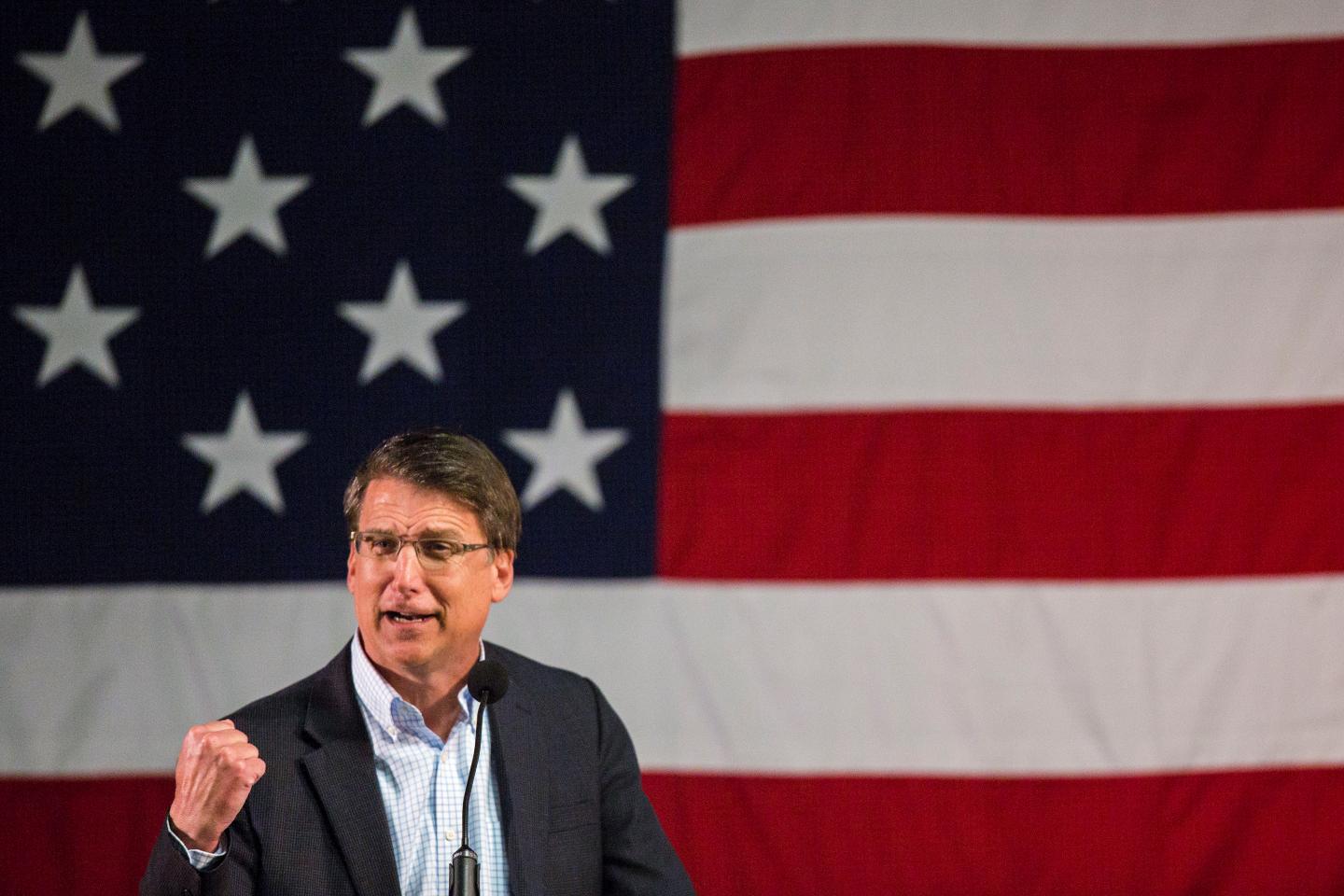
North Carolina Gov. Pat McCrory
Photograph by Al Drago—CQ-Roll Call

Last week, the Greater Raleigh Chamber of Commerce called for the repeal of North Carolina’s new state law restricting gay and transgender rights, saying, “This legislation is bad for business and bad for North Carolina.” The appeal comes after more than 160 national business leaders signed a letter asking Governor Pat McCrory to support a repeal of the law. Prominent businesses have dropped investment plans in the state, and a growing number of entertainers have canceled performances.

Although we do not know how this episode will end, it is only the latest flurry in a cycle of political action and business reaction that has preoccupied politics in many states since the Supreme Court’s June 2015 ruling in favor of same-sex marriage.

Many have begun to compare today’s conflicts with those of the Civil Rights era of the 1960s, and for good reason. But the business community played a far less proactive role during the fight for African American rights.

Without a doubt, business pressures and economic incentives were critical to the South’s acquiescence to racial desegregation. But in the struggle over access to public accommodations (lunch counters, restaurants, theaters, and hotels) in the 1960s, most of the pressure was local, primarily boycotts of offending establishments and shopping areas in settings where the patronage of black customers was enough to matter. Most affected businesses resisted, believing that they could outlast the protesters. North Carolina Governor Luther Hodges, who was himself the owner of many segregated Howard Johnson restaurants, likened the protest to hula-hoops, the latest youthful fad. And national chains largely held back, deferring to local custom. Only when it became clear that the losses to local franchises from sit-ins and boycotts would continue did national chains reluctantly begin to encourage accommodation. The assertiveness of today’s national business community on civil and human rights issues marks a major shift from the past.

Perhaps the business community learned a few lessons from the Civil Rights movement. Most newly desegregated establishments in the 1960s found that the adverse reaction of white customers was not nearly as bad as they had feared, if it was detectable at all. In 1963, Fred Harvey, the president of Harvey’s Department store in Nashville, told The Wall Street Journal, “The biggest surprise I ever had was the apparent ‘so-what’ attitude of white customers.” In May 1961 the New York Times reported, “Almost without exception, desegregation of lunch counters has been accomplished peacefully and without any significant loss of white customers.” By 1963, business communities in most metropolitan areas had made their peace with desegregation, which helps explain the surprisingly smooth adoption of the sweeping public accommodations section in the Civil Rights Act of 1964. The national chains did not exactly lead the way, but most came to see the value of a clear anti-exclusion rule, applied as universally as possible.

When the Civil Rights Act was passed in July 1964, most reports of violations and resistance to the new open-access principle came from smaller cities and towns that had not seen much integration and had not yet begun to adapt to new social realities. This divide is similar to the culture clash we are seeing today between the booming metropolitan areas of the South, which tend to be diverse, cosmopolitan, and tolerant, and the small towns and rural areas, which still adhere to what they consider traditional values. If history is a guide, however, acceptance will eventually come to these places as well. On public accommodations, an intense flurry of disputes and litigation in the late 1960s died out by the early 1970s. The last attorney general’s report with a section devoted explicitly to public accommodations appeared in 1977.

In both the past and present movements, the sports and entertainment industries played major roles in the push for civil rights. The segregated city of Houston, Texas experienced a sit-in movement in 1960. It was not one of the more famous cases, perhaps because the business and political leaders at the time agreed on a publicity blackout as they quietly desegregated all lunch counters in August 1960, and then implemented complete desegregation of theaters and restaurants in 1963. Racial inclusiveness considered a necessary condition for Houston to attract a major league baseball franchise. The Houston Colt 45s began to play in 1962. As activist Rev. Bill Lawson explained to MLB.com in 2014, “To bring in black players like Willie Mays, we could hardly have national publicity about Willie Mays being turned down by some white hotel. It wasn’t really a moral issue. It was basically a financial issue.”

The city’s reputation for tolerance was sufficiently well established in 1965, when the American Football League’s All-Star game was moved from New Orleans to Houston after players protested the exclusion of blacks from New Orleans hotels and businesses.

In 1965, the Milwaukee Braves announced plans to move to Atlanta. Star player Henry Aaron, who grew up in segregated Mobile, Alabama, at first expressed displeasure at returning to the South. But after local businessmen showed him around town, Aaron said he wouldn’t mind playing in Atlanta. Within five years, major league teams were playing in New Orleans and Dallas, moves that would have been unthinkable under segregation.

The connection between big-league sports and desegregation is unsurprising because, by the 1960s, virtually all major baseball, basketball, and football teams had valuable black players. In a marked contrast, openly gay professional athletes are still a rarity, and transgender athletes even more so. So, it is nothing short of remarkable that major sports organizations have been willing to go as far as they have in responding to anti-LGBT legislation. And much of this likely comes down to business interests.

The nominally nonprofit NCAA has waffled on how far its willing to go to support LGBT rights, but the openly profit-seeking NBA has made it “crystal clear” that its 2017 All-Star game will only be held in Charlotte if North Carolina’s new state law is repealed or significantly modified. Opposition by the National Football League (suggesting that it might cost Atlanta a future Super Bowl) played a role in Georgia Governor Nathan Deal’s decision on March 28 to veto a bill similar to North Carolina’s.

Like their counterparts in the business community, many of whom have valued gay employees, these organizations have come to understand that being on the right side of history serves both economic and social objectives. As a GlaxoSmithKline representative told Reuters, “policies that impede inclusion and diversity impede North Carolina’s competitive ecosystem and hinder our ability to recruit and retain key talent.”

Enlightened self-interest from the business community helped the South rejoin the nation during the Civil Rights era. Will it happen again?

Gavin Wright is the William Robertson Coe Professor of American Economic History Emeritus at Stanford University, and author of Sharing the Prize: The Economics of the Civil Rights Revolution in the American South.

About the Author
By Gavin Wright
See full bioRight Arrow Button Icon

Latest in Leadership

Finance
Lorem ipsum dolor sit amet, consectetur adipiscing elit, sed do eiusmod tempor incididunt ut labore et dolore magna aliqua. Ut enim ad minim veniam
By Fortune Editors
October 20, 2025
Finance
Lorem ipsum dolor sit amet, consectetur adipiscing elit, sed do eiusmod tempor incididunt ut labore et dolore magna aliqua. Ut enim ad minim veniam
By Fortune Editors
October 20, 2025
Finance
Lorem ipsum dolor sit amet, consectetur adipiscing elit, sed do eiusmod tempor incididunt ut labore et dolore magna aliqua. Ut enim ad minim veniam
By Fortune Editors
October 20, 2025
Finance
Lorem ipsum dolor sit amet, consectetur adipiscing elit, sed do eiusmod tempor incididunt ut labore et dolore magna aliqua. Ut enim ad minim veniam
By Fortune Editors
October 20, 2025
Finance
Lorem ipsum dolor sit amet, consectetur adipiscing elit, sed do eiusmod tempor incididunt ut labore et dolore magna aliqua. Ut enim ad minim veniam
By Fortune Editors
October 20, 2025
Finance
Lorem ipsum dolor sit amet, consectetur adipiscing elit, sed do eiusmod tempor incididunt ut labore et dolore magna aliqua. Ut enim ad minim veniam
By Fortune Editors
October 20, 2025

Most Popular

Finance
Lorem ipsum dolor sit amet, consectetur adipiscing elit, sed do eiusmod tempor incididunt ut labore et dolore magna aliqua. Ut enim ad minim veniam
By Fortune Editors
October 20, 2025
Finance
Lorem ipsum dolor sit amet, consectetur adipiscing elit, sed do eiusmod tempor incididunt ut labore et dolore magna aliqua. Ut enim ad minim veniam
By Fortune Editors
October 20, 2025
Finance
Lorem ipsum dolor sit amet, consectetur adipiscing elit, sed do eiusmod tempor incididunt ut labore et dolore magna aliqua. Ut enim ad minim veniam
By Fortune Editors
October 20, 2025
Finance
Lorem ipsum dolor sit amet, consectetur adipiscing elit, sed do eiusmod tempor incididunt ut labore et dolore magna aliqua. Ut enim ad minim veniam
By Fortune Editors
October 20, 2025
Finance
Lorem ipsum dolor sit amet, consectetur adipiscing elit, sed do eiusmod tempor incididunt ut labore et dolore magna aliqua. Ut enim ad minim veniam
By Fortune Editors
October 20, 2025
Finance
Lorem ipsum dolor sit amet, consectetur adipiscing elit, sed do eiusmod tempor incididunt ut labore et dolore magna aliqua. Ut enim ad minim veniam
By Fortune Editors
October 20, 2025
Fortune Secondary Logo
Rankings
  • 100 Best Companies
  • Fortune 500
  • Global 500
  • Fortune 500 Europe
  • Most Powerful Women
  • World's Most Admired Companies
  • See All Rankings
  • Lists Calendar
Sections
  • Finance
  • Fortune Crypto
  • Features
  • Leadership
  • Health
  • Commentary
  • Success
  • Retail
  • Mpw
  • Tech
  • Lifestyle
  • CEO Initiative
  • Asia
  • Politics
  • Conferences
  • Europe
  • Newsletters
  • Personal Finance
  • Environment
  • Magazine
  • Education
Customer Support
  • Frequently Asked Questions
  • Customer Service Portal
  • Privacy Policy
  • Terms Of Use
  • Single Issues For Purchase
  • International Print
Commercial Services
  • Advertising
  • Fortune Brand Studio
  • Fortune Analytics
  • Fortune Conferences
  • Business Development
  • Group Subscriptions
About Us
  • About Us
  • Press Center
  • Work At Fortune
  • Terms And Conditions
  • Site Map
  • About Us
  • Press Center
  • Work At Fortune
  • Terms And Conditions
  • Site Map
  • Facebook icon
  • Twitter icon
  • LinkedIn icon
  • Instagram icon
  • Pinterest icon

Latest in Leadership

elon
SuccessIPOs
SpaceX IPO targets $28.5 trillion total addressable market, mission to ‘make life multiplanetary’ and understand ‘true nature of the universe’
By Nick LichtenbergMay 20, 2026
6 hours ago
Elon Musk sits with his fists together, looking up.
Commentaryspace
SpaceX will be worth trillions, but the space station that made it possible is worth even more — if we don’t squander it
By Tejpaul BhatiaMay 20, 2026
7 hours ago
Clinical Psychologist Daniel Wendler
ConferencesWorkplace Innovation Summit
A ‘proudly autistic’ workplace expert says putting neurodivergent employees in a typical office is like dropping a polar bear in Austin, Texas
By Tristan BoveMay 20, 2026
8 hours ago
Pay transparency is exposing a bigger problem: Most companies can’t explain why they pay what they pay
Workplace CultureWorkplace Innovation Summit
Pay transparency is exposing a bigger problem: Most companies can’t explain why they pay what they pay
By Sydney LakeMay 20, 2026
8 hours ago
Professor Jeff DeGraff.
SuccessWorkplace Innovation Summit
‘We’ve given them the short end of the stick’: Business school dean says AI could eliminate many jobs for young people—even as they lead innovation
By Preston ForeMay 20, 2026
9 hours ago
A dating expert says ghosting and quiet quitting are the same problem at their core, and corporate life has more to learn from romance than it admits
Workplace CultureWorkplace Innovation Summit
A dating expert says ghosting and quiet quitting are the same problem at their core, and corporate life has more to learn from romance than it admits
By Marco Quiroz-GutierrezMay 20, 2026
9 hours ago

Most Popular

Bolt CEO says he let go of his entire HR team for creating problems that didn’t exist: ‘Those problems disappeared when I let them go’ 
Workplace Culture
Bolt CEO says he let go of his entire HR team for creating problems that didn’t exist: ‘Those problems disappeared when I let them go’ 
By Preston ForeMay 19, 2026
1 day ago
Meet a 21-year-old community college student who's going to China as the first American woman welder in the trades Olympics
Future of Work
Meet a 21-year-old community college student who's going to China as the first American woman welder in the trades Olympics
By Mike Householder and The Associated PressMay 17, 2026
4 days ago
Despite a $500 million net worth, Shaq just finished his fourth degree. He warns graduates: 'Your character will take you further than your resume'
Success
Despite a $500 million net worth, Shaq just finished his fourth degree. He warns graduates: 'Your character will take you further than your resume'
By Preston ForeMay 20, 2026
13 hours ago
The Bezos family just donated $100 million to help achieve one of Mayor Zohran Mamdani’s top campaign promises
Politics
The Bezos family just donated $100 million to help achieve one of Mayor Zohran Mamdani’s top campaign promises
By Jake AngeloMay 12, 2026
8 days ago
Dr. Bernice King on why companies that walked back DEI were never truly committed: 'If you retreat that quick…that reveals who you really are'
Workplace Culture
Dr. Bernice King on why companies that walked back DEI were never truly committed: 'If you retreat that quick…that reveals who you really are'
By Preston ForeMay 19, 2026
1 day ago
Spirit Airlines apologizes to all the Americans who can't afford any summer vacation flights as it shuts down
Travel & Leisure
Spirit Airlines apologizes to all the Americans who can't afford any summer vacation flights as it shuts down
By Rio Yamat and The Associated PressMay 18, 2026
3 days ago

© 2026 Fortune Media IP Limited. All Rights Reserved. Use of this site constitutes acceptance of our Terms of Use and Privacy Policy | CA Notice at Collection and Privacy Notice | Do Not Sell/Share My Personal Information
FORTUNE is a trademark of Fortune Media IP Limited, registered in the U.S. and other countries. FORTUNE may receive compensation for some links to products and services on this website. Offers may be subject to change without notice.