• Home
  • Latest
  • Fortune 500
  • Finance
  • Tech
  • Leadership
  • Lifestyle
  • Rankings
  • Multimedia
FinanceEconomy

Here’s How Ben Bernanke’s “Helicopter Money” Plan Might Work

By
Chris Matthews
Chris Matthews
Down Arrow Button Icon
By
Chris Matthews
Chris Matthews
Down Arrow Button Icon
April 12, 2016, 10:56 AM ET
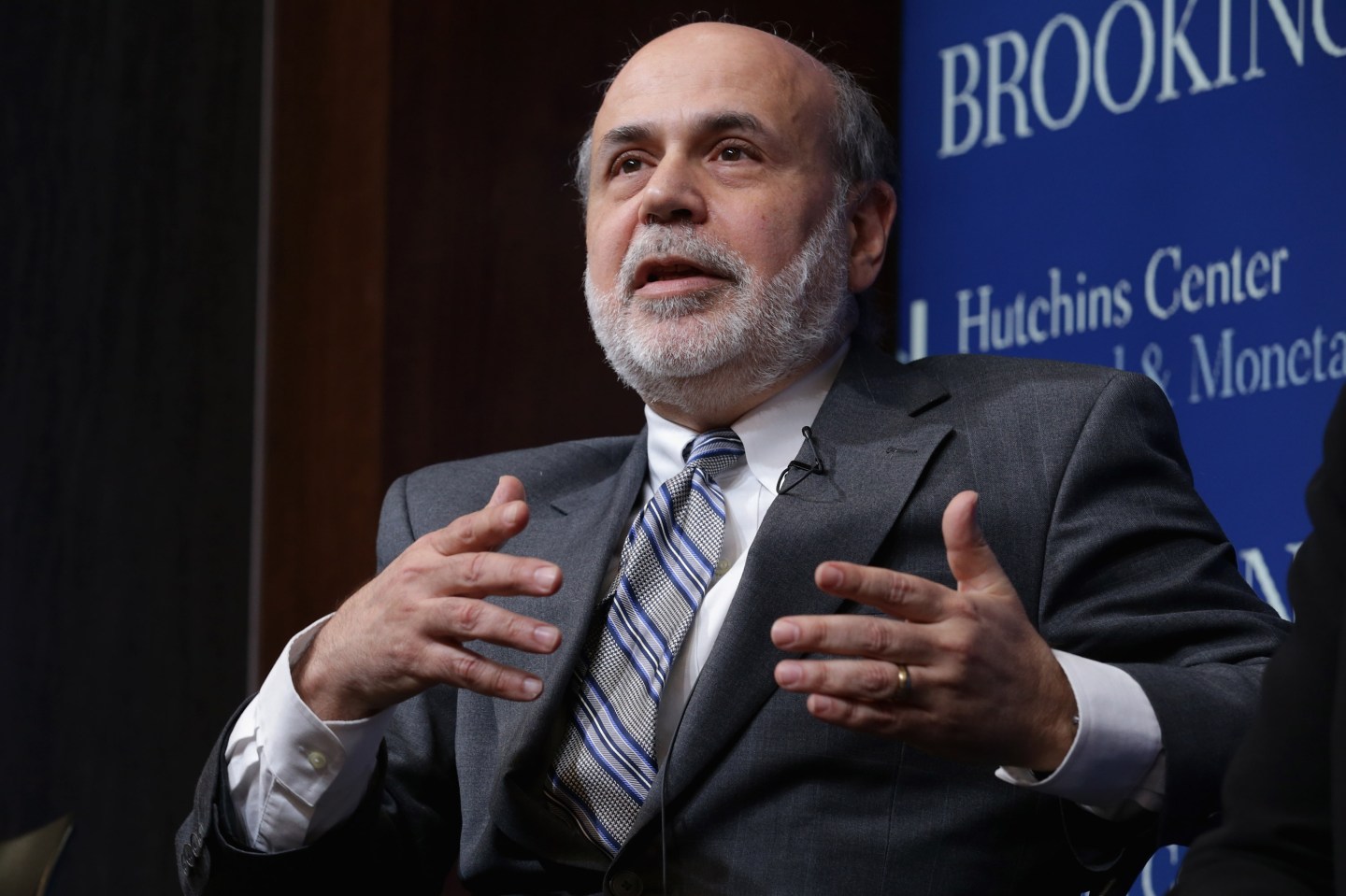
Bernanke, Former Fed Officials Discuss Role Of Federal Reserve In 21st Century
WASHINGTON, DC - MARCH 02: Former Fed Chairman Ben Bernanke participates in a panel discussion at the Brookings Institution March 2, 2015 in Washington, DC. The institution hosted a series of lectures and discussions as party of a program called "The Fed in the 21st century: Independence, governance, and accountability." (Photo by Chip Somodevilla/Getty Images)Photograph by Chip Somodevilla — Getty Images

You’d think it wouldn’t be so hard to spark a little inflation.

But in recent years, the Federal Reserve has consistently fallen short of its goal of a 2% annual inflation rate, despite the fact that it has kept interest rates at historically low levels, and has maintained trillions of dollars of government debt and mortgage-backed securities on its balance sheet.

This inability of the Fed to hit its inflation goal has caused many economic commentators to wonder what the central bank will do once the next recession hits. If the U.S. economy does suffer a recession in the near future, it’s unlikely that the federal funds rate will be high enough that the central bank will be able to stimulate the economy with interest rate cuts anywhere near the magnitude it did following recent downturns.

The situation has economists in general, and former Federal Reserve Chairman Ben Bernanke in particular, worried about what to do when the next recession hits. In a blog post Monday, Bernanke took a look at one of the more exciting (and controversial) ideas for future fed policy: helicopter money.

The term was invented by famed conservative economist Milton Friedman, who used the metaphor of dropping money down from a helicopter to illustrate the fact that a determined central bank could cause inflation if it really wanted to, if by no other means than simply handing out free money. “In theory at least, helicopter money could prove a valuable tool,” Bernanke writes. “In particular, it has the attractive feature that it should work even when more conventional monetary policies are ineffective and the initial level of government debt is high.”

Bernanke famously used the same “helicopter” analogy in a 2002 speech, which critics say gave then-Fed Chair Alan Greenspan the intellectual cover to pursue the loose monetary policies that led to the housing bubble and, ultimately, the 2008 financial crisis.

Fast forward to the present and many people are understandably concerned about giving the central bank the power to just print dollars and hand that money out, as opposed to conducting monetary policy through the banking system as it does now. Many accounts in the media wrongly equate the Fed’s program of quantitative easing (QE), with “printing money,” even though it is really creating bank reserves and using them to buy government debt and mortgage-backed securities from large banks; this stimulates the economy only if the resulting lowering of interest rates encourages banks to lend out more money. One reason the U.S. economy has remained sluggish despite the Fed’s extraordinary actions to address the financial crisis is that its QE program failed to spur a dramatic increase in bank lending.

Helicopter money, however, could finance government spending—or a tax cut—without relying on the banks increasing their lending, and without increasing government debt. But it is difficult to imagine a scenario in which the Federal Reserve could institute a “helicopter drop” of money without coordination with Congress. Sure, the Fed could credit the Treasury Department with extra dollars, but Congress would have to decide how to spend it. The first concern economists who study central banks have with such a program is that this sort of coordination with Congress could undermine the independence of the Federal Reserve, and turn the central bank into an institution that is run by elected officials.

Bernanke shares these concerns but the former Fed Chair does foresee a scenario in which the Fed finances tax cuts or government spending. He writes:

A possible arrangement, set up in advance, might work as follows: Ask Congress to create, by statute, a special Treasury account at the Fed, and to give the Fed . . . the sole authority to “fill” the account, perhaps up to some prespecified limit. At almost all times, the account would be empty; the Fed would use its authority to add funds to the account only when the [Fed] assessed that a [helicopter drop] of specified size was needed to achieve the Fed’s employment and inflation goals.
Should the Fed act, under this proposal, the next step would be for the Congress and the Administration—through the usual, but possibly expedited, legislative process—to determine how to spend the funds (for example, on a tax rebate or on public works). Importantly, the Congress and Administration would have the option to leave the funds unspent. If the funds were not used within a specified time, the Fed would be empowered to withdraw them.

Such an arrangement would enable the Fed to inject money into the system directly, without risking too much coordination between Congress and the central bank. But such an arrangement does raise the question that if Congress can summon the political will to fund a tax cut or stimulus by telling the Fed to print money, why doesn’t it just fund those projects with government debt? After all, there’s no evidence that current levels of federal government debt are high enough that they will slow economic growth or otherwise imperil the American economy—plus borrowing rates remain near historically low levels.
At the same time, one of the dynamics that made the Fed a relatively effective actor following the financial crisis is that it’s relatively shielded from the fallout of unpopular decisions. One could imagine a scenario where the Democratic Party—which is more amenable to using government action to stimulate the economy— gains control of Congress and passes a law giving the Fed the authority to credit Treasury with funds during a time of crisis. Such a scenario would mean that there would not need to be a public debate each time the authority is used, because Congress would have already voted on the issue. It’s difficult to imagine even a Republican administration resisting the ability to cut taxes without raising the deficit or causing inflation to rise beyond where the Fed wants it.
Granted, it’s unlikely that Washington will summon the political will to set up a system to implement a helicopter money drop anytime soon. But with a major figure like Ben Bernanke arguing that it would be wise to at least have such a system in the Fed’s toolkit, you can bet that policy makers will seriously consider it the next time a recession hits.
About the Author
By Chris Matthews
See full bioRight Arrow Button Icon

Latest in Finance

CARACAS, VENEZUELA - A member of the Bolivarian National Armed Forces holds an "Igla-S" rocket launcher during a military ceremony commemorating the 200th anniversary of the presentation of the 'Sword of Peru' to Venezuelan independence hero Simón Bolívar on November 25, 2025, in Caracas, Venezuela. The United States recently designated the "Cartel De Los Soles" (Cartel of The Suns) as a foreign terrorist organization, a group allegedly led by the president of Venezuela, Nicolas Maduro, and which, it is presumed, includes high-ranking members of the Venezuelan government.
EnergyBig Oil
Everything the Trump administration is doing in Venezuela involves oil and regime change—even if the White House won’t admit it
By Jordan BlumDecember 14, 2025
3 hours ago
JPMorganChase CEO Jamie Dimon says AI will eliminate jobs—and that soft skills will be more important than ever.
Future of WorkTech
Jamie Dimon says soft skills like emotional intelligence and communication are vital as AI eliminates roles
By Nino PaoliDecember 14, 2025
6 hours ago
InvestingSports
Big 12 in advanced talks for deal with RedBird-backed fund
By Giles Turner and BloombergDecember 13, 2025
15 hours ago
Spanish Prime Minister Pedro Sánchez often praises the financial and social benefits that immigrants bring to the country.
EuropeSpain
In a continent cracking down on immigration and berated by Trump’s warnings of ‘civilizational erasure,’ Spain embraces migrants
By Suman Naishadham and The Associated PressDecember 13, 2025
17 hours ago
EconomyAgriculture
More financially distressed farmers are expected to lose their property soon as loan repayments and incomes continue to falter
By Jason MaDecember 13, 2025
18 hours ago
InvestingStock
There have been head fakes before, but this time may be different as the latest stock rotation out of AI is just getting started, analysts say
By Jason MaDecember 13, 2025
21 hours ago

Most Popular

placeholder alt text
Economy
Tariffs are taxes and they were used to finance the federal government until the 1913 income tax. A top economist breaks it down
By Kent JonesDecember 12, 2025
2 days ago
placeholder alt text
Success
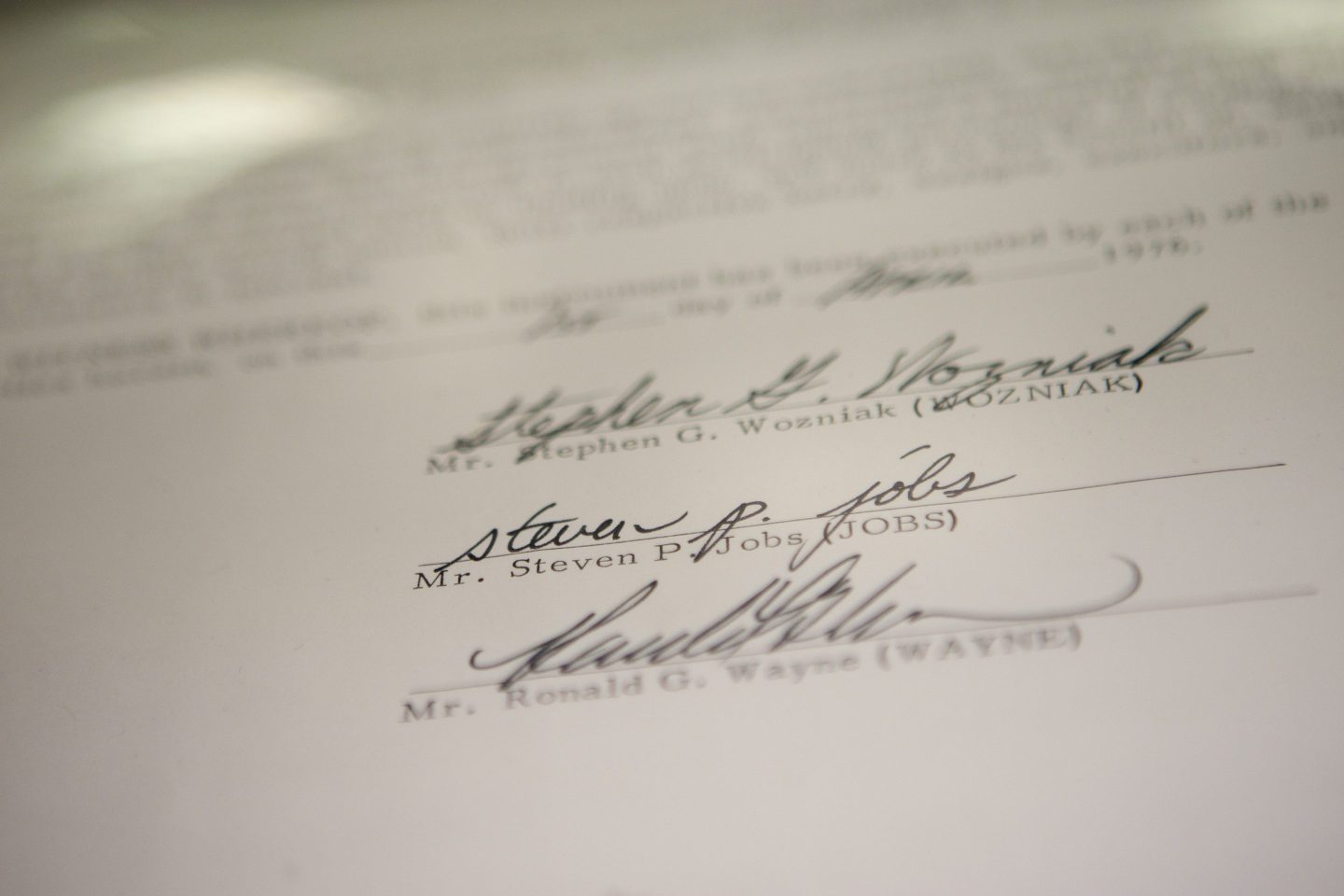
Apple cofounder Ronald Wayne sold his 10% stake for $800 in 1976—today it’d be worth up to $400 billion
By Preston ForeDecember 12, 2025
2 days ago
placeholder alt text
Success
40% of Stanford undergrads receive disability accommodations—but it’s become a college-wide phenomenon as Gen Z try to succeed in the current climate
By Preston ForeDecember 12, 2025
2 days ago
placeholder alt text
Economy
The Fed just ‘Trump-proofed’ itself with a unanimous move to preempt a potential leadership shake-up
By Jason MaDecember 12, 2025
2 days ago
placeholder alt text
Success
Apple CEO Tim Cook out-earns the average American’s salary in just 7 hours—to put that into context, he could buy a new $439,000 home in just 2 days
By Emma BurleighDecember 12, 2025
2 days ago
placeholder alt text
Uncategorized
Transforming customer support through intelligent AI operations
By Lauren ChomiukNovember 26, 2025
18 days ago
Rankings
  • 100 Best Companies
  • Fortune 500
  • Global 500
  • Fortune 500 Europe
  • Most Powerful Women
  • Future 50
  • World’s Most Admired Companies
  • See All Rankings
Sections
  • Finance
  • Leadership
  • Success
  • Tech
  • Asia
  • Europe
  • Environment
  • Fortune Crypto
  • Health
  • Retail
  • Lifestyle
  • Politics
  • Newsletters
  • Magazine
  • Features
  • Commentary
  • Mpw
  • CEO Initiative
  • Conferences
  • Personal Finance
  • Education
Customer Support
  • Frequently Asked Questions
  • Customer Service Portal
  • Privacy Policy
  • Terms Of Use
  • Single Issues For Purchase
  • International Print
Commercial Services
  • Advertising
  • Fortune Brand Studio
  • Fortune Analytics
  • Fortune Conferences
  • Business Development
About Us
  • About Us
  • Editorial Calendar
  • Press Center
  • Work At Fortune
  • Diversity And Inclusion
  • Terms And Conditions
  • Site Map

© 2025 Fortune Media IP Limited. All Rights Reserved. Use of this site constitutes acceptance of our Terms of Use and Privacy Policy | CA Notice at Collection and Privacy Notice | Do Not Sell/Share My Personal Information
FORTUNE is a trademark of Fortune Media IP Limited, registered in the U.S. and other countries. FORTUNE may receive compensation for some links to products and services on this website. Offers may be subject to change without notice.