• Home
  • Latest
  • Fortune 500
  • Finance
  • Tech
  • Leadership
  • Lifestyle
  • Rankings
  • Multimedia

Trendingnow

1

Philanthropy leader at Warren Buffett and Bill Gates’ Giving Pledge says children of billionaires are pushing them to give their wealth away faster

2

Meet a 71-year-old who retired as a radiologist and professor, and now runs a banana-skewer business: ‘I never want to retire. Why would you do that?’

3

Elon Musk’s DOGE swiped $329 million in humanitarian funding from Nepal, leaving a Gen Z tech revolution to transform the budding country’s economy

1

Philanthropy leader at Warren Buffett and Bill Gates’ Giving Pledge says children of billionaires are pushing them to give their wealth away faster

2

Meet a 71-year-old who retired as a radiologist and professor, and now runs a banana-skewer business: ‘I never want to retire. Why would you do that?’

3

Elon Musk’s DOGE swiped $329 million in humanitarian funding from Nepal, leaving a Gen Z tech revolution to transform the budding country’s economy
Xiaomi

Smart Rice Cookers – the Key to the Connected Chinese Home?

By
Scott Cendrowski
Scott Cendrowski
Down Arrow Button Icon
By
Scott Cendrowski
Scott Cendrowski
Down Arrow Button Icon
March 29, 2016, 7:48 AM ET
Courtesy of Xiaomi
Google source logo
Add Fortune on Google for similar content.

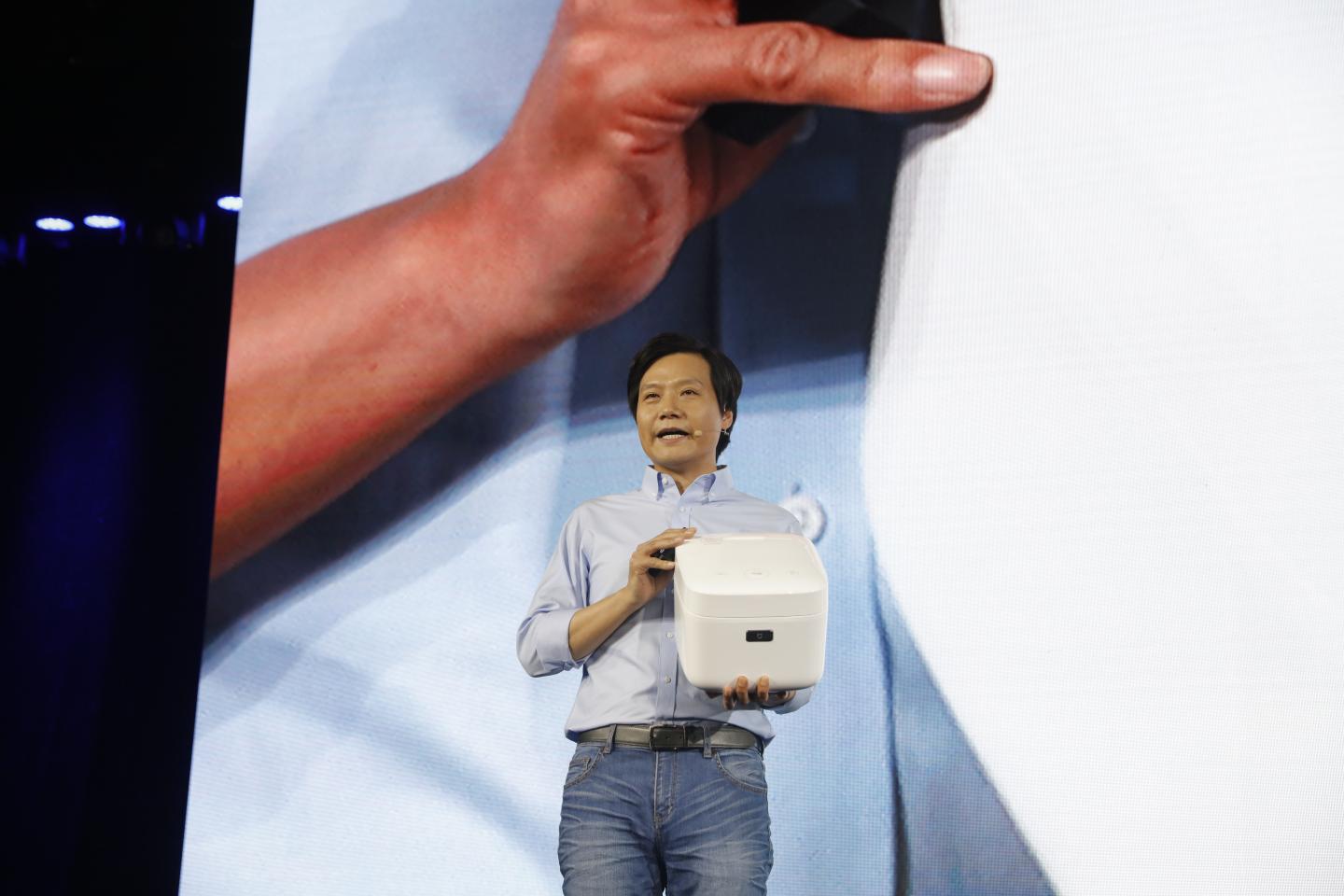
Once the world’s highest valued startup, the fastest growing smartphone maker, and still a curiosity across the world, the $45-billion Xiaomi spent a solid half an hour today talking about its new pressurized rice cooker.

Rice cooker.

The new product was unveiled as part of a new branding for the dozens of companies Xiaomi has invested in, or plain created.

Observers have always called them part of Xiaomi’s “ecosystem.” Today Xiaomi newly branded it as that: the Mi Ecosystem.

Ever since Xiaomi raised money valuing the startup at $45 billion in late 2014, the company’s executives have presented Xiaomi as an Internet services firm, not just a maker of smartphones.

The ecosystem is a large part of that: a universe of devices, connecting back to Xiaomi, which include a miniture Segway, power strip, air purifier, water purifier, portable battery charger, electric bicycle, among others. Xiaomi has created twenty-nine companies over the past two years and twenty of them now produce products, it said. Seven have annual sales over 100 million yuan ($15.5 million), and two have sales over 1 billion ($150 million). “We not only make excellent products, we make excellent startups as well,” founder and CEO Lei Jun said.

The company today outlined its focus for those disparate devices. The message: Xiaomi wants to create a smart home.

At a press conference, CEO and founder Lei Jun spent a half an hour on Xiaomi’s power strip and battery charger. He detailed the battery charger’s beautiful brushed aluminum—and how a group of Chinese brands had already copied it.

Another executive exhaustively detailed ricecookers.

China’s failure to produce its own high quality rice cooker is almost a national embarrassment. The state press has highlighted Chinese tourists traveling back from Japan grasping Japanese brands costing several hundred dollars. Xiaomi’s costs $150 and can be controlled via Xiaomi’s App.

The key to undertanding Xiaomi’s focus for its ‘ecosystem’ lies in the Chinese name, which is different from the English.

The Chinese name, Mi Jia, is a shortened form of Xiaomi Smart Home. Since almost everything Xiaomi makes is only sold in China, the Chinese name carries more meaning. (Left unsaid at the event: why Xiaomi sells the vast majority of its products in China. Intellectual property concerns remain a hindrance to expansion.)

As Xiaomi’s smartphone growth slows down—IDC says Xiaomi phones sales grew 23% last year, to 71 million, about the same growth rate as Apple, which sold 232 million phones—its ecosystem will become more important.

‘Ecosystem’ sales increased by 220% last year over 2014, though the total amount is still estimated to be small: less than 10% of Xiaomi’s total revenues.

The question now is: can Xiaomi be the first company ever to create a connected home?

It’s trying.

About the Author
By Scott Cendrowski
See full bioRight Arrow Button Icon

Latest in International


Most Popular

Fortune Secondary Logo
Rankings
  • 100 Best Companies
  • Fortune 500
  • Global 500
  • Fortune 500 Europe
  • Most Powerful Women
  • World's Most Admired Companies
  • See All Rankings
  • Lists Calendar
Sections
  • Finance
  • Fortune Crypto
  • Features
  • Leadership
  • Health
  • Commentary
  • Success
  • Retail
  • Mpw
  • Tech
  • Lifestyle
  • CEO Initiative
  • Asia
  • Politics
  • Conferences
  • Europe
  • Newsletters
  • Personal Finance
  • Environment
  • Magazine
  • Education
Customer Support
  • Frequently Asked Questions
  • Customer Service Portal
  • Privacy Policy
  • Terms Of Use
  • Single Issues For Purchase
  • International Print
Commercial Services
  • Advertising
  • Fortune Brand Studio
  • Fortune Analytics
  • Fortune Conferences
  • Business Development
  • Group Subscriptions
About Us
  • About Us
  • Press Center
  • Work At Fortune
  • Terms And Conditions
  • Site Map
  • About Us
  • Press Center
  • Work At Fortune
  • Terms And Conditions
  • Site Map
  • Facebook icon
  • Twitter icon
  • LinkedIn icon
  • Instagram icon
  • TikTok icon
  • YouTube icon

    Latest in International


    Most Popular

    © 2026 Fortune Media IP Limited. All Rights Reserved. Use of this site constitutes acceptance of our Terms of Use and Privacy Policy | CA Notice at Collection and Privacy Notice | Do Not Sell/Share My Personal Information
    FORTUNE is a trademark of Fortune Media IP Limited, registered in the U.S. and other countries. FORTUNE may receive compensation for some links to products and services on this website. Offers may be subject to change without notice.