Ryan Boatright was in trouble with the National Collegiate Athletic Association even before he played his first game as a freshman point guard for the University of Connecticut Huskies.
Boatright had arrived at UConn in the fall of 2011 from Aurora, Ill., a town of 200,000 an hour west of Chicago, with a per capita income that ranks it 261st among Illinois cities. His mother, Tanesha Boatright, was a single mom struggling to raise four children; her job as a customer service representative for a health care company, earned her a paycheck that was not much better than minimum wage. Her father had been a well-known local track coach, and she’d run track herself in high school, before she got pregnant with Ryan when she was 17. It was obvious early on that her son was also athletically gifted; despite his lack of size–he never grew taller than 5 foot 10–basketball was his game, and both he and his mother came to see the sport as his ticket to a better life, not just for himself but for his family. When he was 13, he attended a basketball camp run by Tim Floyd, then the basketball coach at the University of Southern California. Floyd became so enamored with Boatright that he offered him a scholarship on the spot. (Floyd resigned a few years later, after being tarred by a recruiting scandal.) At East Aurora High School, Boatright started as a freshman; three years later, as the team’s senior point guard, he averaged over 30 points a game and was named Illinois’s co–Mr. Basketball.

Like many top high school athletes, Boatright also played for a local Amateur Athletic Union (AAU) team. His coach, Reggie Rose, the brother of Chicago Bulls star Derrick Rose, was a long-standing friend of his mother’s, and over time he became a father figure to Boatright. During a particularly stressful period in the Boatright household, Rose got Ryan out of Aurora, taking him to California, where he spent several days working out with other good players—another thing the best high school players commonly do. When Tanesha bought a used car, a 2008 Chevrolet Impala that she needed to get to her job, Rose helped her with some of the payments. And when Boatright went on his recruiting visits—he made four trips in all, including one to the UConn campus in Storrs, Conn.—Rose covered the cost of an additional plane ticket so that Tanesha could go too. Most people would view these as acts of generosity, a friend helping out a friend with fewer resources. But the NCAA, which had been tipped off about the money Rose gave Tanesha, saw them as potential—nay, likely—violations of its “amateurism” rules. That’s why Boatright was in trouble.
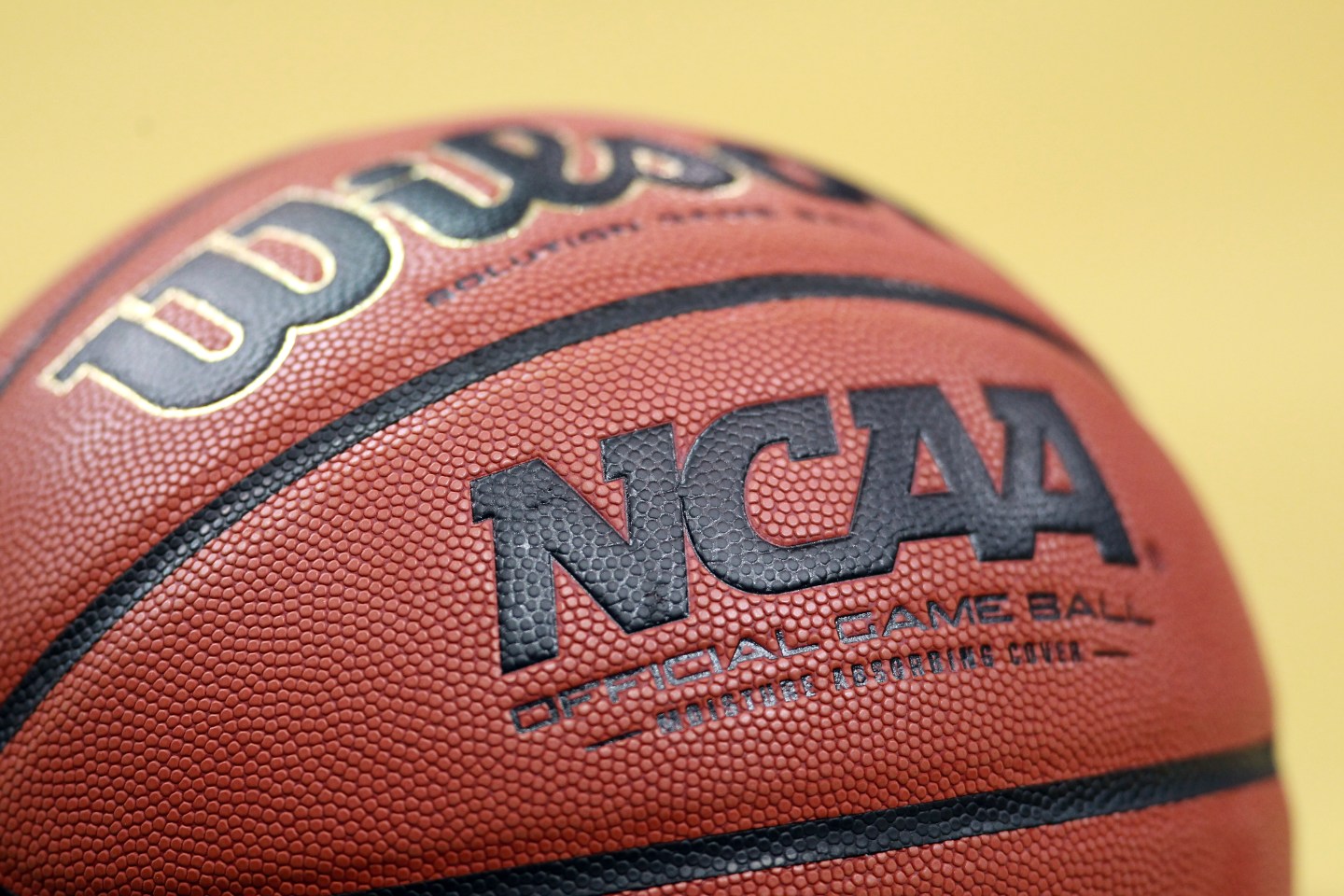
Since the early 1950s, the NCAA has served as the powerful overlord of college sports, with one central tenet: that college athletes, whether gymnasts or quarterbacks, must be unpaid amateurs, for whom sports is little more than a sideline to their academic pursuits. As the NCAA puts it in its bylaws, “Student participation in intercollegiate athletics is an avocation, and student-athletes should be protected from exploitation by professional and commercial enterprises.”
The NCAA’s long-standing insistence that amateurism is the “core value” of college sports has always been more than a little hypocritical— as has the idea that the NCAA was somehow preventing (as opposed to enabling) their exploitation. Has there ever really been a time when the athletes in the so‑called revenue sports—football and men’s basketball— that are the focus of our book Indentured weren’t expected to put their sport first and their studies a distant second, while helping to bring glory and money to their school? Has there ever been a time when college athletes weren’t at some level exploited? Long before coaches made millions and the NCAA turned its annual basketball championship into the financial windfall known as March Madness, critics have complained about the pervasive commercialism of college athletics.
But with the NCAA now generating over $900 million in annual revenue; with athletic conferences owning their own lucrative all-sports cable networks; with coaches making $5 million (Jim Harbaugh, Michigan football) or $7 million (Nick Saban, Alabama football) or even $10 million (Mike Krzyzewski, Duke basketball); and with ESPN paying $7.3 billion over 12 years for the rights to the new college football playoff, the idea that the players who make all this possible should not much more than a scholarship isn’t just hypocritical. It’s offensive. An economist named Dan Rascher, who is a character in Indentured, estimates that college sports in its totality generates some $13 billion, which, incredibly, is more than the most lucrative professional sports league in America, the National Football League.
Before we go any further, a few facts: More than 460,000 NCAA athletes participate in 24 sports across its three divisions. Supporters of the status quo like to point out that the system as currently constructed maximizes opportunities for the largest number of athletes—think of all the scholarships for tennis players and swimmers. Indentured is focused on the 15,000 athletes playing top-level football and nearly 5,500 in Division I men’s basketball, because they produce the revenue that pays for everything from those expensive football coaches’ salaries to track and field scholarships. Indeed, most schools’ athletic department budgets remain separate from central administration. But while the college sports establishment squeezes every last dollar out of their marquee athletes—weekday night games, schools jumping from conference to conference, and a rash of corporate sponsors—they must remain amateurs, while a little more than 5% of them go on to careers in the NBA or NFL.
The NCAA has consistently refused to acknowledge this hypocrisy; instead, it has held tightly to the centrality of amateurism, even as it has encouraged the commercialization of college sports in every other way imaginable. And over the years, it has enforced its amateurism rules with a Javert-like zealotry. Until very recently, athletes could receive nothing for playing their sports beyond their athletic scholarship, plus a Pell Grant if they were poor enough to qualify. (As this book details, the NCAA has recently allowed schools to add a stipend to cover the “full cost of attendance” beyond the scholarship itself.) Anything else these athletes receive that the NCAA deems to be the result of their skill or fame, no matter how inconsequential, is considered a violation of its rules and is therefore punishable.
The NCAA eventually allowed Boatright to play for UConn–but only after it made his mother account for the $8,000 in gifts from Rose, and Boatright had agreed to repay $4,500 in benefits. He missed nine games of the 2012 season.
This article is excerpted from INDENTURED: The Inside Story of the Rebellion Against the NCAA by Joe Nocera and Ben Strauss. Reprinted with permission of Portfolio, an imprint of Penguin Publishing Group, a division of Penguin Random House LLC. Copyright 2016 by Joe Nocera and Ben Strauss.