• Home
  • Latest
  • Fortune 500
  • Finance
  • Tech
  • Leadership
  • Lifestyle
  • Rankings
  • Multimedia
TechCities

China’s ZTE Under Investigation in Nigerian Security Network Failure

By
David Z. Morris
David Z. Morris
Down Arrow Button Icon
By
David Z. Morris
David Z. Morris
Down Arrow Button Icon
February 16, 2016, 11:33 AM ET
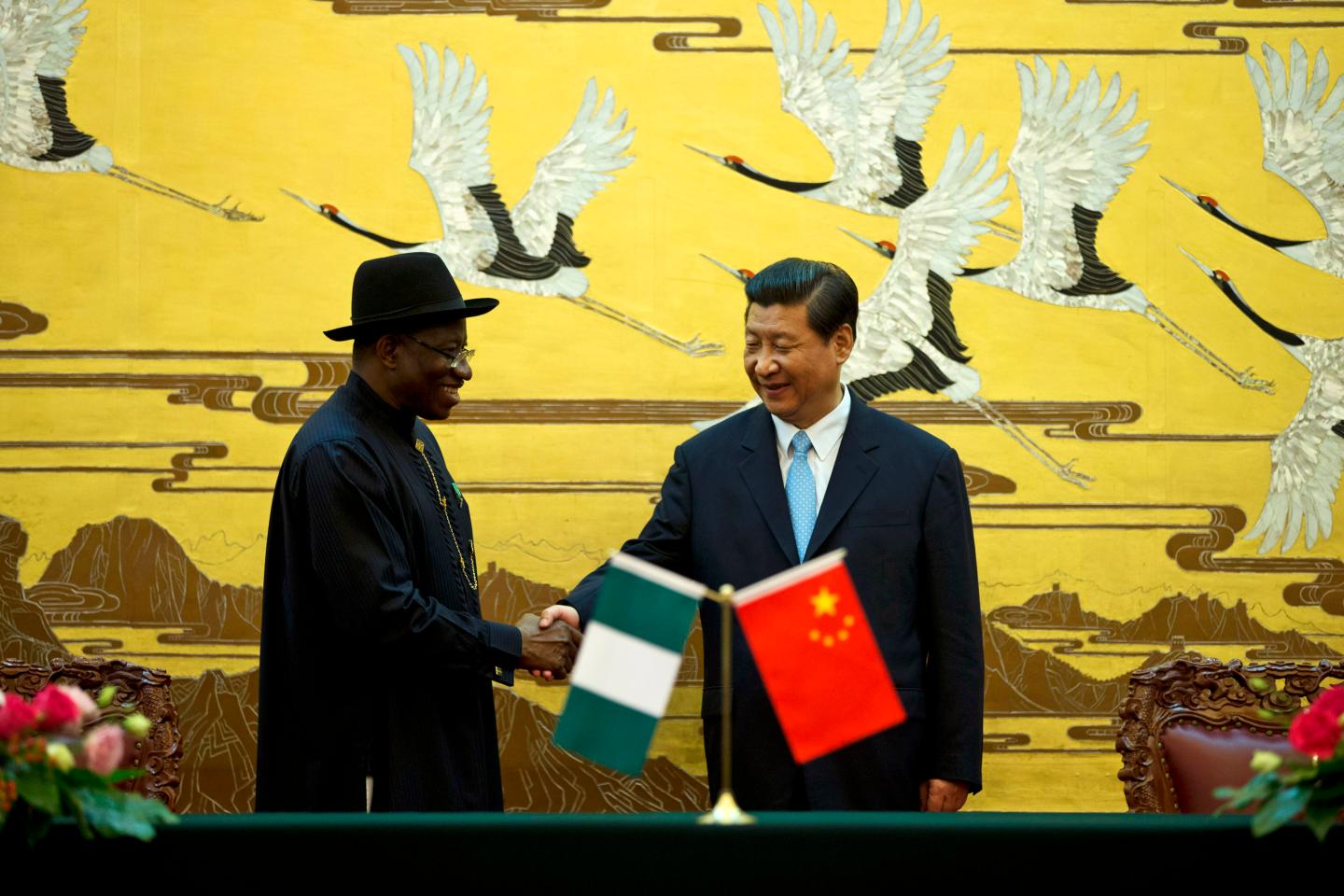
Chinese President Xi shakes hands with Nigerian President Jonathan after their ministers signed agreements in Beijing
Chinese President Xi Jinping (R) shakes hands with Nigerian President Goodluck Jonathan after their countries' ministers signed agreements during a signing ceremony at the Great Hall of the People in Beijing July 10, 2013. REUTERS/Alexander F. Yuan/Pool (CHINA - Tags: POLITICS) - RTX11ILCPhotograph by Reuters

Chinese investment across the developing world has been a source of angst for U.S. business watchers over the past decade— a symbol of China’s growing global reach, and a tally of what can look like missed opportunities. But the story of one major project’s descent from friendly photo-ops to acrimony and legislative hearings shows that those investment efforts often don’t match the hype (or anxiety) surrounding them.

In 2010, Nigeria contracted China’s ZTE Corporation to install a security communications network. The project included closed-circuit cameras intended to improve anti-terror monitoring in Abuja and Lagos, where attacks from groups like Boko Haram are a looming daily threat. But six years later, the $470 million National Public Security Communication System has come to next to nothing, with the system incomplete and effectively mothballed. Terror attacks and crime have continued, unmonitored.

In late January, a Nigerian congressional panel began hearings to determine what turned the half-billion dollar effort into a boondoggle of exploding batteries and cameras that see nothing. They heard he said-she said testimony faulting, on the one hand, slipshod work by ZTE, and on the other, government refusal to fund and maintain the system.

Get Data Sheet, Fortune’s technology newsletter.

Though no official findings have yet emerged, the Nigerian media have pointed fingers at Nigerian leadership who both neglected due diligence and covered up evidence of substandard work and missing supplies for years. The government’s agreement with ZTE was reached without a competitive bidding process, and reportedly contained language prohibiting public discussion of many aspects of the project. (ZTE did not respond to Fortune’s request for comment on this story.)

According to Ed Marsh, a consultant who helps global companies work in Africa, the CCTV scandal shows how corruption has hampered Nigeria’s efforts to upgrade unreliable roads, power grids, and data services.

“Up to this point, with very few exceptions,” says Marsh, “The money that has been putatively earmarked for infrastructure has been squandered. There’s often [just] enough [built] to provide plausible deniability.”

Nigeria is Africa’s biggest economy, with a growing middle class, booming film industry (known as Nollywood), and a promising tech sector. It’s a place, Marsh attests, that many major companies would like to operate—if the wires and roads were more reliable. Marsh describes inconsistent power making basic computing difficult, even in high-end urban hotels. Many Nigerians carry multiple cell phones, because any one provider’s towers might go out unexpectedly. Both urban and rural transportation systems are chaotic and decrepit.

For a time, it seemed like Chinese investment could be the answer. But Nigeria’s security system isn’t the only case in which that dream has gone sour. A Chinese-built hospital in Angola developed serious structural problems only four years after construction, and a Zambian road crumbled just as quickly. Huawei was convicted of bribery in connection with a telecom project in Algeria, and banned from bidding on contracts there for two years. Chinese firms have also been banned from bidding on World Bank projects because of corrupt practices.

There’s a dangerous synergy, it seems, between some African countries’ own endemic corruption and a Chinese business culture that, the Economist writes, “cares little about rules and regulations.” Both systemic corruption and the collapse of substandard roads and buildings are as common on mainland China as they are in Africa. Strict U.S. laws against engaging in corruption abroad are part of why U.S. companies have been slower to do business on the continent.

For more on tech investment in Africa, watch our video.

Despite that spotty track record, it seems Africa just can’t quit China, largely because many Chinese projects in Africa are funded by large loans from China’s Export-Import (Exim) Bank. Chinese Exim funds have at times exceeded those of the World Bank, and can be simply irresistible to cash-strapped developing nations.

“African governments have no money for telecom projects and so China is using its financial muscle to get the contracts through loans,” Amos Kalunga, an analyst for the Computer Society of Zambia, told PC Advisor. The Nigerian CCTV project was backed by a Chinese Exim loan.

But Marsh says that Nigeria’s ambitious urbanites are beginning to demand a higher standard for infrastructure projects and oversight, because they know development is crucial to their global future.

“A young, increasingly urbane middle class population has tasted the opportunity,” says Marsh, “And they don’t want to give it up.”

The most concrete sign of this sentiment is the election last March of President Muhammadu Buhari, who has a strong reputation for honesty (literally strong—he was briefly the nation’s military dictator in the mid-‘80s) and has kicked off a broad anticorruption initiative. The findings of the ZTE inquiry may become an early measure of Buhari’s effectiveness at changing the game.

About the Author
By David Z. Morris
See full bioRight Arrow Button Icon

Latest in Tech

Finance
Lorem ipsum dolor sit amet, consectetur adipiscing elit, sed do eiusmod tempor incididunt ut labore et dolore magna aliqua. Ut enim ad minim veniam
By Fortune Editors
October 20, 2025
Finance
Lorem ipsum dolor sit amet, consectetur adipiscing elit, sed do eiusmod tempor incididunt ut labore et dolore magna aliqua. Ut enim ad minim veniam
By Fortune Editors
October 20, 2025
Finance
Lorem ipsum dolor sit amet, consectetur adipiscing elit, sed do eiusmod tempor incididunt ut labore et dolore magna aliqua. Ut enim ad minim veniam
By Fortune Editors
October 20, 2025
Finance
Lorem ipsum dolor sit amet, consectetur adipiscing elit, sed do eiusmod tempor incididunt ut labore et dolore magna aliqua. Ut enim ad minim veniam
By Fortune Editors
October 20, 2025
Finance
Lorem ipsum dolor sit amet, consectetur adipiscing elit, sed do eiusmod tempor incididunt ut labore et dolore magna aliqua. Ut enim ad minim veniam
By Fortune Editors
October 20, 2025
Finance
Lorem ipsum dolor sit amet, consectetur adipiscing elit, sed do eiusmod tempor incididunt ut labore et dolore magna aliqua. Ut enim ad minim veniam
By Fortune Editors
October 20, 2025

Most Popular

Finance
Lorem ipsum dolor sit amet, consectetur adipiscing elit, sed do eiusmod tempor incididunt ut labore et dolore magna aliqua. Ut enim ad minim veniam
By Fortune Editors
October 20, 2025
Finance
Lorem ipsum dolor sit amet, consectetur adipiscing elit, sed do eiusmod tempor incididunt ut labore et dolore magna aliqua. Ut enim ad minim veniam
By Fortune Editors
October 20, 2025
Finance
Lorem ipsum dolor sit amet, consectetur adipiscing elit, sed do eiusmod tempor incididunt ut labore et dolore magna aliqua. Ut enim ad minim veniam
By Fortune Editors
October 20, 2025
Finance
Lorem ipsum dolor sit amet, consectetur adipiscing elit, sed do eiusmod tempor incididunt ut labore et dolore magna aliqua. Ut enim ad minim veniam
By Fortune Editors
October 20, 2025
Finance
Lorem ipsum dolor sit amet, consectetur adipiscing elit, sed do eiusmod tempor incididunt ut labore et dolore magna aliqua. Ut enim ad minim veniam
By Fortune Editors
October 20, 2025
Finance
Lorem ipsum dolor sit amet, consectetur adipiscing elit, sed do eiusmod tempor incididunt ut labore et dolore magna aliqua. Ut enim ad minim veniam
By Fortune Editors
October 20, 2025
Fortune Secondary Logo
Rankings
  • 100 Best Companies
  • Fortune 500
  • Global 500
  • Fortune 500 Europe
  • Most Powerful Women
  • World's Most Admired Companies
  • See All Rankings
  • Lists Calendar
Sections
  • Finance
  • Fortune Crypto
  • Features
  • Leadership
  • Health
  • Commentary
  • Success
  • Retail
  • Mpw
  • Tech
  • Lifestyle
  • CEO Initiative
  • Asia
  • Politics
  • Conferences
  • Europe
  • Newsletters
  • Personal Finance
  • Environment
  • Magazine
  • Education
Customer Support
  • Frequently Asked Questions
  • Customer Service Portal
  • Privacy Policy
  • Terms Of Use
  • Single Issues For Purchase
  • International Print
Commercial Services
  • Advertising
  • Fortune Brand Studio
  • Fortune Analytics
  • Fortune Conferences
  • Business Development
  • Group Subscriptions
About Us
  • About Us
  • Press Center
  • Work At Fortune
  • Terms And Conditions
  • Site Map
  • About Us
  • Press Center
  • Work At Fortune
  • Terms And Conditions
  • Site Map
  • Facebook icon
  • Twitter icon
  • LinkedIn icon
  • Instagram icon
  • Pinterest icon

Latest in Tech

AstraZeneca CFO Aradhana Sarin
BankingCFO Daily
How AstraZeneca’s 17,000 AI-certified employees are helping it reach a ‘stretch goal’ of $80 billion in revenue
By Sheryl EstradaApril 30, 2026
1 hour ago
agentic
CommentaryAI agents
Why your data infrastructure — not your AI model — will determine whether Agentic AI scales
By Jeffrey Sonnenfeld, Stephen Henriques, Catherine Dai and Zander JeinthanuttkanontApril 30, 2026
2 hours ago
The startup that wants to give surgeons X-ray vision
NewslettersTerm Sheet
The startup that wants to give surgeons X-ray vision
By Allie GarfinkleApril 30, 2026
2 hours ago
Google Cloud CEO Thomas Kurian at Fortune Brainstorm AI 2025 in San Francisco. (Photo: Stuart Isett/Fortune)
NewslettersFortune Tech
Google Cloud is almost one-fifth of Alphabet’s business
By Andrew NuscaApril 30, 2026
3 hours ago
Photo: Donald Trump
Big TechMarkets
With no end in sight, Trump considers new options in Iran war—including the ‘Dark Eagle’ hypersonic missile
By Jim EdwardsApril 30, 2026
3 hours ago
Google Cloud revenue is now 18% of Alphabet’s business. Is this the beginning of the end of Google’s search identity?
Big TechGoogle
Google Cloud revenue is now 18% of Alphabet’s business. Is this the beginning of the end of Google’s search identity?
By Alexei OreskovicApril 29, 2026
12 hours ago

Most Popular

Apple cofounder Ronald Wayne—whose stake would be worth up to $400 billion had he not sold it in 1976—says that at 91, he has no regrets
Success
Apple cofounder Ronald Wayne—whose stake would be worth up to $400 billion had he not sold it in 1976—says that at 91, he has no regrets
By Preston ForeApril 27, 2026
3 days ago
Jamie Dimon gets candid about national debt: ‘There will be a bond crisis, and then we’ll have to deal with it’
Economy
Jamie Dimon gets candid about national debt: ‘There will be a bond crisis, and then we’ll have to deal with it’
By Eleanor PringleApril 29, 2026
1 day ago
‘The cost of compute is far beyond the costs of the employees’: Nvidia executive says right now AI is more expensive than paying human workers
AI
‘The cost of compute is far beyond the costs of the employees’: Nvidia executive says right now AI is more expensive than paying human workers
By Sasha RogelbergApril 28, 2026
2 days ago
‘They left me no choice’: Powell isn’t going anywhere—blocking Trump from another Fed appointee
Banking
‘They left me no choice’: Powell isn’t going anywhere—blocking Trump from another Fed appointee
By Eva RoytburgApril 29, 2026
19 hours ago
‘Take the money and run’: Johns Hopkins economist Steve Hanke on why the UAE quit OPEC
Energy
‘Take the money and run’: Johns Hopkins economist Steve Hanke on why the UAE quit OPEC
By Shawn TullyApril 29, 2026
1 day ago
More than two-thirds of U.S. schools say they’re unable to afford the cost of student free lunch—and MAHA’s dietary guidelines may make it worse
Economy
More than two-thirds of U.S. schools say they’re unable to afford the cost of student free lunch—and MAHA’s dietary guidelines may make it worse
By Sasha RogelbergApril 29, 2026
1 day ago

© 2026 Fortune Media IP Limited. All Rights Reserved. Use of this site constitutes acceptance of our Terms of Use and Privacy Policy | CA Notice at Collection and Privacy Notice | Do Not Sell/Share My Personal Information
FORTUNE is a trademark of Fortune Media IP Limited, registered in the U.S. and other countries. FORTUNE may receive compensation for some links to products and services on this website. Offers may be subject to change without notice.