• Home
  • Latest
  • Fortune 500
  • Finance
  • Tech
  • Leadership
  • Lifestyle
  • Rankings
  • Multimedia
CommentaryOil

How America Could Win Even When Oil Prices Crash

By
Michael Webber
Michael Webber
Down Arrow Button Icon
By
Michael Webber
Michael Webber
Down Arrow Button Icon
January 24, 2016, 9:00 AM ET
Oil-Bust Veterans Brace For Storm Unseen By Shale-Boom Neophytes
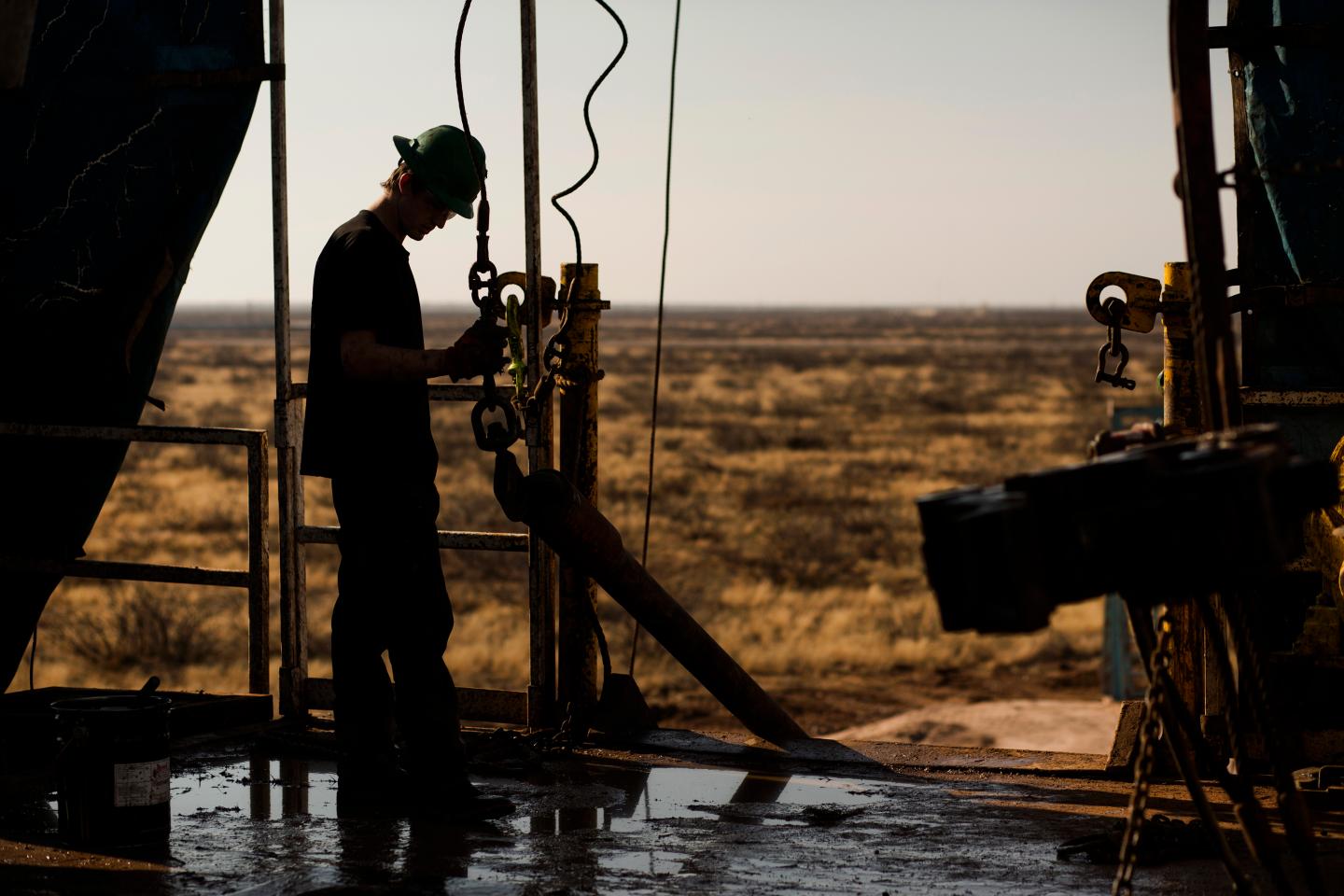
A worker waits to connect a drill bit on Endeavor Energy Resources LP's Big Dog Drilling Rig 22 in the Permian basin outside of Midland, Texas, U.S., on Friday, Dec. 12, 2014. Photographer: Brittany Sowacke/Bloomberg via Getty ImagesPhotograph by Brittany Sowacke — Bloomberg via Getty Images

Many Americans aren’t sure what to think about the ongoing collapse in oil prices. They love lower prices at the pump, but continued market volatility, combined with widespread layoffs in the oil patch and baffling statements from Saudi officials about ‘irrational’ oil prices, are confusing. Is this is good news or bad news?

The truth is that sudden price spikes up or down are bad. While low prices are convenient economically, a sudden and precipitous drop in prices can be hard for markets to accommodate.

That said, for the average citizen, the recent drop in gasoline prices is like a pay raise and tax cut combined. As a nation, what’s important now is to seize the moment and invest in our future.

We can’t afford to squander dividends gained from lower prices on monster trucks and SUVs, like we did the last time this happened in the 1990s.

Low prices already have triggered a wave of investment in energy-intensive industries, such as chemical manufacturing, boosted dividends for refiners, and expanded profits for airlines. But that good news is coupled with the bad news of losses from lenders who are over-exposed to the energy sector and oilfield workers who have to look for new jobs.

We need policy changes to make the most out of the confusion of the current situation – and to avoid the energy mistakes of the past.

For too long, the energy debate that has raged in our country has broken down into two ideological camps: those who believe in low production and low consumption, and those who believe in high production and high consumption. Consequently, for decades, America chose the worst of both—high consumption combined with low production. That meant we suffered the national security and environmental impacts of high consumption, but reaped few economic benefits from low production.

But after 40 years of a downward slide in our energy situation from the 1970s through the 2000s — a period of declining production, increasing consumption, increasing imports, and increasing CO₂ emissions — things have turned around. U.S. national energy consumption peaked around 2005 and domestic production is resurgent. Consequently, imports, consumption and emissions are all down. We’re now reaping the best of both worlds, combing the economic benefits of high production with the environmental and national security enhancements of low consumption.

Over the past decade, high prices have triggered investments in the oil and gas sector to the tune of hundreds of billions of dollars. That meant drilling and jobs. But it also meant man-camps and rural communities over-run by oilfield trucks. The revitalized production strengthened America’s negotiating position with Iran and put the nation on track to solve many of its woes associated with oil imports. It also helped boost renewable fuels and energy efficiency. So high prices are good. Except when they are a drag on the economy and make life more expensive for consumers. Which is all of us.

While energy consumption overall is lower than its peak a decade ago, it has creeped upwards the last two years as the economy grew and energy stayed cheap. That puts many environmental goals into slow gear as people quit buying efficient compact cars to buy large SUVs and trucks again. This reminder about how price drives our consumption patterns is evidence that passing strict fuel economy and lightbulb standards nearly a decade ago when energy prices were high was smart policy.

So what should we do to not blow it this time? Several policy opportunities are ripe for implementation:

  • The U.S. should step up government investments in R&D to drive down operational costs and help keep domestic producers competitive.
  • In parallel with investments in energy production, we should tighten efficiency standards for buildings and appliances because lower energy costs gives us the extra money we need to install better windows and build better engines. Doing so now while we can afford it also puts us in position to mitigate the effects of the next energy price spike, which is surely around the corner.
  • We also need to invest heavily in environmental management for oil and gas producers, who are spending nearly $2 billion per year on water management and even more on fixing leaky infrastructure. Ramping up investments with state and federal support for R&D and pilot programs is a growth opportunity. Doing so makes the industry cleaner and more efficient, improves their social license to operate, and gives us a technology advantage we can export to water-stressed oil-producing regions of the world such as the Middle East and North Africa.
  • Finally, we should levy a price on carbon while prices are low so that the economic impact is blunted. That would go a long way towards establishing a market-based framework for meeting our goals to reduce CO₂ emissions, which in turn would raise the US’ international standing, and give us a jumpstart on meeting agreed-upon targets.

Low oil and gas prices are a mixed bag for the American economy and confounding to consumers. In the short run lower prices make it tricky for markets to adjust. But if we use this opportunity to implement some long-lasting and forward-thinking policies, the confusion wrought by the present instability can be a positive turning point for the nation.

Michael E. Webber is deputy director of the Energy Institute at the University of Texas at Austin. His book Thirst for Power: Energy, Water and Human Survival is due to be published by Yale University Press in April 2016.

About the Author
By Michael Webber
See full bioRight Arrow Button Icon

Latest in Commentary

Finance
Lorem ipsum dolor sit amet, consectetur adipiscing elit, sed do eiusmod tempor incididunt ut labore et dolore magna aliqua. Ut enim ad minim veniam
By Fortune Editors
October 20, 2025
Finance
Lorem ipsum dolor sit amet, consectetur adipiscing elit, sed do eiusmod tempor incididunt ut labore et dolore magna aliqua. Ut enim ad minim veniam
By Fortune Editors
October 20, 2025
Finance
Lorem ipsum dolor sit amet, consectetur adipiscing elit, sed do eiusmod tempor incididunt ut labore et dolore magna aliqua. Ut enim ad minim veniam
By Fortune Editors
October 20, 2025
Finance
Lorem ipsum dolor sit amet, consectetur adipiscing elit, sed do eiusmod tempor incididunt ut labore et dolore magna aliqua. Ut enim ad minim veniam
By Fortune Editors
October 20, 2025
Finance
Lorem ipsum dolor sit amet, consectetur adipiscing elit, sed do eiusmod tempor incididunt ut labore et dolore magna aliqua. Ut enim ad minim veniam
By Fortune Editors
October 20, 2025
Finance
Lorem ipsum dolor sit amet, consectetur adipiscing elit, sed do eiusmod tempor incididunt ut labore et dolore magna aliqua. Ut enim ad minim veniam
By Fortune Editors
October 20, 2025

Most Popular

Finance
Lorem ipsum dolor sit amet, consectetur adipiscing elit, sed do eiusmod tempor incididunt ut labore et dolore magna aliqua. Ut enim ad minim veniam
By Fortune Editors
October 20, 2025
Finance
Lorem ipsum dolor sit amet, consectetur adipiscing elit, sed do eiusmod tempor incididunt ut labore et dolore magna aliqua. Ut enim ad minim veniam
By Fortune Editors
October 20, 2025
Finance
Lorem ipsum dolor sit amet, consectetur adipiscing elit, sed do eiusmod tempor incididunt ut labore et dolore magna aliqua. Ut enim ad minim veniam
By Fortune Editors
October 20, 2025
Finance
Lorem ipsum dolor sit amet, consectetur adipiscing elit, sed do eiusmod tempor incididunt ut labore et dolore magna aliqua. Ut enim ad minim veniam
By Fortune Editors
October 20, 2025
Finance
Lorem ipsum dolor sit amet, consectetur adipiscing elit, sed do eiusmod tempor incididunt ut labore et dolore magna aliqua. Ut enim ad minim veniam
By Fortune Editors
October 20, 2025
Finance
Lorem ipsum dolor sit amet, consectetur adipiscing elit, sed do eiusmod tempor incididunt ut labore et dolore magna aliqua. Ut enim ad minim veniam
By Fortune Editors
October 20, 2025
Fortune Secondary Logo
Rankings
  • 100 Best Companies
  • Fortune 500
  • Global 500
  • Fortune 500 Europe
  • Most Powerful Women
  • World's Most Admired Companies
  • See All Rankings
  • Lists Calendar
Sections
  • Finance
  • Fortune Crypto
  • Features
  • Leadership
  • Health
  • Commentary
  • Success
  • Retail
  • Mpw
  • Tech
  • Lifestyle
  • CEO Initiative
  • Asia
  • Politics
  • Conferences
  • Europe
  • Newsletters
  • Personal Finance
  • Environment
  • Magazine
  • Education
Customer Support
  • Frequently Asked Questions
  • Customer Service Portal
  • Privacy Policy
  • Terms Of Use
  • Single Issues For Purchase
  • International Print
Commercial Services
  • Advertising
  • Fortune Brand Studio
  • Fortune Analytics
  • Fortune Conferences
  • Business Development
  • Group Subscriptions
About Us
  • About Us
  • Press Center
  • Work At Fortune
  • Terms And Conditions
  • Site Map
  • About Us
  • Press Center
  • Work At Fortune
  • Terms And Conditions
  • Site Map
  • Facebook icon
  • Twitter icon
  • LinkedIn icon
  • Instagram icon
  • Pinterest icon

Latest in Commentary

hegseth
CommentaryMilitary
America shot its arsenal empty in 2 wars. Now it needs Beijing’s permission to reload
By Steve H. Hanke and Jeffrey WengApril 30, 2026
10 hours ago
Duncan Tait, CEO of Inchcape
Europecar manufacturing
“Competition is good for the industry”. Inchcape CEO’s case for optimism in automotive’s next chapter
By Duncan TaitApril 30, 2026
13 hours ago
agentic
CommentaryAI agents
Why your data infrastructure — not your AI model — will determine whether Agentic AI scales
By Jeffrey Sonnenfeld, Stephen Henriques, Catherine Dai and Zander JeinthanuttkanontApril 30, 2026
16 hours ago
hoskins
Commentaryoffices
Gensler Co-Chair: Hot-desking was supposed to save money. It may be costing you your culture
By Diane HoskinsApril 30, 2026
18 hours ago
tillis
CommentaryCongress
Thom Tillis: Free markets built American prosperity. Government intervention puts it at risk
By Thom Tillis and John StanfordApril 30, 2026
19 hours ago
iran
CommentaryIran
The Strait of Hormuz is a data problem, not just a military one
By Erik Bethel and Ami DanielApril 30, 2026
20 hours ago

Most Popular

Apple cofounder Ronald Wayne—whose stake would be worth up to $400 billion had he not sold it in 1976—says that at 91, he has no regrets
Success
Apple cofounder Ronald Wayne—whose stake would be worth up to $400 billion had he not sold it in 1976—says that at 91, he has no regrets
By Preston ForeApril 27, 2026
4 days ago
Google Cloud revenue is now 18% of Alphabet's business. Is this the beginning of the end of Google's search identity?
Big Tech
Google Cloud revenue is now 18% of Alphabet's business. Is this the beginning of the end of Google's search identity?
By Alexei OreskovicApril 29, 2026
1 day ago
‘The cost of compute is far beyond the costs of the employees’: Nvidia executive says right now AI is more expensive than paying human workers
AI
‘The cost of compute is far beyond the costs of the employees’: Nvidia executive says right now AI is more expensive than paying human workers
By Sasha RogelbergApril 28, 2026
3 days ago
China dominates the world's lithium supply. The U.S. just found 328 years' worth in its own backyard
North America
China dominates the world's lithium supply. The U.S. just found 328 years' worth in its own backyard
By Jake AngeloApril 30, 2026
10 hours ago
With no end in sight, Trump considers new options in Iran war—including the ‘Dark Eagle’ hypersonic missile
Big Tech
With no end in sight, Trump considers new options in Iran war—including the ‘Dark Eagle’ hypersonic missile
By Jim EdwardsApril 30, 2026
18 hours ago
No, tariffs are not strengthening the economy
Commentary
No, tariffs are not strengthening the economy
By Alex DuranteApril 29, 2026
2 days ago

© 2026 Fortune Media IP Limited. All Rights Reserved. Use of this site constitutes acceptance of our Terms of Use and Privacy Policy | CA Notice at Collection and Privacy Notice | Do Not Sell/Share My Personal Information
FORTUNE is a trademark of Fortune Media IP Limited, registered in the U.S. and other countries. FORTUNE may receive compensation for some links to products and services on this website. Offers may be subject to change without notice.