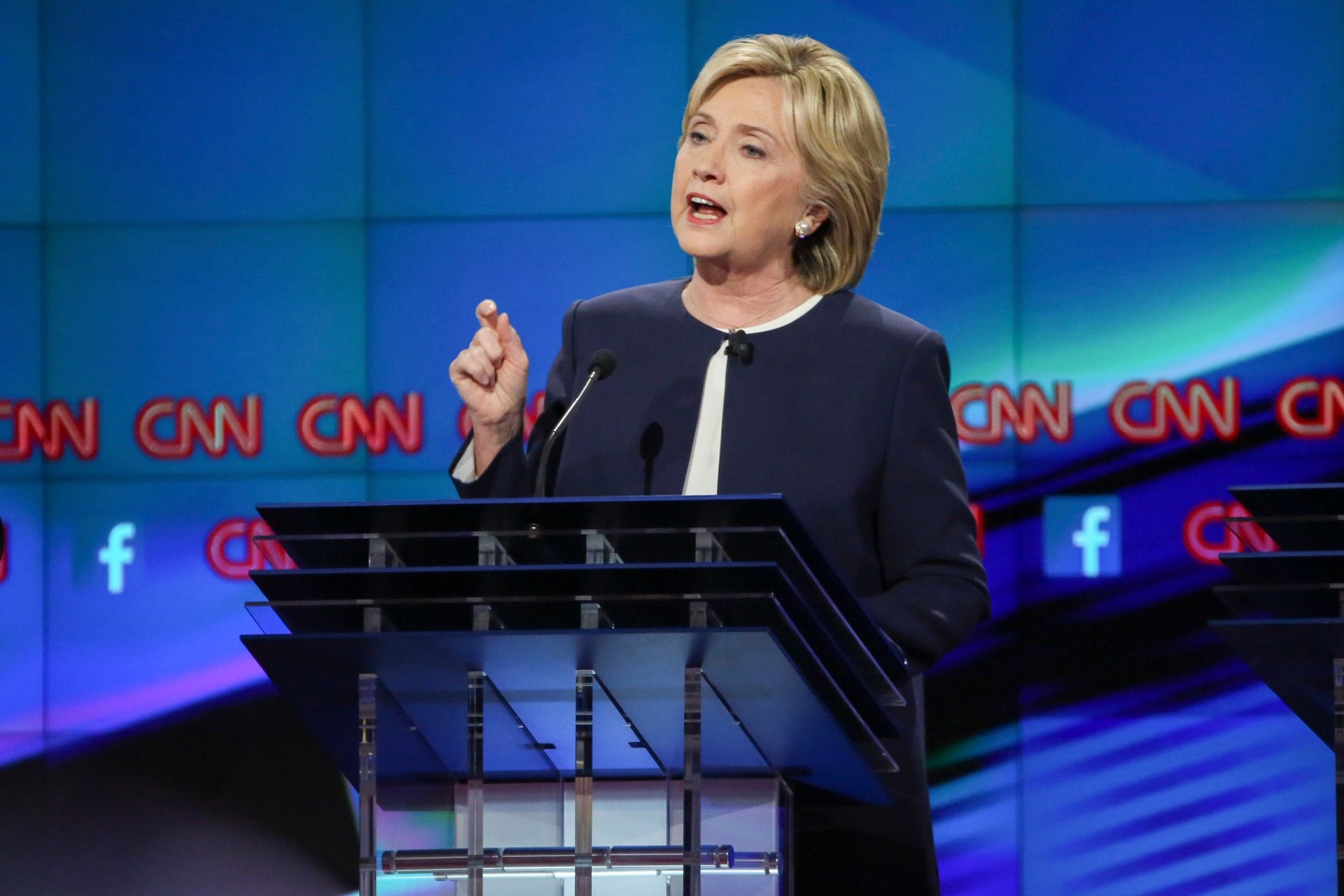
Both the political left and right are enraged over news that Hillary Clinton accepted six-figure fees for talks she gave after leaving the Obama administration. Even worse than the amount of money she amassed, say her critics, are the sources of those speaking fees: Goldman Sachs (GS), GoldenTree Asset Management, and other tony Wall Street firms.
Doesn’t this pose a grave conflict of interest to her presidential aspirations? Won’t she be partial to the financial sector if she is elected Commander in Chief?
No, and not necessarily.
Here’s why.
One Law to Rule Them All
The law of supply and demand has a prominent place in a free-market society. The demand for goods and services—memoirs and keynote speeches, for example—determines their cost and availability. Right now, for example, a lot of people want anything emblazoned with images of Star Wars characters, and many are willing to pay whatever manufacturers ask. For a mere $440, fans can get a PlayStation 4 bundle that includes a console bearing the likeness of Darth Vader, a Star Wars video game, and a voucher for four films. The same console devoted to Jem and the Holograms, one of 2015’s biggest box office flops, would already be in a landfill, if it existed at all.
Clinton was able to command $675,000 for three speeches at Goldman Sachs because the company wanted to hear what she had to say. A former elected official has “insight and perspective that others do not,” says Stacy Tetschner, CEO of the National Speakers Association. This knowledge, he adds, “is now that person’s intellectual property, and he or she has a right to share it.”
Besides, Clinton had already left office by that point, so she wasn’t in violation of ethics laws that prohibit government officials from being paid to speak. And then there’s the celebrity factor. Even the high rollers of lower Manhattan aren’t immune to the magnetic pull of one of the biggest boldface names in the country, if not the world.
But let’s face it: the real reason that investment banks and hedge funds hire Clinton as a speaker is her ability to return the favor down the road, right?
Let’s look more closely at this objection.
The Hannibal Lecter Syndrome
In Jonathan Demme’s The Silence of the Lambs, which was based on the novel by Thomas Harris, FBI agent Clarice Starling turns to imprisoned serial killer Hannibal Lecter for insight into the mind of a criminal. But Lecter won’t help Clarice unless she reveals something of herself to him.
“Quid pro quo, Clarice,” Lecter says. “I tell you things, you tell me things.”
A legitimate concern about paying former politicians high speaking fees is that it’s akin to buying influence. Even if those politicians don’t return to office, as Clinton might, they still know a lot of people in power who can do favors for them. And Wall Street’s C-suite executives are the most powerful influencers of all.
That’s why Republican strategist Karl Rove is on the attack. “Wall Street made [Hillary Clinton] a multi-millionaire,” intones an ad run by Rove’s American Crossroads Super PAC on the eve of the Iowa caucuses. “Does Iowa really want Wall Street in the White House?”
But if it’s wrong for a Democratic presidential candidate to take money from deep-pocketed American businesses, why is it okay for a Republican Super PAC to be funded by such organizations? The only way to completely eliminate the influence of corporations in politics is through the kind of campaign finance reform that many Republicans and Democrats alike are loath to bring about. And it’s no wonder. Thanks to U.S. Supreme Court decisions like McCutcheon v. FEC and Citizens United v. FEC, it’s in elected officials’ interests to keep the money coming in.
Politicians can’t have it both ways. Either big money is off-limits, or it’s not. Right now, it’s not, so it’s hypocritical for people like Rove to say “stop” to Hillary Clinton’s speaking fees and “go” to money from the same source for his political action committee.
Beyond “All or None”
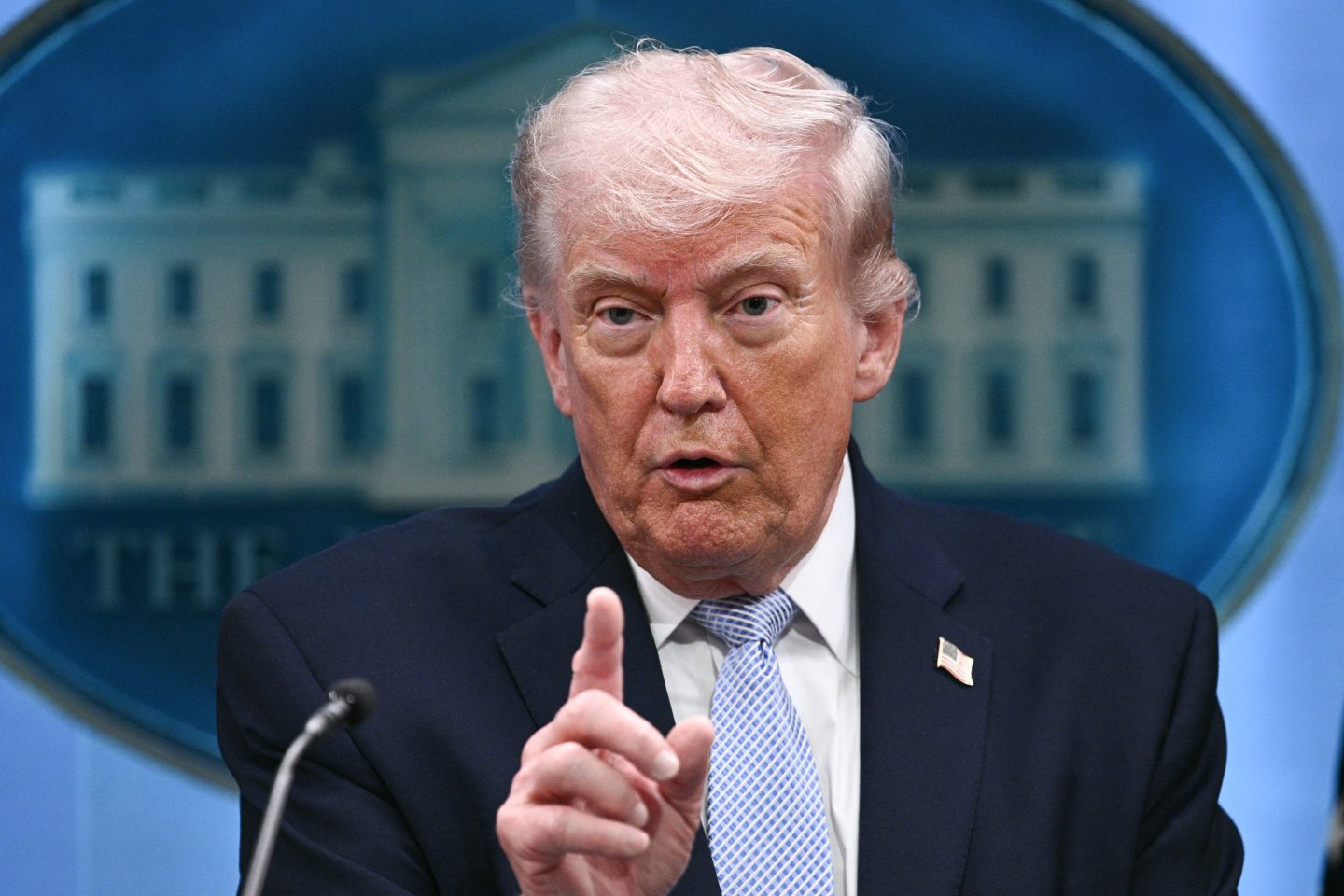
Senator Bernie Sanders is better situated to criticize Clinton, since his campaign has been funded largely by small donations from individuals. At the other end of the spectrum is multi-billionaire Donald Trump who, like Sanders, has not taken Super PAC money. About the only thing the two men have in common, in fact, is their rejection of such funding. If Sanders is elected, he may very well change the role that big money plays in politics. Perhaps Trump would, too.
But all of the noise about Hillary Clinton’s hefty honoraria obscures a distinction worth keeping: there’s a big difference between running a political campaign that’s funded significantly by Fortune 500 companies and a former civil servant who gives talks for big bucks. In the former scenario, the potential for abuse is both significant and real. It is Congress that passes laws, and it is members of Congress who, as a whole, stand to be unduly swayed by large financial contributions.
[fortune-brightcove videoid=4607033098001]
Former elected officials who choose to run for president are much less likely to have the power to influence legislation because of speaking fees they were paid in the years before they ran for office. The U.S. President may be among the most powerful people in the world, but Congress is the nation’s most powerful entity.
The fracas about Clinton as a million-dollar speaker is merely name-calling, ad hominem attacks, and political maneuvering masquerading as legitimate criticism.