• Home
  • Latest
  • Fortune 500
  • Finance
  • Tech
  • Leadership
  • Lifestyle
  • Rankings
  • Multimedia
Commentarytrans-pacific partnership

What a Failed TPP Would Mean for the U.S. Economy

By
Alan Wolff
Alan Wolff
and
Bethany Cianciolo
Bethany Cianciolo
Down Arrow Button Icon
By
Alan Wolff
Alan Wolff
and
Bethany Cianciolo
Bethany Cianciolo
Down Arrow Button Icon
January 6, 2016, 4:22 PM ET
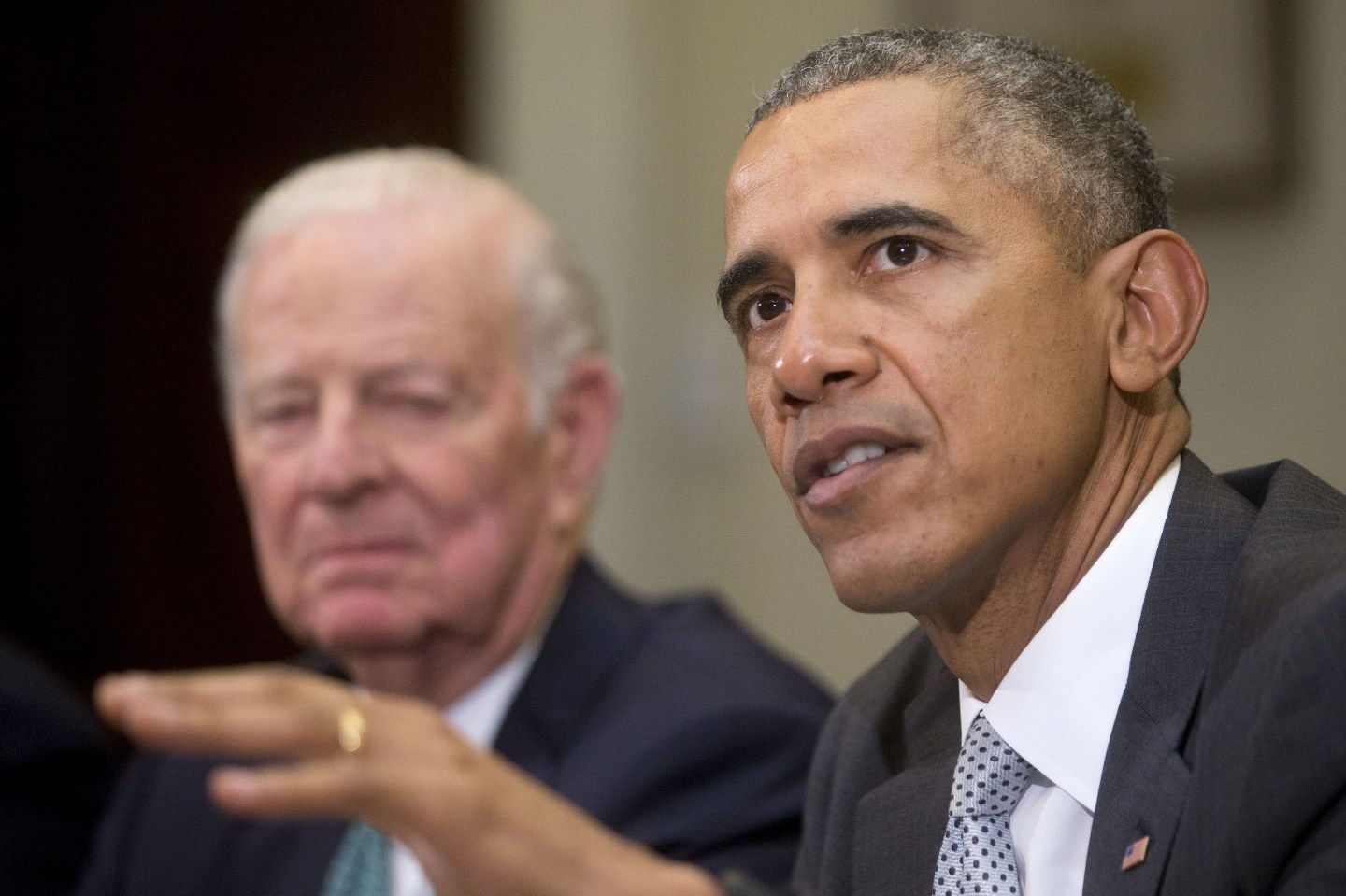
President Barack Obama Meets With National Security Leaders To Discuss The Trans-Pacific Partnership
U.S. President Barack Obama, right, speaks while meeting with current and former diplomatic and national security officials including James Baker, former U.S. Secretary of State, to discuss the Trans-Pacific Partnership (TPP) in the Roosevelt Room of the White House in Washington, D.C., U.S., on Friday, Nov. 13, 2015. Obama, hoping to kick off a new phase of selling the TPP at home while enhancing its prospects overseas, has enlisted some of the nations top national security leaders to give testimonials. Photographer: Andrew Harrer/Bloomberg via Getty ImagesPhotograph by Andrew Harrer — Bloomberg via Getty Images

The most important foreign economic policy decision of 2016 in the U.S. will be made after President Obama signs and submits the Trans-Pacific Partnership (TPP) Agreement to Congress for approval this spring. Congress will then have no more than 60 legislative days in both the House and Senate to vote it up or down with no amendment. There are a lot of upsides to approval, and enormous costs to its rejection.

The TPP is the first 21st-century trade agreement in more than name, as it blazes new paths to creating opportunities for American commerce. It’s the first trade agreement to be designed for the new digital economy, and if implemented, small and medium-sized American businesses will have assured access to nearly half of the world’s economies for the first time. Even a one-person business that comes up with a new smartphone app—or any other product—will be able to serve markets abroad. For trade in goods, not only are taxes on trade cut around the Pacific Rim—in most cases sinking to zero (the negotiators point to 18,000 examples of this on all manufactured products and nearly all U.S. agricultural exports)—but conflicting regulations that needlessly impede trade will be also be reduced. Services in a wide variety of sectors will be able to cross borders more freely, and competition from state-owned enterprises will be made fairer.

This is an agreement designed for our times and for our talents. There are no sufficient alternatives.


The lack of a global consensus on trade was regrettably demonstrated by the failure of 162 World Trade Organization members to even agree on whether their 15-year-old negotiating agenda was still alive last month. Currently, trade agreements can only be entered into by coalitions of the willing, and the bulk of these agreements are regional.

If Congress cannot work out remaining issues with the Administration and vote to implement the TPP, then:

  • Other countries will continue to negotiate preferential trade agreements that discriminate against American commerce.
  • The future for international trade would be of a world more divided, with lower standards than the U.S. wants and that the American economy needs.
  • The terms of agreements in Asia would be dictated by China’s perceived needs, falling far short of the TPP.
  • The U.S. would not be in a position to replace this agreement with either individual bilateral agreements nor broader agreements in the WTO. What countries would chance reaching an agreement with the U.S. were the TPP not approved?


In short, the damage to the American economy of the TPP failing to come into effect due to U.S. rejection or inaction would be enormous—and it’s calculable.

With the TPP agreed and approved, a path forward will emerge. The TPP has an open architecture—other countries can negotiate accession. There is strong interest in Korea, Indonesia, the Philippines, Thailand, Taiwan, and Colombia to join. The TPP—along with the other trans-oceanic agreement under current negotiation, the Transatlantic Trade and Investment Partnership (TTIP)—may be looked back upon as the modern equivalent for trade of the 1944 Bretton Woods Agreement, which gave rise to a rules-based global financial system that has provided a foundation first for economic recovery and subsequent global economic growth.

The bottom line: The TPP requires a majority vote in both houses of Congress, and the fact that it’s an election year doesn’t make the process any easier. The year of 2016 will see a major test for continued American world leadership.

Alan Wm. Wolff is Chairman of the National Foreign Trade Council and is a Senior Counsel with the global law firm Dentons. He is a former U.S. Deputy Trade Negotiator.


About the Authors
By Alan Wolff
See full bioRight Arrow Button Icon
By Bethany Cianciolo
See full bioRight Arrow Button Icon

Latest in Commentary

Finance
Lorem ipsum dolor sit amet, consectetur adipiscing elit, sed do eiusmod tempor incididunt ut labore et dolore magna aliqua. Ut enim ad minim veniam
By Fortune Editors
October 20, 2025
Finance
Lorem ipsum dolor sit amet, consectetur adipiscing elit, sed do eiusmod tempor incididunt ut labore et dolore magna aliqua. Ut enim ad minim veniam
By Fortune Editors
October 20, 2025
Finance
Lorem ipsum dolor sit amet, consectetur adipiscing elit, sed do eiusmod tempor incididunt ut labore et dolore magna aliqua. Ut enim ad minim veniam
By Fortune Editors
October 20, 2025
Finance
Lorem ipsum dolor sit amet, consectetur adipiscing elit, sed do eiusmod tempor incididunt ut labore et dolore magna aliqua. Ut enim ad minim veniam
By Fortune Editors
October 20, 2025
Finance
Lorem ipsum dolor sit amet, consectetur adipiscing elit, sed do eiusmod tempor incididunt ut labore et dolore magna aliqua. Ut enim ad minim veniam
By Fortune Editors
October 20, 2025
Finance
Lorem ipsum dolor sit amet, consectetur adipiscing elit, sed do eiusmod tempor incididunt ut labore et dolore magna aliqua. Ut enim ad minim veniam
By Fortune Editors
October 20, 2025

Most Popular

Finance
Lorem ipsum dolor sit amet, consectetur adipiscing elit, sed do eiusmod tempor incididunt ut labore et dolore magna aliqua. Ut enim ad minim veniam
By Fortune Editors
October 20, 2025
Finance
Lorem ipsum dolor sit amet, consectetur adipiscing elit, sed do eiusmod tempor incididunt ut labore et dolore magna aliqua. Ut enim ad minim veniam
By Fortune Editors
October 20, 2025
Finance
Lorem ipsum dolor sit amet, consectetur adipiscing elit, sed do eiusmod tempor incididunt ut labore et dolore magna aliqua. Ut enim ad minim veniam
By Fortune Editors
October 20, 2025
Finance
Lorem ipsum dolor sit amet, consectetur adipiscing elit, sed do eiusmod tempor incididunt ut labore et dolore magna aliqua. Ut enim ad minim veniam
By Fortune Editors
October 20, 2025
Finance
Lorem ipsum dolor sit amet, consectetur adipiscing elit, sed do eiusmod tempor incididunt ut labore et dolore magna aliqua. Ut enim ad minim veniam
By Fortune Editors
October 20, 2025
Finance
Lorem ipsum dolor sit amet, consectetur adipiscing elit, sed do eiusmod tempor incididunt ut labore et dolore magna aliqua. Ut enim ad minim veniam
By Fortune Editors
October 20, 2025
Fortune Secondary Logo
Rankings
  • 100 Best Companies
  • Fortune 500
  • Global 500
  • Fortune 500 Europe
  • Most Powerful Women
  • Future 50
  • World’s Most Admired Companies
  • See All Rankings
Sections
  • Finance
  • Fortune Crypto
  • Features
  • Leadership
  • Health
  • Commentary
  • Success
  • Retail
  • Mpw
  • Tech
  • Lifestyle
  • CEO Initiative
  • Asia
  • Politics
  • Conferences
  • Europe
  • Newsletters
  • Personal Finance
  • Environment
  • Magazine
  • Education
Customer Support
  • Frequently Asked Questions
  • Customer Service Portal
  • Privacy Policy
  • Terms Of Use
  • Single Issues For Purchase
  • International Print
Commercial Services
  • Advertising
  • Fortune Brand Studio
  • Fortune Analytics
  • Fortune Conferences
  • Business Development
  • Group Subscriptions
About Us
  • About Us
  • Editorial Calendar
  • Press Center
  • Work At Fortune
  • Diversity And Inclusion
  • Terms And Conditions
  • Site Map
  • About Us
  • Editorial Calendar
  • Press Center
  • Work At Fortune
  • Diversity And Inclusion
  • Terms And Conditions
  • Site Map
  • Facebook icon
  • Twitter icon
  • LinkedIn icon
  • Instagram icon
  • Pinterest icon

Latest in Commentary

hunt
CommentaryMedia
OpenAI’s TBPN deal shows how talent, media, and influence are collapsing into one
By Jonathan HuntApril 11, 2026
49 minutes ago
pandu
CommentaryIndonesia
Danantara CIO: Indonesia can anchor the AI and energy economy—if governance keeps pace
By Pandu SjahrirApril 11, 2026
49 minutes ago
assis
CommentaryIBM
The digital sovereignty dilemma is a false choice — here’s how enterprises can have both
By Ana Paula AssisApril 9, 2026
2 days ago
housing
CommentaryHousing
The housing market has been frozen for 3 years. Here’s why this spring could finally change that
By Jessica LautzApril 8, 2026
3 days ago
curtin
CommentaryInfrastructure
TE Connectivity CEO: the real promise of AI is long-term transformation, not short-term efficiency gains
By Terrence CurtinApril 7, 2026
4 days ago
philip
CommentaryEducation
I just became CEO of one of education’s Big 3. Here’s why AI will never replace a great teacher
By Philip MoyerApril 7, 2026
4 days ago

Most Popular

Scottie Scheffler joined Tiger Woods and Rory McIlroy in golf's $100M club—and donated his entire Ryder Cup stipend to charity
Success
Scottie Scheffler joined Tiger Woods and Rory McIlroy in golf's $100M club—and donated his entire Ryder Cup stipend to charity
By Fortune EditorsApril 10, 2026
18 hours ago
Mark Cuban admits he made a mistake letting go of the Mavericks: 'I don't regret selling. I regret who I sold to'
Investing
Mark Cuban admits he made a mistake letting go of the Mavericks: 'I don't regret selling. I regret who I sold to'
By Fortune EditorsApril 9, 2026
2 days ago
Schools across America are quietly admitting that screens in classrooms made students worse off and are reversing years of tech-first policies
Innovation
Schools across America are quietly admitting that screens in classrooms made students worse off and are reversing years of tech-first policies
By Fortune EditorsApril 10, 2026
1 day ago
The U.S. government is spending $88 billion a month in interest on national debt—equal to spending on defense and education combined
Economy
The U.S. government is spending $88 billion a month in interest on national debt—equal to spending on defense and education combined
By Fortune EditorsApril 9, 2026
2 days ago
A Meta employee created a dashboard so coworkers can compete to be the company's No. 1 AI token user—and Zuckerberg doesn't even rank in the top 250
AI
A Meta employee created a dashboard so coworkers can compete to be the company's No. 1 AI token user—and Zuckerberg doesn't even rank in the top 250
By Fortune EditorsApril 9, 2026
2 days ago
The Navy confirmed an ‘abundant amount’ of Uncrustables when the Artemis II crew lands. Smucker’s just offered them a lifetime supply
Politics
The Navy confirmed an ‘abundant amount’ of Uncrustables when the Artemis II crew lands. Smucker’s just offered them a lifetime supply
By Fortune EditorsApril 10, 2026
12 hours ago

© 2026 Fortune Media IP Limited. All Rights Reserved. Use of this site constitutes acceptance of our Terms of Use and Privacy Policy | CA Notice at Collection and Privacy Notice | Do Not Sell/Share My Personal Information
FORTUNE is a trademark of Fortune Media IP Limited, registered in the U.S. and other countries. FORTUNE may receive compensation for some links to products and services on this website. Offers may be subject to change without notice.









