• Home
  • Latest
  • Fortune 500
  • Finance
  • Tech
  • Leadership
  • Lifestyle
  • Rankings
  • Multimedia
Commentary

Why Striking ISIS Targets Won’t Protect Citizens

By
Peter Dombrowski
Peter Dombrowski
and
Bethany Cianciolo
Bethany Cianciolo
Down Arrow Button Icon
By
Peter Dombrowski
Peter Dombrowski
and
Bethany Cianciolo
Bethany Cianciolo
Down Arrow Button Icon
November 23, 2015, 1:37 PM ET
FRANCE-ATTACKS-DEFENCE-CONFLICT-SYRIA-IRAQ
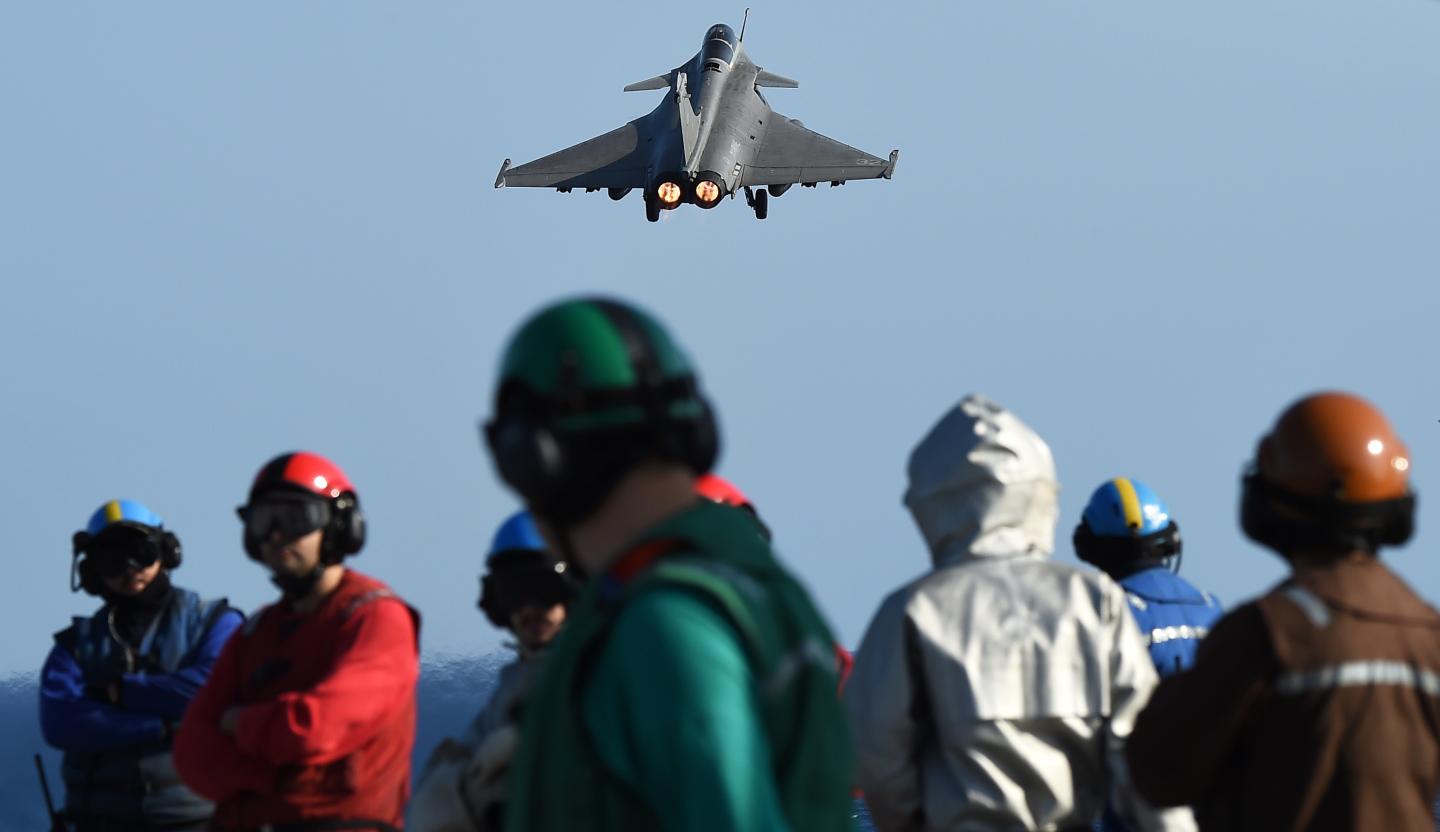
A French Rafale fighter aircraft takes off with bombs from the French aircraft carrier Charles-de-Gaulle, on November 23, 2015 at eastern Mediterranean sea, as part of operation Chammal in Syria and Iraq against the Islamic State (IS) group. AFP PHOTO / ANNE-CHRISTINE POUJOULAT / AFP / ANNE-CHRISTINE POUJOULAT (Photo credit should read ANNE-CHRISTINE POUJOULAT/AFP/Getty Images)Photograph by Anne-Christine Poujoulat — AFP via Getty Images

It is magical thinking to assume that Western states can continue to wage war against the Islamic State (ISIS) without incurring casualties at home. Like France, the United States faces the possibility that the ISIS will attack an American city sooner or later.

As a professor of national security employed by an American war college, I am charged with thinking about the future of war and teaching military leaders. I find the implications of the Paris attack for our public and our services members disturbing.

Most members of the American public regret, but recognize, that soldiers, sailors, and airmen might be killed in action in Syria or Iraq. But until the past week, few seemed to understand fully that the home front remains vulnerable.

The Paris attacks should put an end to this comforting fiction.

An inviting target

France is now relearning that its several hundred air strikes against ISIS over the past months and long-term commitment to secular ideals in the face of Islamism at home have consequences.

While the EU may have upheld France’s right to ban veils, the ban raised the ire of Muslims and Islamists alike. France became an inviting soft target. Even the heightened security measures and intensified intelligence activities imposed in the aftermath of Charlie Hebdo were insufficient to save the Bataclan concertgoers. Increased numbers of armed police officers and military personnel on the streets provided superficial reassurance but insufficient safety.

One hundred and fifty years ago, Western states could intervene militarily anywhere the world with little fear that London or Berlin would be bombed or civilians would be shot on the street.

If terrorists like the 19th-century Anarchists attacked innocent civilians or state leaders, their weapons were limited to guns or perhaps stolen explosives.

Today the world is awash in military-grade weapons. High-volume killing machines like the AK-47s that were used in the Paris attack are available even in countries like France with strict gun control measures. Knowledge of how to combine basic chemicals and simple electronics to build makeshift improvised explosive devices is readily available on the internet. Worse, as 9/11 showed, even peaceful technologies like civilian airliners can be used as weapons with enough planning, willpower, and cleverness. Casualties have been and will be high.

Moreover, migration has left many countries multiethnic, multireligious mélanges. Even if the vast majority of immigrants of North African and Arab origin in France are peaceable, law-abiding citizens who abhor violence, it takes only a few family members or disaffected outcasts to shelter terrorists and make surveillance extremely difficult.

Reportedly 1,800 or so French residents have traveled to the Middle East to fight alongside ISIS. Anonymous intelligence reports suggest that some number have returned to live amid the roughly 4.7 million Muslims living in France. With large, growing, and sometimes unassimilated Islamic populations where Jihadis might hide and perhaps find comfort, the United States and many other European nations will remain vulnerable. This is especially true if ISIS grows desperate, local sympathizers are radicalized, and more now-battle-hardened Western recruits return home.

The capability of governments like France, Belgium, and the U.S. to track such threats face technical, analytic, and legal limitations.

Democratic norms and values, at least to date, have moderated some of the harshest measures that might be taken against those illegally crossing international borders. In a more brutal time and place, boats carrying refugees might have been turned away without ceremony, while those captured later could be sent home with little if any due process. As for internal threats, only a few generations have passed since internment and deportation were normal in times of crisis. Even the United States has the stain of interning Japanese-American citizens in its recent history.

Forget closing borders

Closing borders is impractical in an era of globalization. Modern commerce depends on the free flow of goods, services, and people. Modern transportation systems provide bulk transport for people and materials. Attempts to close borders more tightly will inevitably run afoul of both practical politics and commercial considerations. This, of course, has not stopped the right from calling for such measures in both France and the U.S.

More important, it is also magical thinking to assume that calling the Paris attacks an act of war, devising new military-dominated strategies, and reinvigorating efforts to strike ISIS targets in Syria and Iraq will protect ordinary citizens. Politicians like French President Francois Hollande who engage in such rhetoric are encouraging still more magical thinking among their constituents.

This is unhealthy politically.

It is also unhealthy strategically.

Obama has it right

Despite the intense criticism leveled at President Obama these past few days, his strong defense of a more hands-off approach is both compelling and less likely to embroil American troops in costly and ineffective tit-for-tat military escalation.

Defeating ISIS on the battlefield to prevent attacks in Rome or New York may be futile. No matter how much military force France, the United States, Russia, or some yet-to-be-formed coalition apply, it will be incredibly difficult to protect citizens from terror, the ultimate weapon of the weak. As long as lone wolves or small dedicated cells are willing to die in the name of their beliefs, they will be hard to find and difficult to deter. The amount of time and resources—including potentially large numbers of the proverbial “boots on the ground”—that will be required to defeat ISIS in Syria and Iraq ensures that the threat of future terrorist attacks will remain for a long time to come.

There is no pleasure in pointing out these uncomfortable realities. But the public must understand what war against an enemy such as ISIS means. Political leaders in France, the United States, and elsewhere will better serve their constituents by not pretending that the fight will always remain somewhere “over there.” And they should not peddle military solutions that offer little hope for resolving the direct military threat of ISIS quickly, much less the underlying political, religious, and ethnic sources of the conflict.


Peter Dombrowski is a professor of strategy at the U.S. Naval War College. This piece was originally published on The Conversation.
The Conversation

About the Authors
By Peter Dombrowski
See full bioRight Arrow Button Icon
By Bethany Cianciolo
See full bioRight Arrow Button Icon

Latest in Commentary

Finance
Lorem ipsum dolor sit amet, consectetur adipiscing elit, sed do eiusmod tempor incididunt ut labore et dolore magna aliqua. Ut enim ad minim veniam
By Fortune Editors
October 20, 2025
Finance
Lorem ipsum dolor sit amet, consectetur adipiscing elit, sed do eiusmod tempor incididunt ut labore et dolore magna aliqua. Ut enim ad minim veniam
By Fortune Editors
October 20, 2025
Finance
Lorem ipsum dolor sit amet, consectetur adipiscing elit, sed do eiusmod tempor incididunt ut labore et dolore magna aliqua. Ut enim ad minim veniam
By Fortune Editors
October 20, 2025
Finance
Lorem ipsum dolor sit amet, consectetur adipiscing elit, sed do eiusmod tempor incididunt ut labore et dolore magna aliqua. Ut enim ad minim veniam
By Fortune Editors
October 20, 2025
Finance
Lorem ipsum dolor sit amet, consectetur adipiscing elit, sed do eiusmod tempor incididunt ut labore et dolore magna aliqua. Ut enim ad minim veniam
By Fortune Editors
October 20, 2025
Finance
Lorem ipsum dolor sit amet, consectetur adipiscing elit, sed do eiusmod tempor incididunt ut labore et dolore magna aliqua. Ut enim ad minim veniam
By Fortune Editors
October 20, 2025

Most Popular

Finance
Lorem ipsum dolor sit amet, consectetur adipiscing elit, sed do eiusmod tempor incididunt ut labore et dolore magna aliqua. Ut enim ad minim veniam
By Fortune Editors
October 20, 2025
Finance
Lorem ipsum dolor sit amet, consectetur adipiscing elit, sed do eiusmod tempor incididunt ut labore et dolore magna aliqua. Ut enim ad minim veniam
By Fortune Editors
October 20, 2025
Finance
Lorem ipsum dolor sit amet, consectetur adipiscing elit, sed do eiusmod tempor incididunt ut labore et dolore magna aliqua. Ut enim ad minim veniam
By Fortune Editors
October 20, 2025
Finance
Lorem ipsum dolor sit amet, consectetur adipiscing elit, sed do eiusmod tempor incididunt ut labore et dolore magna aliqua. Ut enim ad minim veniam
By Fortune Editors
October 20, 2025
Finance
Lorem ipsum dolor sit amet, consectetur adipiscing elit, sed do eiusmod tempor incididunt ut labore et dolore magna aliqua. Ut enim ad minim veniam
By Fortune Editors
October 20, 2025
Finance
Lorem ipsum dolor sit amet, consectetur adipiscing elit, sed do eiusmod tempor incididunt ut labore et dolore magna aliqua. Ut enim ad minim veniam
By Fortune Editors
October 20, 2025
Fortune Secondary Logo
Rankings
  • 100 Best Companies
  • Fortune 500
  • Global 500
  • Fortune 500 Europe
  • Most Powerful Women
  • World's Most Admired Companies
  • See All Rankings
  • Lists Calendar
Sections
  • Finance
  • Fortune Crypto
  • Features
  • Leadership
  • Health
  • Commentary
  • Success
  • Retail
  • Mpw
  • Tech
  • Lifestyle
  • CEO Initiative
  • Asia
  • Politics
  • Conferences
  • Europe
  • Newsletters
  • Personal Finance
  • Environment
  • Magazine
  • Education
Customer Support
  • Frequently Asked Questions
  • Customer Service Portal
  • Privacy Policy
  • Terms Of Use
  • Single Issues For Purchase
  • International Print
Commercial Services
  • Advertising
  • Fortune Brand Studio
  • Fortune Analytics
  • Fortune Conferences
  • Business Development
  • Group Subscriptions
About Us
  • About Us
  • Press Center
  • Work At Fortune
  • Terms And Conditions
  • Site Map
  • About Us
  • Press Center
  • Work At Fortune
  • Terms And Conditions
  • Site Map
  • Facebook icon
  • Twitter icon
  • LinkedIn icon
  • Instagram icon
  • Pinterest icon

Latest in Commentary

joaquin
Commentary250 Years of Innovation
Johnson & Johnson CEO: America’s innovation advantage starts with health 
By Joaquin DuatoMay 9, 2026
12 hours ago
reed
CommentaryRetirement
Tim Cook and Reed Hastings just showed every CEO how to leave gracefully
By Paul HardartMay 9, 2026
15 hours ago
golf
Commentarybooks
How playing golf alone can make you better at your job
By Gary BelskyMay 8, 2026
1 day ago
naomi
Commentarymental health
Naomi Osaka: the things I didn’t do to succeed
By Naomi OsakaMay 8, 2026
2 days ago
amanda
Commentarybatteries
Why energy storage is moving beyond the capex debate
By Amanda SimonianMay 7, 2026
2 days ago
trump
CommentaryMedicare
Auto-enrollment in Medicare Advantage isn’t a nudge. It’s a trap
By Brian KeyserMay 7, 2026
2 days ago

Most Popular

Ted Cruz says the quiet part out loud: Trump accounts are Social Security personal accounts as GOP senator reveals 'dirty little secret'
Politics
Ted Cruz says the quiet part out loud: Trump accounts are Social Security personal accounts as GOP senator reveals 'dirty little secret'
By Jason MaMay 9, 2026
6 hours ago
California farmers must destroy 420,000 peach trees after Del Monte closes its canneries and cancels more than $550 million in long-term contracts
North America
California farmers must destroy 420,000 peach trees after Del Monte closes its canneries and cancels more than $550 million in long-term contracts
By Sasha RogelbergMay 7, 2026
2 days ago
A Michigan farm town voted down plans for a giant OpenAI-Oracle data center. Weeks later, construction began
Magazine
A Michigan farm town voted down plans for a giant OpenAI-Oracle data center. Weeks later, construction began
By Sharon GoldmanMay 6, 2026
4 days ago
'Employers are increasingly turning to degree and GPA' in hiring: Recruiters retreat from ‘talent is everywhere,’ double down on top colleges
Future of Work
'Employers are increasingly turning to degree and GPA' in hiring: Recruiters retreat from ‘talent is everywhere,’ double down on top colleges
By Jake AngeloMay 9, 2026
10 hours ago
The CEO of Maersk, which ships 14% of everything you buy, said the Iran war is adding $500 million in monthly costs it's trying not to pass down
Energy
The CEO of Maersk, which ships 14% of everything you buy, said the Iran war is adding $500 million in monthly costs it's trying not to pass down
By Sasha RogelbergMay 8, 2026
1 day ago
You're probably safe from the Hantavirus outbreak, but here's what you absolutely must not do, experts say
Politics
You're probably safe from the Hantavirus outbreak, but here's what you absolutely must not do, experts say
By Catherina GioinoMay 8, 2026
1 day ago

© 2026 Fortune Media IP Limited. All Rights Reserved. Use of this site constitutes acceptance of our Terms of Use and Privacy Policy | CA Notice at Collection and Privacy Notice | Do Not Sell/Share My Personal Information
FORTUNE is a trademark of Fortune Media IP Limited, registered in the U.S. and other countries. FORTUNE may receive compensation for some links to products and services on this website. Offers may be subject to change without notice.