• Home
  • Latest
  • Fortune 500
  • Finance
  • Tech
  • Leadership
  • Lifestyle
  • Rankings
  • Multimedia
FinanceFederal Reserve

How the Fed’s ‘Schizophrenia’ Could be Holding Back the Economy

By
Simon Constable
Simon Constable
Down Arrow Button Icon
By
Simon Constable
Simon Constable
Down Arrow Button Icon
November 6, 2015, 11:32 AM ET
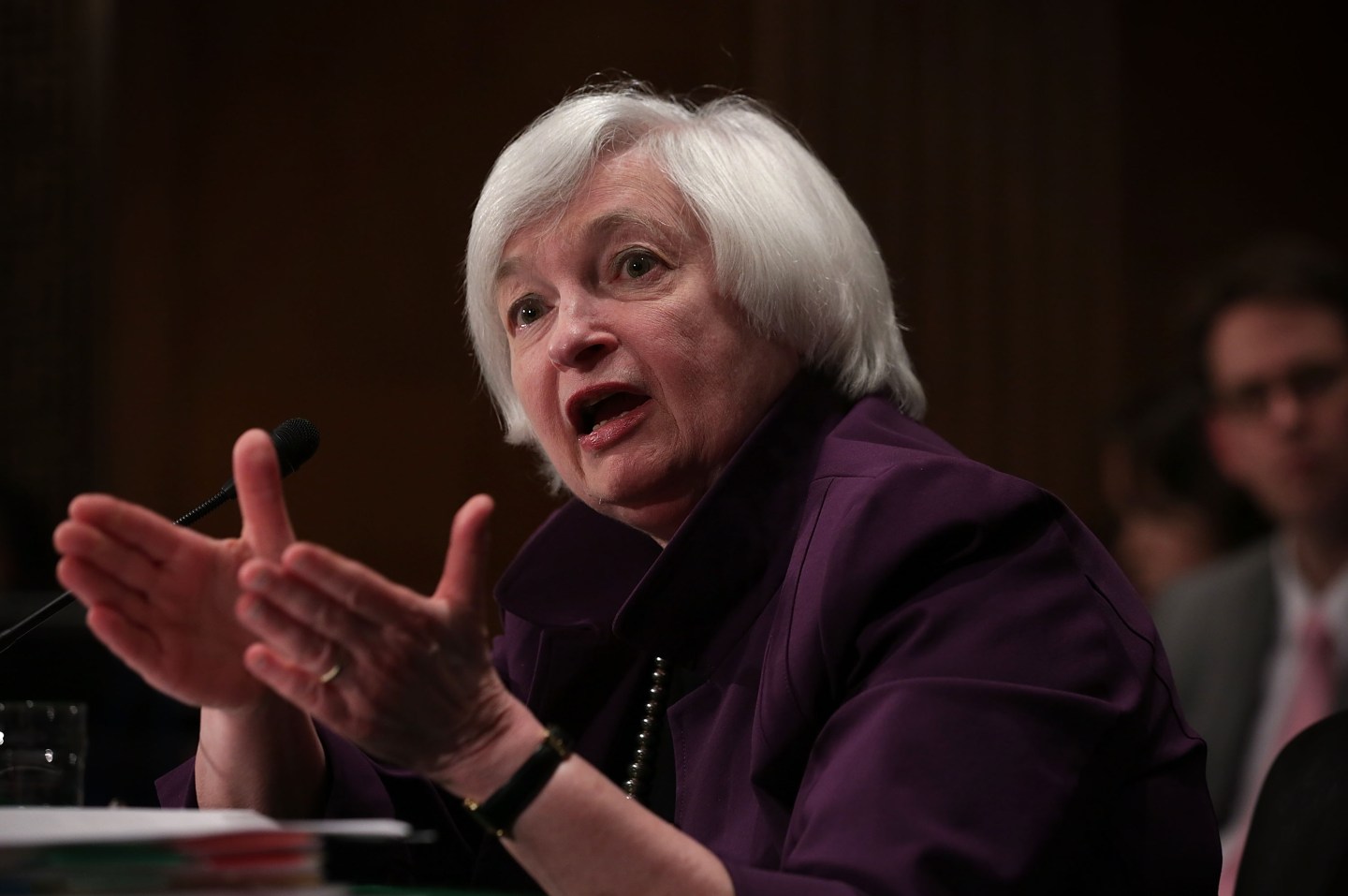
Janet Yellen Presents Semiannual Monetary Policy Report At Senate Hearing
WASHINGTON, DC - JULY 16: Federal Reserve Board Chair Janet Yellen testifies during a hearing before Senate Banking, Housing and Urban Affairs Committee July 16, 2015 on Capitol Hill in Washington, DC. The committee held a hearing on "The Semiannual Monetary Policy Report to the Congress." (Photo by Alex Wong/Getty Images)Photograph by Alex Wong — Getty Images

The Federal Reserve’s latest proposal to limit the need for big bank bailouts has some claiming it could curtail something the Fed wants and economy needs: More lending.

The new rule, announced last week, would force the big banks to raise long-term debt that could be turned into equity if the banks needed addition capital to absorb lending losses. The Fed estimated that the rule would cost the nation’s eight largest banks $1.5 billion in additional financing expenses a year. That may sound like a lot, but it only equals roughly 2% of the combined profits of the banks, and they will have years before they have to fully comply with the law.

Still, critics have attacked, saying that while the rule may make banks safer, and less likely in need of bailouts, it may cause other problems, says Steve Hanke, professor of economics at Johns Hopkins University and fellow at the Cato Institute, a think tank that generally opposes regulation. Hanke believes the new regulations will not only hurt lending, but also the Fed’s ability to stimulate the economy. Zero interest rates are suppose to get people to borrow more money. But that won’t happen if banks don’t lend.

“Every time they get ready to loan money they have to comply with another regulation,” Hanke says. “The policies are making them take risk assets [like loans] off the table. It’s the schizophrenic part of the Fed.”

Last Friday’s Fed announcement isn’t unique in its potential to stifle lending. The introduction of the Dodd Frank Bill and Basel III achieve the same ends of limiting so-called systemic risk, but it also further limits the ability of the Fed to achieve its other goals. Or put more simply: “Telling banks they’ve got to be safer will mean that they won’t lend as much,” says David Wyss, professor of economics at Brown.

Of course, bankers have long argued that all the regulations coming out of the financial crisis would force banks to cut back lending. It hasn’t. Banks have more loans outstanding than they did before the financial crisis. Collectively all loans and leases from commercial banks now total $8.5 trillion versus $6.8 trillion five years ago. Borrowing for autos is also doing better, totaling $1 trillion, up from $708 billion over five years. Both figures are from the St. Louis Fed. So it looks like the lending is healthy despite the regulations?

Well maybe not. Remember when the Fed defended its actions by saying it could have been at lot worse if the central bank didn’t act? A similar argument can be made here – it could have been better.

The growth rate of certain types of loans has slowed. Take commercial bank loans for instance. The annualized growth rate of such loans averaged in excess of 10% in the two years prior to the financial crisis. For most of the period post crisis it has been much lower, only in the last twelve months averaging around 7.5%, again according to the St. Louis Fed.

Another sign regulation has hurt the economy: The money supply, which tracks how often money is changing hands, and is generally seen as an important measure of economic activity. Hanke notes that while M4, a very broad measure of money supply, has risen, its growth is much slower than before. M4 has been rising at an annual rate of 1.5% a year post crisis versus 8.8% pre-October 2008 from January 2003, according to his analysis. Of course, that slowdown could be the reaction to the fact that we had a massive lending and housing bubble. What’s more, another narrower measure of money supply, M2, is growing at a rate similar to just before the crisis.

The regulations could also push up the cost of loans. “The price of money [interest rates] might be higher than it would otherwise be because of regulation,” says Tony Crescenzi, portfolio manager and investment committee member at mutual fund company PIMCO. That extra cost can also manifest in higher bank fees. But he notes that the overall cost of borrowing is still very low, at least historically.

Of course, if you really want to make banks safer, curtailing lending at least somewhat is something you could and probably should do. One of the reasons banks ran into so many problems in the financial crisis is because they made a lot of dumb loans. What’s more, in the Fed’s eyes one of the ways it stops really low interest rates from causing a bubble is to closely regulate lending. But the Fed needs to understand it’s a balance. And if pushes the banks too hard we could end up with permanent low interest rates, and a permanently underperforming economy.

Simon Constable is a New York-based writer and author of The WSJ Guide to the 50 Economic Indicators That Really Matter.

About the Author
By Simon Constable
See full bioRight Arrow Button Icon

Latest in Finance

Finance
Lorem ipsum dolor sit amet, consectetur adipiscing elit, sed do eiusmod tempor incididunt ut labore et dolore magna aliqua. Ut enim ad minim veniam
By Fortune Editors
October 20, 2025
Finance
Lorem ipsum dolor sit amet, consectetur adipiscing elit, sed do eiusmod tempor incididunt ut labore et dolore magna aliqua. Ut enim ad minim veniam
By Fortune Editors
October 20, 2025
Finance
Lorem ipsum dolor sit amet, consectetur adipiscing elit, sed do eiusmod tempor incididunt ut labore et dolore magna aliqua. Ut enim ad minim veniam
By Fortune Editors
October 20, 2025
Finance
Lorem ipsum dolor sit amet, consectetur adipiscing elit, sed do eiusmod tempor incididunt ut labore et dolore magna aliqua. Ut enim ad minim veniam
By Fortune Editors
October 20, 2025
Finance
Lorem ipsum dolor sit amet, consectetur adipiscing elit, sed do eiusmod tempor incididunt ut labore et dolore magna aliqua. Ut enim ad minim veniam
By Fortune Editors
October 20, 2025
Finance
Lorem ipsum dolor sit amet, consectetur adipiscing elit, sed do eiusmod tempor incididunt ut labore et dolore magna aliqua. Ut enim ad minim veniam
By Fortune Editors
October 20, 2025

Most Popular

Finance
Lorem ipsum dolor sit amet, consectetur adipiscing elit, sed do eiusmod tempor incididunt ut labore et dolore magna aliqua. Ut enim ad minim veniam
By Fortune Editors
October 20, 2025
Finance
Lorem ipsum dolor sit amet, consectetur adipiscing elit, sed do eiusmod tempor incididunt ut labore et dolore magna aliqua. Ut enim ad minim veniam
By Fortune Editors
October 20, 2025
Finance
Lorem ipsum dolor sit amet, consectetur adipiscing elit, sed do eiusmod tempor incididunt ut labore et dolore magna aliqua. Ut enim ad minim veniam
By Fortune Editors
October 20, 2025
Finance
Lorem ipsum dolor sit amet, consectetur adipiscing elit, sed do eiusmod tempor incididunt ut labore et dolore magna aliqua. Ut enim ad minim veniam
By Fortune Editors
October 20, 2025
Finance
Lorem ipsum dolor sit amet, consectetur adipiscing elit, sed do eiusmod tempor incididunt ut labore et dolore magna aliqua. Ut enim ad minim veniam
By Fortune Editors
October 20, 2025
Finance
Lorem ipsum dolor sit amet, consectetur adipiscing elit, sed do eiusmod tempor incididunt ut labore et dolore magna aliqua. Ut enim ad minim veniam
By Fortune Editors
October 20, 2025
Fortune Secondary Logo
Rankings
  • 100 Best Companies
  • Fortune 500
  • Global 500
  • Fortune 500 Europe
  • Most Powerful Women
  • Future 50
  • World’s Most Admired Companies
  • See All Rankings
Sections
  • Finance
  • Fortune Crypto
  • Features
  • Leadership
  • Health
  • Commentary
  • Success
  • Retail
  • Mpw
  • Tech
  • Lifestyle
  • CEO Initiative
  • Asia
  • Politics
  • Conferences
  • Europe
  • Newsletters
  • Personal Finance
  • Environment
  • Magazine
  • Education
Customer Support
  • Frequently Asked Questions
  • Customer Service Portal
  • Privacy Policy
  • Terms Of Use
  • Single Issues For Purchase
  • International Print
Commercial Services
  • Advertising
  • Fortune Brand Studio
  • Fortune Analytics
  • Fortune Conferences
  • Business Development
About Us
  • About Us
  • Editorial Calendar
  • Press Center
  • Work At Fortune
  • Diversity And Inclusion
  • Terms And Conditions
  • Site Map
Fortune Secondary Logo
  • About Us
  • Editorial Calendar
  • Press Center
  • Work At Fortune
  • Diversity And Inclusion
  • Terms And Conditions
  • Site Map
  • Facebook icon
  • Twitter icon
  • LinkedIn icon
  • Instagram icon
  • Pinterest icon

Latest in Finance

Middle EastIran
Trump calls death of Ayatollah Ali Khamenei the ‘single greatest chance for the Iranian people to take back their Country’
By Jon Gambrell, Konstantin Toropin, Josh Boak, Aamer Madhani and The Associated PressFebruary 28, 2026
25 minutes ago
Middle EastDubai
Dubai’s worst nightmare unfolds as Iran strikes Gulf neighbors
By Dana Khraiche, Fiona MacDonald and BloombergFebruary 28, 2026
43 minutes ago
Middle EastIran
Iran’s missile barrage tests whether U.S. has enough interceptors
By Gerry Doyle and BloombergFebruary 28, 2026
59 minutes ago
Middle EastIran
Iran is now on ‘death ground’ amid existential threat from U.S. attacks and could ‘go big’ in retaliation, former NATO commander warns
By Jason MaFebruary 28, 2026
5 hours ago
trump
LawTariffs
‘Why shouldn’t we get our money back too?’ Normal people are starting to demand Trump tariff refunds
By Mae Anderson and The Associated PressFebruary 28, 2026
6 hours ago
warren
InvestingBerkshire Hathaway
Berkshire Hathaway shareholders just woke up to a letter by someone other than Warren Buffett
By Josh Funk and The Associated PressFebruary 28, 2026
6 hours ago

Most Popular

placeholder alt text
Success
Japanese companies are paying older workers to sit by a window and do nothing—while Western CEOs demand super-AI productivity just to keep your job
By Orianna Rosa RoyleFebruary 27, 2026
1 day ago
placeholder alt text
Success
Walmart exec says U.S. workforces needs to take inspiration from China where ‘5 year-olds are learning DeepSeek’
By Preston ForeFebruary 27, 2026
2 days ago
placeholder alt text
Personal Finance
Current price of gold as of February 27, 2026
By Danny BakstFebruary 27, 2026
1 day ago
placeholder alt text
AI
The week the AI scare turned real and America realized maybe it isn't ready for what's coming
By Nick LichtenbergFebruary 28, 2026
13 hours ago
placeholder alt text
Law
China's government intervenes to show Michigan scientists were carrying worms, not biological materials
By Ed White and The Associated PressFebruary 26, 2026
2 days ago
placeholder alt text
Middle East
Iran is now on 'death ground' amid existential threat from U.S. attacks and could 'go big' in retaliation, former NATO commander warns
By Jason MaFebruary 28, 2026
5 hours ago

© 2026 Fortune Media IP Limited. All Rights Reserved. Use of this site constitutes acceptance of our Terms of Use and Privacy Policy | CA Notice at Collection and Privacy Notice | Do Not Sell/Share My Personal Information
FORTUNE is a trademark of Fortune Media IP Limited, registered in the U.S. and other countries. FORTUNE may receive compensation for some links to products and services on this website. Offers may be subject to change without notice.