• Home
  • News
  • Fortune 500
  • Tech
  • Finance
  • Leadership
  • Lifestyle
  • Rankings
  • Multimedia
Tech

Toyota wants self-driving cars on the highway by 2020

By
Kirsten Korosec
Kirsten Korosec
Down Arrow Button Icon
By
Kirsten Korosec
Kirsten Korosec
Down Arrow Button Icon
October 6, 2015, 6:39 PM ET
Courtesy of Toyota

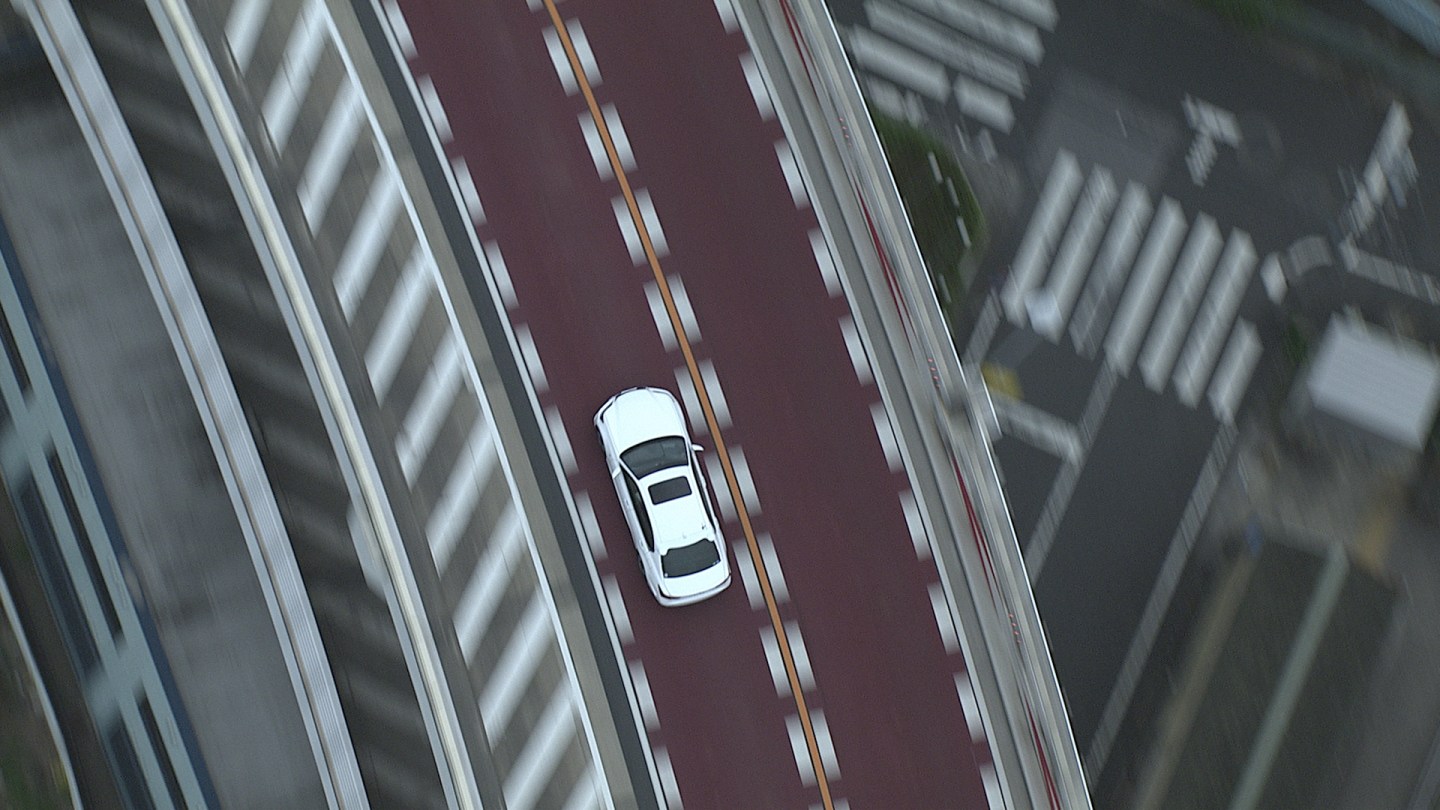
By 2020, Toyota envisions highway driving that leaves the hard part to the vehicle—not the driver.

The company-dubbed “Highway Teammate” feature, which has been tested in a modified Lexus GS on Tokyo’s Shuto Expressway, enables automated driving on highways once a car enters the on-ramp all the way through to the off-ramp. On-board technology evaluates traffic conditions, makes decisions, and takes action during highway driving, including merging, exiting, changing lanes, and maintaining a safe distance between vehicles, according to Toyota. The prototype car uses road map data and multiple external sensors to recognize nearby vehicles and hazards, and select appropriate routes and lanes depending on the destination, the company says.

Toyota, which demonstrated the technology at an event in Tokyo on Oct. 6, says it’s ramping up research into and development of automated driving technologies, with the goal of launching products based on Highway Teammate by around 2020.

Toyota (TOYOF) has a different approach to automated driving than potential rivals Google (GOOG) and Apple (AAPL). The Japanese automaker’s technology aims to make the car a partner, or teammate—not replace the driver completely.

From Toyota:

Toyota believes that interactions between drivers and cars should mirror those between close friends who share a common purpose, sometimes watching over each other and sometimes helping each other out. Toyota refers to this approach as the Mobility Teammate Concept, and Highway Teammate represents an important first effort to give form to this concept.

Google and Apple might not have the same automotive manufacturing expertise as Toyota and other major automakers. However, they do have a lot more freedom to experiment with self-driving cars—and create what they want. Google and Apple don’t have any existing car customers who have their own set of expectations.

Google has an ambitious timeline for fully self-driving cars (not just vehicles that have the capability on the highway). The company’s self-driving director, Chris Urmson, has said he wants his son to be able to skip getting a driver’s license when he turns 16 and instead use a self-driving car; the boy is 12 now. In June, Google introduced a self-driving car that it had designed itself, without pedals and steering wheels, but lots of sensors and software. It hopes to commercialize its technology by 2020.

Meanwhile, Toyota, and particularly luxury automakers, are beholden to existing customers who have certain expectations based on their previous experience or perception of that car brand. Automakers must strike a balance between producing cars that fulfill a customer’s desire to drive when it’s enjoyable and taking over for the driver when conditions are hazardous or it’s not so fun (commuting would be one of those less desirable times).

For Toyota, this means a two-pronged approach: the long-term goal of fully autonomous cars, and near-term development into semi-autonomous technology to make driving safer now. Last week, Toyota announced it would make its Intelligent Transportation System (ITS) safety package available on three models in Japan by the end of 2015. The package, named ITS Connect, features vehicle-to-vehicle and vehicle-to-infrastructure communication to provide drivers with information that cannot be picked up by on-board sensors, including traffic signal information and the presence of vehicles and pedestrians in blind spots.

Using automated driving tech to improve safety is a primary driver for Toyota. Last month, the company announced it would partner with Stanford University and the Massachusetts Institute of Technology to create two joint research centers focused on using technology to make driving safer. As part of the partnership Toyota will invest $50 million over the next five years to study the use of artificial intelligence.

[fortune-brightcove videoid=4238378730001]

About the Author
By Kirsten Korosec
See full bioRight Arrow Button Icon

Latest in Tech

Big TechSpotify
Spotify users lamented Wrapped in 2024. This year, the company brought back an old favorite and made it less about AI
By Dave Lozo and Morning BrewDecember 4, 2025
10 hours ago
InnovationVenture Capital
This Khosla Ventures–backed startup is using AI to personalize cancer care
By Allie GarfinkleDecember 4, 2025
14 hours ago
AIEye on AI
Companies are increasingly falling victim to AI impersonation scams. This startup just raised $28M to stop deepfakes in real time
By Sharon GoldmanDecember 4, 2025
14 hours ago
Jensen Huang
SuccessBillionaires
Nvidia CEO Jensen Huang admits he works 7 days a week, including holidays, in a constant ‘state of anxiety’ out of fear of going bankrupt
By Jessica CoacciDecember 4, 2025
14 hours ago
Ted Pick
BankingData centers
Morgan Stanley considers offloading some of its data-center exposure
By Esteban Duarte, Paula Seligson, Davide Scigliuzzo and BloombergDecember 4, 2025
14 hours ago
Zuckerberg
EnergyMeta
Meta’s Zuckerberg plans deep cuts for metaverse efforts
By Kurt Wagner and BloombergDecember 4, 2025
15 hours ago

Most Popular

placeholder alt text
Economy
Two months into the new fiscal year and the U.S. government is already spending more than $10 billion a week servicing national debt
By Eleanor PringleDecember 4, 2025
19 hours ago
placeholder alt text
Success
‘Godfather of AI’ says Bill Gates and Elon Musk are right about the future of work—but he predicts mass unemployment is on its way
By Preston ForeDecember 4, 2025
15 hours ago
placeholder alt text
North America
Jeff Bezos and Lauren Sánchez Bezos commit $102.5 million to organizations combating homelessness across the U.S.: ‘This is just the beginning’
By Sydney LakeDecember 2, 2025
3 days ago
placeholder alt text
Success
Nearly 4 million new manufacturing jobs are coming to America as boomers retire—but it's the one trade job Gen Z doesn't want
By Emma BurleighDecember 4, 2025
15 hours ago
placeholder alt text
Success
Nvidia CEO Jensen Huang admits he works 7 days a week, including holidays, in a constant 'state of anxiety' out of fear of going bankrupt
By Jessica CoacciDecember 4, 2025
14 hours ago
placeholder alt text
Health
Bill Gates decries ‘significant reversal in child deaths’ as nearly 5 million kids will die before they turn 5 this year
By Nick LichtenbergDecember 4, 2025
1 day ago
Rankings
  • 100 Best Companies
  • Fortune 500
  • Global 500
  • Fortune 500 Europe
  • Most Powerful Women
  • Future 50
  • World’s Most Admired Companies
  • See All Rankings
Sections
  • Finance
  • Leadership
  • Success
  • Tech
  • Asia
  • Europe
  • Environment
  • Fortune Crypto
  • Health
  • Retail
  • Lifestyle
  • Politics
  • Newsletters
  • Magazine
  • Features
  • Commentary
  • Mpw
  • CEO Initiative
  • Conferences
  • Personal Finance
  • Education
Customer Support
  • Frequently Asked Questions
  • Customer Service Portal
  • Privacy Policy
  • Terms Of Use
  • Single Issues For Purchase
  • International Print
Commercial Services
  • Advertising
  • Fortune Brand Studio
  • Fortune Analytics
  • Fortune Conferences
  • Business Development
About Us
  • About Us
  • Editorial Calendar
  • Press Center
  • Work At Fortune
  • Diversity And Inclusion
  • Terms And Conditions
  • Site Map

© 2025 Fortune Media IP Limited. All Rights Reserved. Use of this site constitutes acceptance of our Terms of Use and Privacy Policy | CA Notice at Collection and Privacy Notice | Do Not Sell/Share My Personal Information
FORTUNE is a trademark of Fortune Media IP Limited, registered in the U.S. and other countries. FORTUNE may receive compensation for some links to products and services on this website. Offers may be subject to change without notice.