• Home
  • Latest
  • Fortune 500
  • Finance
  • Tech
  • Leadership
  • Lifestyle
  • Rankings
  • Multimedia

Trendingnow

1

Jeff Bezos wants the bottom half of earners to pay zero income tax—he says nurses making just $75K should save $12K a year

2

Despite a $500 million net worth, Shaq just finished his fourth degree. He warns graduates: 'Your character will take you further than your resume'

3

Bolt CEO says he let go of his entire HR team for creating problems that didn’t exist: ‘Those problems disappeared when I let them go’ 

1

Jeff Bezos wants the bottom half of earners to pay zero income tax—he says nurses making just $75K should save $12K a year

2

Despite a $500 million net worth, Shaq just finished his fourth degree. He warns graduates: 'Your character will take you further than your resume'

3

Bolt CEO says he let go of his entire HR team for creating problems that didn’t exist: ‘Those problems disappeared when I let them go’ 
TechGoogle

Why has Google stopped buying ‘unicorns’?

By
Zocalo Public Square
Down Arrow Button Icon
By
Zocalo Public Square
Down Arrow Button Icon
September 30, 2015, 1:44 PM ET
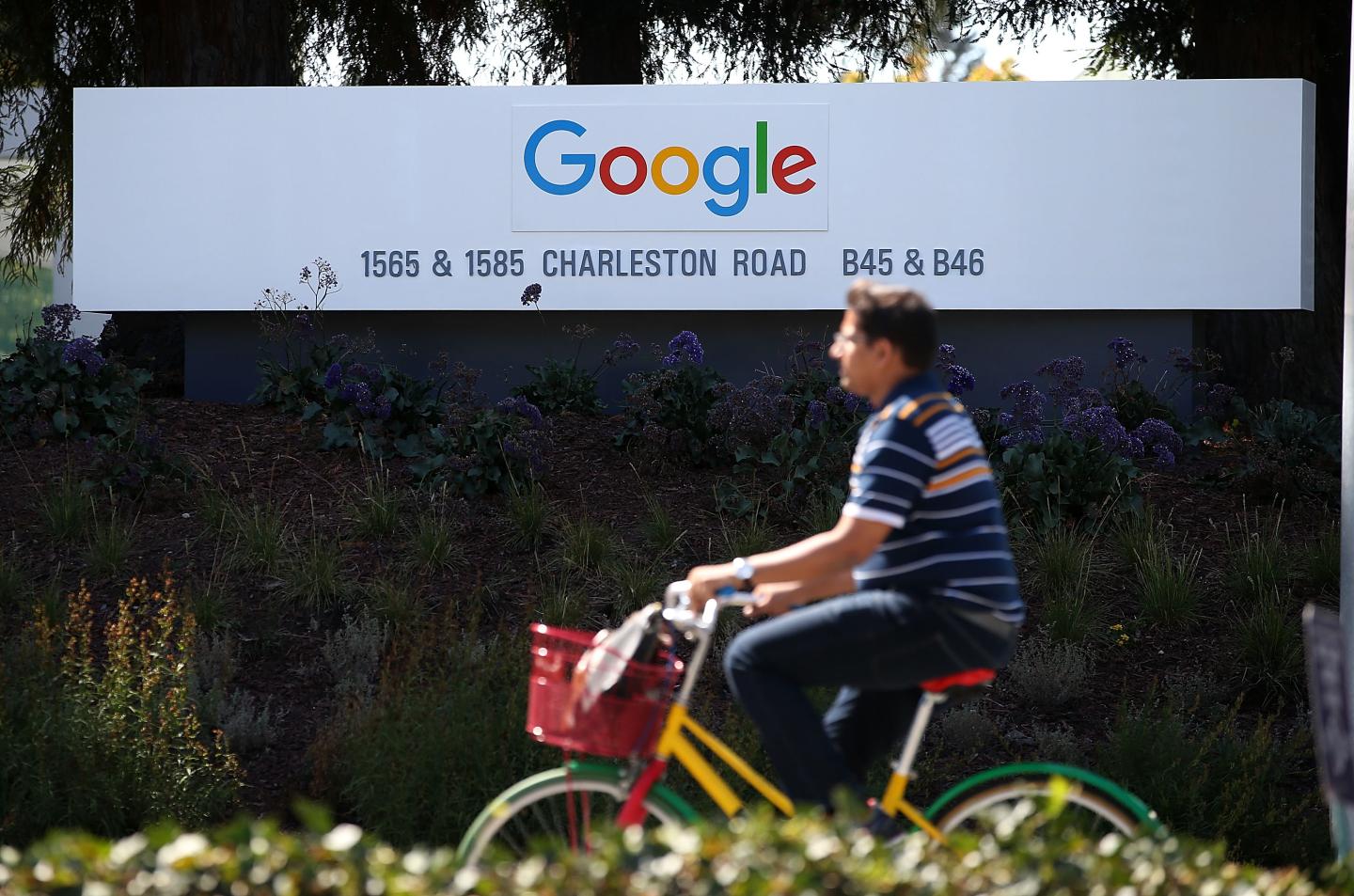
Google Updates Its Logo
MOUNTAIN VIEW, CA - SEPTEMBER 02: The new Google logo is displayed on a sign outside of the Google headquarters on September 2, 2015 in Mountain View, California. Google has made the most dramatic change to their logo since 1999 and have replaced their signature serif font with a new typeface called Product Sans. (Photo by Justin Sullivan/Getty Images)Photograph by Justin Sullivan — Getty Images

This post is in partnership with Zocalo Public Square. The article below was originally published at zocalopublicsquare.org.

By George T. Geis, Zocalo Public Square

How do you grow the most innovative company of tomorrow? Is it better to grow the business “organically” from within, or is it better to continually acquire outside companies (along with their talent and products) to stay ahead of the pack? That is one of the perennial questions asked in Silicon Valley and across the tech industry, and it’s a question that involves not just dollars and cents, but intangibles of culture and chemistry.

Apple has famously opted, for the most part, to grow organically. When Steve Jobs took the momentous decision to wade into the smartphone business, for instance, he didn’t acquire an existing phone manufacturer the way Google and Microsoft did—he built the operation from within. Other tech companies, such as Cisco and Facebook in more recent years, have been voracious acquirers of innovative companies, either because they’ve coveted the targeted company’s technology, or feared it as a competitive threat. People raised their eyebrows at the billions Facebook spent to acquire Instagram and WhatsApp, but those deals seem to make more sense in retrospect than they did at the time.

Similarly, there was a lot of scoffing back in 2006 when Google spent $1.65 billion to acquire YouTube. Now, with YouTube becoming an increasingly desirable platform for advertisers to connect with young consumers, that deal looks farsighted.

I’ve spent a lot of time studying Google, and its approach to growth seems to bridge the two competing (but in fact overlapping) theories of growth in Silicon Valley. The company hasn’t been shy about making bold bets to acquire outside businesses to bring into the fold, as in the case of YouTube or Nest Labs, but it is also, more so than any other U.S. company, consciously designed to be an incubator for homegrown businesses and technologies.

Overall, dealmaking is surging in corporate America this year. According to Dealogic, the global volume of mergers and acquisitions (M&A) reached $3 trillion in August and is poised to challenge the record-setting year of 2007. Healthcare deals led all sectors with transactions worth $487 billion, with technology acquisitions in second place at $392 billion.

Google, though, has been remarkably quiet. So far in 2015, Google has acquired a mere nine small companies, with none of these targets reaching a valuation so high that Google felt obliged to disclose specific deal terms. According to the company’s required disclosures to shareholders, Google spent a mere $149 million in total consideration for its acquisitions during the first six months of 2015.

Compare that to 2014, when Google acquired at least 35 companies, closing major deals that included Nest Labs (smart-home devices), DeepMind (artificial intelligence), Skybox (nano-satellites), and Dropcam (home monitoring). The Nest deal alone amounted to $2.6 billion.

What’s going on? Overall M&A activity is racing, but Google’s appetite is waning. Is the company merely pre-occupied with its recently announced restructuring and the integration of companies it acquired during last year’s bumper crop of deals? Has Ruth Porat, Google’s new chief financial officer, hired away from Morgan Stanley in May, put her on foot on the M&A brakes? Or is there more of a philosophical shift at hand?

As I argued in my book, Semi-Organic Growth, M&A made an imprint on Google very early in its corporate history. Even before the company went public, acquisitions played a particularly important role in the strategic development of this iconic company. Over the years Google has become an experimental lab, not only for products and services but also in utilizing M&A to further its purposes. Of particular experimental importance has been learning how to integrate a wide range of talent and technologies with the goal of keeping Google “small.”

Search may be the company’s core business, but it at times also appears to be its guiding strategic initiative. By the end of 2014, Google had acquired some 200 companies. But there’s more to the story than numbers. Google has developed a playbook for M&A activity built around what I call semi-organic growth. This refers to the growth and revenues generated when a company blends the technology-related assets and talent of an acquired company with its own existing capabilities to create products and services.

Consider an example that is not as well known as its YouTube acquisition, but in some ways more important. In 2003, Google acquired Applied Semantics (ASI), a developer of technology called AdSense. AdSense contextually analyzed the content on a website and recommended ads that would perform best on the site. Google had been working on a similar initiative with the vision of moving beyond search-based advertising and making the entre web its advertising canvas.

In buying ASI, Google amalgamated ASI’s people, technology, and other assets with its own and achieved massive revenue acceleration in context-based advertising. By 2014, Google was generating over $10 billion in revenue from AdSense.

Acquisitions such as ASI imprinted on Google a way of growing revenue that became deeply ingrained within the company. M&A would become a core strategic capability, a major driver of growth.

So why did Google’s 2015 deal slowdown in a red-hot M&A market? I believe the cause is not the challenge of integrating a massive number of acquisitions completed during 2014. Nor is there a major strategic shift under the new CFO Porat that de-emphasizes the role of M&A within Google.

The answer lies in current valuations for privately held tech companies. In other words, the price is no longer right. The age of the unicorn has dawned, with valuations surpassing $1 billion as cash from private equity, hedge funds, mutual funds, and corporate venture capital flow into new ventures. These $1 billion-plus unicorn companies have become a herd, with over 100 such creatures now roaming the business landscape. Some unicorns are household names—Uber, Airbnb, Snapchat, and Pinterest. But most are obscure.

The unicorn phenomenon is part of the technology sector’s boom-and-bust cycle. When times are good, overall valuations soar. Too much, Google apparently believes.

I would expect Google to start filling up its deal-shopping cart again starting in 2016 (or even later this year) at less fanciful valuations if the next funding rounds for ventures become considerably more challenging.

M&A is far from out at Google. But financial discipline is most definitely in.

To see Fortune’s full unicorn list, click here.


George T. Geis a professor at the UCLA Anderson School of Management and author of Semi-Organic Growth: Tactics and Strategies Behind Google’s Success.

About the Author
By Zocalo Public Square
See full bioRight Arrow Button Icon

Latest in Tech

Finance
Lorem ipsum dolor sit amet, consectetur adipiscing elit, sed do eiusmod tempor incididunt ut labore et dolore magna aliqua. Ut enim ad minim veniam
By Fortune Editors
October 20, 2025
Finance
Lorem ipsum dolor sit amet, consectetur adipiscing elit, sed do eiusmod tempor incididunt ut labore et dolore magna aliqua. Ut enim ad minim veniam
By Fortune Editors
October 20, 2025
Finance
Lorem ipsum dolor sit amet, consectetur adipiscing elit, sed do eiusmod tempor incididunt ut labore et dolore magna aliqua. Ut enim ad minim veniam
By Fortune Editors
October 20, 2025
Finance
Lorem ipsum dolor sit amet, consectetur adipiscing elit, sed do eiusmod tempor incididunt ut labore et dolore magna aliqua. Ut enim ad minim veniam
By Fortune Editors
October 20, 2025
Finance
Lorem ipsum dolor sit amet, consectetur adipiscing elit, sed do eiusmod tempor incididunt ut labore et dolore magna aliqua. Ut enim ad minim veniam
By Fortune Editors
October 20, 2025
Finance
Lorem ipsum dolor sit amet, consectetur adipiscing elit, sed do eiusmod tempor incididunt ut labore et dolore magna aliqua. Ut enim ad minim veniam
By Fortune Editors
October 20, 2025

Most Popular

Finance
Lorem ipsum dolor sit amet, consectetur adipiscing elit, sed do eiusmod tempor incididunt ut labore et dolore magna aliqua. Ut enim ad minim veniam
By Fortune Editors
October 20, 2025
Finance
Lorem ipsum dolor sit amet, consectetur adipiscing elit, sed do eiusmod tempor incididunt ut labore et dolore magna aliqua. Ut enim ad minim veniam
By Fortune Editors
October 20, 2025
Finance
Lorem ipsum dolor sit amet, consectetur adipiscing elit, sed do eiusmod tempor incididunt ut labore et dolore magna aliqua. Ut enim ad minim veniam
By Fortune Editors
October 20, 2025
Finance
Lorem ipsum dolor sit amet, consectetur adipiscing elit, sed do eiusmod tempor incididunt ut labore et dolore magna aliqua. Ut enim ad minim veniam
By Fortune Editors
October 20, 2025
Finance
Lorem ipsum dolor sit amet, consectetur adipiscing elit, sed do eiusmod tempor incididunt ut labore et dolore magna aliqua. Ut enim ad minim veniam
By Fortune Editors
October 20, 2025
Finance
Lorem ipsum dolor sit amet, consectetur adipiscing elit, sed do eiusmod tempor incididunt ut labore et dolore magna aliqua. Ut enim ad minim veniam
By Fortune Editors
October 20, 2025
Fortune Secondary Logo
Rankings
  • 100 Best Companies
  • Fortune 500
  • Global 500
  • Fortune 500 Europe
  • Most Powerful Women
  • World's Most Admired Companies
  • See All Rankings
  • Lists Calendar
Sections
  • Finance
  • Fortune Crypto
  • Features
  • Leadership
  • Health
  • Commentary
  • Success
  • Retail
  • Mpw
  • Tech
  • Lifestyle
  • CEO Initiative
  • Asia
  • Politics
  • Conferences
  • Europe
  • Newsletters
  • Personal Finance
  • Environment
  • Magazine
  • Education
Customer Support
  • Frequently Asked Questions
  • Customer Service Portal
  • Privacy Policy
  • Terms Of Use
  • Single Issues For Purchase
  • International Print
Commercial Services
  • Advertising
  • Fortune Brand Studio
  • Fortune Analytics
  • Fortune Conferences
  • Business Development
  • Group Subscriptions
About Us
  • About Us
  • Press Center
  • Work At Fortune
  • Terms And Conditions
  • Site Map
  • About Us
  • Press Center
  • Work At Fortune
  • Terms And Conditions
  • Site Map
  • Facebook icon
  • Twitter icon
  • LinkedIn icon
  • Instagram icon
  • Pinterest icon

Latest in Tech

Elon Musk’s SpaceX IPO filing just told us what business he’s betting on for the future—and it’s not rockets
InvestingFinance
Elon Musk’s SpaceX IPO filing just told us what business he’s betting on for the future—and it’s not rockets
By Shawn TullyMay 23, 2026
30 minutes ago
morris
CommentaryEntrepreneurship
My startup hit $200 million ARR. But first I walked away from 2.5 million YouTube subscribers and nearly went bankrupt
By Joel MorrisMay 23, 2026
1 hour ago
How Grab’s CTO sees the superapp’s push into physical AI and automated driving—and why he uses his competitors’ robots in the office
AITransportation
How Grab’s CTO sees the superapp’s push into physical AI and automated driving—and why he uses his competitors’ robots in the office
By Angelica AngMay 22, 2026
11 hours ago
Trump AI and crpto czar David Sacks sits next to Meta CEO Mark Zuckerberg at a dinner table in the White House as Zuckerberg turns to Sacks and says something.
AIAmerican Politics
Tech billionaires convinced Trump to back off an AI executive order. But much of MAGA favors AI regulation
By Jeremy KahnMay 22, 2026
12 hours ago
James Daunt sits in a booksop, gesturing with both hands and smiling.
AIbooks
Barnes & Noble CEO clarifies the bookseller’s stance on AI-written books after refusing to ban them: ‘This is a straightforward rejection of AI books’
By Sasha RogelbergMay 22, 2026
14 hours ago
A photo taken during the Maroon Bells bicycle ride during Fortune Brainstorm Tech 2019 in Aspen, Colorado. (Photo: Fortune)
InnovationBrainstorm Tech
Fortune Brainstorm Tech 2026 will be brilliant
By Andrew NuscaMay 22, 2026
14 hours ago

Most Popular

Jeff Bezos wants the bottom half of earners to pay zero income tax—he says nurses making just $75K should save $12K a year
Success
Jeff Bezos wants the bottom half of earners to pay zero income tax—he says nurses making just $75K should save $12K a year
By Preston ForeMay 21, 2026
2 days ago
Despite a $500 million net worth, Shaq just finished his fourth degree. He warns graduates: 'Your character will take you further than your resume'
Success
Despite a $500 million net worth, Shaq just finished his fourth degree. He warns graduates: 'Your character will take you further than your resume'
By Preston ForeMay 20, 2026
3 days ago
Bolt CEO says he let go of his entire HR team for creating problems that didn’t exist: ‘Those problems disappeared when I let them go’ 
Workplace Culture
Bolt CEO says he let go of his entire HR team for creating problems that didn’t exist: ‘Those problems disappeared when I let them go’ 
By Preston ForeMay 19, 2026
3 days ago
Indeed chief economist says we’re entering an era of ‘great mismatch’ thanks to a generational imbalance of workers
Success
Indeed chief economist says we’re entering an era of ‘great mismatch’ thanks to a generational imbalance of workers
By Emma BurleighMay 22, 2026
17 hours ago
Microsoft reports are exposing AI's real cost problem: Using the tech is more expensive than paying human employees
AI
Microsoft reports are exposing AI's real cost problem: Using the tech is more expensive than paying human employees
By Jake AngeloMay 22, 2026
16 hours ago
Pay transparency is exposing a bigger problem: Most companies can't explain why they pay what they pay
Workplace Culture
Pay transparency is exposing a bigger problem: Most companies can't explain why they pay what they pay
By Sydney LakeMay 20, 2026
3 days ago

© 2026 Fortune Media IP Limited. All Rights Reserved. Use of this site constitutes acceptance of our Terms of Use and Privacy Policy | CA Notice at Collection and Privacy Notice | Do Not Sell/Share My Personal Information
FORTUNE is a trademark of Fortune Media IP Limited, registered in the U.S. and other countries. FORTUNE may receive compensation for some links to products and services on this website. Offers may be subject to change without notice.