• Home
  • Latest
  • Fortune 500
  • Finance
  • Tech
  • Leadership
  • Lifestyle
  • Rankings
  • Multimedia
Commentary

The Federal Reserve is losing credibility by not raising rates now

By
Alex Nikolsko-Rzhevskyy
and
Bethany Cianciolo
Bethany Cianciolo
Down Arrow Button Icon
By
Alex Nikolsko-Rzhevskyy
and
Bethany Cianciolo
Bethany Cianciolo
Down Arrow Button Icon
September 17, 2015, 3:52 PM ET
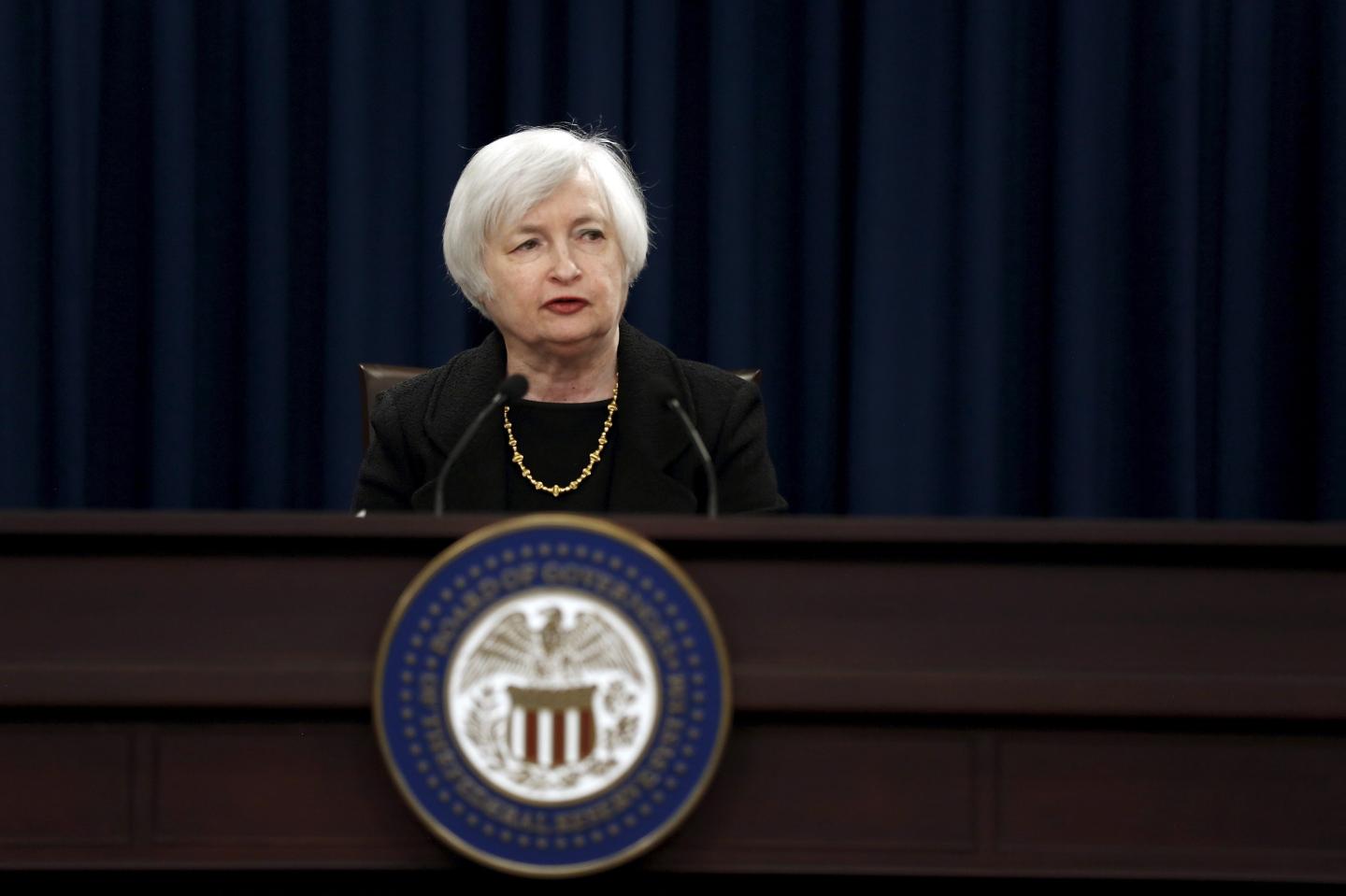
Yellen holds a news conference following the Federal Open Market Committee meeting in Washington
Federal Reserve Chair Janet Yellen holds a news conference following the Federal Open Market Committee meeting in Washington September 17, 2015. REUTERS/Jonathan Ernst - RTS1M8HPhotograph by Jonathan Ernst — Reuters

So the results are in: The Federal Reserve decided to keep interest rates at around zero, delaying any increase in its target for at least six more weeks.

The move did not come as a surprise to Wall Street — which was betting 3:1 against the hike. But that’s not because investors didn’t think the U.S. economy was ready for a rates “liftoff.” Rather, it shows that markets did not believe the Fed has the will or power to raise rates for the first time since June 2006.

Unfortunately, they guessed right.

The economy is ready — if not eager — for a liftoff and a return to a normal rates environment. Investors and businesses know this. It’s time the Fed recognized this too.

Ready for liftoff

The data clearly show that the U.S. economy hasn’t looked stronger in a very long time — a sharp improvement from earlier this year when I wrote that it wasn’t ready for an increase in interest rates.

While the labor market may not have experienced strong growth in wages yet, joblessness has plunged to 5.1%, reaching what is known as the “natural rate” of unemployment (also called “full” employment). That’s significant because achieving maximum employment is one of the Fed’s two primary mandates, and anything below the natural rate risks fueling inflation.

And inflation, its other main policy goal, is also in range of its target of 2%. Indexes of consumer prices, both including and excluding volatile energy prices, and personal spending are forecast to be right in that sweet spot of 1.5% to 2% next quarter.

Furthermore, the U.S. economy grew a stronger-than-forecast 3.7% in the second quarter, much better than the previous three-month period and signaling the recovery is on a pretty sound footing.

The output gap — or difference between what an economy is producing and what it is capable of — remains negative at about 3%, and deflation is still a threat.

But regardless of what the Fed does now and in coming months, its target short-term rate will remain well below the long-term “normal” level of about 4% for years to come, so there is little risk a small increase will drag down growth.

Why the Fed didn’t act

According to the Federal Open Market Committee statement, the main factors that persuaded the Fed to delay liftoff are the weakening global economy, “soft” net exports and subdued inflation.

Granted, developing economies — especially China and Russia — are indeed weak, as are global financial markets, which could spill over into the U.S. And the devaluation of the yuan in China and the recession in Canada (the U.S.’ two largest individual trading partners) — coupled with loose monetary policy in Europe — are causing the dollar to appreciate, making U.S. exports decline and imports rise.

It is important to understand that all of these factors – except inflation — are outside the Fed’s jurisdiction and its dual mandate of maintaining full employment and stable prices. If these factors matter at all to U.S. monetary policymakers, it should only be through their effects on the U.S. economy, in terms of inflation, labor markets and GDP.

And while an appreciating dollar and low oil prices can indeed create deflationary pressures (and reduce U.S. GDP), the data indicate that U.S. prices nevertheless continue to rise, if slowly.

Furthermore, a higher interest rate and stronger dollar make U.S. assets even more attractive to global investors, thus spurring more investment, while low oil prices stimulate consumer spending. Both of these factors boost economic activity and at least partially offset any decline due to lower net exports caused by a strong dollar.

What’s at stake

What’s more important is that the impact of a small rate hike has been with us for some time. Capital is already fleeing developing economies and the dollar has been strong for a while. Hence, the direct marginal economic effects of a 0.25 percentage point increase in the target rate on the U.S. economy would be negligible at best.

What was really at stake was repairing the Fed’s credibility in terms of successfully shaping U.S. monetary policy and sending a powerful signal that the U.S. economy is in strong shape.

Hoping to avoid previously failed, bungled attempts to adjust monetary policy in recent years that led to significant market volatility, this time the Fed spent at least half of the year updating the language in its statements and gradually preparing the world for a hike. And since it did not deliver, this tells the world that the Fed is unable or unwilling to go against market expectations.

As a result, the central bank will have to either delay the liftoff until the next meeting, slowly re-shaping market expectations to be consistent with a hike at that point, or risk a financial panic if it decides on an unexpected policy shift sooner. Delaying the timing further would mean losing precious time in normalizing monetary policy, necessary so that the Fed again has the tools it needs to fight future economic downturns. There’s also the increased risk that the economy will overheat and cause inflation to spiral out of control.

There is never a perfect time to start down this path. It is always possible to find reasons to delay, but each postponement requires even stronger data to justify an eventual liftoff the next time. The problem is that with the hesitant Fed sending mixed signals to the economy, that imaginary perfect day might not ever come.

Alex Nikolsko-Rzhevskyy is an associate professor of economics at Lehigh University. This article was originally published on The Conversation.

Subscribe to Fortune Daily to get essential business stories straight to your inbox each morning.

About the Authors
By Alex Nikolsko-Rzhevskyy
See full bioRight Arrow Button Icon
By Bethany Cianciolo
See full bioRight Arrow Button Icon

Latest in Commentary

Finance
Lorem ipsum dolor sit amet, consectetur adipiscing elit, sed do eiusmod tempor incididunt ut labore et dolore magna aliqua. Ut enim ad minim veniam
By Fortune Editors
October 20, 2025
Finance
Lorem ipsum dolor sit amet, consectetur adipiscing elit, sed do eiusmod tempor incididunt ut labore et dolore magna aliqua. Ut enim ad minim veniam
By Fortune Editors
October 20, 2025
Finance
Lorem ipsum dolor sit amet, consectetur adipiscing elit, sed do eiusmod tempor incididunt ut labore et dolore magna aliqua. Ut enim ad minim veniam
By Fortune Editors
October 20, 2025
Finance
Lorem ipsum dolor sit amet, consectetur adipiscing elit, sed do eiusmod tempor incididunt ut labore et dolore magna aliqua. Ut enim ad minim veniam
By Fortune Editors
October 20, 2025
Finance
Lorem ipsum dolor sit amet, consectetur adipiscing elit, sed do eiusmod tempor incididunt ut labore et dolore magna aliqua. Ut enim ad minim veniam
By Fortune Editors
October 20, 2025
Finance
Lorem ipsum dolor sit amet, consectetur adipiscing elit, sed do eiusmod tempor incididunt ut labore et dolore magna aliqua. Ut enim ad minim veniam
By Fortune Editors
October 20, 2025

Most Popular

Finance
Lorem ipsum dolor sit amet, consectetur adipiscing elit, sed do eiusmod tempor incididunt ut labore et dolore magna aliqua. Ut enim ad minim veniam
By Fortune Editors
October 20, 2025
Finance
Lorem ipsum dolor sit amet, consectetur adipiscing elit, sed do eiusmod tempor incididunt ut labore et dolore magna aliqua. Ut enim ad minim veniam
By Fortune Editors
October 20, 2025
Finance
Lorem ipsum dolor sit amet, consectetur adipiscing elit, sed do eiusmod tempor incididunt ut labore et dolore magna aliqua. Ut enim ad minim veniam
By Fortune Editors
October 20, 2025
Finance
Lorem ipsum dolor sit amet, consectetur adipiscing elit, sed do eiusmod tempor incididunt ut labore et dolore magna aliqua. Ut enim ad minim veniam
By Fortune Editors
October 20, 2025
Finance
Lorem ipsum dolor sit amet, consectetur adipiscing elit, sed do eiusmod tempor incididunt ut labore et dolore magna aliqua. Ut enim ad minim veniam
By Fortune Editors
October 20, 2025
Finance
Lorem ipsum dolor sit amet, consectetur adipiscing elit, sed do eiusmod tempor incididunt ut labore et dolore magna aliqua. Ut enim ad minim veniam
By Fortune Editors
October 20, 2025
Fortune Secondary Logo
Rankings
  • 100 Best Companies
  • Fortune 500
  • Global 500
  • Fortune 500 Europe
  • Most Powerful Women
  • World's Most Admired Companies
  • See All Rankings
  • Lists Calendar
Sections
  • Finance
  • Fortune Crypto
  • Features
  • Leadership
  • Health
  • Commentary
  • Success
  • Retail
  • Mpw
  • Tech
  • Lifestyle
  • CEO Initiative
  • Asia
  • Politics
  • Conferences
  • Europe
  • Newsletters
  • Personal Finance
  • Environment
  • Magazine
  • Education
Customer Support
  • Frequently Asked Questions
  • Customer Service Portal
  • Privacy Policy
  • Terms Of Use
  • Single Issues For Purchase
  • International Print
Commercial Services
  • Advertising
  • Fortune Brand Studio
  • Fortune Analytics
  • Fortune Conferences
  • Business Development
  • Group Subscriptions
About Us
  • About Us
  • Press Center
  • Work At Fortune
  • Terms And Conditions
  • Site Map
  • About Us
  • Press Center
  • Work At Fortune
  • Terms And Conditions
  • Site Map
  • Facebook icon
  • Twitter icon
  • LinkedIn icon
  • Instagram icon
  • Pinterest icon

Latest in Commentary

kapoor
Commentaryquarterly results
Morningstar CEO: I agree with the SEC on ending quarterly reporting—with conditions
By Nick LichtenbergMay 5, 2026
1 hour ago
alain
CommentaryIran
I watched my father run his business through the Lebanese Civil War. Here’s what it taught me about leading through disruption.
By Alain BejjaniMay 5, 2026
9 hours ago
Hong Kong is the hub for China’s AI IPOs. It can be so much more than that
CommentaryHong Kong
Hong Kong is the hub for China’s AI IPOs. It can be so much more than that
By Brian Wong and Tony ChanMay 3, 2026
2 days ago
jason corso
Commentarydisruption
AI models are choking on junk data
By Jason Corso and David CowanMay 3, 2026
2 days ago
blake
CommentaryHousing
I spent a decade selling homes to the ultra-wealthy. What I saw explains the housing market’s nepo problem
By Blake O'ShaughnessyMay 3, 2026
2 days ago
Can the ‘blue economy’ deliver on its promise? Investors are starting see the ocean as an asset worth protecting
CommentaryConservation
Can the ‘blue economy’ deliver on its promise? Investors are starting see the ocean as an asset worth protecting
By Natalie Sum Yue ChungMay 2, 2026
3 days ago

Most Popular

Diary of a CEO founder says he hired someone with 'zero' work experience because she 'thanked the security guard by name' before the interview
Success
Diary of a CEO founder says he hired someone with 'zero' work experience because she 'thanked the security guard by name' before the interview
By Emma BurleighMay 3, 2026
2 days ago
Current price of silver as of Monday, May 4, 2026
Personal Finance
Current price of silver as of Monday, May 4, 2026
By Joseph HostetlerMay 4, 2026
1 day ago
Current price of oil as of May 4, 2026
Personal Finance
Current price of oil as of May 4, 2026
By Joseph HostetlerMay 4, 2026
1 day ago
America got rich and got sad. A top economist says 2020 broke something that hasn't healed
Economy
America got rich and got sad. A top economist says 2020 broke something that hasn't healed
By Nick LichtenbergMay 3, 2026
2 days ago
As economic despair mounts, Russian official admits the country has had enough of Putin's war on Ukraine. 'We can’t even take one region'
Economy
As economic despair mounts, Russian official admits the country has had enough of Putin's war on Ukraine. 'We can’t even take one region'
By Jason MaMay 3, 2026
2 days ago
America is lucky it’s no longer a manufacturing powerhouse—it’s what’s protecting the U.S. economy from the worst of the oil shock, top economist says
Economy
America is lucky it’s no longer a manufacturing powerhouse—it’s what’s protecting the U.S. economy from the worst of the oil shock, top economist says
By Sasha RogelbergMay 4, 2026
23 hours ago

© 2026 Fortune Media IP Limited. All Rights Reserved. Use of this site constitutes acceptance of our Terms of Use and Privacy Policy | CA Notice at Collection and Privacy Notice | Do Not Sell/Share My Personal Information
FORTUNE is a trademark of Fortune Media IP Limited, registered in the U.S. and other countries. FORTUNE may receive compensation for some links to products and services on this website. Offers may be subject to change without notice.