• Home
  • News
  • Fortune 500
  • Tech
  • Finance
  • Leadership
  • Lifestyle
  • Rankings
  • Multimedia
Finance

Why crazy market swings can be a good thing

Geoff Colvin
By
Geoff Colvin
Geoff Colvin
Senior Editor-at-Large
Down Arrow Button Icon
Geoff Colvin
By
Geoff Colvin
Geoff Colvin
Senior Editor-at-Large
Down Arrow Button Icon
September 11, 2015, 10:39 AM ET
Fortune Global Forum 2015
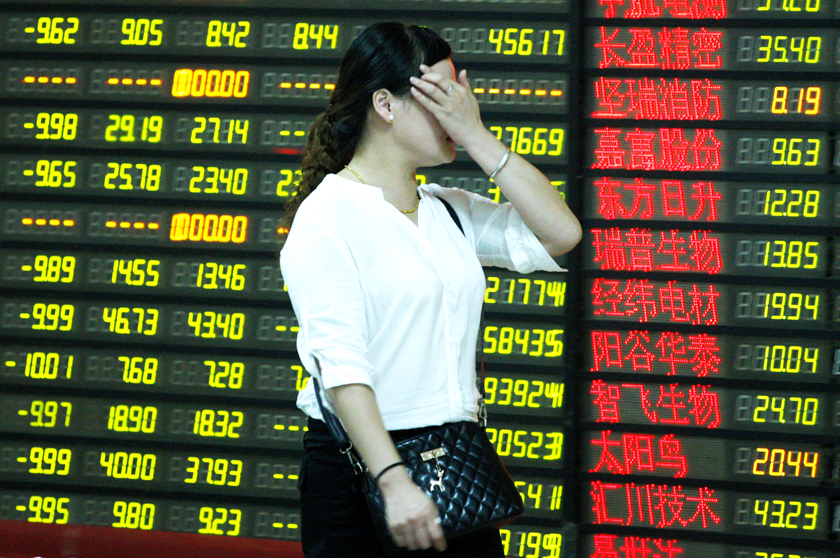
Pickup Armi HarrisPhotograph by Xie Zhengyi—ImagineChina

Investors from Manila to Munich to Manhattan were aghast at the spectacle of market contagion during August’s global stock-price meltdown—all those markets and many more took a heavy hit. What’s an investor to do when a bursting bubble in China can wipe trillions of dollars from the value of assets on every continent?

It’s a good question, and it has an answer: Celebrate. Not that a plunge in net worth makes anyone want to raise a glass (a bottle, maybe). But the worldwide rout is evidence of an emerging financial order that is, on the whole, a good thing. Here’s how to think about it.

We increasingly live in one big capitalist world. Obviously some countries aren’t there yet, and a few don’t want to be. National economies don’t move in sync and probably never will. That’s not what matters most. What counts is that the world’s capital is more willing and able than ever to go anywhere, moving around the globe as comfortably as Carlos Ghosn or Beyoncé. A given investor’s mutual fund money at a ­given moment might plausibly be in any or all of the world’s stock markets.

The evidence is striking. Global foreign-exchange trading is around $5 trillion a day. Worldwide trading in goods and services is about 1% of that amount. In other words, all that money on the move is 1% trade, 99% ­finance—investors operating globally.

The result is that market contagion is no longer a concept that makes much sense. To say that stocks in London dropped because of contagion from the Shanghai market is like saying that stocks on Nasdaq fell because of contagion from the New York Stock Exchange. In one case the two exchanges are on opposite sides of the planet, while in the other case they’re separated by a 20-minute subway ride. But none of them are anyplace, really, except in a bunch of servers, receiving buy and sell orders from other computers around the world. It is, increasingly, one big system.

But hold on—China clearly had a stock bubble and bust, which clearly moved markets around the world. How is that not contagion? Well, maybe it is, but then “contagion” is just an alarming word for an ordinary phenomenon. Bubbles inflate in asset classes all the time, and the inevitable bust always has broader repercussions. A widespread fear now is that the global economy’s interconnectedness makes these classic patterns bigger and more dangerous. But the August crash, frightening though it was for a few days, wasn’t anything special. U.S. markets fell further in 2011, and European markets did so in 2008. Even the Shanghai market rocketed higher and plunged deeper from June 2006 to October 2008.

In the one big system, markets aren’t any more or less rational than before. The madness of crowds still happens. Investing fashions come and go. Making markets bigger or smaller doesn’t make investors wiser. But a bigger system does bring in more participants with different perspectives, motivations, and information. They may behave like a crazed crowd for a while, but broad diversity can also bring steadiness. It’s worth noting that the August correction in U.S. stocks—a drop of roughly 10% from recent highs—­lasted all of three days.

A more global financial system certainly isn’t perfect, as we learned in the financial crisis, and it won’t banish bad times. But it brings more liquidity, more opportunity, better price discovery, and more economic efficiency. That’s progress. Why call it by a nasty name? 

A version of this article appears in the September 15, 2015 issue of Fortune magazine with the headline “The new financial order.”
About the Author
Geoff Colvin
By Geoff ColvinSenior Editor-at-Large
LinkedIn iconTwitter icon

Geoff Colvin is a senior editor-at-large at Fortune, covering leadership, globalization, wealth creation, the infotech revolution, and related issues.

See full bioRight Arrow Button Icon

Latest in Finance

CryptoBinance
Binance has been proudly nomadic for years. A new announcement suggests it’s finally chosen a headquarters
By Ben WeissDecember 7, 2025
3 hours ago
Big TechOpenAI
OpenAI goes from stock market savior to burden as AI risks mount
By Ryan Vlastelica and BloombergDecember 7, 2025
7 hours ago
InvestingStock
What bubble? Asset managers in risk-on mode stick with stocks
By Julien Ponthus, Natalia Kniazhevich, Abhishek Vishnoi and BloombergDecember 7, 2025
8 hours ago
EconomyTariffs and trade
Macron warns EU may hit China with tariffs over trade surplus
By James Regan and BloombergDecember 7, 2025
8 hours ago
EconomyTariffs and trade
U.S. trade chief says China has complied with terms of trade deals
By Hadriana Lowenkron and BloombergDecember 7, 2025
8 hours ago
PoliticsCongress
Leaders in Congress outperform rank-and-file lawmakers on stock trades by up to 47% a year, researchers say
By Jason MaDecember 7, 2025
8 hours ago

Most Popular

placeholder alt text
Real Estate
The 'Great Housing Reset' is coming: Income growth will outpace home-price growth in 2026, Redfin forecasts
By Nino PaoliDecember 6, 2025
2 days ago
placeholder alt text
AI
Nvidia CEO says data centers take about 3 years to construct in the U.S., while in China 'they can build a hospital in a weekend'
By Nino PaoliDecember 6, 2025
2 days ago
placeholder alt text
Economy
The most likely solution to the U.S. debt crisis is severe austerity triggered by a fiscal calamity, former White House economic adviser says
By Jason MaDecember 6, 2025
1 day ago
placeholder alt text
Economy
JPMorgan CEO Jamie Dimon says Europe has a 'real problem’
By Katherine Chiglinsky and BloombergDecember 6, 2025
1 day ago
placeholder alt text
Big Tech
Mark Zuckerberg rebranded Facebook for the metaverse. Four years and $70 billion in losses later, he’s moving on
By Eva RoytburgDecember 5, 2025
3 days ago
placeholder alt text
Politics
Supreme Court to reconsider a 90-year-old unanimous ruling that limits presidential power on removing heads of independent agencies
By Mark Sherman and The Associated PressDecember 7, 2025
16 hours ago
Rankings
  • 100 Best Companies
  • Fortune 500
  • Global 500
  • Fortune 500 Europe
  • Most Powerful Women
  • Future 50
  • World’s Most Admired Companies
  • See All Rankings
Sections
  • Finance
  • Leadership
  • Success
  • Tech
  • Asia
  • Europe
  • Environment
  • Fortune Crypto
  • Health
  • Retail
  • Lifestyle
  • Politics
  • Newsletters
  • Magazine
  • Features
  • Commentary
  • Mpw
  • CEO Initiative
  • Conferences
  • Personal Finance
  • Education
Customer Support
  • Frequently Asked Questions
  • Customer Service Portal
  • Privacy Policy
  • Terms Of Use
  • Single Issues For Purchase
  • International Print
Commercial Services
  • Advertising
  • Fortune Brand Studio
  • Fortune Analytics
  • Fortune Conferences
  • Business Development
About Us
  • About Us
  • Editorial Calendar
  • Press Center
  • Work At Fortune
  • Diversity And Inclusion
  • Terms And Conditions
  • Site Map

© 2025 Fortune Media IP Limited. All Rights Reserved. Use of this site constitutes acceptance of our Terms of Use and Privacy Policy | CA Notice at Collection and Privacy Notice | Do Not Sell/Share My Personal Information
FORTUNE is a trademark of Fortune Media IP Limited, registered in the U.S. and other countries. FORTUNE may receive compensation for some links to products and services on this website. Offers may be subject to change without notice.