• Home
  • News
  • Fortune 500
  • Tech
  • Finance
  • Leadership
  • Lifestyle
  • Rankings
  • Multimedia
TechBig Data

Why LinkedIn is important to the future of the Internet of things

By
Derrick Harris
Derrick Harris
Down Arrow Button Icon
By
Derrick Harris
Derrick Harris
Down Arrow Button Icon
September 2, 2015, 4:05 PM ET
Social Media Illustrations
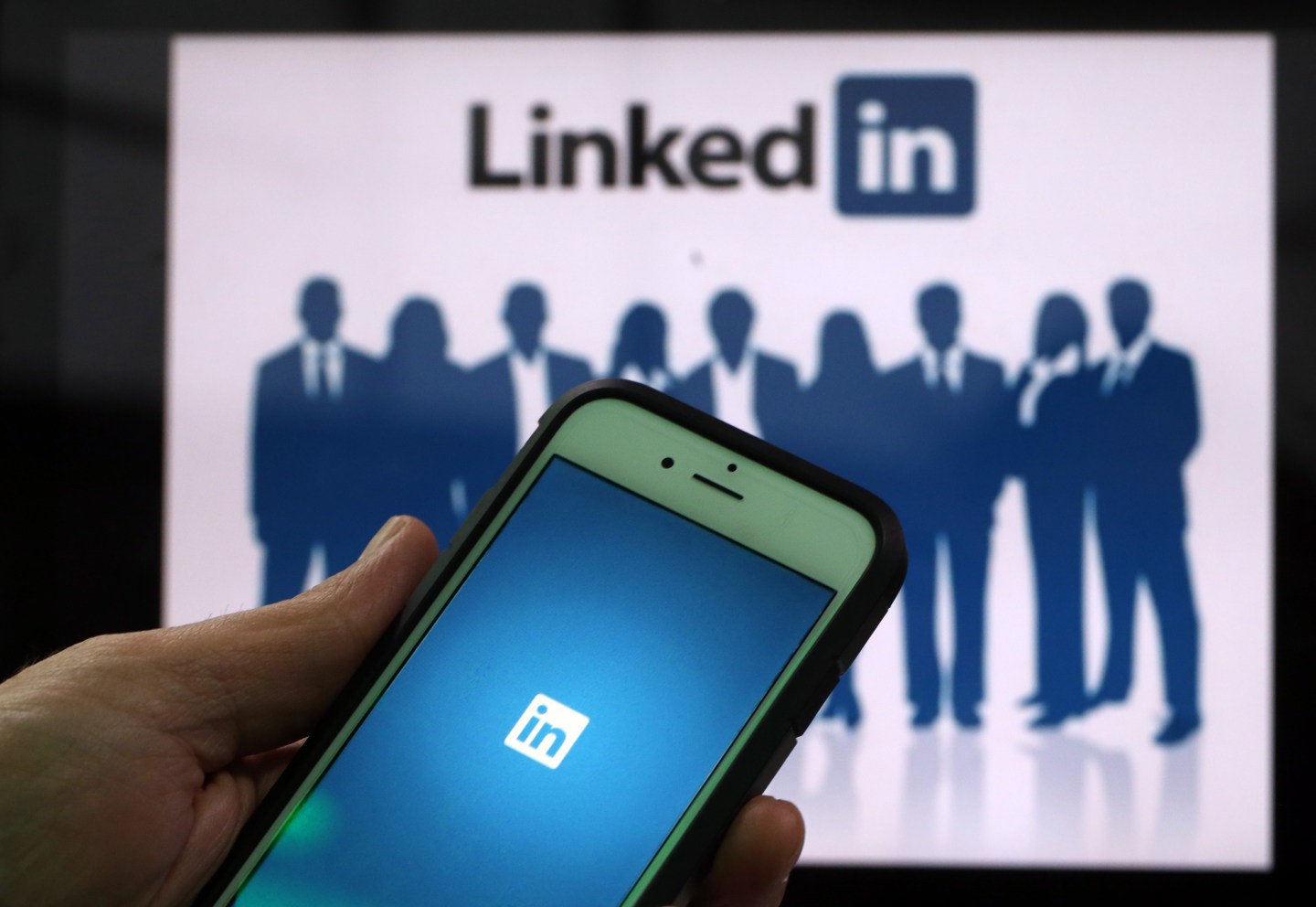
The LinkedIn Corp. logo is displayed on the screens of an Apple Inc. iPhone 6 and a laptop in this arranged photograph taken in London, U.K., on Friday, May, 15, 2015. Facebook Inc. reached a deal with New York Times Co. and eight other media outlets to post stories directly to the social network's mobile news feeds, as publishers strive for new ways to expand their reach. Photographer: Chris Ratcliffe/Bloomberg via Getty ImagesPhotograph by Chris Ratcliffe — Bloomberg via Getty Images

LinkedIn (LNKD) is not often thought of as a technological giant on par with Google or Facebook, but the professional networking pioneer has made some significant contributions to the way that companies capture and analyze the mountains of data they’re generating. Undoubtedly the biggest is an open source technology called Kafka that was originally developed to pass messages between the pieces of LinkedIn’s sprawling web application, but which is now becoming a fundamental component of the Internet of things—the movement to connect everything from toothbrushes to jet engines.

At a high level, Kafka works by receiving “messages” from one system—that Derrick Harris has edited his profile, for example—and sending them to other systems that needs that information, often in real-time. These are things like a standard database, a big data processing engine (e.g., Hadoop) and the system that powers LinkedIn’s People You May Know feature. It’s a relatively simple function that is very difficult to pull off at when you’re a major web company dealing with huge volumes of fast-moving data.

On Wednesday, LinkedIn gave some more detail into its unique data challenges via a blog post, in which the company says Kafka handles 1 trillion messages per day. That’s the equivalent of 1.34 petabytes (or 1,340,000 gigabytes, or the storage capacity of about 10,468 base-model MacBook Airs) passing through the system each week. It’s also a 1,200% increase from the 1 billion messages that Kafka processed each day just five years ago.

That is can handle so much data—and the fact that it’s open source—has already made Kafka a big hit among other web companies, such as Netflix (NFLX), that have their own challenges brokering data among millions of users and dozens (or more) of backend systems.

kafkaarchitecture
Confluent

Conventional wisdom suggests Kafka is now poised to become a major factor in the Internet of things. Both CEOs and consumers will eventually start expecting more information faster from their connected things — from smart jewelry to sensor-heavy delivery trucks — and Kafka has already proven its ability to get the relevant data (and lots of it) from Point A to Point B in a flash. According to Wednesday’s blog post, enhanced security features, including encryption, are on their way, too.

A trio of former LinkedIn engineers who created Kafka while at the company have even formed a startup called Confluent, which has raised more than $30 million in venture capital less than a year into its existence. Its mission, as one might expect, is to commercialize Kafka and support its deployment at large, mainstream companies. Confluent, as well as other vendors in the big data space, is banking that the Internet of things could be a major driver for their technologies.

LinkedIn, however, is hardly the only web company responsible for developing the data-processing technologies that will eventually power our connected lives and businesses. Companies like Google (GOOG) and Facebook (FB) have developed fundamental tools for storing, processing, and serving huge amounts of data fast. And Twitter (TWTR) —a company that knows a thing or two about fast-flowing data—has driven the development of Storm, a real-time data-analysis technology already in use by early Internet of things adopters, as well as a newer, better version called Heron.

Sign up for Data Sheet, Fortune’s daily newsletter about the business of technology.

For more about LinkedIn, watch this Fortune video:
About the Author
By Derrick Harris
See full bioRight Arrow Button Icon

Latest in Tech

AIMeta
It’s ‘kind of jarring’: AI labs like Meta, Deepseek, and Xai earned some of the worst grades possible on an existential safety index
By Patrick Kulp and Tech BrewDecember 5, 2025
6 hours ago
Elon Musk
Big TechSpaceX
Musk’s SpaceX discusses record valuation, IPO as soon as 2026
By Edward Ludlow, Loren Grush, Lizette Chapman, Eric Johnson and BloombergDecember 5, 2025
6 hours ago
data center
EnvironmentData centers
The rise of AI reasoning models comes with a big energy tradeoff
By Rachel Metz, Dina Bass and BloombergDecember 5, 2025
6 hours ago
netflix
Arts & EntertainmentAntitrust
Hollywood writers say Warner takeover ‘must be blocked’
By Thomas Buckley and BloombergDecember 5, 2025
6 hours ago
person
CybersecurityDigital
Dictionaries’ words of the year are trying to tell us something about being online in 2025
By Roger J. KreuzDecember 5, 2025
7 hours ago
Greg Peters
Big TechMedia
Top analyst says Netflix’s $72 billion bet on Warner Bros. isn’t about the ‘death of Hollywood’ at all. It’s really about Google
By Nick LichtenbergDecember 5, 2025
9 hours ago

Most Popular

placeholder alt text
Economy
Two months into the new fiscal year and the U.S. government is already spending more than $10 billion a week servicing national debt
By Eleanor PringleDecember 4, 2025
2 days ago
placeholder alt text
Success
‘Godfather of AI’ says Bill Gates and Elon Musk are right about the future of work—but he predicts mass unemployment is on its way
By Preston ForeDecember 4, 2025
1 day ago
placeholder alt text
Success
Nearly 4 million new manufacturing jobs are coming to America as boomers retire—but it's the one trade job Gen Z doesn't want
By Emma BurleighDecember 4, 2025
2 days ago
placeholder alt text
Success
Nvidia CEO Jensen Huang admits he works 7 days a week, including holidays, in a constant 'state of anxiety' out of fear of going bankrupt
By Jessica CoacciDecember 4, 2025
1 day ago
placeholder alt text
Real Estate
‘There is no Mamdani effect’: Manhattan luxury home sales surge after mayoral election, undercutting predictions of doom and escape to Florida
By Sasha RogelbergDecember 4, 2025
1 day ago
placeholder alt text
Economy
Tariffs and the $38 trillion national debt: Kevin Hassett sees ’big reductions’ in deficit while Scott Bessent sees a ‘shrinking ice cube’
By Nick LichtenbergDecember 4, 2025
1 day ago
Rankings
  • 100 Best Companies
  • Fortune 500
  • Global 500
  • Fortune 500 Europe
  • Most Powerful Women
  • Future 50
  • World’s Most Admired Companies
  • See All Rankings
Sections
  • Finance
  • Leadership
  • Success
  • Tech
  • Asia
  • Europe
  • Environment
  • Fortune Crypto
  • Health
  • Retail
  • Lifestyle
  • Politics
  • Newsletters
  • Magazine
  • Features
  • Commentary
  • Mpw
  • CEO Initiative
  • Conferences
  • Personal Finance
  • Education
Customer Support
  • Frequently Asked Questions
  • Customer Service Portal
  • Privacy Policy
  • Terms Of Use
  • Single Issues For Purchase
  • International Print
Commercial Services
  • Advertising
  • Fortune Brand Studio
  • Fortune Analytics
  • Fortune Conferences
  • Business Development
About Us
  • About Us
  • Editorial Calendar
  • Press Center
  • Work At Fortune
  • Diversity And Inclusion
  • Terms And Conditions
  • Site Map

© 2025 Fortune Media IP Limited. All Rights Reserved. Use of this site constitutes acceptance of our Terms of Use and Privacy Policy | CA Notice at Collection and Privacy Notice | Do Not Sell/Share My Personal Information
FORTUNE is a trademark of Fortune Media IP Limited, registered in the U.S. and other countries. FORTUNE may receive compensation for some links to products and services on this website. Offers may be subject to change without notice.