• Home
  • Latest
  • Fortune 500
  • Finance
  • Tech
  • Leadership
  • Lifestyle
  • Rankings
  • Multimedia

Trendingnow

1

As Big Tech showers employees with perks to win the talent war, Nvidia built a nearly $5 trillion company by making people pay for their own lunch

2

Mark Zuckerberg feeds his cows macadamia nuts and beer to create the 'highest-quality beef in the world' on his $300 million estate in Hawaii

3

MacKenzie Scott alone accounted for one-third of America's $19.2 billion in megagifts last year

1

As Big Tech showers employees with perks to win the talent war, Nvidia built a nearly $5 trillion company by making people pay for their own lunch

2

Mark Zuckerberg feeds his cows macadamia nuts and beer to create the 'highest-quality beef in the world' on his $300 million estate in Hawaii

3

MacKenzie Scott alone accounted for one-third of America's $19.2 billion in megagifts last year
CommentaryTrans-Pacific Parternship

Why free trade agreements don’t really deliver free trade

By
Alan Wolff
Alan Wolff
Down Arrow Button Icon
By
Alan Wolff
Alan Wolff
Down Arrow Button Icon
August 13, 2015, 10:05 AM ET
117046654
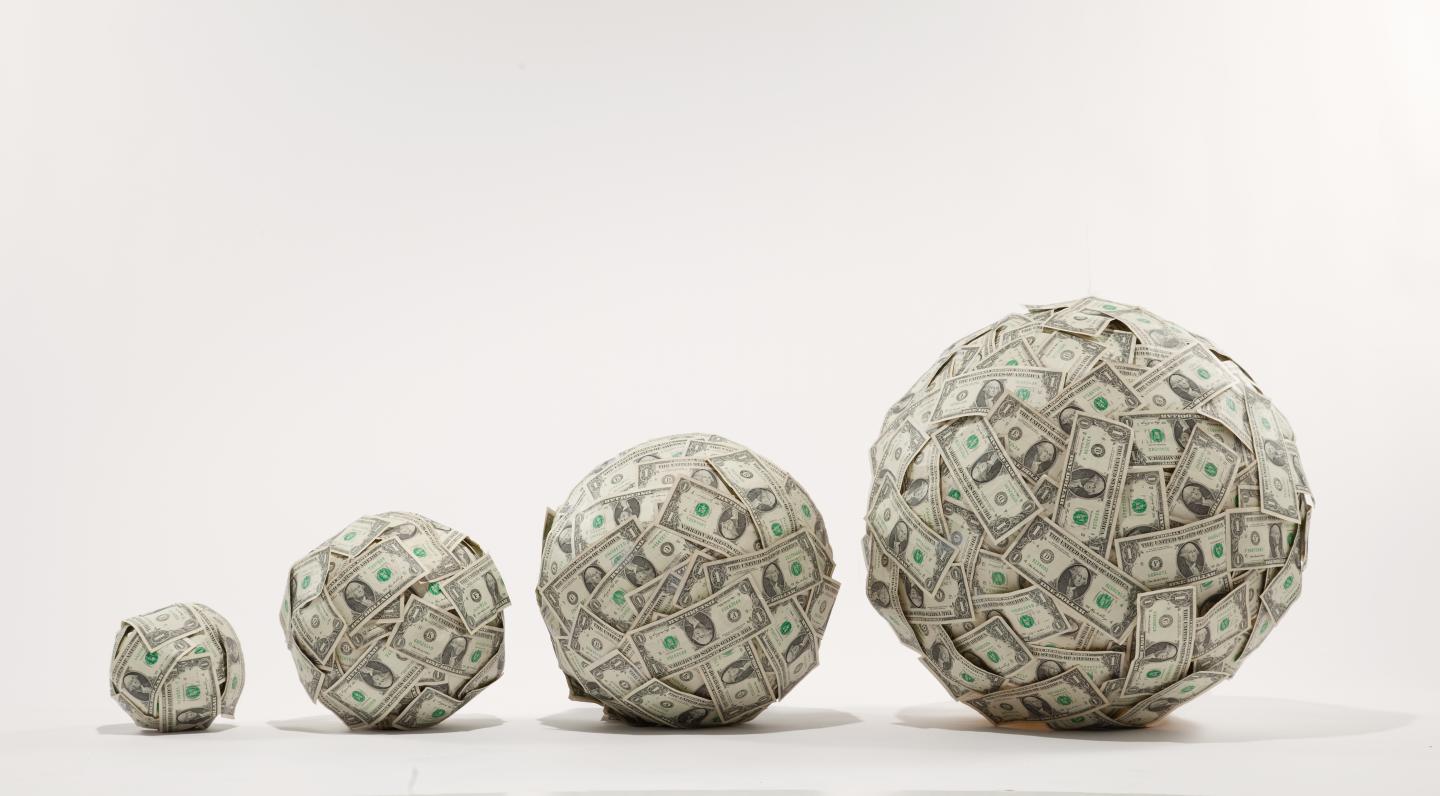
Growing balls of moneyPhotograph by Getty Images
Add Fortune on Google for similar content.

As officials last week approached what they hoped would be the final week of negotiations of a Pacific Rim trade deal involving nearly 40% of the world’s economy, one of the most contentious issues between the U.S. and Japan turned out to be the handling of the 25% U.S. tariff on pick-ups and SUVs. Since the weighted average American tariff on industrial products is 1.5% on industrial products, one might think that there was some scientific or policy reason that exists for high protection on these very popular vehicles.

Actually, that high tariff stems from a spat that took place 50 years ago. When the European Common Market was being formed in the 1960s, it restricted imports of chicken from America, and could not be convinced to budge of the new high protection, there ensued the so-called “Chicken War.” To even the score for the fact that chickens from America couldn’t cross the Atlantic in reasonable numbers, the United States placed high tariffs on cognac, potato starch, dextrin, and yes, small trucks. This last was to penalize German trade at a time when Volkswagen busses were a popular import. All of these tariffs were applied against imports from all countries, but were designed to hit European products. The tariffs on three of the retaliation items gradually got reduced, but not the truck tariff. Why? Because Japan became highly competitive in small trucks. So, although the penalty tariff was originally aimed at Germany, it never was removed, as it came to protect Detroit against Japan – sort of.

As a result of the light truck tariff, Japanese auto companies relocated much of their production to the United States. So it was that a fight with Europe over chickens gave the initial impetus causing Toyota, Nissan, Honda and Subaru to open pick-up truck and later SUV plants across the United States, although these Japanese car companies no doubt found value in being closer to this very large market.

In 2012, a new “free trade agreement” (FTA) between the United States and Korea came into force. Under this agreement, Korea is slated to gain duty free access to the U.S. market for light trucks phased in over the closing three years of this decade. FTAs are discriminatory; that is, the benefits apply only to the signatories. For this reason, as Japan negotiates with other world leaders on a Trans-Pacific Trade agreement, Japan would like to get the U.S. light truck tariff down for direct shipments from Japan. Had the deal closed in Maui in July, Japan would have gotten its wish, but conditionally, and phased in over an extended period.

Of course there would have been U.S. requests of Japan as well – with U.S. carmakers to gain additional access to the Japanese market. In addition, Detroit would like as an additional preconditions for Japan gaining duty-free access to the U.S. market, an enforceable provision against currency manipulation.

Other major problem blocking a TPP agreement from coming together in Maui were longstanding protections against sugar and dairy imports. In colonial times, the British crown imposed sugar tariffs on sugar and molasses entering from the Caribbean to maintain a profitable trade for the crown, America’s colonial master. While British rule was ended, the tariffs persisted well past American independence, however.

The original purpose for the 1789 American sugar tariff was to raise revenue (in those days almost all Federal tax revenues came from tariffs), but thanks to the income tax coming into effect in 1913 and global trade barriers generally being reduced, tariffs are no longer a large portion of U.S. government revenues. Nevertheless, tight restrictions on sugar imports remain, affording protection to sugar beet production in the Midwest and cane in the Gulf states. The net result – the price of sugar in the United States is almost half again as high as world market prices. Were American consumers told that they were to pay a 40 cents per pound tax on sugar, and a proportional tax on sugar-containing candy and baked goods, there might be another American rebellion, this time by consumers. But the cost of the protection in sugar is buried deep in the supply chain and appears to go unnoticed.

Australia exports sugar at the far lower world market prices. In the current TPP agreement, Australia never aspired to getting the U.S. to scrap its entire sugar import quota system. It simply wanted (and wants) to ship more of its sugar to the U.S. The two parties are still far apart. The reported Australian request is a very small fraction of the U.S. market and the reported U.S. offer is only a fraction of that fraction.

Yet another area of steep protection is dairy – cheese, milk, milk powder, butter and the like. The request for trade liberalization has been made by a number of TPP parties having efficient dairy production (most prominently New Zealand) to the U.S., Canada and Japan. In the talks at Maui, no great willingness was shown to agree to dramatically liberalize trade in these products. This greatly complicates trying to strike a deal where dairy and sugar are important export interests of a number of the parties.

Nor will there be much far-reaching change to allow greater freedom for trade in apparel products. Another substantial trade interest.

The irony of “free trade agreements” is that they do not deliver truly free trade for everything among the parties. The agreements do make progress — within the bounds of what is considered politically feasible at the time. And there is always the hope that the progress could be really substantial.

Looking at the needs of the world economy as a whole, and the U.S. in particular, more will be required. We cannot get what we want if others cannot achieve some of their objectives. And that goes not only for the U.S., but for Canada and Japan as well. A major push should be made in September for a high value Trans-Pacific agreement.

Alan Wolff practices law in Washington D.C. with Dentons and chairman of the National Foreign Trade Council. He is a former U.S. Deputy Trade Representative.

About the Author
By Alan Wolff
See full bioRight Arrow Button Icon
Add Fortune on Google for similar content.

Latest in Commentary

Finance
Lorem ipsum dolor sit amet, consectetur adipiscing elit, sed do eiusmod tempor incididunt ut labore et dolore magna aliqua. Ut enim ad minim veniam
By Fortune Editors
October 20, 2025
Finance
Lorem ipsum dolor sit amet, consectetur adipiscing elit, sed do eiusmod tempor incididunt ut labore et dolore magna aliqua. Ut enim ad minim veniam
By Fortune Editors
October 20, 2025
Finance
Lorem ipsum dolor sit amet, consectetur adipiscing elit, sed do eiusmod tempor incididunt ut labore et dolore magna aliqua. Ut enim ad minim veniam
By Fortune Editors
October 20, 2025
Finance
Lorem ipsum dolor sit amet, consectetur adipiscing elit, sed do eiusmod tempor incididunt ut labore et dolore magna aliqua. Ut enim ad minim veniam
By Fortune Editors
October 20, 2025
Finance
Lorem ipsum dolor sit amet, consectetur adipiscing elit, sed do eiusmod tempor incididunt ut labore et dolore magna aliqua. Ut enim ad minim veniam
By Fortune Editors
October 20, 2025
Finance
Lorem ipsum dolor sit amet, consectetur adipiscing elit, sed do eiusmod tempor incididunt ut labore et dolore magna aliqua. Ut enim ad minim veniam
By Fortune Editors
October 20, 2025

Most Popular

Finance
Lorem ipsum dolor sit amet, consectetur adipiscing elit, sed do eiusmod tempor incididunt ut labore et dolore magna aliqua. Ut enim ad minim veniam
By Fortune Editors
October 20, 2025
Finance
Lorem ipsum dolor sit amet, consectetur adipiscing elit, sed do eiusmod tempor incididunt ut labore et dolore magna aliqua. Ut enim ad minim veniam
By Fortune Editors
October 20, 2025
Finance
Lorem ipsum dolor sit amet, consectetur adipiscing elit, sed do eiusmod tempor incididunt ut labore et dolore magna aliqua. Ut enim ad minim veniam
By Fortune Editors
October 20, 2025
Finance
Lorem ipsum dolor sit amet, consectetur adipiscing elit, sed do eiusmod tempor incididunt ut labore et dolore magna aliqua. Ut enim ad minim veniam
By Fortune Editors
October 20, 2025
Finance
Lorem ipsum dolor sit amet, consectetur adipiscing elit, sed do eiusmod tempor incididunt ut labore et dolore magna aliqua. Ut enim ad minim veniam
By Fortune Editors
October 20, 2025
Finance
Lorem ipsum dolor sit amet, consectetur adipiscing elit, sed do eiusmod tempor incididunt ut labore et dolore magna aliqua. Ut enim ad minim veniam
By Fortune Editors
October 20, 2025
Fortune Secondary Logo
Rankings
  • 100 Best Companies
  • Fortune 500
  • Global 500
  • Fortune 500 Europe
  • Most Powerful Women
  • World's Most Admired Companies
  • See All Rankings
  • Lists Calendar
Sections
  • Finance
  • Fortune Crypto
  • Features
  • Leadership
  • Health
  • Commentary
  • Success
  • Retail
  • Mpw
  • Tech
  • Lifestyle
  • CEO Initiative
  • Asia
  • Politics
  • Conferences
  • Europe
  • Newsletters
  • Personal Finance
  • Environment
  • Magazine
  • Education
Customer Support
  • Frequently Asked Questions
  • Customer Service Portal
  • Privacy Policy
  • Terms Of Use
  • Single Issues For Purchase
  • International Print
Commercial Services
  • Advertising
  • Fortune Brand Studio
  • Fortune Analytics
  • Fortune Conferences
  • Business Development
  • Group Subscriptions
About Us
  • About Us
  • Press Center
  • Work At Fortune
  • Terms And Conditions
  • Site Map
  • About Us
  • Press Center
  • Work At Fortune
  • Terms And Conditions
  • Site Map
  • Facebook icon
  • Twitter icon
  • LinkedIn icon
  • Instagram icon
  • Pinterest icon

Latest in Commentary

rn
CommentaryCryptocurrency
Former Iran director at NSC: Crypto legislation is a ticket to sanctions evasion
By Richard NephewJuly 2, 2026
14 hours ago
m
Commentary250 Years of Innovation
McKinsey chairs: Building a more resilient industrial base may require $2 trillion in investment
By Eric Kutcher and Shubham SinghalJuly 2, 2026
14 hours ago
em
Commentary250 Years of Innovation
America’s 250th birthday has Elon Musk and a record IPO. Its 15th had Alexander Hamilton — and a stock market bubble
By Owen LamontJuly 2, 2026
17 hours ago
paramount
CommentaryAntitrust
How Paramount’s theater commitments could boost local economies across the nation
By Ike BrannonJuly 2, 2026
17 hours ago
elon
CommentaryChina
China has 400 private space companies. The West is barely paying attention
By Rainer ZitelmannJuly 2, 2026
19 hours ago
senate
CommentaryCongress
One rare bipartisan AI bill is moving through Congress. Here’s why it deserves to pass
By Neil Björkman and Betsy BrewerJuly 1, 2026
2 days ago

Most Popular

As Big Tech showers employees with perks to win the talent war, Nvidia built a nearly $5 trillion company by making people pay for their own lunch
Big Tech
As Big Tech showers employees with perks to win the talent war, Nvidia built a nearly $5 trillion company by making people pay for their own lunch
By Marco Quiroz-GutierrezJuly 1, 2026
2 days ago
Mark Zuckerberg feeds his cows macadamia nuts and beer to create the 'highest-quality beef in the world' on his $300 million estate in Hawaii
Success
Mark Zuckerberg feeds his cows macadamia nuts and beer to create the 'highest-quality beef in the world' on his $300 million estate in Hawaii
By Sasha RogelbergJuly 2, 2026
11 hours ago
MacKenzie Scott alone accounted for one-third of America's $19.2 billion in megagifts last year
Success
MacKenzie Scott alone accounted for one-third of America's $19.2 billion in megagifts last year
By Sydney LakeJune 25, 2026
8 days ago
Today, Emily Blunt is worth $80 million thanks to her Hollywood career—but she actually wanted to be a UN Spanish translator on $80K
Success
Today, Emily Blunt is worth $80 million thanks to her Hollywood career—but she actually wanted to be a UN Spanish translator on $80K
By Orianna Rosa RoyleJuly 2, 2026
21 hours ago
Americans are escaping the U.S. for New Zealand where house prices have hit a new low—but only wealthy Americans with $3 million spare can invest
Success
Americans are escaping the U.S. for New Zealand where house prices have hit a new low—but only wealthy Americans with $3 million spare can invest
By Emma BurleighJuly 2, 2026
13 hours ago
Current price of oil as of July 2, 2026
Personal Finance
Current price of oil as of July 2, 2026
By Joseph HostetlerJuly 2, 2026
14 hours ago

© 2026 Fortune Media IP Limited. All Rights Reserved. Use of this site constitutes acceptance of our Terms of Use and Privacy Policy | CA Notice at Collection and Privacy Notice | Do Not Sell/Share My Personal Information
FORTUNE is a trademark of Fortune Media IP Limited, registered in the U.S. and other countries. FORTUNE may receive compensation for some links to products and services on this website. Offers may be subject to change without notice.