• Home
  • News
  • Fortune 500
  • Tech
  • Finance
  • Leadership
  • Lifestyle
  • Rankings
  • Multimedia
Tech

The cellphone contract era is so dead

By
Kevin Fitchard
Kevin Fitchard
Down Arrow Button Icon
By
Kevin Fitchard
Kevin Fitchard
Down Arrow Button Icon
August 10, 2015, 2:52 PM ET
Google Cloud Event With VP Of Operations Urs Holzle
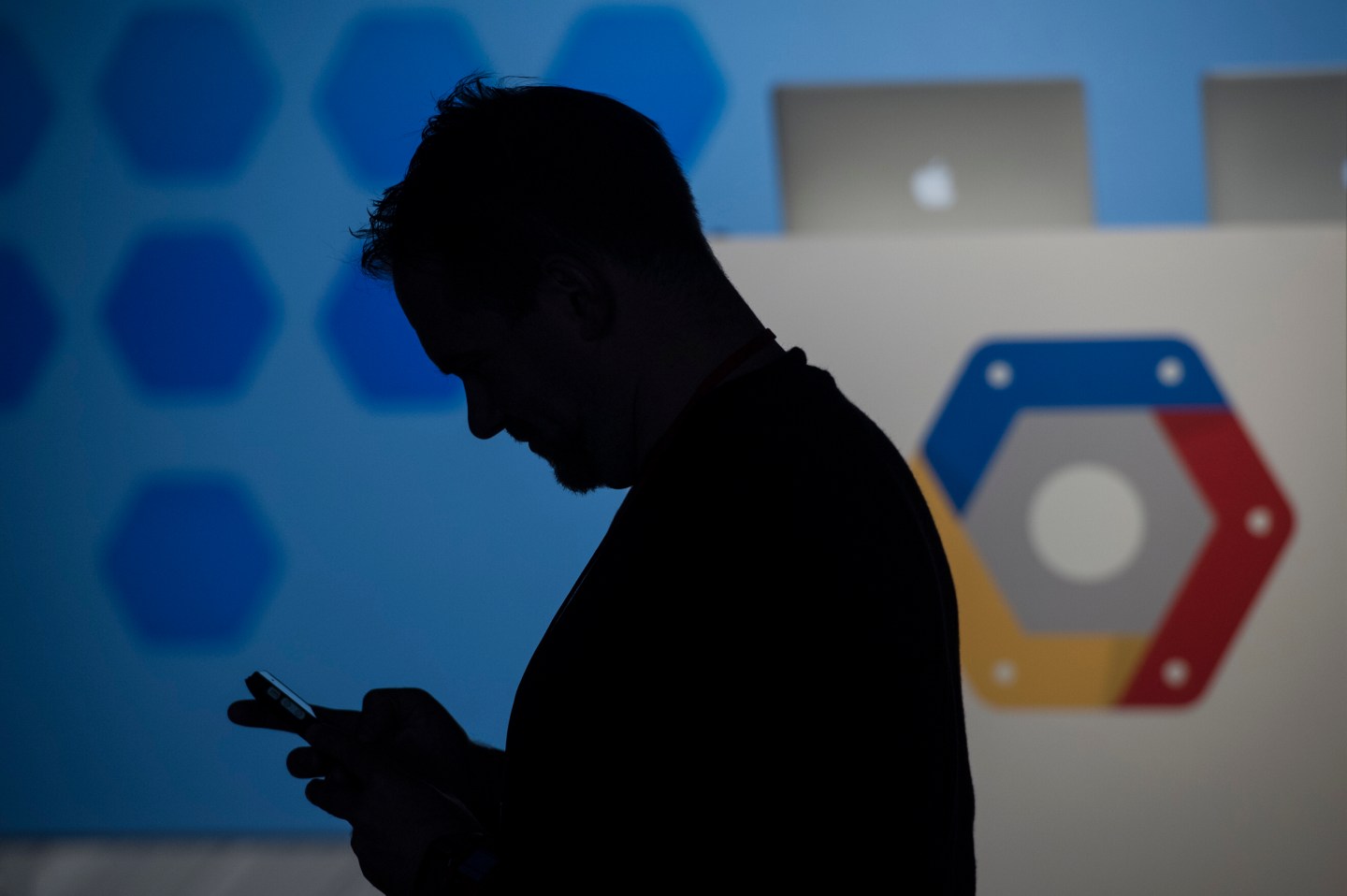
The silhouette of an attendee is seen checking his mobile phone prior to a Google Inc. Cloud event in San Francisco, California, U.S., on Thursday, March 25, 2014. Google Inc. cut prices on some Internet-based services for businesses by 30 percent or more, stepping up a challenge to Amazon.com Inc. and Microsoft Corp. in cloud computing. Photographer: David Paul Morris/Bloomberg via Getty ImagesPhotograph by David Paul Morris — Bloomberg via Getty Images

On Friday, Verizon (VZ) made a big change to how it prices mobile services, which will have significant repercussions throughout the U.S. mobile industry. Last week, in an unexpected move, the company decided to eliminate service contracts. Verizon wasn’t the first to do so—T-Mobile (TMUS) took that step two years ago—but it’s one of the biggest names in the mobile business to make that change.

The reason why the end of contracts is so important is because it gives consumers a much clearer sense of what they’re paying—and often overpaying—for when they buy a phone and sign up for a mobile plan. By getting rid of cellphone contracts Verizon will give consumers much more flexibility in choosing a phone, drive down service plan costs, and encourage a much more fluid phone market that will allow customers the opportunity to move between mobile operators.

When consumers sign up for a contract in the U.S., they typically get a steep discount on their phone—known as a subsidy—but carriers aren’t just eating that cost. They’re charging customers much higher monthly plan fees in order to make up for that subsidy.

Over the life of a mobile contract, those hidden fees can add up to much more than a phone is worth. And while under contract, consumers are locked into a chosen carrier for up to two years, even if its service is suffering or coverage declines. Many customers also continue to pay hidden fees after their contracts are up, essentially making mortgage payments on a phone they already own outright.

Verizon’s new rates will separate devices from their steep service costs. The company has reduced its access fee (which includes the cost of maintaining your phone number and unlimited voice and messaging) from $40 to $20 a month. Customers can also pick a data plan from 1 to 12 GB for $30 to $80 a month, which can be shared with other Verizon devices. The trade off is customers either have to pay the full cost of a new phone up front or buy it on installment. They can also option, however, to get a used phone online or bring on old Verizon phone to the network. And if they ever get sick of Verizon, they can simply leave, though they would still be responsible for paying off a phone they bought on credits.

However, Verizon’s new rates still aren’t cheap, but the company has never been an inexpensive carrier. It’s always charged premium prices for good coverage and reliability. The important thing to note is it’s now normalizing its rates, allowing customers to see how much their service plan costs versus the cost of their phones. From there, they can make a much more informed decision about whether Verizon’s higher fees are worth it.

Verizon latest move means it now joins T-Mobile by becoming entirely contract free, but there are plenty of signs the rest of the industry is heading in that direction too. AT&T now charges separate monthly rates depending on whether customers buy their phones on contract or pay for them separately. Last year the company even started forgiving contracts if customers moved over to unsubsidized plans such as its Next upgrade program. Now that Verizon is giving up the contract ghost, AT&T will likely follow.

The end of contracts won’t be all sunshine and roses for consumers, though. Many are likely to experience sticker shock as the new iPhone they thought only cost $200 suddenly is priced at $650. Also, even without contracts, operators are finding ways to lock customers into long-term commitments, either through installment plans or through new upgrade programs, which are really rental plans in disguise. T-Mobile’s Jump and Sprint’s All In plans charge you a monthly leasing fee, and after you complete its terms you can trade in that phone for a new one.

Finally, though a contract-less world means customers are free to move between carriers at their pleasure, in practice there is a technical limitation to that mobility. The big four operators use different 2G technologies in their voice networks and they run their 4G data networks on different spectrum bands. While there are an increasing number of universal high-end phones that can work on any network, many devices will only work on a specific carrier or set of carriers’ networks in the U.S.

Despite those limitations, the end of contracts and subsidies will only be a good thing for U.S. consumers. The U.S. traditionally has had some of the highest prices in the world. By separating the cost of the phone from the cost of the service, we’ll wind up paying more for our devices, but service plan prices will come down. Most importantly, we’ll be able to see exactly what we’re paying for.


About the Author
By Kevin Fitchard
See full bioRight Arrow Button Icon

Latest in Tech

satellite
AIData centers
Google’s plan to put data centers in the sky faces thousands of (little) problems: space junk
By Mojtaba Akhavan-TaftiDecember 3, 2025
9 hours ago
Mark Zuckerberg, chief executive officer of Meta Platforms Inc., during the Meta Connect event in Menlo Park, California, US, on Wednesday, Sept. 25, 2024.
AIMeta
Inside Silicon Valley’s ‘soup wars’: Why Mark Zuckerberg and OpenAI are hand-delivering soup to poach talent
By Eva RoytburgDecember 3, 2025
9 hours ago
Greg Abbott and Sundar Pichai sit next to each other at a red table.
AITech Bubble
Bank of America predicts an ‘air pocket,’ not an AI bubble, fueled by mountains of debt piling up from the data center rush
By Sasha RogelbergDecember 3, 2025
10 hours ago
Alex Karp smiles on stage
Big TechPalantir Technologies
Alex Karp credits his dyslexia for Palantir’s $415 billion success: ‘There is no playbook a dyslexic can master … therefore we learn to think freely’
By Lily Mae LazarusDecember 3, 2025
10 hours ago
Isaacman
PoliticsNASA
Billionaire spacewalker pleads his case to lead NASA, again, in Senate hearing
By Marcia Dunn and The Associated PressDecember 3, 2025
10 hours ago
Kris Mayes
LawArizona
Arizona becomes latest state to sue Temu over claims that its stealing customer data
By Sejal Govindarao and The Associated PressDecember 3, 2025
11 hours ago

Most Popular

placeholder alt text
North America
Jeff Bezos and Lauren Sánchez Bezos commit $102.5 million to organizations combating homelessness across the U.S.: ‘This is just the beginning’
By Sydney LakeDecember 2, 2025
2 days ago
placeholder alt text
Economy
Ford workers told their CEO 'none of the young people want to work here.' So Jim Farley took a page out of the founder's playbook
By Sasha RogelbergNovember 28, 2025
5 days ago
placeholder alt text
North America
Anonymous $50 million donation helps cover the next 50 years of tuition for medical lab science students at University of Washington
By The Associated PressDecember 2, 2025
2 days ago
placeholder alt text
C-Suite
MacKenzie Scott's $19 billion donations have turned philanthropy on its head—why her style of giving actually works
By Sydney LakeDecember 2, 2025
2 days ago
placeholder alt text
Innovation
Google CEO Sundar Pichai says we’re just a decade away from a new normal of extraterrestrial data centers
By Sasha RogelbergDecember 1, 2025
2 days ago
placeholder alt text
Economy
Scott Bessent calls the Giving Pledge well-intentioned but ‘very amorphous,’ growing from ‘a panic among the billionaire class’
By Nick LichtenbergDecember 3, 2025
11 hours ago
Rankings
  • 100 Best Companies
  • Fortune 500
  • Global 500
  • Fortune 500 Europe
  • Most Powerful Women
  • Future 50
  • World’s Most Admired Companies
  • See All Rankings
Sections
  • Finance
  • Leadership
  • Success
  • Tech
  • Asia
  • Europe
  • Environment
  • Fortune Crypto
  • Health
  • Retail
  • Lifestyle
  • Politics
  • Newsletters
  • Magazine
  • Features
  • Commentary
  • Mpw
  • CEO Initiative
  • Conferences
  • Personal Finance
  • Education
Customer Support
  • Frequently Asked Questions
  • Customer Service Portal
  • Privacy Policy
  • Terms Of Use
  • Single Issues For Purchase
  • International Print
Commercial Services
  • Advertising
  • Fortune Brand Studio
  • Fortune Analytics
  • Fortune Conferences
  • Business Development
About Us
  • About Us
  • Editorial Calendar
  • Press Center
  • Work At Fortune
  • Diversity And Inclusion
  • Terms And Conditions
  • Site Map

© 2025 Fortune Media IP Limited. All Rights Reserved. Use of this site constitutes acceptance of our Terms of Use and Privacy Policy | CA Notice at Collection and Privacy Notice | Do Not Sell/Share My Personal Information
FORTUNE is a trademark of Fortune Media IP Limited, registered in the U.S. and other countries. FORTUNE may receive compensation for some links to products and services on this website. Offers may be subject to change without notice.