• Home
  • Latest
  • Fortune 500
  • Finance
  • Tech
  • Leadership
  • Lifestyle
  • Rankings
  • Multimedia
Tech

Does Facebook have a duty to the news or to journalism, and if so what is it?

By
Mathew Ingram
Mathew Ingram
Down Arrow Button Icon
By
Mathew Ingram
Mathew Ingram
Down Arrow Button Icon
July 7, 2015, 3:14 PM ET
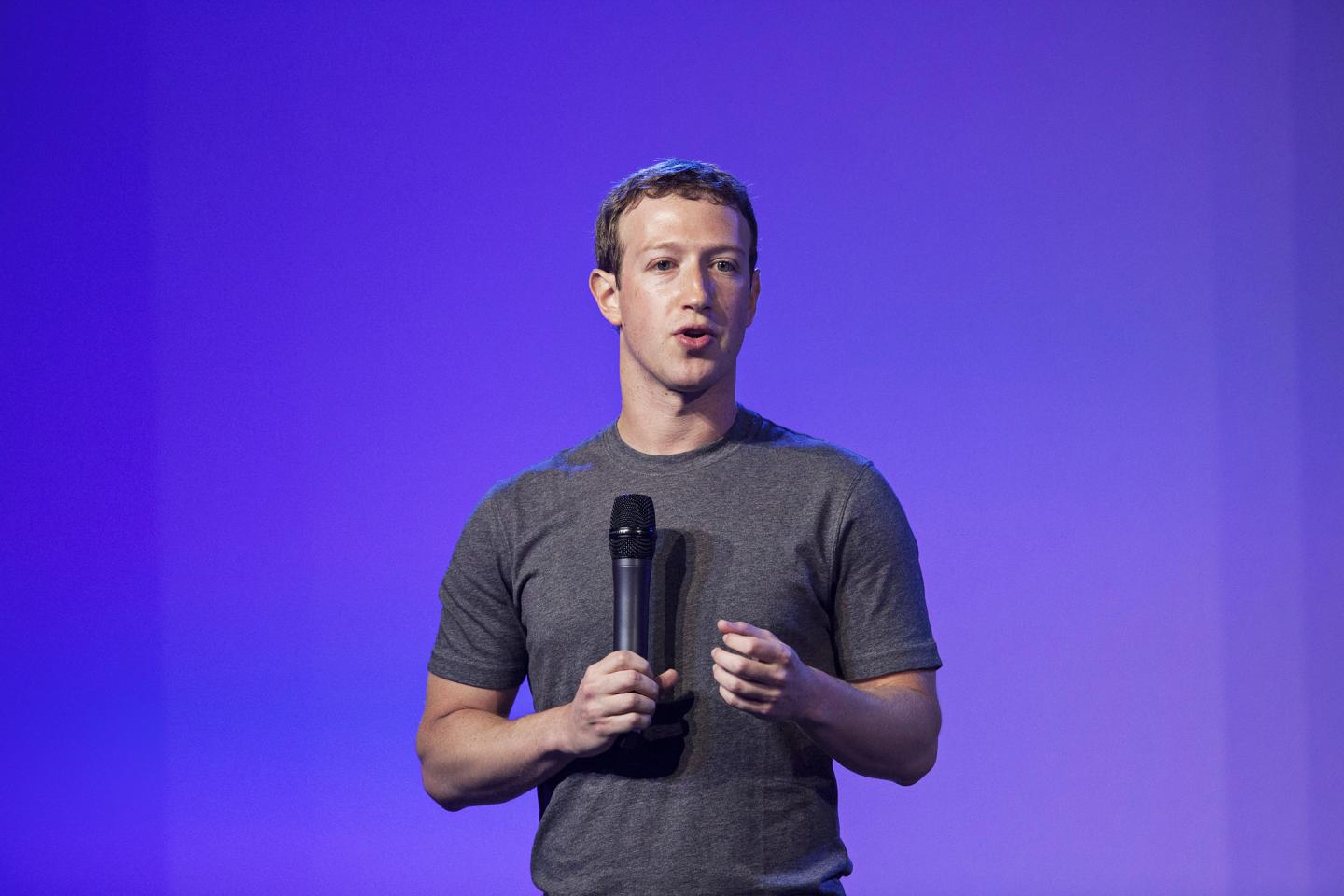
Facebook Chief Executive Officer Mark Zuckerberg Hosts Internet.org Summit
Mark Zuckerberg, chief executive officer of Facebook.Bloomberg Bloomberg via Getty Images

As Facebook takes on a larger and larger role as a platform for journalism, the debate continues to heat up over what its duties or responsibilities are towards the media industry—or if in fact it has any at all. The deal that the giant social network has cut with a number of media partners, including the New York Times and the Guardian, is that it will help make their articles look better if they are published directly through its mobile app under the “Instant Articles” program. In return, Facebook agrees to give those outlets a share of the revenue generated from the advertising around those articles.

This seems like a fairly straightforward business deal: Media companies get better distribution and a better mobile interface, and they get either 70% or 100% of the advertising revenue, depending on whether they sell the ads or they let Facebook (FB) sell them. But the arrangement has raised all kinds of difficult questions about whether it is actually a Faustian bargain—one that provides a much greater long-term benefit for Facebook than it does for the media outlets that provide the content.

One of the questions at the center of this debate is whether Facebook has any kind of responsibility to the news or to journalism. In a piece he wrote for Medium, CUNY journalism professor Jeff Jarvis tried to tackle some of these issues, and he splits it into two related questions: 1) Should an informed society be part of Facebook’s mission? and 2) Does the company bear any kind of civic responsibility for the news?

When it comes to #2, Jarvis seems to be arguing that Facebook does have a civic responsibility for delivering the news. Since the social network is in the position of being “a critical distribution channel,” Jarvis says—and will also soon be a key supporter of news organizations, both in terms of audience and revenue generation—then “certain responsibilities fall on its shoulders.” He turns to a recent lecture by Emily Bell of Columbia University to list these responsibilities, which include:

“Making sure news is accurate, which seems pretty basic; being accountable for it if it is not accurate; being transparent about the source of stories and information; standing up to governments, pressure groups, commercial interests, the police, if they intimidate, threaten or censor you. Protecting your sources against arrest and disclosure. Knowing when you have a strong enough public interest defence to break the law and being prepared to go to jail to defend your story and sources.”

This is a great list if you happen to be a newspaper or some other journalistic organization, but what are the odds that Facebook agrees that it bears some or all of these responsibilities, or that it has any duties whatsoever? I honestly don’t know, but my hunch would be that Facebook probably believes it has one over-arching duty, and that’s to generate as much revenue as possible for shareholders.

Is Facebook prepared to do the work required to make sure all of the news it publishes is accurate? Or to protect journalists from arrest and disclosure? Or to stand up to governments and commercial interests if they try to intimidate or censor the content on the network? In the past, the company has shown that it is more than willing to bend to the requirements of foreign governments who want certain content removed, and it deletes or hides content all the time based on its own interpretation of what users and brands want to see. How are journalists going to convince it otherwise?

In his essay, Jarvis is arguing that the media industry should enter into a kind of Peace Talks accord with Facebook, in order to convince the company that it needs to uphold certain journalistic principles—and that it needs to give media companies data about their readers, and other features and benefits, as opposed to just sharing advertising revenue. But what possible incentive could there be for Facebook to do any of this? The social network is the one holding all the cards.

In answer to the first question that he poses, whether informing the public should be part of Facebook’s mission, Jarvis says his answer would be no—but the main reason he says no is that a yes answer implies the social network might eventually decide to start creating its own news, by hiring journalists, rather than being beholden to media partners. This would be bad, Jarvis says. But bad for whom?

“If the answer were yes, then that would mean Facebook might be driven to hire its own reporters and editors and make its own content. In our discussion, Emily said she would welcome the platforms paying for journalists. I get her point: She’s asking who will pay for the work we do. But I say that creating its own news content would put Facebook — like Google and the other platforms — in channel conflict with the news ecosystem.”

Having Facebook become a media entity that reports and distributes its own news might be a disastrous outcome for existing media companies, but that’s not to say Facebook wouldn’t decide to do it anyway, if that was going to achieve its central goal of appealing to as many users as possible, and generating as much revenue as possible. In fact, the argument that it shouldn’t do this just brings us back to the central problem: Why should Facebook care about the news? And even if it does care about the news, in the sense that it wants content, why should it care about media companies?

Behind all of Jarvis’s questions are a series of assumptions, including a) The social network sees an informed public as a valuable or worthwhile goal, and b) It believes it has some duty or responsibility to treat media companies fairly, or to fulfill whatever journalistic role they believe it needs to take on. But it’s not clear that any of those assumptions are actually true. And it certainly doesn’t follow that the company would be interested in devoting its resources to helping existing media companies figure out how to adapt, or how to develop new technology, or how to make use of the data it has.

Jarvis says that when it comes to platforms like Facebook, media companies have to “build bridges, or we will be left as islands.” But even that assumes that the platforms in question are interested in having bridges. What if it turns out to be a bridge to nowhere, or the land owner changes the terms of the bridge deal and it suddenly becomes a toll road?

About the Author
By Mathew Ingram
See full bioRight Arrow Button Icon

Latest in Tech

Finance
Lorem ipsum dolor sit amet, consectetur adipiscing elit, sed do eiusmod tempor incididunt ut labore et dolore magna aliqua. Ut enim ad minim veniam
By Fortune Editors
October 20, 2025
Finance
Lorem ipsum dolor sit amet, consectetur adipiscing elit, sed do eiusmod tempor incididunt ut labore et dolore magna aliqua. Ut enim ad minim veniam
By Fortune Editors
October 20, 2025
Finance
Lorem ipsum dolor sit amet, consectetur adipiscing elit, sed do eiusmod tempor incididunt ut labore et dolore magna aliqua. Ut enim ad minim veniam
By Fortune Editors
October 20, 2025
Finance
Lorem ipsum dolor sit amet, consectetur adipiscing elit, sed do eiusmod tempor incididunt ut labore et dolore magna aliqua. Ut enim ad minim veniam
By Fortune Editors
October 20, 2025
Finance
Lorem ipsum dolor sit amet, consectetur adipiscing elit, sed do eiusmod tempor incididunt ut labore et dolore magna aliqua. Ut enim ad minim veniam
By Fortune Editors
October 20, 2025
Finance
Lorem ipsum dolor sit amet, consectetur adipiscing elit, sed do eiusmod tempor incididunt ut labore et dolore magna aliqua. Ut enim ad minim veniam
By Fortune Editors
October 20, 2025

Most Popular

Finance
Lorem ipsum dolor sit amet, consectetur adipiscing elit, sed do eiusmod tempor incididunt ut labore et dolore magna aliqua. Ut enim ad minim veniam
By Fortune Editors
October 20, 2025
Finance
Lorem ipsum dolor sit amet, consectetur adipiscing elit, sed do eiusmod tempor incididunt ut labore et dolore magna aliqua. Ut enim ad minim veniam
By Fortune Editors
October 20, 2025
Finance
Lorem ipsum dolor sit amet, consectetur adipiscing elit, sed do eiusmod tempor incididunt ut labore et dolore magna aliqua. Ut enim ad minim veniam
By Fortune Editors
October 20, 2025
Finance
Lorem ipsum dolor sit amet, consectetur adipiscing elit, sed do eiusmod tempor incididunt ut labore et dolore magna aliqua. Ut enim ad minim veniam
By Fortune Editors
October 20, 2025
Finance
Lorem ipsum dolor sit amet, consectetur adipiscing elit, sed do eiusmod tempor incididunt ut labore et dolore magna aliqua. Ut enim ad minim veniam
By Fortune Editors
October 20, 2025
Finance
Lorem ipsum dolor sit amet, consectetur adipiscing elit, sed do eiusmod tempor incididunt ut labore et dolore magna aliqua. Ut enim ad minim veniam
By Fortune Editors
October 20, 2025
Fortune Secondary Logo
Rankings
  • 100 Best Companies
  • Fortune 500
  • Global 500
  • Fortune 500 Europe
  • Most Powerful Women
  • World's Most Admired Companies
  • See All Rankings
  • Lists Calendar
Sections
  • Finance
  • Fortune Crypto
  • Features
  • Leadership
  • Health
  • Commentary
  • Success
  • Retail
  • Mpw
  • Tech
  • Lifestyle
  • CEO Initiative
  • Asia
  • Politics
  • Conferences
  • Europe
  • Newsletters
  • Personal Finance
  • Environment
  • Magazine
  • Education
Customer Support
  • Frequently Asked Questions
  • Customer Service Portal
  • Privacy Policy
  • Terms Of Use
  • Single Issues For Purchase
  • International Print
Commercial Services
  • Advertising
  • Fortune Brand Studio
  • Fortune Analytics
  • Fortune Conferences
  • Business Development
  • Group Subscriptions
About Us
  • About Us
  • Press Center
  • Work At Fortune
  • Terms And Conditions
  • Site Map
  • About Us
  • Press Center
  • Work At Fortune
  • Terms And Conditions
  • Site Map
  • Facebook icon
  • Twitter icon
  • LinkedIn icon
  • Instagram icon
  • Pinterest icon

Latest in Tech

UFO files show Buzz Aldrin saw a ‘sizeable’ object close to the moon and a ‘fairly bright light source’ that the Apollo 11 crew felt could be a laser
Innovationspace
UFO files show Buzz Aldrin saw a ‘sizeable’ object close to the moon and a ‘fairly bright light source’ that the Apollo 11 crew felt could be a laser
By Seung Min Kim, Collin Binkley and The Associated PressMay 9, 2026
2 hours ago
joaquin
Commentary250 Years of Innovation
Johnson & Johnson CEO: America’s innovation advantage starts with health 
By Joaquin DuatoMay 9, 2026
5 hours ago
Qualcomm’s CEO is working with ‘pretty much all’ major AI players on top-secret devices—and powering OpenAI’s first push into hardware
AIQualcomm
Qualcomm’s CEO is working with ‘pretty much all’ major AI players on top-secret devices—and powering OpenAI’s first push into hardware
By Eva RoytburgMay 9, 2026
6 hours ago
reed
CommentaryRetirement
Tim Cook and Reed Hastings just showed every CEO how to leave gracefully
By Paul HardartMay 9, 2026
7 hours ago
Companies are abandoning ‘peanut butter’ raises as pay-for-performance takes over the workplace in the AI era
Future of WorkTech
Companies are abandoning ‘peanut butter’ raises as pay-for-performance takes over the workplace in the AI era
By Marco Quiroz-GutierrezMay 9, 2026
9 hours ago
Goldman Sachs’ tech boss says tracking individual AI usage isn’t useful. He just watches how fast his 12,000 engineers move from idea to production
AIBanks
Goldman Sachs’ tech boss says tracking individual AI usage isn’t useful. He just watches how fast his 12,000 engineers move from idea to production
By Marco Quiroz-GutierrezMay 8, 2026
22 hours ago

Most Popular

California farmers must destroy 420,000 peach trees after Del Monte closes its canneries and cancels more than $550 million in long-term contracts
North America
California farmers must destroy 420,000 peach trees after Del Monte closes its canneries and cancels more than $550 million in long-term contracts
By Sasha RogelbergMay 7, 2026
2 days ago
A Michigan farm town voted down plans for a giant OpenAI-Oracle data center. Weeks later, construction began
Magazine
A Michigan farm town voted down plans for a giant OpenAI-Oracle data center. Weeks later, construction began
By Sharon GoldmanMay 6, 2026
3 days ago
'Blue dot fever' plagues musicians like Post Malone, Meghan Trainor, and Zayn as a growing list of artists cancel tours due to lagging ticket sales
Arts & Entertainment
'Blue dot fever' plagues musicians like Post Malone, Meghan Trainor, and Zayn as a growing list of artists cancel tours due to lagging ticket sales
By Dave Lozo and Morning BrewMay 7, 2026
2 days ago
Current price of oil as of May 8, 2026
Personal Finance
Current price of oil as of May 8, 2026
By Joseph HostetlerMay 8, 2026
1 day ago
The CEO of Maersk, which ships 14% of everything you buy, said the Iran war is adding $500 million in monthly costs it's trying not to pass down
Energy
The CEO of Maersk, which ships 14% of everything you buy, said the Iran war is adding $500 million in monthly costs it's trying not to pass down
By Sasha RogelbergMay 8, 2026
23 hours ago
Airbnb CEO Brian Chesky warns two types of people won’t survive the AI era: ‘pure people managers’ and workers who resist change
Success
Airbnb CEO Brian Chesky warns two types of people won’t survive the AI era: ‘pure people managers’ and workers who resist change
By Emma BurleighMay 7, 2026
2 days ago

© 2026 Fortune Media IP Limited. All Rights Reserved. Use of this site constitutes acceptance of our Terms of Use and Privacy Policy | CA Notice at Collection and Privacy Notice | Do Not Sell/Share My Personal Information
FORTUNE is a trademark of Fortune Media IP Limited, registered in the U.S. and other countries. FORTUNE may receive compensation for some links to products and services on this website. Offers may be subject to change without notice.