• Home
  • Latest
  • Fortune 500
  • Finance
  • Tech
  • Leadership
  • Lifestyle
  • Rankings
  • Multimedia

Trendingnow

1

Trump, who has repeatedly called climate change fake, is now threatening Brazil with tariffs over the deforestation of the Amazon

2

Pentagon accuses Alibaba, Baidu and BYD, three of China's biggest companies, of supporting the Chinese military

3

'We are rapidly running out of time': Watchdog sounds Social Security alarm after 22% cut confirmed for 2032

1

Trump, who has repeatedly called climate change fake, is now threatening Brazil with tariffs over the deforestation of the Amazon

2

Pentagon accuses Alibaba, Baidu and BYD, three of China's biggest companies, of supporting the Chinese military

3

'We are rapidly running out of time': Watchdog sounds Social Security alarm after 22% cut confirmed for 2032
FinanceChina

China’s big, misguided stock market gamble

By
Minxin Pei
Minxin Pei
Down Arrow Button Icon
By
Minxin Pei
Minxin Pei
Down Arrow Button Icon
July 6, 2015, 11:05 AM ET
china stock market
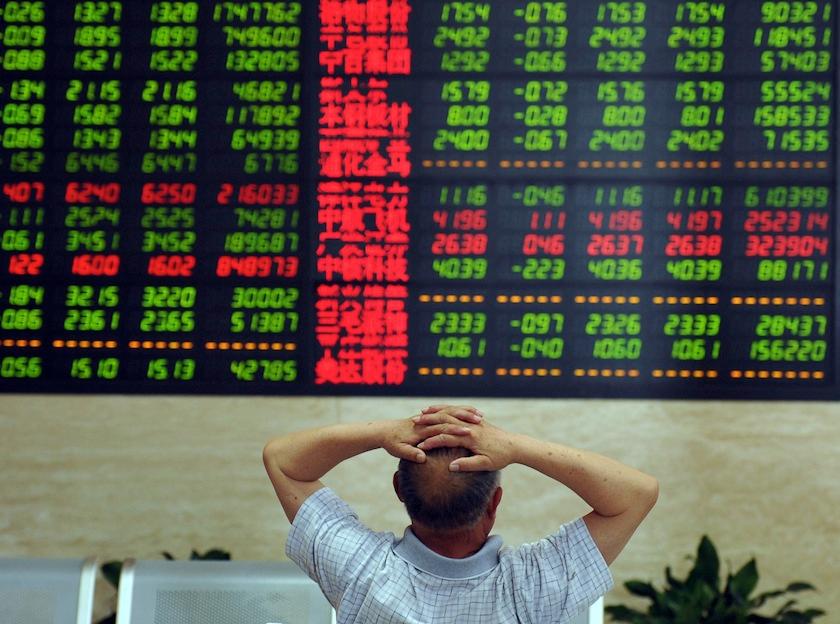
A Chinese stock investor monitors share prices at a securities firm in Fuyang, in China's Anhui province on June 19, 2015. Shanghai shares plunged 6.42 percent on June 19, ending a torrid week as the benchmark index was hit by tight liquidity and profit-taking after a powerful surge over the past year. CHINA OUT AFP PHOTO (Photo credit should read STR/AFP/Getty Images)Photograph by AFP/Getty Images

The rout in China’s frothy stock markets since mid-June has been painful, to say the least. Between its peak on June 12 and July 2, the Shanghai Composite Index, which includes China’s largest companies, dropped 28%, wiping out $2.4 trillion in paper wealth.

In real market economies, stock crashes of such magnitude may cause heartburn but unlikely precipitate frenzied government efforts to prop up equity prices. But China is, as we know, not exactly a market economy and has a government that acts differently. In response to the latest crash, instead of allowing market forces to self-correct, Beijing is rolling out aggressive measures to keep the bubble from popping completely.

Over the weekend, the People’s Bank of China announced a plan to inject funds into a state-owned entity that lends to brokerage firms. The country’s 21 brokerage firms also pledged 120 billion yuan to invest in stocks when the Shanghai Composite Index is below 4,500 (it closed at 3687 on July 2). Besides financing the bubble with new money, the Chinese government has suspended IPOs, cut trading fees, and relaxed requirements on margin loans (for example, Chinese retail investors can now use their apartments as collateral).

We can excuse Chinese leaders for fearing that a rapid collapse of the leverage-fueled bubble would set off secondary financial implosions in the country’s financial sector. Margin loans are estimated to total 4 trillion yuan, half of which is supplied by the shadow banking system, and they are the source of 18% of the country’s total credit, making them an integral part of the financial system. Beijing worries that a market crash could create, through the shadow banking system, financial contagion that, in turn, will accelerate the bursting of another much bigger bubble: Chinese real estate.

There are, however, two less charitable explanations for China’s latest moves. First, Chinese leaders tend to view economic issues from a purely political perspective. Unsurprisingly, the performance of the stock market has been made a barometer of the popularity of the current regime. The head of China Security Regulatory Commission not too long ago called the soaring market “a reform bull market,” suggesting that investors were giving a vote of confidence in the leadership’s promised reform programs. A plunging market would imply a loss of confidence and falling popularity of the current leadership—an intolerable prospect.

Second, those who have watched how China deals with bubbles know that its leaders have little faith in market forces but excessive confidence in their ability to sustain bubbles.

We can see this mindset at work in China’s management of two recent bubbles: the real estate market and local government debt. In addressing the real estate market bubble, Beijing has opted to keep insolvent developers alive by forcing their lenders to roll over the loans. Consequently, the glut of unsold inventory hangs over the real estate sector. Because there is such an excess in the supply of housing, it is unlikely that those zombie real estate developers will return to life and pay their creditors in full.

Beijing has used a similar recipe for shoring up its debt-laden local governments. After the bond market rejected Beijing’s plan to float the debt issued by local governments earlier this year, Chinese leaders simply ordered state-owned banks to buy such debt, adding assets of dubious quality to their balance sheet.

Fortunately for Chinese leaders, they have not paid a heavy penalty for supporting these bubbles. At least not yet. It is also likely that, in deciding to intervene in a crashing stock market, Beijing believes that it can again get away with market-defying policies.

We do not know whether Beijing’s big stock market gamble will pay off, but its odds are not encouraging. Even after its recent plunge, Chinese stock prices are overvalued. The price-earnings (P/E) ratio of the Shanghai Composite Index is 23, compared with 12 for the Hong Kong’s Hang Shen Index, on which many of the same Chinese firms are listed. The Shenzhen Composite Index, which has lost a third of its value, has an average P/E ratio of 50. (However, a hefty portion of the reported earnings of Chinese firms is “investment income,” paper gains from their overvalued stock portfolios.) Efforts to support the market at high valuations are expensive and unlikely sustainable.

Beijing is trying to save the stock market bubble while three other bubbles have yet to deflate: real estate, local government debt, and manufacturing overcapacity. It’s possible that these bubbles will feed into each other, amplifying distortions and raising the final bill to clean up the mess.

The opportunity costs for Beijing’s intervention are very high. Right now, Beijing should be building social safety nets and recapitalizing its banks, not betting the house on a stock market bubble.

Minxin Pei is the Tom and Margot Pritzker ’72 Professor of Government at Claremont McKenna College and a non-resident senior fellow of the German Marshall Fund of the United States

About the Author
By Minxin Pei
See full bioRight Arrow Button Icon

Latest in Finance

Finance
Lorem ipsum dolor sit amet, consectetur adipiscing elit, sed do eiusmod tempor incididunt ut labore et dolore magna aliqua. Ut enim ad minim veniam
By Fortune Editors
October 20, 2025
Finance
Lorem ipsum dolor sit amet, consectetur adipiscing elit, sed do eiusmod tempor incididunt ut labore et dolore magna aliqua. Ut enim ad minim veniam
By Fortune Editors
October 20, 2025
Finance
Lorem ipsum dolor sit amet, consectetur adipiscing elit, sed do eiusmod tempor incididunt ut labore et dolore magna aliqua. Ut enim ad minim veniam
By Fortune Editors
October 20, 2025
Finance
Lorem ipsum dolor sit amet, consectetur adipiscing elit, sed do eiusmod tempor incididunt ut labore et dolore magna aliqua. Ut enim ad minim veniam
By Fortune Editors
October 20, 2025
Finance
Lorem ipsum dolor sit amet, consectetur adipiscing elit, sed do eiusmod tempor incididunt ut labore et dolore magna aliqua. Ut enim ad minim veniam
By Fortune Editors
October 20, 2025
Finance
Lorem ipsum dolor sit amet, consectetur adipiscing elit, sed do eiusmod tempor incididunt ut labore et dolore magna aliqua. Ut enim ad minim veniam
By Fortune Editors
October 20, 2025

Most Popular

Finance
Lorem ipsum dolor sit amet, consectetur adipiscing elit, sed do eiusmod tempor incididunt ut labore et dolore magna aliqua. Ut enim ad minim veniam
By Fortune Editors
October 20, 2025
Finance
Lorem ipsum dolor sit amet, consectetur adipiscing elit, sed do eiusmod tempor incididunt ut labore et dolore magna aliqua. Ut enim ad minim veniam
By Fortune Editors
October 20, 2025
Finance
Lorem ipsum dolor sit amet, consectetur adipiscing elit, sed do eiusmod tempor incididunt ut labore et dolore magna aliqua. Ut enim ad minim veniam
By Fortune Editors
October 20, 2025
Finance
Lorem ipsum dolor sit amet, consectetur adipiscing elit, sed do eiusmod tempor incididunt ut labore et dolore magna aliqua. Ut enim ad minim veniam
By Fortune Editors
October 20, 2025
Finance
Lorem ipsum dolor sit amet, consectetur adipiscing elit, sed do eiusmod tempor incididunt ut labore et dolore magna aliqua. Ut enim ad minim veniam
By Fortune Editors
October 20, 2025
Finance
Lorem ipsum dolor sit amet, consectetur adipiscing elit, sed do eiusmod tempor incididunt ut labore et dolore magna aliqua. Ut enim ad minim veniam
By Fortune Editors
October 20, 2025
Fortune Secondary Logo
Rankings
  • 100 Best Companies
  • Fortune 500
  • Global 500
  • Fortune 500 Europe
  • Most Powerful Women
  • World's Most Admired Companies
  • See All Rankings
  • Lists Calendar
Sections
  • Finance
  • Fortune Crypto
  • Features
  • Leadership
  • Health
  • Commentary
  • Success
  • Retail
  • Mpw
  • Tech
  • Lifestyle
  • CEO Initiative
  • Asia
  • Politics
  • Conferences
  • Europe
  • Newsletters
  • Personal Finance
  • Environment
  • Magazine
  • Education
Customer Support
  • Frequently Asked Questions
  • Customer Service Portal
  • Privacy Policy
  • Terms Of Use
  • Single Issues For Purchase
  • International Print
Commercial Services
  • Advertising
  • Fortune Brand Studio
  • Fortune Analytics
  • Fortune Conferences
  • Business Development
  • Group Subscriptions
About Us
  • About Us
  • Press Center
  • Work At Fortune
  • Terms And Conditions
  • Site Map
  • About Us
  • Press Center
  • Work At Fortune
  • Terms And Conditions
  • Site Map
  • Facebook icon
  • Twitter icon
  • LinkedIn icon
  • Instagram icon
  • Pinterest icon

Latest in Finance

Sam Bankman-Fried formally files for pardon—but White House reiterates that FTX cofounder’s odds are slim
CryptoSam Bankman-Fried
Sam Bankman-Fried formally files for pardon—but White House reiterates that FTX cofounder’s odds are slim
By Camila Grigera NaonJune 9, 2026
3 hours ago
A trader works on the floor of the New York Stock Exchange (NYSE) in New York, US, on Wednesday, June 3, 2026
InvestingWall Street
Wall Street dumped nearly $1 trillion in tech stocks by midday—then clawed it back and bought peanut butter and paint
By Eva RoytburgJune 9, 2026
4 hours ago
America’s grid is reeling. General Motors offers itself as a distributed utility in disguise
EnergyAutos
America’s grid is reeling. General Motors offers itself as a distributed utility in disguise
By Nick LichtenbergJune 9, 2026
5 hours ago
Tesla cofounder: ‘We should be really worried’ about the U.S. grid as China speeds ahead in the power race
EnergyBrainstorm Tech
Tesla cofounder: ‘We should be really worried’ about the U.S. grid as China speeds ahead in the power race
By Jordan BlumJune 9, 2026
5 hours ago
President Donald Trump signing an executive order introducing a $100,000 fee for H-1B visas.
LawImmigration
Trump’s $100,000 visa fee is dead in one court and alive in another, setting up Supreme Court brawl
By Michael Casey and The Associated PressJune 9, 2026
5 hours ago
U.S. President Donald Trump on Liberation Day.
EconomyChina
China’s exports to the US are surging at a pre-Liberation Day pace, defying Trump’s tariff goals
By Chan Ho-Him and The Associated PressJune 9, 2026
6 hours ago

Most Popular

Trump, who has repeatedly called climate change fake, is now threatening Brazil with tariffs over the deforestation of the Amazon
Environment
Trump, who has repeatedly called climate change fake, is now threatening Brazil with tariffs over the deforestation of the Amazon
By Sasha RogelbergJune 8, 2026
1 day ago
Pentagon accuses Alibaba, Baidu and BYD, three of China's biggest companies, of supporting the Chinese military
Asia
Pentagon accuses Alibaba, Baidu and BYD, three of China's biggest companies, of supporting the Chinese military
By Kate O'Keeffe and BloombergJune 8, 2026
1 day ago
'We are rapidly running out of time': Watchdog sounds Social Security alarm after 22% cut confirmed for 2032
Economy
'We are rapidly running out of time': Watchdog sounds Social Security alarm after 22% cut confirmed for 2032
By Nick LichtenbergJune 9, 2026
9 hours ago
Current price of oil as of June 8, 2026
Personal Finance
Current price of oil as of June 8, 2026
By Joseph HostetlerJune 8, 2026
2 days ago
Gen Zers are arriving at college unable to even read a sentence—professors warn it could lead to a generation of anxious and lonely graduates
Success
Gen Zers are arriving at college unable to even read a sentence—professors warn it could lead to a generation of anxious and lonely graduates
By Preston ForeJune 7, 2026
2 days ago
Costco CEO Ron Vachris rose from forklift driver to the C-suite without a college degree: ‘Don’t chase a title’ is the career advice that got him there
Success
Costco CEO Ron Vachris rose from forklift driver to the C-suite without a college degree: ‘Don’t chase a title’ is the career advice that got him there
By Preston ForeJune 8, 2026
1 day ago

© 2026 Fortune Media IP Limited. All Rights Reserved. Use of this site constitutes acceptance of our Terms of Use and Privacy Policy | CA Notice at Collection and Privacy Notice | Do Not Sell/Share My Personal Information
FORTUNE is a trademark of Fortune Media IP Limited, registered in the U.S. and other countries. FORTUNE may receive compensation for some links to products and services on this website. Offers may be subject to change without notice.