• Home
  • Latest
  • Fortune 500
  • Finance
  • Tech
  • Leadership
  • Lifestyle
  • Rankings
  • Multimedia
CommentaryWalmart

How Walmart could get Congress to reform America’s gun control laws

By
Danielle Weatherby
Danielle Weatherby
and
Terri Day
Terri Day
Down Arrow Button Icon
By
Danielle Weatherby
Danielle Weatherby
and
Terri Day
Terri Day
Down Arrow Button Icon
June 25, 2015, 12:16 PM ET
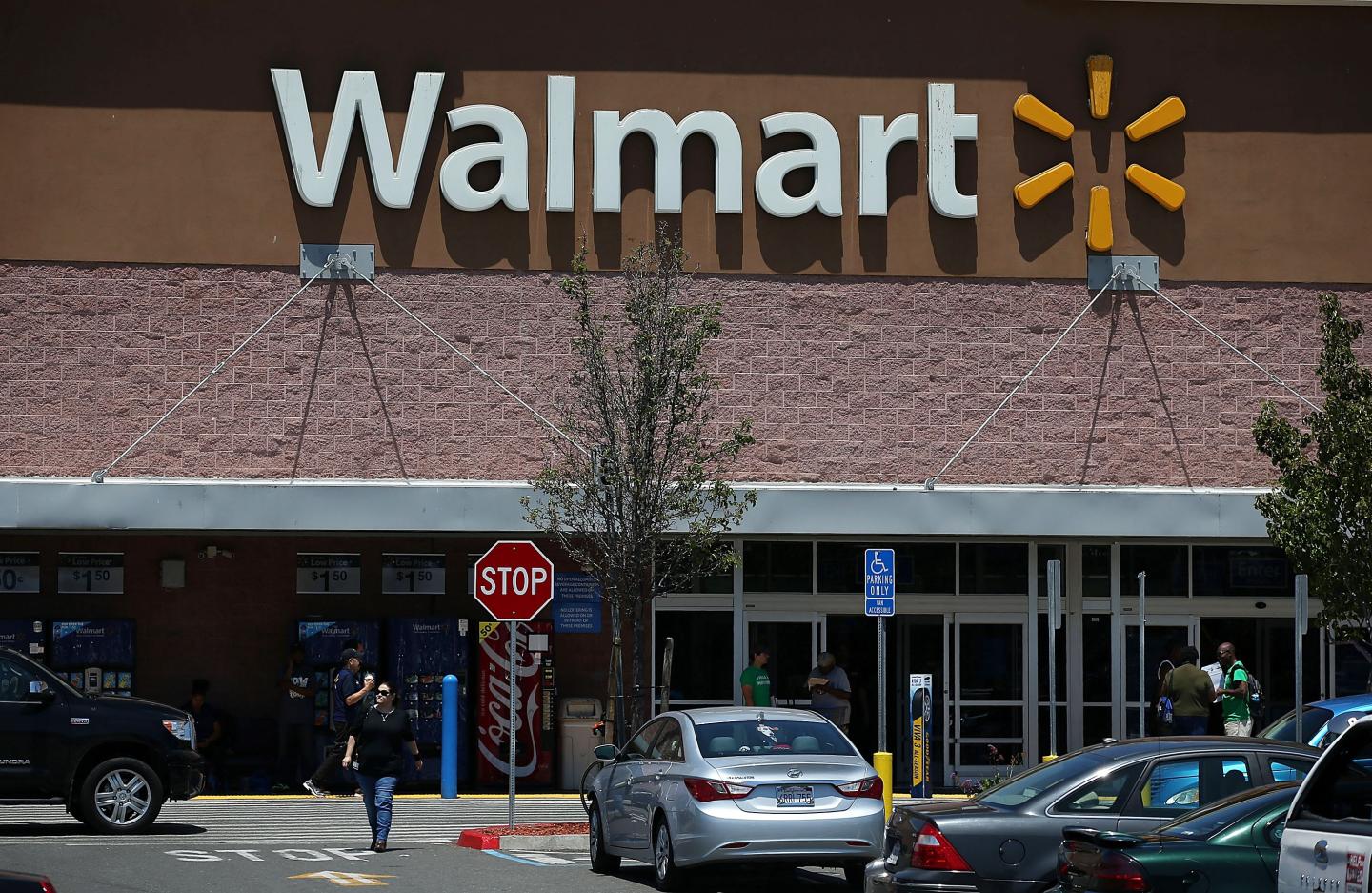
OAKLAND, CA - JUNE 11:  Customers leave a Wal-Mart store on June 11, 2015 in Oakland, California. A federal judge has ruled that Wal-Mart failed to pay the California minimum wage to truck drivers and could have to pay $100 million in back pay.  (Photo by Justin Sullivan/Getty Images)
Photograph by Justin Sullivan — Getty Images

Walmart took a stand on a controversial social issue this this week when it declared its intent to stop selling Confederate flag merchandise following the shooting deaths of nine African-Americans at a Charleston church.

In the aftermath of the brutal deaths, a public debate erupted over the display of the flag, which has unfortunately persisted as a symbol of Southern and – let’s be honest, white – pride. When an image of the Charleston perpetrator donning a gun and Confederate flag exploded on social media, the flag became an immediate flashpoint for opening unhealed wounds about racism in America.

While the U.S. Supreme Court affirms Texas’s decision to ban specialty license plates displaying the Confederate flag and South Carolina wrestles with removing the flag from its state Capitol, corporate America is acting – without hesitation – based on its conscience. Once again, Walmart (WMT) entered the fray of public controversy, taking a moral and political stand, without regard for its bottom line.

In many ways, Walmart is the corporate face of America. With this position as the world’s biggest retailer comes the power to influence other corporate actors, setting business trends and consumer standards, and possibly shaping cultural norms.

Recently, the corporate giant has already set a precedent of taking a stance on divisive civil rights issues. It boycotted overly-zealous religious freedom laws in Indiana and its home state of Arkansas, which threatened to legalize private discrimination against the LGBT community. Earlier this year, the company announced it would raise wages for half a million employees. And, now, in response to the violent racist act in Charleston, it has made the courageous decision to discontinue the sale of Confederate flag merchandise in its big-box and online stores. Following Walmart’s lead, eBay, Sears (SHLD) and Amazon (AMZN) all banned the sale of Confederate flags in their stores and online sites.

Will Walmart be the catalyst for gun control reform?

Despite the fact that Walmart is headquartered in Arkansas, one of the nation’s most conservative and gun-toting Southern states, the corporate empire’s act in banning Confederate flag merchandise is symbolic of its sensitivity to a larger, more systemic problem with gun violence.

Now, Walmart has the opportunity to go one step further and speak out on the broader issue. In protest of the perpetuation of gun violence in America and the country’s obsession with the right to pack heat, Walmart could discontinue the sale of firearms in its stores. This singular act would send the powerful message to consumers that America’s favorite retailer considers gun accessibility to be a grave matter of public safety.

We know that the politics of gun control reignites after every gun-related tragedy. But it is doubtful that the loss of innocent lives in schools, movie theaters, malls and now a church will galvanize Congress to revisit gun reform, particularly in an election year. Walmart’s corporate acts could be the impetus toward solving the country’s problem with gun violence.

Second Amendment advocates will condemn the removal of guns from retail shelves. Proponents of the First Amendment will claim that banning the Confederate flag is anti-American. Nonetheless, as a private, non-partisan actor, Walmart is not constrained by the First and Second Amendments or political gridlock. Walmart has the right to exercise its corporate conscience by taking a stance on the most politicized social problems of the day.

When Walmart takes a stance on a divisive issue, the debate moves from the halls of Congress and federal courtrooms to the grocery-lined aisles where middle America shops. The typical demographic of a Walmart shopper is a middle-aged, Caucasian female with an annual household income of roughly $53,000. This average-Jane customer may not relate to the talking heads and commentators on network news; but when Walmart acts to further its own social agenda, Jane will listen.

Walmart’s social consciousness should be applauded

Of course, Walmart must be cognizant of the potential financial fallout, including a consumer boycott, resulting from any decision to pull a product from its shelves. Admittedly, the decision to ban gun sales would likely have a greater financial impact than a ban on the sale of Confederate flag merchandise. While, at first, it may be fiscally harmful to stop gun sales, such a decision would ultimately catapult Walmart to a higher status among many consumers, including shareholders, and thus go a long way toward building its reputation as a corporation that values socially responsible business practices over profits.

And we know from experience that Walmart can impact politics without risking a depreciation of its corporate profits. Skeptics even say Walmart is self-serving, pointing to the dollars-and-cents proof that the company’s history of speaking out on a controversial issue actually enhances its bottom line. Whatever the reason, Walmart should be applauded for infusing social consciousness into its business decisions. Mega-corporations like Walmart have the power to address social issues and shape important public policy. Out of the horrific events in Charleston, corporate America exercised its voice by removing incendiary merchandise from public consumption: today Confederate flags; tomorrow, maybe guns?

Danielle Weatherby is an assistant professor at the University of Arkansas School of Law. Terri Day is a professor of law at Barry University in Florida.

About the Authors
By Danielle Weatherby
See full bioRight Arrow Button Icon
By Terri Day
See full bioRight Arrow Button Icon

Latest in Commentary

Finance
Lorem ipsum dolor sit amet, consectetur adipiscing elit, sed do eiusmod tempor incididunt ut labore et dolore magna aliqua. Ut enim ad minim veniam
By Fortune Editors
October 20, 2025
Finance
Lorem ipsum dolor sit amet, consectetur adipiscing elit, sed do eiusmod tempor incididunt ut labore et dolore magna aliqua. Ut enim ad minim veniam
By Fortune Editors
October 20, 2025
Finance
Lorem ipsum dolor sit amet, consectetur adipiscing elit, sed do eiusmod tempor incididunt ut labore et dolore magna aliqua. Ut enim ad minim veniam
By Fortune Editors
October 20, 2025
Finance
Lorem ipsum dolor sit amet, consectetur adipiscing elit, sed do eiusmod tempor incididunt ut labore et dolore magna aliqua. Ut enim ad minim veniam
By Fortune Editors
October 20, 2025
Finance
Lorem ipsum dolor sit amet, consectetur adipiscing elit, sed do eiusmod tempor incididunt ut labore et dolore magna aliqua. Ut enim ad minim veniam
By Fortune Editors
October 20, 2025
Finance
Lorem ipsum dolor sit amet, consectetur adipiscing elit, sed do eiusmod tempor incididunt ut labore et dolore magna aliqua. Ut enim ad minim veniam
By Fortune Editors
October 20, 2025

Most Popular

Finance
Lorem ipsum dolor sit amet, consectetur adipiscing elit, sed do eiusmod tempor incididunt ut labore et dolore magna aliqua. Ut enim ad minim veniam
By Fortune Editors
October 20, 2025
Finance
Lorem ipsum dolor sit amet, consectetur adipiscing elit, sed do eiusmod tempor incididunt ut labore et dolore magna aliqua. Ut enim ad minim veniam
By Fortune Editors
October 20, 2025
Finance
Lorem ipsum dolor sit amet, consectetur adipiscing elit, sed do eiusmod tempor incididunt ut labore et dolore magna aliqua. Ut enim ad minim veniam
By Fortune Editors
October 20, 2025
Finance
Lorem ipsum dolor sit amet, consectetur adipiscing elit, sed do eiusmod tempor incididunt ut labore et dolore magna aliqua. Ut enim ad minim veniam
By Fortune Editors
October 20, 2025
Finance
Lorem ipsum dolor sit amet, consectetur adipiscing elit, sed do eiusmod tempor incididunt ut labore et dolore magna aliqua. Ut enim ad minim veniam
By Fortune Editors
October 20, 2025
Finance
Lorem ipsum dolor sit amet, consectetur adipiscing elit, sed do eiusmod tempor incididunt ut labore et dolore magna aliqua. Ut enim ad minim veniam
By Fortune Editors
October 20, 2025
Fortune Secondary Logo
Rankings
  • 100 Best Companies
  • Fortune 500
  • Global 500
  • Fortune 500 Europe
  • Most Powerful Women
  • World's Most Admired Companies
  • See All Rankings
  • Lists Calendar
Sections
  • Finance
  • Fortune Crypto
  • Features
  • Leadership
  • Health
  • Commentary
  • Success
  • Retail
  • Mpw
  • Tech
  • Lifestyle
  • CEO Initiative
  • Asia
  • Politics
  • Conferences
  • Europe
  • Newsletters
  • Personal Finance
  • Environment
  • Magazine
  • Education
Customer Support
  • Frequently Asked Questions
  • Customer Service Portal
  • Privacy Policy
  • Terms Of Use
  • Single Issues For Purchase
  • International Print
Commercial Services
  • Advertising
  • Fortune Brand Studio
  • Fortune Analytics
  • Fortune Conferences
  • Business Development
  • Group Subscriptions
About Us
  • About Us
  • Press Center
  • Work At Fortune
  • Terms And Conditions
  • Site Map
  • About Us
  • Press Center
  • Work At Fortune
  • Terms And Conditions
  • Site Map
  • Facebook icon
  • Twitter icon
  • LinkedIn icon
  • Instagram icon
  • Pinterest icon

Latest in Commentary

tillis
CommentaryCongress
Thom Tillis: Free markets built American prosperity. Government intervention puts it at risk
By Thom Tillis and John StanfordApril 30, 2026
1 hour ago
iran
CommentaryIran
The Strait of Hormuz is a data problem, not just a military one
By Erik Bethel and Ami DanielApril 30, 2026
2 hours ago
hollywood
CommentaryMarketing
I spent 20 years learning to navigate an industry. Then I built a campaign for the man who’s dismantling it
By Matti YahavApril 29, 2026
21 hours ago
aging
HealthLongevity
We’re the CEOs of Peloton and the Hospital for Special Surgery. Living longer isn’t enough, we need to live better, too
By Bryan T. Kelly and Peter SternApril 29, 2026
22 hours ago
gen z
Commentarydisruption
AI won’t kill your job — it will kill the path to your first one
By Jeffrey Sonnenfeld, Stephen Henriques, Johan Griesel, Andrew Alam-Nist and Peter YuApril 29, 2026
22 hours ago
greer
CommentaryTariffs
No, tariffs are not strengthening the economy
By Alex DuranteApril 29, 2026
23 hours ago

Most Popular

Apple cofounder Ronald Wayne—whose stake would be worth up to $400 billion had he not sold it in 1976—says that at 91, he has no regrets
Success
Apple cofounder Ronald Wayne—whose stake would be worth up to $400 billion had he not sold it in 1976—says that at 91, he has no regrets
By Preston ForeApril 27, 2026
3 days ago
‘Take the money and run’: Johns Hopkins economist Steve Hanke on why the UAE quit OPEC
Energy
‘Take the money and run’: Johns Hopkins economist Steve Hanke on why the UAE quit OPEC
By Shawn TullyApril 29, 2026
1 day ago
‘The cost of compute is far beyond the costs of the employees’: Nvidia executive says right now AI is more expensive than paying human workers
AI
‘The cost of compute is far beyond the costs of the employees’: Nvidia executive says right now AI is more expensive than paying human workers
By Sasha RogelbergApril 28, 2026
2 days ago
Jamie Dimon gets candid about national debt: ‘There will be a bond crisis, and then we’ll have to deal with it’
Economy
Jamie Dimon gets candid about national debt: ‘There will be a bond crisis, and then we’ll have to deal with it’
By Eleanor PringleApril 29, 2026
23 hours ago
‘They left me no choice’: Powell isn’t going anywhere—blocking Trump from another Fed appointee
Banking
‘They left me no choice’: Powell isn’t going anywhere—blocking Trump from another Fed appointee
By Eva RoytburgApril 29, 2026
15 hours ago
More than two-thirds of U.S. schools say they’re unable to afford the cost of student free lunch—and MAHA’s dietary guidelines may make it worse
Economy
More than two-thirds of U.S. schools say they’re unable to afford the cost of student free lunch—and MAHA’s dietary guidelines may make it worse
By Sasha RogelbergApril 29, 2026
1 day ago

© 2026 Fortune Media IP Limited. All Rights Reserved. Use of this site constitutes acceptance of our Terms of Use and Privacy Policy | CA Notice at Collection and Privacy Notice | Do Not Sell/Share My Personal Information
FORTUNE is a trademark of Fortune Media IP Limited, registered in the U.S. and other countries. FORTUNE may receive compensation for some links to products and services on this website. Offers may be subject to change without notice.