• Home
  • Latest
  • Fortune 500
  • Finance
  • Tech
  • Leadership
  • Lifestyle
  • Rankings
  • Multimedia
Commentarytrans-pacific partnership

What it takes to get Obama’s trade agenda more love

By
Alan Wolff
Alan Wolff
Down Arrow Button Icon
By
Alan Wolff
Alan Wolff
Down Arrow Button Icon
June 22, 2015, 3:53 PM ET
Barack Obama
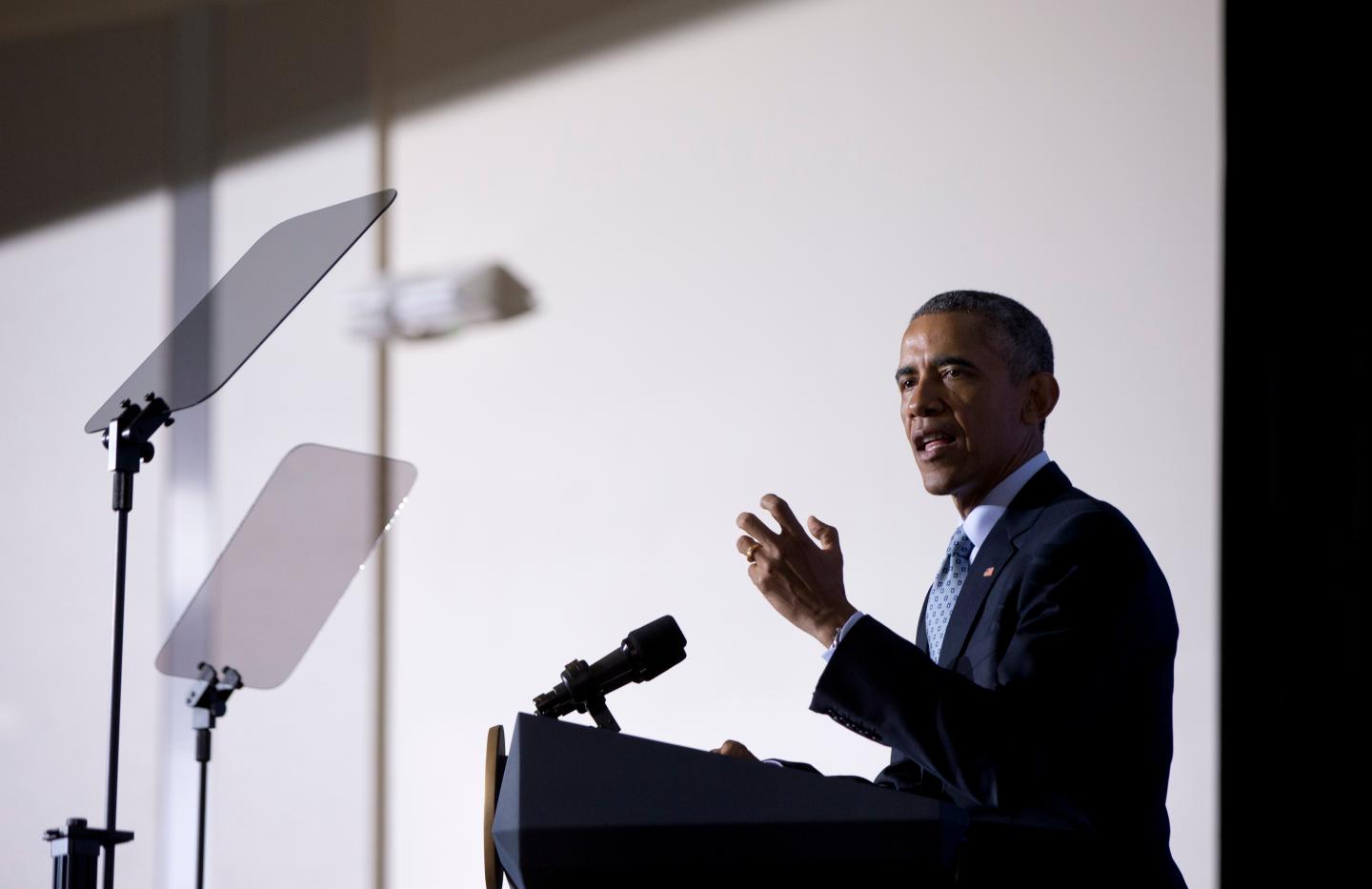
President Barack Obama speaks at the Federal Trade Commission (FTC) offices at the Constitution Center in Washington, Monday, Jan. 12, 2015, about his plan to improve confidence in technology by tackling identify theft and improving consumer and student privacy. The president wants Congress to pass legislation requiring companies to inform customers within 30 days if their data has been hacked, a move that follows high-profile breaches at retailers including Target, Home Depot and Neiman Marcus. (AP Photo/Carolyn Kaster)Photograph by Carolyn Kaster — AP

The U.S. House last week voted to advance legislation to give President Barack Obama special authority to negotiate a Pacific trade deal that involves about 40% of the global economy. Despite the political drama, the move was nonetheless positive for Obama’s push to achieve a key element of his trade agenda.

This week, the drama will continue to unfold, with votes in the Senate and House. For most observers, it may be like watching a game of cricket — the rules and actions are obscure, but this particular contest bears watching because the stakes are very high, as the attention is now focused not only on the trade agreement promotion authority but also on re-authorization of measures to assist workers where there are job losses or negative implications that an expansion of free trade might have.

Despite the opposition, the Republican Congressional leadership has vowed to pass this legislation continuing Trade Adjustment Assistance for Workers (TAA), in hopes of gathering enough support from Democrats to renew trade promotion authority in an ongoing effort to permit progress on Obama’s trade agenda.

This strategy was key in 1974 when legislation for the worker assistance program was included in the first modern trade promotion authority. (You will recall that trade promotion authority, then referred to as “fast track,” was a special procedure for consideration of the agreements the President presented to the Congress for approval and implementation. It permitted only an up or down vote, with no amendments, with little ability to block the vote – e.g. no filibusters permitted.). Inclusion of worker assistance 40 years ago brought along enough Democratic support to pass the trade promotion authority.

When a more effective (and larger) trade adjustment assistance program was being debated within the Nixon Administration, it was not free of controversy. Then Treasury Secretary George Shultz questioned the logic of giving assistance to a worker adversely affected by import competition in excess of that given to a worker hurt by other causes, such as changes in technology or consumer tastes. After all, being out of work is being out of work. That was indeed logical, but there was a Catch 22: there was not enough money to retrain, relocate, and support all workers who lost their jobs regardless of cause. So the program was limited to one class – the trade-related group.

To date, over 2 million workers have received benefits under the current trade adjustment assistance program. The question to ask now is whether worker assistance is still relevant today?

Twenty-first Century trade agreements are still about lowering trade barriers, but are even more about setting new rules for international trade.

The United States is, by and large, a very low tariff country. Liberalization of trade under any new agreements is likely to have very limited adverse effects on any worker. To be sure, the U.S. still has areas of protection against imports – apparel being one of them. But the fact is that imports already account for about a 98% share of the U.S. apparel consumption, and no agreement that is contemplated is going to change that reality. What is at stake for America in the new agreements consists primarily of obtaining additional liberalization abroad and, as or more importantly, putting into place better trade rules. Neither of these objectives is likely to result in displacement of American workers.

So why have worker adjustment assistance? Because the series of trade agreements beginning some 70 years ago is responsible for markets around the world being more open. This has brought unprecedented prosperity to America and to its trading partners. There is no serious proposal in any quarter that our market should be closed. Part of the bargain to maintain this openness and to strive for greater openness abroad and rules-based trade is to maintain the worker trade adjustment assistance. The worker assistance program deserves strong bipartisan support.

Alan Wolff is chairman of the National Foreign Trade Council and practices law in Washington D.C.

About the Author
By Alan Wolff
See full bioRight Arrow Button Icon

Latest in Commentary

Finance
Lorem ipsum dolor sit amet, consectetur adipiscing elit, sed do eiusmod tempor incididunt ut labore et dolore magna aliqua. Ut enim ad minim veniam
By Fortune Editors
October 20, 2025
Finance
Lorem ipsum dolor sit amet, consectetur adipiscing elit, sed do eiusmod tempor incididunt ut labore et dolore magna aliqua. Ut enim ad minim veniam
By Fortune Editors
October 20, 2025
Finance
Lorem ipsum dolor sit amet, consectetur adipiscing elit, sed do eiusmod tempor incididunt ut labore et dolore magna aliqua. Ut enim ad minim veniam
By Fortune Editors
October 20, 2025
Finance
Lorem ipsum dolor sit amet, consectetur adipiscing elit, sed do eiusmod tempor incididunt ut labore et dolore magna aliqua. Ut enim ad minim veniam
By Fortune Editors
October 20, 2025
Finance
Lorem ipsum dolor sit amet, consectetur adipiscing elit, sed do eiusmod tempor incididunt ut labore et dolore magna aliqua. Ut enim ad minim veniam
By Fortune Editors
October 20, 2025
Finance
Lorem ipsum dolor sit amet, consectetur adipiscing elit, sed do eiusmod tempor incididunt ut labore et dolore magna aliqua. Ut enim ad minim veniam
By Fortune Editors
October 20, 2025

Most Popular

Finance
Lorem ipsum dolor sit amet, consectetur adipiscing elit, sed do eiusmod tempor incididunt ut labore et dolore magna aliqua. Ut enim ad minim veniam
By Fortune Editors
October 20, 2025
Finance
Lorem ipsum dolor sit amet, consectetur adipiscing elit, sed do eiusmod tempor incididunt ut labore et dolore magna aliqua. Ut enim ad minim veniam
By Fortune Editors
October 20, 2025
Finance
Lorem ipsum dolor sit amet, consectetur adipiscing elit, sed do eiusmod tempor incididunt ut labore et dolore magna aliqua. Ut enim ad minim veniam
By Fortune Editors
October 20, 2025
Finance
Lorem ipsum dolor sit amet, consectetur adipiscing elit, sed do eiusmod tempor incididunt ut labore et dolore magna aliqua. Ut enim ad minim veniam
By Fortune Editors
October 20, 2025
Finance
Lorem ipsum dolor sit amet, consectetur adipiscing elit, sed do eiusmod tempor incididunt ut labore et dolore magna aliqua. Ut enim ad minim veniam
By Fortune Editors
October 20, 2025
Finance
Lorem ipsum dolor sit amet, consectetur adipiscing elit, sed do eiusmod tempor incididunt ut labore et dolore magna aliqua. Ut enim ad minim veniam
By Fortune Editors
October 20, 2025
Fortune Secondary Logo
Rankings
  • 100 Best Companies
  • Fortune 500
  • Global 500
  • Fortune 500 Europe
  • Most Powerful Women
  • World's Most Admired Companies
  • See All Rankings
  • Lists Calendar
Sections
  • Finance
  • Fortune Crypto
  • Features
  • Leadership
  • Health
  • Commentary
  • Success
  • Retail
  • Mpw
  • Tech
  • Lifestyle
  • CEO Initiative
  • Asia
  • Politics
  • Conferences
  • Europe
  • Newsletters
  • Personal Finance
  • Environment
  • Magazine
  • Education
Customer Support
  • Frequently Asked Questions
  • Customer Service Portal
  • Privacy Policy
  • Terms Of Use
  • Single Issues For Purchase
  • International Print
Commercial Services
  • Advertising
  • Fortune Brand Studio
  • Fortune Analytics
  • Fortune Conferences
  • Business Development
  • Group Subscriptions
About Us
  • About Us
  • Press Center
  • Work At Fortune
  • Terms And Conditions
  • Site Map
  • About Us
  • Press Center
  • Work At Fortune
  • Terms And Conditions
  • Site Map
  • Facebook icon
  • Twitter icon
  • LinkedIn icon
  • Instagram icon
  • Pinterest icon

Latest in Commentary

Can the ‘blue economy’ deliver on its promise? Investors are starting see the ocean as an asset worth protecting
CommentaryConservation
Can the ‘blue economy’ deliver on its promise? Investors are starting see the ocean as an asset worth protecting
By Natalie Sum Yue ChungMay 2, 2026
5 hours ago
old
Commentaryaffordability
The American household just took an 81% margin cut. Wall Street hasn’t priced it in
By Katica RoyMay 2, 2026
16 hours ago
dario
CommentaryAnthropic
Anthropic’s most powerful AI model just exposed a crisis in corporate governance. Here’s the framework every CEO needs.
By Jeffrey Sonnenfeld, Stephen Henriques, Dan Kent and Holden LeeMay 2, 2026
17 hours ago
mackenzie
Commentaryphilanthropy
Stop donating to Harvard and the Ivy League. There’s a better option that MacKenzie Scott already figured out
By Ed Smith-LewisMay 2, 2026
19 hours ago
drinks
CommentaryFood and drink
We need a new way of thinking about drinking: Time to replace the ‘standard drink’ with advice people can actually use
By Justin KissingerMay 2, 2026
19 hours ago
pakistan
CommentaryIran
Asia is being hammered by the Iran conflict’s economic fallout. The U.S. has the playbook to help—and every reason to
By Wendy Cutler and Jane MellsopMay 2, 2026
20 hours ago

Most Popular

Scott Bessent on financial literacy: 'it drives me crazy' to see young men in blue-collar construction jobs playing the lottery
Personal Finance
Scott Bessent on financial literacy: 'it drives me crazy' to see young men in blue-collar construction jobs playing the lottery
By Fatima Hussein and The Associated PressMay 1, 2026
2 days ago
Gen Z is rebelling against the economy with ‘disillusionomics,’ tackling near 6-figure debt by turning life into a giant list of income streams
Economy
Gen Z is rebelling against the economy with ‘disillusionomics,’ tackling near 6-figure debt by turning life into a giant list of income streams
By Jacqueline MunisMay 2, 2026
13 hours ago
Stop donating to Harvard and the Ivy League. There's a better option that MacKenzie Scott already figured out
Commentary
Stop donating to Harvard and the Ivy League. There's a better option that MacKenzie Scott already figured out
By Ed Smith-LewisMay 2, 2026
19 hours ago
The American household just took an 81% margin cut. Wall Street hasn’t priced it in
Commentary
The American household just took an 81% margin cut. Wall Street hasn’t priced it in
By Katica RoyMay 2, 2026
16 hours ago
Current price of oil as of May 1, 2026
Personal Finance
Current price of oil as of May 1, 2026
By Joseph HostetlerMay 1, 2026
2 days ago
A Chick-fil-A worker got fired and then showed up behind the register to allegedly refund himself over $80,000 in mac and cheese
Law
A Chick-fil-A worker got fired and then showed up behind the register to allegedly refund himself over $80,000 in mac and cheese
By Catherina GioinoMay 1, 2026
1 day ago

© 2026 Fortune Media IP Limited. All Rights Reserved. Use of this site constitutes acceptance of our Terms of Use and Privacy Policy | CA Notice at Collection and Privacy Notice | Do Not Sell/Share My Personal Information
FORTUNE is a trademark of Fortune Media IP Limited, registered in the U.S. and other countries. FORTUNE may receive compensation for some links to products and services on this website. Offers may be subject to change without notice.