• Home
  • Latest
  • Fortune 500
  • Finance
  • Tech
  • Leadership
  • Lifestyle
  • Rankings
  • Multimedia
FinanceCurrency

Replacing Hamilton on the $10 bill is the worst decision Jack Lew has made

By
Chris Matthews
Chris Matthews
Down Arrow Button Icon
By
Chris Matthews
Chris Matthews
Down Arrow Button Icon
June 18, 2015, 12:44 PM ET
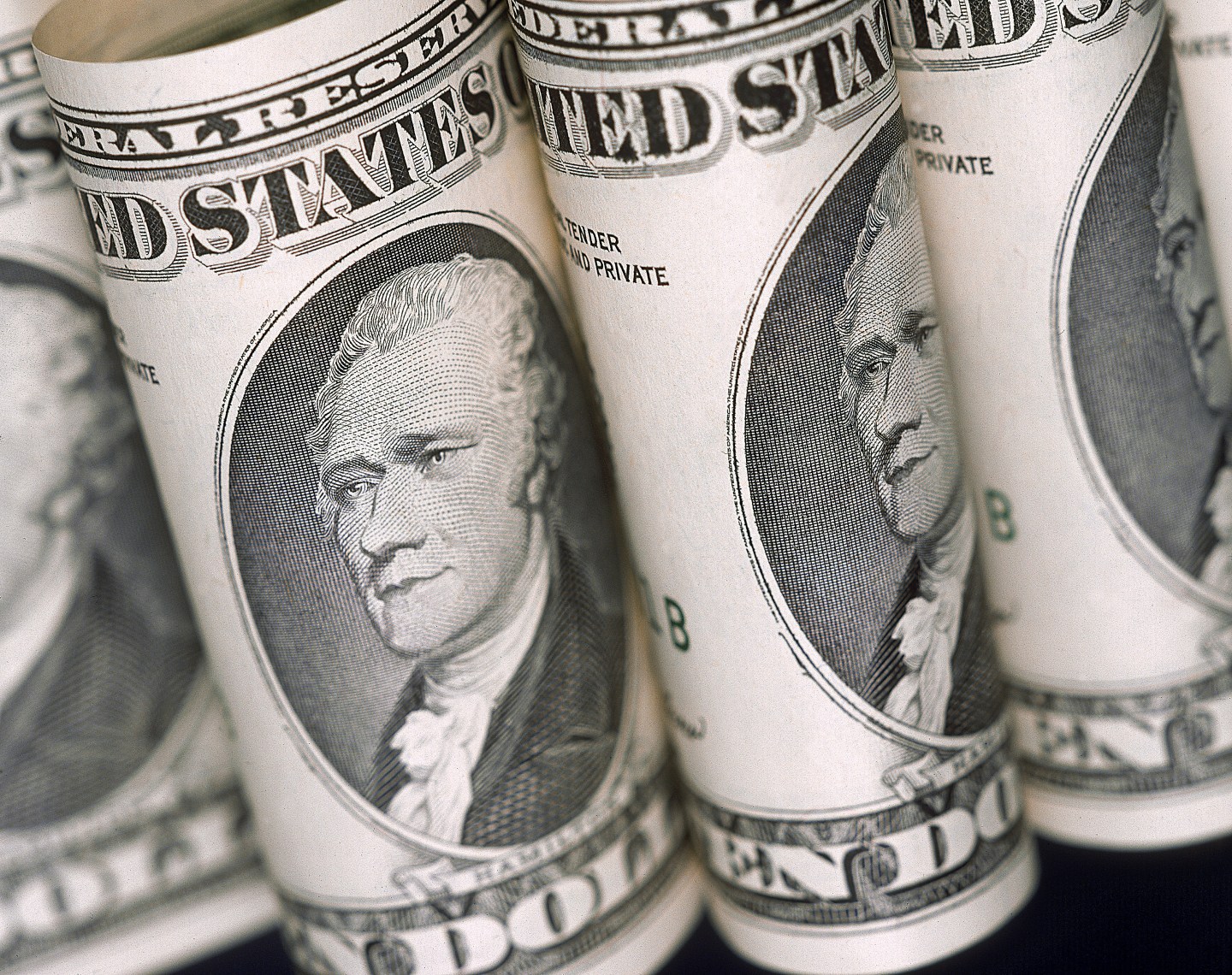
Hamilton $10 bill
Ben Bernanke is appalled by Jack Lew's decision to demote Alexander Hamilton on the $10 billPhotograph by Bob Wickham — Getty Images

Jack Lew is not the most controversial Treasury Secretary in history. He certainly has aroused less ire than his predecessor Tim Geithner, who presided over the hated, but ultimately necessary, bailout of the United States’ banking system. The most famous thing about Lew, who was sworn in two years ago, is probably his erstwhile goofy signature, which had to be amended before it was placed on the nation’s currency.

But that is almost certainly about to change, as the nation is abuzz today with Lew’s announcement that he has decided to, for the first time, place a woman on U.S. paper currency. The decision to put a woman on a Federal Reserve note is long overdue, and laudable. But the decision to put a woman specifically on the $10 bill, with a diminished place for Alexander Hamilton, the nation’s first treasury secretary, is a real head scratcher.


After the American revolution, Hamilton was a driving force behind the decision to have the federal government assume the debts of the individual states, which helped bind the young nation together and give investors around the world reason to root for the success of the fledgling state. He was also the progenitor of the First Bank of the United States, which helped quell the effects of the financial panic of 1792, through the purchases of U.S. government debt, much like the Federal Reserve does today.

The first central bank in American history was fiercely opposed by founding fathers like Thomas Jefferson, who feared that the bank would concentrate power in industrial centers like Philadelphia and New York. As Jefferson biographer Richard B. Bernstein wrote, Jefferson had a deep attraction toward a vision of America that was

An agrarian republic of independent yeoman farmers supporting themselves by their own labors. Self-sufficient to the greatest possible degree, they would maintain their virtue, the necessary ingredient for preserving a republic, refusing the seductive lures of manufactured luxury goods and the economic activities (trade and commerce) that created and distributed them.

Needless to say, Hamilton’s vision of a United States with a strong, centralized financial system and an economy based on vibrant trade and consumption won the day. The unprecedented material wealth enjoyed by Americans today would likely never have come about if it weren’t for Alexander Hamilton and his ideas for the country’s future. There is simply no better place to honor such a man than on our currency.

Meanwhile, the man who graces the $20 bill, Andrew Jackson, was a fierce opponent of centralized banking and the model of the American economy that Hamilton championed. Partly as a result of a land deal that went wrong, President Jackson strongly distrusted paper money and the banks that issued them. Jackson did everything in his power to eradicate the Second National Bank of the United States, and was eventually successful when the bank’s charter expired in 1836.

The results were devastating. The elimination of the bank helped plunge the nation into the financial panic of 1837, what the Lehrman Institute has called “the most serious economic upheaval to face the United States until the Great Depression.” The United States would go without a central bank for more than 75 years after Jackson killed the Second Bank of the United States, until the creation of the Federal Reserve System in 1913. This period would be marked by a series of severe financial crises, with no central authority to step in and mitigate the effects. In fact, the United States often had to rely on the beneficence of private actors, as it did when financier J.P. Morgan stepped in to shore up the banking system after the panic of 1907.

Jackson’s ideas about the economy–from his abhorrence of public debt to his dedication to hard money–are antithetical to everything that defines the United States and the global financial system today. Whatever your opinions on Jackson’s presidency otherwise, it’s deeply ironic, even absurd, that his face graces one of the most commonly used Federal Reserve notes in circulation.

About the Author
By Chris Matthews
See full bioRight Arrow Button Icon

Latest in Finance

Finance
Lorem ipsum dolor sit amet, consectetur adipiscing elit, sed do eiusmod tempor incididunt ut labore et dolore magna aliqua. Ut enim ad minim veniam
By Fortune Editors
October 20, 2025
Finance
Lorem ipsum dolor sit amet, consectetur adipiscing elit, sed do eiusmod tempor incididunt ut labore et dolore magna aliqua. Ut enim ad minim veniam
By Fortune Editors
October 20, 2025
Finance
Lorem ipsum dolor sit amet, consectetur adipiscing elit, sed do eiusmod tempor incididunt ut labore et dolore magna aliqua. Ut enim ad minim veniam
By Fortune Editors
October 20, 2025
Finance
Lorem ipsum dolor sit amet, consectetur adipiscing elit, sed do eiusmod tempor incididunt ut labore et dolore magna aliqua. Ut enim ad minim veniam
By Fortune Editors
October 20, 2025
Finance
Lorem ipsum dolor sit amet, consectetur adipiscing elit, sed do eiusmod tempor incididunt ut labore et dolore magna aliqua. Ut enim ad minim veniam
By Fortune Editors
October 20, 2025
Finance
Lorem ipsum dolor sit amet, consectetur adipiscing elit, sed do eiusmod tempor incididunt ut labore et dolore magna aliqua. Ut enim ad minim veniam
By Fortune Editors
October 20, 2025

Most Popular

Finance
Lorem ipsum dolor sit amet, consectetur adipiscing elit, sed do eiusmod tempor incididunt ut labore et dolore magna aliqua. Ut enim ad minim veniam
By Fortune Editors
October 20, 2025
Finance
Lorem ipsum dolor sit amet, consectetur adipiscing elit, sed do eiusmod tempor incididunt ut labore et dolore magna aliqua. Ut enim ad minim veniam
By Fortune Editors
October 20, 2025
Finance
Lorem ipsum dolor sit amet, consectetur adipiscing elit, sed do eiusmod tempor incididunt ut labore et dolore magna aliqua. Ut enim ad minim veniam
By Fortune Editors
October 20, 2025
Finance
Lorem ipsum dolor sit amet, consectetur adipiscing elit, sed do eiusmod tempor incididunt ut labore et dolore magna aliqua. Ut enim ad minim veniam
By Fortune Editors
October 20, 2025
Finance
Lorem ipsum dolor sit amet, consectetur adipiscing elit, sed do eiusmod tempor incididunt ut labore et dolore magna aliqua. Ut enim ad minim veniam
By Fortune Editors
October 20, 2025
Finance
Lorem ipsum dolor sit amet, consectetur adipiscing elit, sed do eiusmod tempor incididunt ut labore et dolore magna aliqua. Ut enim ad minim veniam
By Fortune Editors
October 20, 2025
Fortune Secondary Logo
Rankings
  • 100 Best Companies
  • Fortune 500
  • Global 500
  • Fortune 500 Europe
  • Most Powerful Women
  • Future 50
  • World’s Most Admired Companies
  • See All Rankings
Sections
  • Finance
  • Fortune Crypto
  • Features
  • Leadership
  • Health
  • Commentary
  • Success
  • Retail
  • Mpw
  • Tech
  • Lifestyle
  • CEO Initiative
  • Asia
  • Politics
  • Conferences
  • Europe
  • Newsletters
  • Personal Finance
  • Environment
  • Magazine
  • Education
Customer Support
  • Frequently Asked Questions
  • Customer Service Portal
  • Privacy Policy
  • Terms Of Use
  • Single Issues For Purchase
  • International Print
Commercial Services
  • Advertising
  • Fortune Brand Studio
  • Fortune Analytics
  • Fortune Conferences
  • Business Development
About Us
  • About Us
  • Editorial Calendar
  • Press Center
  • Work At Fortune
  • Diversity And Inclusion
  • Terms And Conditions
  • Site Map
Fortune Secondary Logo
  • About Us
  • Editorial Calendar
  • Press Center
  • Work At Fortune
  • Diversity And Inclusion
  • Terms And Conditions
  • Site Map
  • Facebook icon
  • Twitter icon
  • LinkedIn icon
  • Instagram icon
  • Pinterest icon

Latest in Finance

trump
LawTariffs
‘Why shouldn’t we get our money back too?’ Normal people are starting to demand Trump tariff refunds
By Mae Anderson and The Associated PressFebruary 28, 2026
52 minutes ago
warren
InvestingBerkshire Hathaway
Berkshire Hathaway shareholders just woke up to a letter by someone other than Warren Buffett
By Josh Funk and The Associated PressFebruary 28, 2026
1 hour ago
trump
PoliticsWhite House
Trump says Cuba has ‘no money’ and ‘maybe we’ll have a friendly takeover’
By Will Weissert and The Associated PressFebruary 28, 2026
1 hour ago
paramount
LawHollywood
Warner/Paramount sets up Hollywood to shrink from Big 5 to Big 4, a decade after Disney took out number 6
By Lindsey Bahr and The Associated PressFebruary 28, 2026
1 hour ago
iran
Middle EastMiddle East
‘This will be probably your only chance for generations’: Trump tells Iranians to first take cover, then rise up
By Brian Melley and The Associated PressFebruary 28, 2026
1 hour ago
sarandos
InvestingMedia
3 things we will never know after Netflix pulled out of the Warner Bros. bidding, handing it to Paramount
By Nick LichtenbergFebruary 28, 2026
1 hour ago

Most Popular

placeholder alt text
Success
Japanese companies are paying older workers to sit by a window and do nothing—while Western CEOs demand super-AI productivity just to keep your job
By Orianna Rosa RoyleFebruary 27, 2026
1 day ago
placeholder alt text
Success
Walmart exec says U.S. workforces needs to take inspiration from China where ‘5 year-olds are learning DeepSeek’
By Preston ForeFebruary 27, 2026
1 day ago
placeholder alt text
Law
China's government intervenes to show Michigan scientists were carrying worms, not biological materials
By Ed White and The Associated PressFebruary 26, 2026
2 days ago
placeholder alt text
Commentary
'The Pitt': a masterclass display of DEI in action 
By Robert RabenFebruary 26, 2026
2 days ago
placeholder alt text
Personal Finance
Current price of gold as of February 27, 2026
By Danny BakstFebruary 27, 2026
1 day ago
placeholder alt text
Economy
Come 2030, the U.S. deficit will be worth 5.9% of GDP—more than spending on Social Security, and equal to major health programs
By Eleanor PringleFebruary 26, 2026
2 days ago

© 2026 Fortune Media IP Limited. All Rights Reserved. Use of this site constitutes acceptance of our Terms of Use and Privacy Policy | CA Notice at Collection and Privacy Notice | Do Not Sell/Share My Personal Information
FORTUNE is a trademark of Fortune Media IP Limited, registered in the U.S. and other countries. FORTUNE may receive compensation for some links to products and services on this website. Offers may be subject to change without notice.