• Home
  • News
  • Fortune 500
  • Tech
  • Finance
  • Leadership
  • Lifestyle
  • Rankings
  • Multimedia
China

China rejected, for now, from stock indexes

By
Scott Cendrowski
Scott Cendrowski
Down Arrow Button Icon
By
Scott Cendrowski
Scott Cendrowski
Down Arrow Button Icon
June 10, 2015, 5:33 AM ET
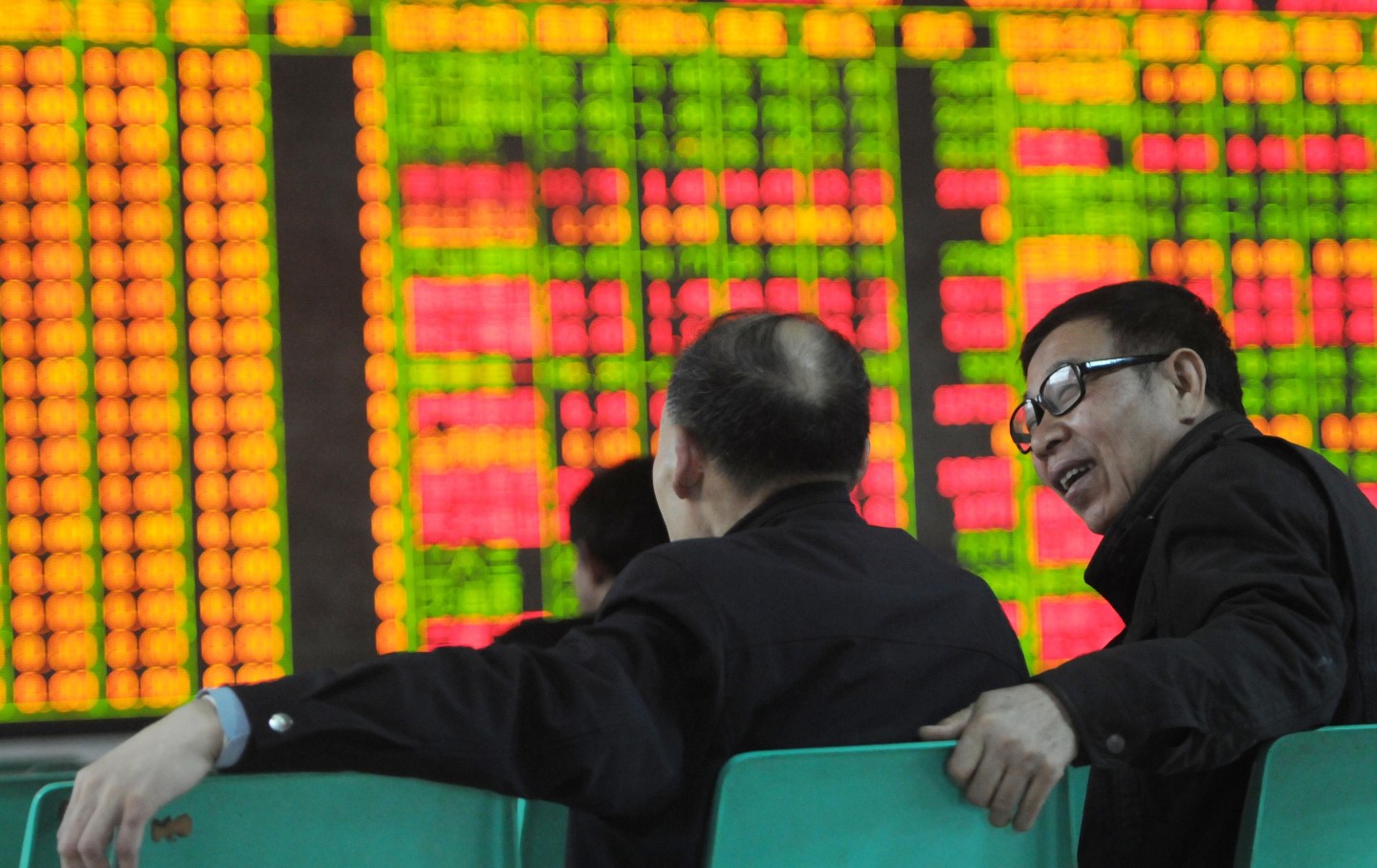
The Shanghai Composite Index Rises 2.2% To 4300 Points
JIUJIANG, CHINA - APRIL 17: (CHINA OUT) Investors observe stock market at a stock exchange corporation on April 17, 2015 in Jiujiang, Jiangxi province of China. The Shanghai Composite Index rises 2.2% to climb high to 4,300 points at its close. (Photo by ChinaFotoPress/ChinaFotoPress via Getty Images)Photograph by ChinaFotoPress via Getty Images

Beijing badly wants China’s domestic stocks included in the indexes followed by global investors. It could mean billions more dollars buying yuan-denominated shares in Shanghai and Shenzhen, which helps the government promote its goal of expanding the currency overseas.

But the country was rejected yesterday by MSCI, whose emerging market indexes have $1.7 trillion tracking them, which said after its annual review it wouldn’t include the mainland A-shares. It said Chinese regulators hadn’t done enough to open their market to foreigners. It’s a reminder to China that even reforms that liberalize its financial markets and seem momentous within the country are considered incremental, at best, by outsiders.

This is the second time in as many years that China has been spurned by the index maker. Last spring, MSCI first proposed the idea of including A-shares and was met with cries from big fund managers like Fidelity and Vanguard who said China hadn’t passed enough reforms for access.

So China launched the ‘Shanghai-Hong Kong Stock Connect’ this past November, which allowed foreigners for the first time to buy Shanghai stocks directly via Hong Kong. Earlier in the year it also expanded quotas for foreign investors.

But MSCI said yesterday there are still enough unresolved problems to avoid including A-shares for now. The first involves those quotas. Big foreign investors feel their daily allotments are too small. The second is the ease of getting money out of mainland China. Capital controls are cumbersome. The third is the technical rules around stock ownership. Foreign investors feel jittery that Chinese regulations aren’t as clear as those in developed markets.

MSCI is the biggest authority on emerging market indexes, but its influence hasn’t kept other fund companies from adding Chinese shares. Vanguard said last week that its Vanguard Emerging Markets Stock Index Fund will add Chinese shares. The funds follow FTSE indexes, an MSCI competitor, which decided to include A-shares as an initial 5% weighting in some transitional indexes.

Beijing will eventually get its wish. MSCI’s statement also said A-shares were “on track for inclusion” in the next year if issues were resolved.

Unfortunately for global investors, the manic Chinese stock market has risen nearly 150% in the past year and the country’s economic troubles are mounting. By the time investors get to own a slice of China’s mainland market, the excitement could be wearing off.
About the Author
By Scott Cendrowski
See full bioRight Arrow Button Icon
0

Most Popular

placeholder alt text
Economy
Two months into the new fiscal year and the U.S. government is already spending more than $10 billion a week servicing national debt
By Eleanor PringleDecember 4, 2025
2 days ago
placeholder alt text
Big Tech
Mark Zuckerberg rebranded Facebook for the metaverse. Four years and $70 billion in losses later, he’s moving on
By Eva RoytburgDecember 5, 2025
1 day ago
placeholder alt text
Success
Nvidia CEO Jensen Huang admits he works 7 days a week, including holidays, in a constant 'state of anxiety' out of fear of going bankrupt
By Jessica CoacciDecember 4, 2025
2 days ago
placeholder alt text
Success
‘Godfather of AI’ says Bill Gates and Elon Musk are right about the future of work—but he predicts mass unemployment is on its way
By Preston ForeDecember 4, 2025
2 days ago
placeholder alt text
Success
Nearly 4 million new manufacturing jobs are coming to America as boomers retire—but it's the one trade job Gen Z doesn't want
By Emma BurleighDecember 4, 2025
2 days ago
placeholder alt text
Asia
Despite their ‘no limits’ friendship, Russia is paying a nearly 90% markup on sanctioned goods from China—compared with 9% from other countries
By Jason MaNovember 29, 2025
7 days ago
Rankings
  • 100 Best Companies
  • Fortune 500
  • Global 500
  • Fortune 500 Europe
  • Most Powerful Women
  • Future 50
  • World’s Most Admired Companies
  • See All Rankings
Sections
  • Finance
  • Leadership
  • Success
  • Tech
  • Asia
  • Europe
  • Environment
  • Fortune Crypto
  • Health
  • Retail
  • Lifestyle
  • Politics
  • Newsletters
  • Magazine
  • Features
  • Commentary
  • Mpw
  • CEO Initiative
  • Conferences
  • Personal Finance
  • Education
Customer Support
  • Frequently Asked Questions
  • Customer Service Portal
  • Privacy Policy
  • Terms Of Use
  • Single Issues For Purchase
  • International Print
Commercial Services
  • Advertising
  • Fortune Brand Studio
  • Fortune Analytics
  • Fortune Conferences
  • Business Development
About Us
  • About Us
  • Editorial Calendar
  • Press Center
  • Work At Fortune
  • Diversity And Inclusion
  • Terms And Conditions
  • Site Map

© 2025 Fortune Media IP Limited. All Rights Reserved. Use of this site constitutes acceptance of our Terms of Use and Privacy Policy | CA Notice at Collection and Privacy Notice | Do Not Sell/Share My Personal Information
FORTUNE is a trademark of Fortune Media IP Limited, registered in the U.S. and other countries. FORTUNE may receive compensation for some links to products and services on this website. Offers may be subject to change without notice.