
• Home
  • Latest
  • Fortune 500
  • Finance
  • Tech
  • Leadership
  • Lifestyle
  • Rankings
  • Multimedia

Trendingnow

1

Mark Cuban says he has the solution to growing income inequality, and it's to reward every employee—from CEO to janitor—with company stock

2

OpenAI says its AI models secretly broke out of a secure test environment and hacked into AI company Hugging Face in order to cheat on an evaluation

3

‘I want to die broke’: Billionaire philanthropist Denny Sanford dies after giving away $4 billion

1

Mark Cuban says he has the solution to growing income inequality, and it's to reward every employee—from CEO to janitor—with company stock

2

OpenAI says its AI models secretly broke out of a secure test environment and hacked into AI company Hugging Face in order to cheat on an evaluation

3

‘I want to die broke’: Billionaire philanthropist Denny Sanford dies after giving away $4 billion
Tech

How Danone gets the right bacteria in your yogurt

Erika Fry
By
Erika Fry
Erika Fry
Down Arrow Button Icon
Erika Fry
By
Erika Fry
Erika Fry
Down Arrow Button Icon
May 26, 2015, 10:52 AM ET
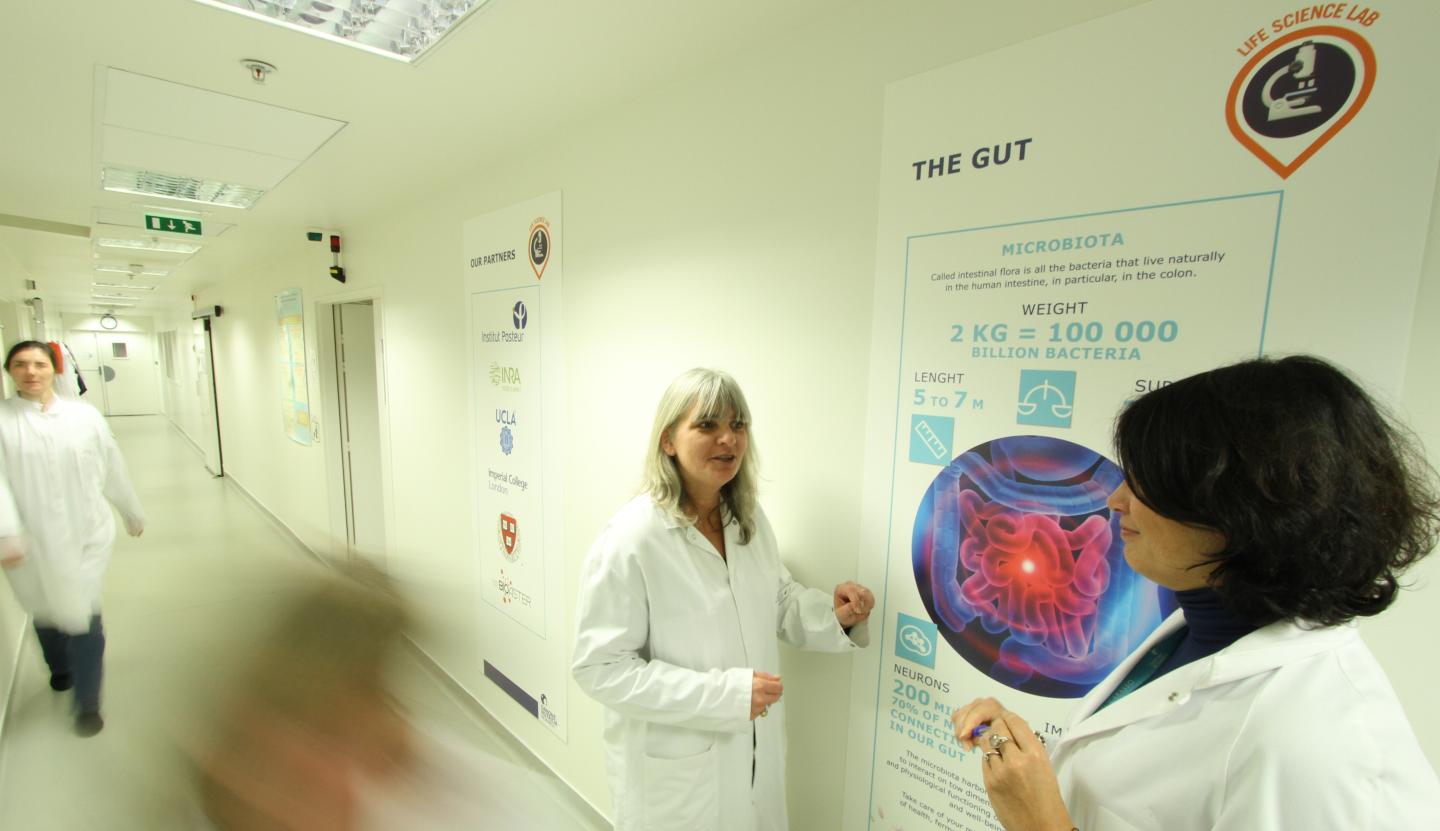
Courtesy of Danone.
Add Fortune on Google for similar content.

Danone, the $28 billion French dairy maker, has been making yogurt for nearly a century. First sold in Spanish pharmacies as a medicine for children with intestinal disorders, Danone, the world’s largest yogurt producer now sells it in grocery stores around the globe (and under the Dannon brand in the U.S.).

The ascent of the humble, fermented milk product has been just as impressive: yogurt—now sold every which way—has become an $86 billion commercial food category. And that’s a figure that’s bound to get bigger if food companies like Danone succeed in optimizing it for the human microbiome—the 4.4 pounds of microorganisms that live, largely, in our guts and contribute, in a number of ways, to human health. See our feature story on the corporate race to feed the microbiome here.

How does it work? Danone’s Director of Microbiology & Biotechnology, Sophie Legrain-Raspaud, walked Fortune through the art and science of the company’s cutting-edge efforts to develop a new generation of good-for-your-gut yogurts.

Step 1: What’s in there?

“Yogurt is made by two bacteria—Streptococcus thermophilus and Lactobacillus bulgaricus. When they’re together, there is symbiosis. If you have only one of them, you don’t get anything. But if you put them together, they are a good couple—they work quite well together and perform fermentation.

“But Lactobacillus bulgaricus is a whole family of bacteria. There are many different individuals in that family—and they’re all a little bit different. If we want to play with the taste or texture of yogurt—in Europe, we have different tastes than in the U.S., or in Asia—we’ll play with different members of the family. We have a collection of more than 4,000 different bacteria in this freezer. We have a big, big playground here.”

Step 2: Isolate the best bugs

“We also look for health effects in these bacteria. Say I want to have a beneficial effect on digestion. We have scientists who hypothesize what sort of properties the bacteria should have, and then we’ll test 100 different bacteria for those properties —you never know in advance. Hopefully, you’ll see something interesting in one or two bacteria.

“We do these tests in the lab, or in vitro. We’ll check ‘does this bacteria produce certain metabolites?’ The bacteria talk a lot with each other because of specific production of metabolites— their language is related to chemicals. We do this to 100 different bacteria. We also check to see if the bacteria is safe and whether it’s able to grow in milk.”

Step three: Make it a food

“Then we start to develop the first prototype of yogurt. In a product, you have at least two different kinds of bacteria, but if you want to have a health effect, you’ll have at least three. We test to see if each bacteria grows well with the others, and if it’s able to survive in the product. Bacteria is a live element—not an ingredient—and so you have to follow it during the product’s shelf life. That’s a challenge—bacteria are microscopic and not so different. Even at microscopic level it’s difficult to tell them apart. You also have to know exactly what number of bacteria you have in the yogurt, so for each bacteria, you need to develop specific tests to numerate and make sure we have the right amount of bacteria in the product. We want to see how many are alive, how many are stressed, which means they’re not in a good condition to grow. This is classic microbiology. We use different kind of chemicals that help us target the right bacteria and learn what physiological state they’re in.”

Step four: Mock digestion

“Once the product is ready, we want to know—especially with a probiotic product—does it survive the GI tract and go to the gut to interact with the microbiota, or the bacteria in the gut? We have developed in vitro tests: we look at each bacteria in a simplistic model to see if it’s able to survive the stomach, which is very acidic—it’s a big, big stress on bacteria, many die there—and in the intestine. We use things related to saliva and chemicals in the stomach to simulate the human condition. It’s not perfect, but a first check. Why do we want to see if bacteria arrive alive in the gut? Because we want communication between the bacteria there.

“Our interest is not just the product, but the impact it will have on specific parameters of health, so we also do work on the microbiota. To do this, we have a colonic gas model, which mimics the human colon. We use bacteria from biological samples (stool) and use it reproduce what happens to the yogurt’s bacteria in the colon. We measure the metabolites and gas produced. Depending on the microbiota you have, you’ll react differently. We test different kinds of samples—adults and babies, but even adults won’t have the same microbiota.

“We also work on the enteric nervous system. In your gut you have a lot of nerves—as many nerve cells as in the brain of a dog. The fact is that there’s a big relationship between your gut and your brain.

“The tools we had in the past didn’t allow us to study this. We developed these tools 5 years ago—they’re relatively unique and they’ve been validated for only a year and a half, meaning we can trust the results. It’s a relatively young science, but this is how we can start to analyze and understand the microbiome.

“Now we’re doing clinical studies to check what is the real alignment between these in vitro tests and the reality. In the end, what we’re interested in is not the microbiota, but the health of the host.”

Step five: Sell a lot of yogurt.

About the Author
Erika Fry
By Erika Fry
LinkedIn iconTwitter icon
See full bioRight Arrow Button Icon
Add Fortune on Google for similar content.

Latest in Tech

Finance
Lorem ipsum dolor sit amet, consectetur adipiscing elit, sed do eiusmod tempor incididunt ut labore et dolore magna aliqua. Ut enim ad minim veniam
By Fortune Editors
October 20, 2025
Finance
Lorem ipsum dolor sit amet, consectetur adipiscing elit, sed do eiusmod tempor incididunt ut labore et dolore magna aliqua. Ut enim ad minim veniam
By Fortune Editors
October 20, 2025
Finance
Lorem ipsum dolor sit amet, consectetur adipiscing elit, sed do eiusmod tempor incididunt ut labore et dolore magna aliqua. Ut enim ad minim veniam
By Fortune Editors
October 20, 2025
Finance
Lorem ipsum dolor sit amet, consectetur adipiscing elit, sed do eiusmod tempor incididunt ut labore et dolore magna aliqua. Ut enim ad minim veniam
By Fortune Editors
October 20, 2025
Finance
Lorem ipsum dolor sit amet, consectetur adipiscing elit, sed do eiusmod tempor incididunt ut labore et dolore magna aliqua. Ut enim ad minim veniam
By Fortune Editors
October 20, 2025
Finance
Lorem ipsum dolor sit amet, consectetur adipiscing elit, sed do eiusmod tempor incididunt ut labore et dolore magna aliqua. Ut enim ad minim veniam
By Fortune Editors
October 20, 2025

Most Popular

Finance
Lorem ipsum dolor sit amet, consectetur adipiscing elit, sed do eiusmod tempor incididunt ut labore et dolore magna aliqua. Ut enim ad minim veniam
By Fortune Editors
October 20, 2025
Finance
Lorem ipsum dolor sit amet, consectetur adipiscing elit, sed do eiusmod tempor incididunt ut labore et dolore magna aliqua. Ut enim ad minim veniam
By Fortune Editors
October 20, 2025
Finance
Lorem ipsum dolor sit amet, consectetur adipiscing elit, sed do eiusmod tempor incididunt ut labore et dolore magna aliqua. Ut enim ad minim veniam
By Fortune Editors
October 20, 2025
Finance
Lorem ipsum dolor sit amet, consectetur adipiscing elit, sed do eiusmod tempor incididunt ut labore et dolore magna aliqua. Ut enim ad minim veniam
By Fortune Editors
October 20, 2025
Finance
Lorem ipsum dolor sit amet, consectetur adipiscing elit, sed do eiusmod tempor incididunt ut labore et dolore magna aliqua. Ut enim ad minim veniam
By Fortune Editors
October 20, 2025
Finance
Lorem ipsum dolor sit amet, consectetur adipiscing elit, sed do eiusmod tempor incididunt ut labore et dolore magna aliqua. Ut enim ad minim veniam
By Fortune Editors
October 20, 2025
Fortune Secondary Logo
Rankings
  • 100 Best Companies
  • Fortune 500
  • Global 500
  • Fortune 500 Europe
  • Most Powerful Women
  • World's Most Admired Companies
  • See All Rankings
  • Lists Calendar
Sections
  • Finance
  • Fortune Crypto
  • Features
  • Leadership
  • Health
  • Commentary
  • Success
  • Retail
  • Mpw
  • Tech
  • Lifestyle
  • CEO Initiative
  • Asia
  • Politics
  • Conferences
  • Europe
  • Newsletters
  • Personal Finance
  • Environment
  • Magazine
  • Education
Customer Support
  • Frequently Asked Questions
  • Customer Service Portal
  • Privacy Policy
  • Terms Of Use
  • Single Issues For Purchase
  • International Print
Commercial Services
  • Advertising
  • Fortune Brand Studio
  • Fortune Analytics
  • Fortune Conferences
  • Business Development
  • Group Subscriptions
About Us
  • About Us
  • Press Center
  • Work At Fortune
  • Terms And Conditions
  • Site Map
  • About Us
  • Press Center
  • Work At Fortune
  • Terms And Conditions
  • Site Map
  • Facebook icon
  • Twitter icon
  • LinkedIn icon
  • Instagram icon
  • TikTok icon
  • YouTube icon

Latest in Tech

orson
CommentaryOpenAI
We got California to intervene about OpenAI’s corporate switch from nonprofit status. It’s time for the SEC to come to the table
By Orson Aguilar and Catherine BracyJuly 22, 2026
18 minutes ago
A woman observes stock trends on her smartphone while a computer screen displays financial graphs.
NewslettersCFO Daily
Beyond SpaceX: Why great IPOs depend on more than first-day demand
By Sheryl EstradaJuly 22, 2026
26 minutes ago
Arrakis cofounder and CEO Rafael Quintanilla.
Startups & VentureVenture Capital
Exclusive: Arrakis, betting AI’s biggest payoff is in industrial sectors not office work, emerges from stealth with $38 million in venture funding
By Jeremy KahnJuly 22, 2026
48 minutes ago
ls
Commentarybooks
Confessions of an award-winning AI memoirist — the ‘slop’ debate isn’t really about good writing, and you know it
By Luke StoffelJuly 22, 2026
1 hour ago
b
Commentarythe future of work
Manpower President: The future of work question that even CEOs can’t answer
By Becky FrankiewiczJuly 22, 2026
1 hour ago
nela
Successdisruption
Exclusive: Stanford and ADP have new payroll data on Gen Z women losing ground to men in the job market—and AI isn’t the main culprit
By Nick LichtenbergJuly 22, 2026
2 hours ago

Most Popular

Mark Cuban says he has the solution to growing income inequality, and it's to reward every employee—from CEO to janitor—with company stock
Success
Mark Cuban says he has the solution to growing income inequality, and it's to reward every employee—from CEO to janitor—with company stock
By Sasha RogelbergJuly 20, 2026
2 days ago
OpenAI says its AI models secretly broke out of a secure test environment and hacked into AI company Hugging Face in order to cheat on an evaluation
Cybersecurity
OpenAI says its AI models secretly broke out of a secure test environment and hacked into AI company Hugging Face in order to cheat on an evaluation
By Jeremy Kahn and Emily ForliniJuly 21, 2026
17 hours ago
‘I want to die broke’: Billionaire philanthropist Denny Sanford dies after giving away $4 billion
Success
‘I want to die broke’: Billionaire philanthropist Denny Sanford dies after giving away $4 billion
By Sydney LakeJuly 20, 2026
2 days ago
Mathematicians grapple with a ‘very rapid and very unsettling change’ as AI cracks yet another century-old problem
AI
Mathematicians grapple with a ‘very rapid and very unsettling change’ as AI cracks yet another century-old problem
By Eva RoytburgJuly 21, 2026
21 hours ago
Despite a $156 million contract, Knicks star Jalen Brunson still calls his parents for financial advice any time he makes a big purchase
Success
Despite a $156 million contract, Knicks star Jalen Brunson still calls his parents for financial advice any time he makes a big purchase
By Emma BurleighJuly 21, 2026
22 hours ago
'Dr. Doom' Nouriel Roubini says we're headed for universal basic income or 'some form of socialism' as AI revolutionizes work—He calls that optimistic
AI
'Dr. Doom' Nouriel Roubini says we're headed for universal basic income or 'some form of socialism' as AI revolutionizes work—He calls that optimistic
By Jason MaJuly 18, 2026
4 days ago

© 2026 Fortune Media IP Limited. All Rights Reserved. Use of this site constitutes acceptance of our Terms of Use and Privacy Policy | CA Notice at Collection and Privacy Notice | Do Not Sell/Share My Personal Information
FORTUNE is a trademark of Fortune Media IP Limited, registered in the U.S. and other countries. FORTUNE may receive compensation for some links to products and services on this website. Offers may be subject to change without notice.