• Home
  • News
  • Fortune 500
  • Tech
  • Finance
  • Leadership
  • Lifestyle
  • Rankings
  • Multimedia
Techturnarounds

How Sony got up and out of its death bed

By
Kevin Kelleher
Kevin Kelleher
Down Arrow Button Icon
By
Kevin Kelleher
Kevin Kelleher
Down Arrow Button Icon
May 21, 2015, 12:15 PM ET
JAPAN-SONY
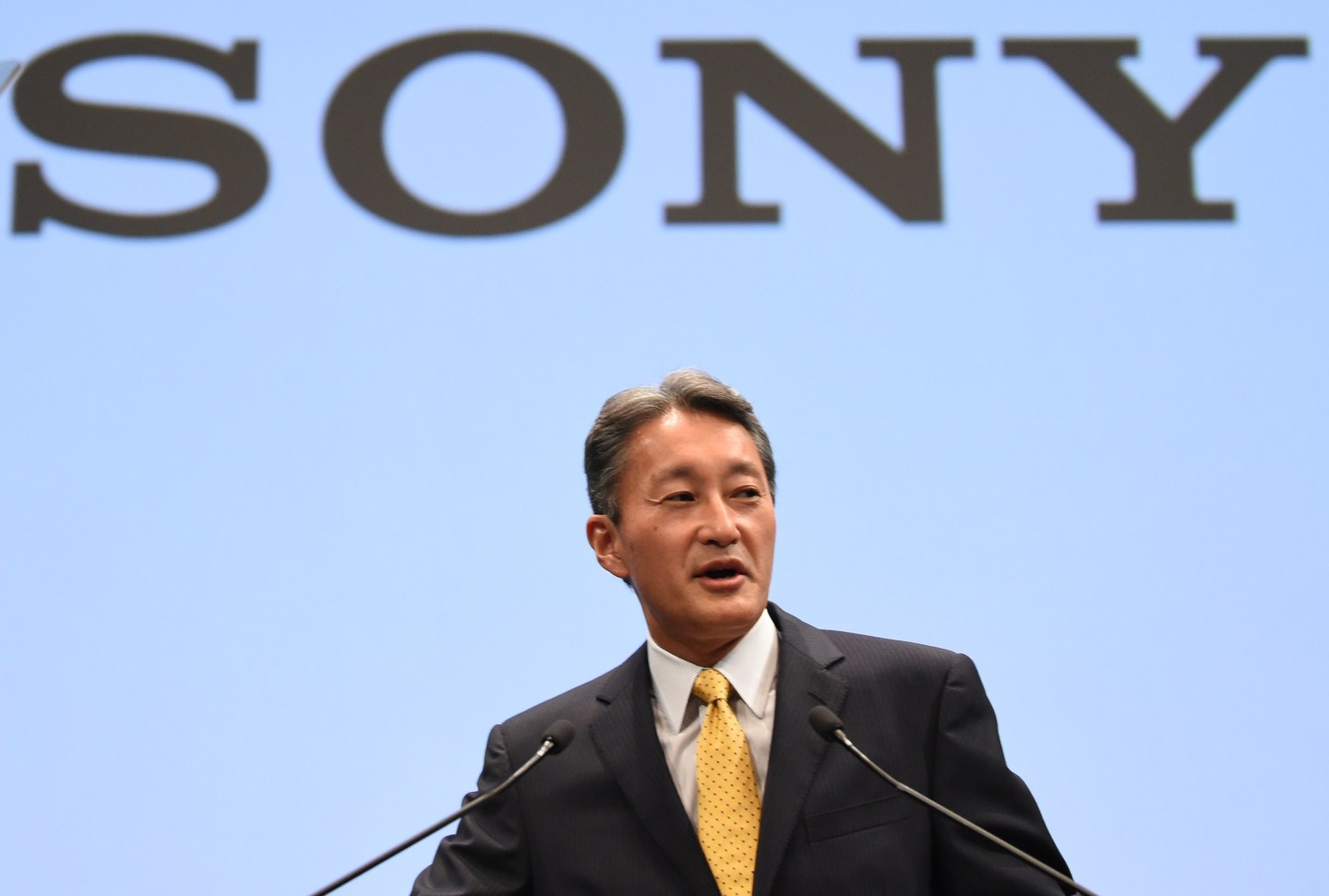
Sony corporation president and CEO Kazuo Hirai speaks at the company's headquarters in Tokyo on November 18, 2014. Hirai was attending the "Sony IR (Investor Relations) Day 2014" meeting. AFP PHOTO / TOSHIFUMI KITAMURA (Photo credit should read TOSHIFUMI KITAMURA/AFP/Getty Images)Photograph by Toshifumi Kitamura — AFP/Getty Images
In the annals of consumer electronics companies that have slipped from great heights, none has taken a bigger fall far from its glory days than Sony. But after years of struggling to right itself, the company is finally making real progress on a turnaround.

Just as Apple helped revive itself in the early 2000s with the iPod, Sony built much of its success on the idea of helping people carry music around in their pocket–first with the transistor radio in the 50s and 60s and later with the Walkman portable cassette player. Those products, coupled with smart engineering, made the Sony brand synonymous with peerless quality.

In the early 2000s, Sony began to lose its competitive edge. Rivals like Samsung had emerged to undercut its higher-priced TVs and stereos. Sony couldn’t get a foothold in new markets like mp3 players. Its earlier expansion into new areas like insurance and its overspending on film and music studios left it with a structure that was at once bloated and siloed.

Sony named Howard Stringer as CEO in 2005 to turn things around. Stringer cut a charismatic figure, but couldn’t speak Japanese and, as a lifelong media executive, lacked an engineering background. Stringer tried to conjure a convergence of electronics and media properties that never quite gelled. (Stringer is on the board of Time Inc.) Meanwhile, further setbacks struck: the global recession in 2009, the Fukushima earthquake in 2011 and a stronger yen that hurt Japanese exports.

MORE: The Next Step in Sony’s Evolution

Sony has posted net losses for six of the past seven years. As a result, the price of its ADRs traded on the NYSE fell from $55 in early 2008 to below $10 in late 2012. (An ADR is a stock that trades in the U.S. but represents a specific number of shares in a foreign corporation.) Its credit ratings eventually fell to near junk levels. But then things began to look up: After bottoming out below $10 in 2012, its ADRs have risen back near $33 this month, a rally of 238% in the last two and a half years.

The change came after Sony replaced Stringer with Kazuo Hirai in early 2012. Hirai was a Sony veteran known for wringing profits from troubled businesses like the PlayStation gaming division. And like Stringer, Hirai didn’t fit the mold of the Japanese salaryman. Hirai grew up in Japan and North America, giving him a fluency in English and also a gift for being plainspoken, like when he told the Wall Street Journal on taking the job, “It’s one issue after another. I feel like, “Holy shit, now what?”

Hirai began an ambitious restructuring of Sony over the three years that followed. He quickly announced a “One Sony” structure that built on Stringer’s convergence with an emphasis on communication and joint decisions among siloed divisions. He focused the electronics business on mobile, gaming and imaging products. Over time, he cut thousands of jobs, sold off the Vaio PC unit, separated the ailing TV business into its own company and overhauled the smartphone lineup.

All of this added to financial losses with restructuring charges and made for a tumultuous 2014. But the low point came last November, with the infamous hack that left sensitive documents from Sony Pictures Entertainment in public view. But it was just around this time when some analysts began voicing their conviction in a Sony turnaround. The turnaround painstakingly plotted by Stringer and Hirai was finally bearing fruit.

That became more evident when Sony reported its most recent earnings. There were encouraging signs in the past year’s finances, like revenue rising 6% and the TV business posting its first profit in 11 years. But the better news was in the cautious forecast for the coming year.

MORE: These Are the Fastest Growing Cities in America

The bulk of the restructuring was behind Sony, CFO Kenichiro Yoshida said, and while revenue may decline 4% this fiscal year, operating profit would rise fourfold to $2.6 billion, its highest profit since 2008. Hirai had earlier projected net income to rise above $4 billion by 2018, which would be its biggest profit since 1998, before the great fall began.

There’s still some restructuring to do. The revenue decrease this year will come largely from Sony’s move away from mid-range mobile phones to focus on the high end of the market. While camera sales continue to decline, Sony is seeing strong growth in imaging sensors used in smartphones. Overall, Sony will be a smaller company in terms of revenue but with bigger sales and slow, steady move from aging markets into growing ones.

A turnaround needs more than cost cutting and restructuring. Sony has a long road ahead to go from playing catch-up in technology markets to playing a leading role in new ones. That step requires a lot more work, but Sony’s return to profitability makes a major turnaround as feasible as it’s been in more than a decade.


About the Author
By Kevin Kelleher
See full bioRight Arrow Button Icon

Latest in Tech

NewslettersCIO Intelligence
Dave’s Hot Chicken is placing broad bets on AI to give the restaurant chain an edge in the chicken wars
By John KellDecember 3, 2025
41 seconds ago
AITech
IBM CEO warns there’s ‘no way’ hyperscalers like Google and Amazon will be able to turn a profit at the rate of their data center spending
By Marco Quiroz-GutierrezDecember 3, 2025
3 minutes ago
Workplace CultureBrainstorm Design
Designer Kevin Bethune: Bringing ‘disparate disciplines around the table’ is how leaders can ‘problem solve the future’
By Fortune EditorsDecember 3, 2025
15 minutes ago
AIBrainstorm Design
Microsoft AI wants all its employees to be AI-native by the end of the fiscal year, says VP of design Liz Danzico
By Angelica AngDecember 3, 2025
1 hour ago
Two men sit and smile in front of a building
Cryptostablecoins
Exclusive: Former Citadel employees raise $17 million for Fin, a global stablecoin app ‘without all the complexity’
By Carlos GarciaDecember 3, 2025
2 hours ago
CybersecuritySmall Business
Main Street’s make-or-break upgrade: Why small businesses are racing to modernize their tech
By Ashley LutzDecember 3, 2025
3 hours ago

Most Popular

placeholder alt text
North America
Jeff Bezos and Lauren Sánchez Bezos commit $102.5 million to organizations combating homelessness across the U.S.: ‘This is just the beginning’
By Sydney LakeDecember 2, 2025
1 day ago
placeholder alt text
Economy
Ford workers told their CEO 'none of the young people want to work here.' So Jim Farley took a page out of the founder's playbook
By Sasha RogelbergNovember 28, 2025
5 days ago
placeholder alt text
Success
Warren Buffett used to give his family $10,000 each at Christmas—but when he saw how fast they were spending it, he started buying them shares instead
By Eleanor PringleDecember 2, 2025
1 day ago
placeholder alt text
Economy
Elon Musk says he warned Trump against tariffs, which U.S. manufacturers blame for a turn to more offshoring and diminishing American factory jobs
By Sasha RogelbergDecember 2, 2025
1 day ago
placeholder alt text
North America
Anonymous $50 million donation helps cover the next 50 years of tuition for medical lab science students at University of Washington
By The Associated PressDecember 2, 2025
1 day ago
placeholder alt text
C-Suite
MacKenzie Scott's $19 billion donations have turned philanthropy on its head—why her style of giving actually works
By Sydney LakeDecember 2, 2025
1 day ago
Rankings
  • 100 Best Companies
  • Fortune 500
  • Global 500
  • Fortune 500 Europe
  • Most Powerful Women
  • Future 50
  • World’s Most Admired Companies
  • See All Rankings
Sections
  • Finance
  • Leadership
  • Success
  • Tech
  • Asia
  • Europe
  • Environment
  • Fortune Crypto
  • Health
  • Retail
  • Lifestyle
  • Politics
  • Newsletters
  • Magazine
  • Features
  • Commentary
  • Mpw
  • CEO Initiative
  • Conferences
  • Personal Finance
  • Education
Customer Support
  • Frequently Asked Questions
  • Customer Service Portal
  • Privacy Policy
  • Terms Of Use
  • Single Issues For Purchase
  • International Print
Commercial Services
  • Advertising
  • Fortune Brand Studio
  • Fortune Analytics
  • Fortune Conferences
  • Business Development
About Us
  • About Us
  • Editorial Calendar
  • Press Center
  • Work At Fortune
  • Diversity And Inclusion
  • Terms And Conditions
  • Site Map

© 2025 Fortune Media IP Limited. All Rights Reserved. Use of this site constitutes acceptance of our Terms of Use and Privacy Policy | CA Notice at Collection and Privacy Notice | Do Not Sell/Share My Personal Information
FORTUNE is a trademark of Fortune Media IP Limited, registered in the U.S. and other countries. FORTUNE may receive compensation for some links to products and services on this website. Offers may be subject to change without notice.