• Home
  • Latest
  • Fortune 500
  • Finance
  • Tech
  • Leadership
  • Lifestyle
  • Rankings
  • Multimedia
Tech

Is Facebook’s Internet.org project a charitable effort or a customer acquisition strategy?

By
Mathew Ingram
Mathew Ingram
Down Arrow Button Icon
By
Mathew Ingram
Mathew Ingram
Down Arrow Button Icon
May 20, 2015, 2:02 PM ET
Inside The F8 Facebook Developers Conference
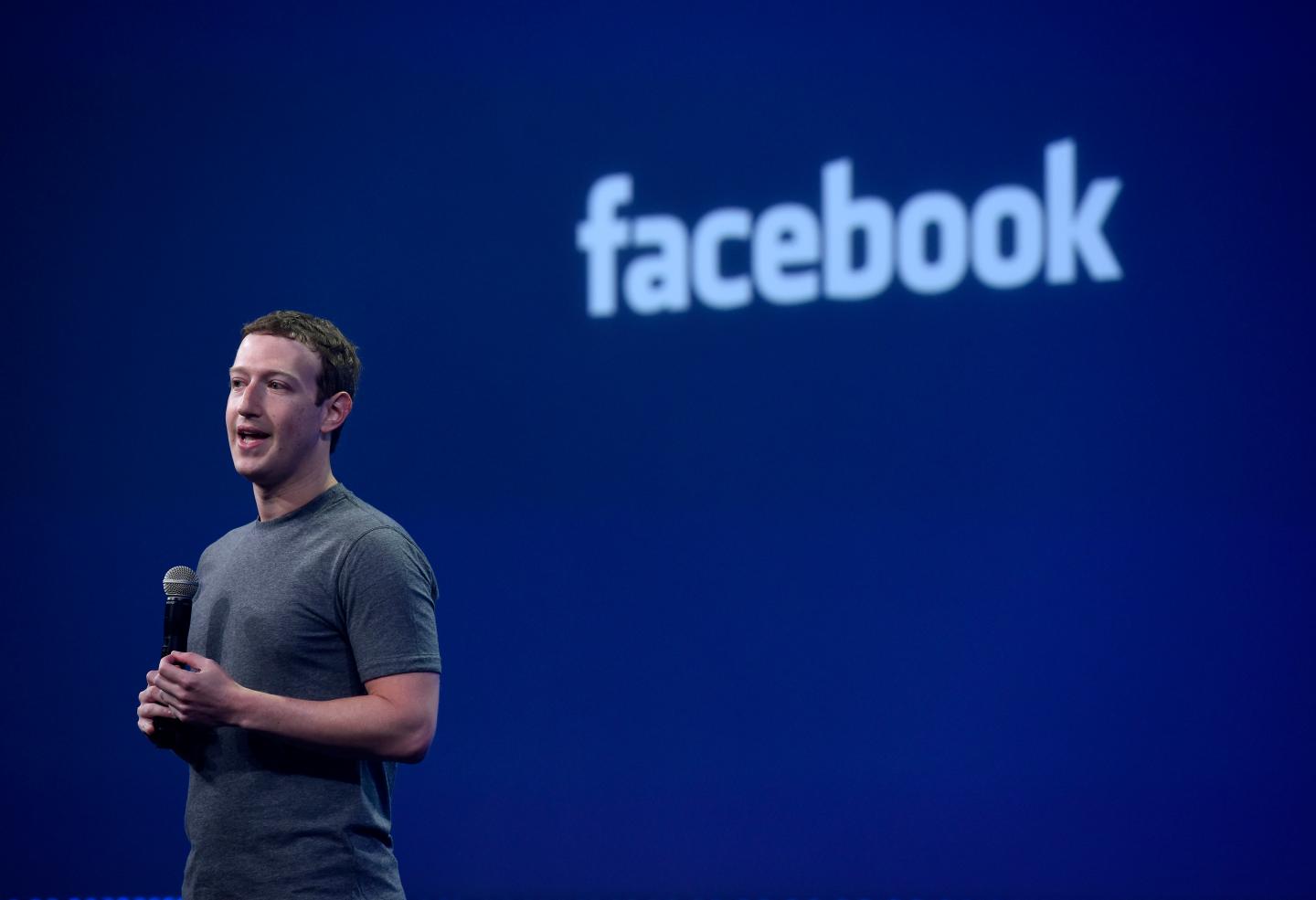
Mark Zuckerberg, chief executive officer of Facebook Inc., speaks during the Facebook F8 Developers Conference in San Francisco, California, U.S., on Wednesday, March 25, 2015. Zuckerberg plans to unveil tools that let application makers reach the social network's audience while helping the company boost revenue. Photographer: David Paul Morris/Bloomberg via Getty ImagesPhotograph by David Paul Morris — Bloomberg/Getty Images

The sales pitch for Facebook’s Internet.org initiative is pretty straightforward: In many countries, access to the Internet is either prohibitively expensive and/or simply unavailable, so the giant social network wants to help give those without access a way to get online. It sounds like a magnanimous and public-spirited effort by Facebook co-founder Mark Zuckerberg—but a growing number of critics say this plan could actually be worse than having no Internet access at all.

In a nutshell, the problem is that the Internet.org project is being organized and controlled by Facebook, from the telecom partners who have agreed to participate—including Samsung, Ericsson, Microsoft and Qualcomm—to the selected websites and services that participants would be able to access through the initiative.

In other words, what Facebook and its partners are providing to users in countries like India, Guatemala and Zambia isn’t Internet access per se, it’s a specific subset of the Internet, composed of websites that have agreed to play ball with the social network. Some say that what Facebook is actually building is a “high-tech ghetto,” and that its approach amounts to “economic racism.” The Electronic Frontier Foundation recently took the company to task for its proposal, saying:

“As we and others have noted, there’s a real risk that the few websites that Facebook and its partners select for Internet.org (including, of course, Facebook itself) could end up becoming a ghetto for poor users instead of a stepping stone to the larger Internet.”

In an attempt to counter some of these criticisms, Facebook recently opened up the Internet.org project to outside developers and third-party services, and said that it would be giving users more choice over which sites and services they could use once connected. Zuckerberg said that the websites selected as part of the initiative needed to be simple and data efficient, so that operators could offer them for free, and that “anyone who meets these guidelines will be able to participate.”

In a video message and in an op-ed for an Indian newspaper, the Facebook co-founder added that while he believes in the concept of net neutrality—which holds that Internet providers and telecom companies shouldn’t artificially restrict access to certain websites or services, or give priority to certain content—the Internet.org project serves a useful purpose for the 4 billion or so people who have no access to the Internet at all. And giving these people access to the entire Internet isn’t economically feasible, he argued:

“Net neutrality should not prevent access. We need both. Our vision is to give people more access to free services over time [but] it’s not sustainable to offer the whole internet for free. No operator could afford this.”

So is limited access to a subset of the Internet—a subset that is ultimately selected by Facebook—better than no Internet access at all? Many critics of the plan say it isn’t. In fact, there is criticism even in some of the countries where Facebook’s proposal would have a significant impact: In India, for example, some of the companies that initially agreed to participate in the Internet.org project have backed out, or have said they will do so if their competitors also agree to quit.

In a piece on LinkedIn, Indian investor Mahesh Murthy said Internet.org amounts to “exploiting the poor in under-developed parts of the world to become your customers under the guise of some apparent charitable purpose. While offering them a shoddy, stunted version of the real thing… it just seems to be a cloaked proxy for the Facebook Economically Disadvantaged User Acquisition Department.”

A number of consumer-advocacy and digital-rights groups have also written an open letter to Facebook’s CEO, arguing that the Internet.org initiative falls down on a number of levels, including the fact that it violates the spirit of net neutrality by restricting users to only the sites that are permitted inside Facebook’s “walled garden.”

11235050_10153290293303480_6474472559195461110_n

For its part, the EFF says that Facebook’s attempts to throttle data-hogging applications and websites makes sense, so that carriers don’t have to absorb huge data charges, but selecting which sites and services get to participate isn’t kosher. And there are other issues with the proposal as well, the EFF says:

“We agree that some Internet access is better than none, and if that is what Internet.org actually provided—for example, through a uniformly rate-limited or data-capped free service—then it would have our full support. But it doesn’t. Instead, it continues to impose conditions and restraints that not only make it something less than a true Internet service, but also endanger people’s privacy and security.”

In effect, says the EFF, the structure of Internet.org means that Facebook has set itself up as a gatekeeper when it comes to accessing the Internet, and this means that it has “issued an open invitation for governments and special interest groups to lobby, cajole or threaten them to withhold particular content from their service.” Until the social network truly opens up the project to anyone and everyone, Internet.org will “not be living up to its promise or its name,” the foundation says.

Mark Zuckerberg may indeed be sincere about his desire to provide some form of Internet access to poor and developing countries. But the structure of Internet.org still feels like a gambit on Facebook’s part to effectively become the Internet in those countries, and that’s something many people quite rightly find disturbing.

About the Author
By Mathew Ingram
See full bioRight Arrow Button Icon

Latest in Tech

Finance
Lorem ipsum dolor sit amet, consectetur adipiscing elit, sed do eiusmod tempor incididunt ut labore et dolore magna aliqua. Ut enim ad minim veniam
By Fortune Editors
October 20, 2025
Finance
Lorem ipsum dolor sit amet, consectetur adipiscing elit, sed do eiusmod tempor incididunt ut labore et dolore magna aliqua. Ut enim ad minim veniam
By Fortune Editors
October 20, 2025
Finance
Lorem ipsum dolor sit amet, consectetur adipiscing elit, sed do eiusmod tempor incididunt ut labore et dolore magna aliqua. Ut enim ad minim veniam
By Fortune Editors
October 20, 2025
Finance
Lorem ipsum dolor sit amet, consectetur adipiscing elit, sed do eiusmod tempor incididunt ut labore et dolore magna aliqua. Ut enim ad minim veniam
By Fortune Editors
October 20, 2025
Finance
Lorem ipsum dolor sit amet, consectetur adipiscing elit, sed do eiusmod tempor incididunt ut labore et dolore magna aliqua. Ut enim ad minim veniam
By Fortune Editors
October 20, 2025
Finance
Lorem ipsum dolor sit amet, consectetur adipiscing elit, sed do eiusmod tempor incididunt ut labore et dolore magna aliqua. Ut enim ad minim veniam
By Fortune Editors
October 20, 2025

Most Popular

Finance
Lorem ipsum dolor sit amet, consectetur adipiscing elit, sed do eiusmod tempor incididunt ut labore et dolore magna aliqua. Ut enim ad minim veniam
By Fortune Editors
October 20, 2025
Finance
Lorem ipsum dolor sit amet, consectetur adipiscing elit, sed do eiusmod tempor incididunt ut labore et dolore magna aliqua. Ut enim ad minim veniam
By Fortune Editors
October 20, 2025
Finance
Lorem ipsum dolor sit amet, consectetur adipiscing elit, sed do eiusmod tempor incididunt ut labore et dolore magna aliqua. Ut enim ad minim veniam
By Fortune Editors
October 20, 2025
Finance
Lorem ipsum dolor sit amet, consectetur adipiscing elit, sed do eiusmod tempor incididunt ut labore et dolore magna aliqua. Ut enim ad minim veniam
By Fortune Editors
October 20, 2025
Finance
Lorem ipsum dolor sit amet, consectetur adipiscing elit, sed do eiusmod tempor incididunt ut labore et dolore magna aliqua. Ut enim ad minim veniam
By Fortune Editors
October 20, 2025
Finance
Lorem ipsum dolor sit amet, consectetur adipiscing elit, sed do eiusmod tempor incididunt ut labore et dolore magna aliqua. Ut enim ad minim veniam
By Fortune Editors
October 20, 2025
Fortune Secondary Logo
Rankings
  • 100 Best Companies
  • Fortune 500
  • Global 500
  • Fortune 500 Europe
  • Most Powerful Women
  • World's Most Admired Companies
  • See All Rankings
  • Lists Calendar
Sections
  • Finance
  • Fortune Crypto
  • Features
  • Leadership
  • Health
  • Commentary
  • Success
  • Retail
  • Mpw
  • Tech
  • Lifestyle
  • CEO Initiative
  • Asia
  • Politics
  • Conferences
  • Europe
  • Newsletters
  • Personal Finance
  • Environment
  • Magazine
  • Education
Customer Support
  • Frequently Asked Questions
  • Customer Service Portal
  • Privacy Policy
  • Terms Of Use
  • Single Issues For Purchase
  • International Print
Commercial Services
  • Advertising
  • Fortune Brand Studio
  • Fortune Analytics
  • Fortune Conferences
  • Business Development
  • Group Subscriptions
About Us
  • About Us
  • Press Center
  • Work At Fortune
  • Terms And Conditions
  • Site Map
  • About Us
  • Press Center
  • Work At Fortune
  • Terms And Conditions
  • Site Map
  • Facebook icon
  • Twitter icon
  • LinkedIn icon
  • Instagram icon
  • Pinterest icon

Latest in Tech

The fruit fly cancer researcher who built his first prototype out of lollipop sticks and straws
NewslettersTerm Sheet
The fruit fly cancer researcher who built his first prototype out of lollipop sticks and straws
By Allie GarfinkleMay 1, 2026
40 minutes ago
Apple CEO Tim Cook in Washington, D.C. on December 10, 2025. (Tom Williams/CQ-Roll Call/Getty Images)
NewslettersFortune Tech
Tim Cook’s advice for Apple’s next CEO
By Andrew NuscaMay 1, 2026
1 hour ago
Newly appointed Apple CEO John Ternus (left) with outgoing CEO Tim Cook in Cupertino, Calif. (Photo courtesy Apple)
PoliticsMarkets
Apple’s new CEO said he will continue the company’s tradition of secrecy—and Wall Street loved it
By Jim EdwardsMay 1, 2026
2 hours ago
Hitting the ‘GenAI wall’: Where generative AI stops working, and what it means for your talent strategy
AILeadership
Hitting the ‘GenAI wall’: Where generative AI stops working, and what it means for your talent strategy
By François Candelon and Iavor BojinovMay 1, 2026
3 hours ago
Evan Spiegel wears a black t-shirt and speaks into a microphone while on stage.
AITech
Snap CEO praises AI for writing two-thirds of the company’s code but warns fellow tech executives underestimate ‘societal pushback’ to the tech
By Sasha RogelbergMay 1, 2026
3 hours ago
Meta wants to spend more even after it lost $80 billion on the Metaverse and over 20 million users
Big TechMeta
Meta wants to spend more even after it lost $80 billion on the Metaverse and over 20 million users
By Marco Quiroz-GutierrezMay 1, 2026
4 hours ago

Most Popular

Apple cofounder Ronald Wayne—whose stake would be worth up to $400 billion had he not sold it in 1976—says that at 91, he has no regrets
Success
Apple cofounder Ronald Wayne—whose stake would be worth up to $400 billion had he not sold it in 1976—says that at 91, he has no regrets
By Preston ForeApril 27, 2026
4 days ago
China dominates the world's lithium supply. The U.S. just found 328 years' worth in its own backyard
North America
China dominates the world's lithium supply. The U.S. just found 328 years' worth in its own backyard
By Jake AngeloApril 30, 2026
18 hours ago
Accenture's Julie Sweet blew up 50 years of company history. She says the hardest part is still ahead
Conferences
Accenture's Julie Sweet blew up 50 years of company history. She says the hardest part is still ahead
By Nick LichtenbergApril 29, 2026
2 days ago
Google Cloud revenue is now 18% of Alphabet's business. Is this the beginning of the end of Google's search identity?
Big Tech
Google Cloud revenue is now 18% of Alphabet's business. Is this the beginning of the end of Google's search identity?
By Alexei OreskovicApril 29, 2026
1 day ago
With no end in sight, Trump considers new options in Iran war—including the ‘Dark Eagle’ hypersonic missile
Big Tech
With no end in sight, Trump considers new options in Iran war—including the ‘Dark Eagle’ hypersonic missile
By Jim EdwardsApril 30, 2026
1 day ago
America shot its arsenal empty in 2 wars. Now it needs Beijing's permission to reload
Commentary
America shot its arsenal empty in 2 wars. Now it needs Beijing's permission to reload
By Steve H. Hanke and Jeffrey WengApril 30, 2026
18 hours ago

© 2026 Fortune Media IP Limited. All Rights Reserved. Use of this site constitutes acceptance of our Terms of Use and Privacy Policy | CA Notice at Collection and Privacy Notice | Do Not Sell/Share My Personal Information
FORTUNE is a trademark of Fortune Media IP Limited, registered in the U.S. and other countries. FORTUNE may receive compensation for some links to products and services on this website. Offers may be subject to change without notice.