• Home
  • Latest
  • Fortune 500
  • Finance
  • Tech
  • Leadership
  • Lifestyle
  • Rankings
  • Multimedia

Trendingnow

1

He worked 100-hour weeks to save a nearly bankrupt boat company. At 83, he’s just turned down $400 million for it—and gave it all to charity instead

2

Costco's $14 million email settlement: Who qualifies for an up-to $500 payment and how to claim before the Aug. 24 deadline

3

Mamdani’s pied-à-terre tax was designed to hit the wealthy, but it’s sending most New Yorkers to their estate lawyers

1

He worked 100-hour weeks to save a nearly bankrupt boat company. At 83, he’s just turned down $400 million for it—and gave it all to charity instead

2

Costco's $14 million email settlement: Who qualifies for an up-to $500 payment and how to claim before the Aug. 24 deadline

3

Mamdani’s pied-à-terre tax was designed to hit the wealthy, but it’s sending most New Yorkers to their estate lawyers
Retail

Here’s how McDonald’s became the king of burgers

By
Matt Vella
Matt Vella
Down Arrow Button Icon
By
Matt Vella
Matt Vella
Down Arrow Button Icon
May 15, 2015, 1:44 PM ET
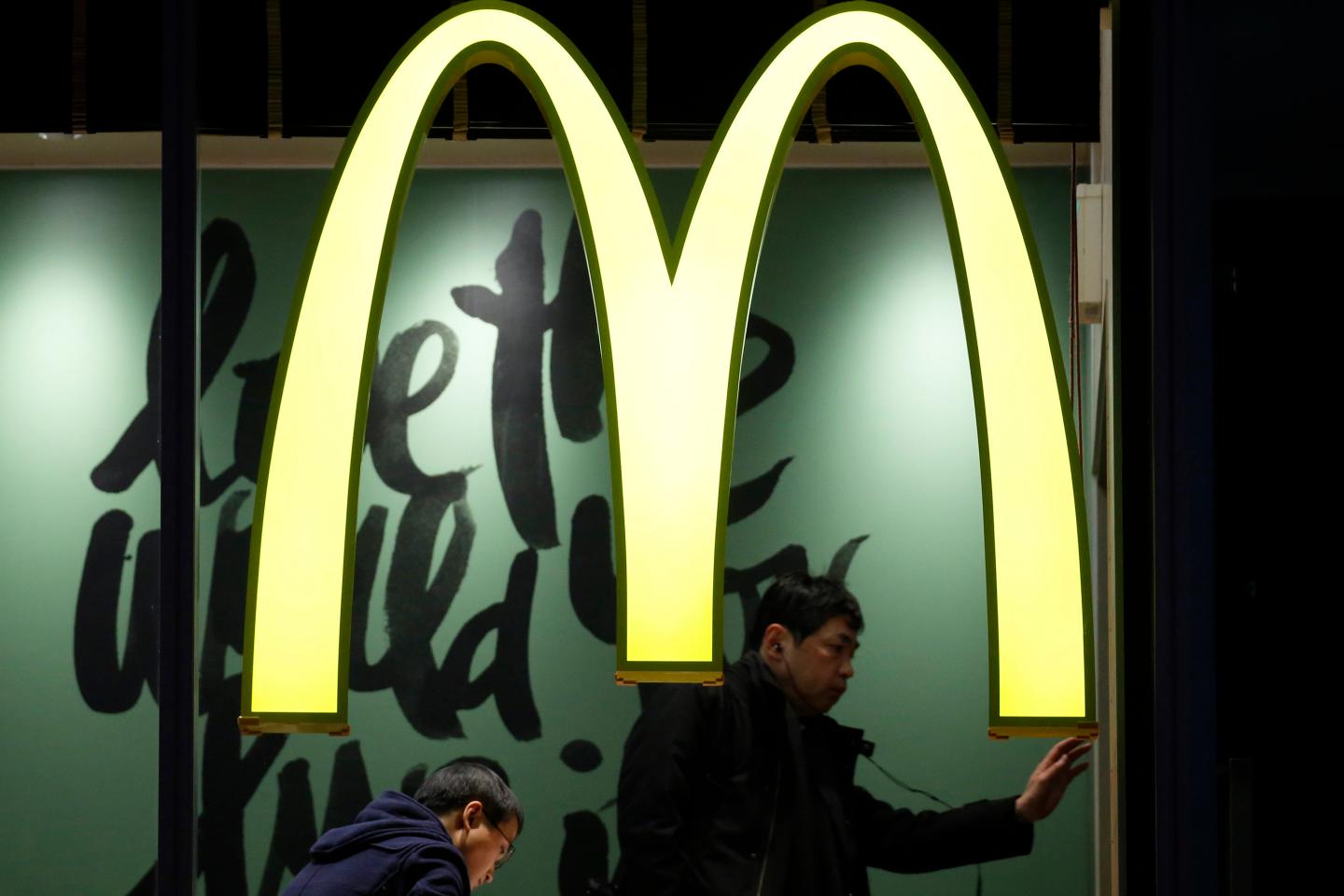
Photograph by Kiyoshi Ota — Bloomberg via Getty Images
Add Fortune on Google for similar content.

It is in no way surprising that McDonald’s recent troubles have drawn so much media attention. It’s not just because it’s a huge company, it’s because it is one of a small handful of corporations that are closely associated with the idea America itself, part of our national identity. And that has been the case for most of McDonald’s 75-year history.

There are many reasons for this, but the chief one might have been expressed best by the quotation TIME chose to open its September 17, 1973 cover story on McDonald’s: “The destiny of nations depends on the manner in which they nourish themselves.” The quote came from The Physiology of Taste, written in 1826 by Jean Brillat-Savarin.

The cover story was titled “The Burger That Conquered the Country.” At the time—and for decades thereafter—nobody could seriously argue the title’s point. McDonald’s has faced stiff competition all along, from Burger King, from Wendy’s, from Taco Bell, and from any number of other fast-food chains. But none of those competitors ever came close to McDonald’s, especially in terms of image. McDonald’s—even now, when it faces some of its greatest challenges ever—is America’s burger joint.

In the 1973 article (in which McDonald’s main product is rather quaintly referred to as a “ham burger”—two words), TIME declared that if Brillat-Savarin’s quote was correct, “America’s destiny manifestly depends to no small degree on the ham burgers, French fries and milkshakes served beneath the golden arches of McDonald’s.”

Though it would grow much, much larger in the years ahead, McDonald’s was by 1973 a fully realized entity. It employed 130,000 employees in nine countries, and operated 2,500 outlets in the United States. And although Time declared that it “gone from a uniquely American to a truly global operation,” its image remained fully American, as it still does 42 years later—for better and, in some respects, worse.

Our destiny since then has manifested itself largely in our waistlines, a concern that in 1973 was just starting to creep into the national dialogue. The company most often cited by health-conscious critics of our food economy is, of course, McDonald’s. Our economic destiny meanwhile has in recent years manifested itself in the form of a growing wealth gap, with low-wage retail jobs taking the place of vanishing, high-wage manufacturing jobs. The company most-often cited in discussions of this problem (along with Wal-Mart) is, again, McDonald’s.

In the past few years, these trends have hit critical mass, to McDonald’s detriment. Consumer tastes for quick meals remained static for decades. Now they’re changing. Largely motivated by health concerns, but also by the desire for higher-quality eats, diners are increasingly opting for “fast-casual” outlets like Chipotle and Panera Bread. In response, McDonald’s is grasping for solutions that might not exist.

At the same time, the company is facing pressure on the labor front. In 1973, most of its employees were teenagers working as burger flippers and “window girls.” Now, most of it workers are adults, many of them trying to support families. Last month, the company said it was raising wages and increasing benefits, though that applies only to employees of company-owned outlets, not to franchisees, meaning that most McDonald’s workers aren’t affected.

Officially, McDonald’s traces its history only back to 1955, when businessman Ray Kroc joined the company as a franchise agent. But the first McDonald’s (“McDonald’s Barbecue Restaurant”) actually opened on May 15, 1940, in San Bernardino, Calif. Kroc, impressed by the company’s production-line methods, purchased the chain from the McDonald brothers in 1961, and set about turning it into a burger leviathan.

The chain now includes about 30,000 outlets (14,000 in the United States) in 119 countries and employs about 1.7 million people.

By 1987, TIME was declaring “McDonald’s as a corporation looks more and more like a case study in how to concentrate on providing one service exceedingly well.” Despite all the grief it was taking from critics of its fatty, salt-laden fare and its monolithic corporate image, the company was still largely beloved. “McDonald’s has become such a pervasive reference point in American life that many consumers think of the company as a public institution—one that is often more reliable than the post office or the phone company,” wrote Stephen Koepp.

The company’s growth continued more or less unabated until after the 2008 recession, when the restaurant industry as a whole was hit hard—fast food included. As recently as 2005, TIME was describing fast food as a “quintessentially American dining experience” and a “perfect expression of those bedrock values of efficiency, thriftiness and speed.” Total spending on fast food had quadrupled in the preceding decade.

But even then, fast-food chains—McDonald’s definitely included—saw the writing on the wall, and were working to change their images. Consumers still wanted to dine out, but they were looking for a more pleasant experience, and healthier food. Stores were redesigned, menus were upgraded. Then the recession hit.

“Fallen Arches,” read a headline in Fortune magazine last November. “Can McDonald’s Get Its Mojo Back?” The company “has risen to the top of the fast-food chain by being comfortably, familiarly, iconically ‘mass market’ and so ubiquitous as to be the Platonic ideal of ‘convenient,’” wrote Fortune‘s Beth Kowitt. “Neither of these selling points, however, is as high as it was even a decade ago on Americans’ list of dining priorities. A growing segment of restaurant goers are choosing ‘fresh and healthy’ over ‘fast and convenient,’ and McDonald’s is having trouble convincing consumers that it’s both. Or even can be both.”

So much for “providing one service exceedingly well.” If people don’t want that one service, what’s a company to do? McDonald’s is still looking for answers, from making burgers more customizable to adding various new menu items (and subtracting others) to launching attention-getting promotional campaigns with varying degrees of success.

Kale, of all things, provides a nice microcosm for McDonald’s challenges. Several months back, the company made fun of the trendy, often-mocked “superfood” in TV advertisements. Over a camera close-up of the lettuce on a Big Mac, the narrator intoned: “This will never be kale.” Earlier this month, McDonald’s started test-marketing a breakfast bowl consisting of turkey sausage, egg whites, and … kale.

It seems that McDonald’s still hasn’t decided which one service it wants to provide exceedingly well. But America will likely be watching.

About the Author
By Matt Vella
See full bioRight Arrow Button Icon
Add Fortune on Google for similar content.

Latest in Retail

Finance
Lorem ipsum dolor sit amet, consectetur adipiscing elit, sed do eiusmod tempor incididunt ut labore et dolore magna aliqua. Ut enim ad minim veniam
By Fortune Editors
October 20, 2025
Finance
Lorem ipsum dolor sit amet, consectetur adipiscing elit, sed do eiusmod tempor incididunt ut labore et dolore magna aliqua. Ut enim ad minim veniam
By Fortune Editors
October 20, 2025
Finance
Lorem ipsum dolor sit amet, consectetur adipiscing elit, sed do eiusmod tempor incididunt ut labore et dolore magna aliqua. Ut enim ad minim veniam
By Fortune Editors
October 20, 2025
Finance
Lorem ipsum dolor sit amet, consectetur adipiscing elit, sed do eiusmod tempor incididunt ut labore et dolore magna aliqua. Ut enim ad minim veniam
By Fortune Editors
October 20, 2025
Finance
Lorem ipsum dolor sit amet, consectetur adipiscing elit, sed do eiusmod tempor incididunt ut labore et dolore magna aliqua. Ut enim ad minim veniam
By Fortune Editors
October 20, 2025
Finance
Lorem ipsum dolor sit amet, consectetur adipiscing elit, sed do eiusmod tempor incididunt ut labore et dolore magna aliqua. Ut enim ad minim veniam
By Fortune Editors
October 20, 2025

Most Popular

Finance
Lorem ipsum dolor sit amet, consectetur adipiscing elit, sed do eiusmod tempor incididunt ut labore et dolore magna aliqua. Ut enim ad minim veniam
By Fortune Editors
October 20, 2025
Finance
Lorem ipsum dolor sit amet, consectetur adipiscing elit, sed do eiusmod tempor incididunt ut labore et dolore magna aliqua. Ut enim ad minim veniam
By Fortune Editors
October 20, 2025
Finance
Lorem ipsum dolor sit amet, consectetur adipiscing elit, sed do eiusmod tempor incididunt ut labore et dolore magna aliqua. Ut enim ad minim veniam
By Fortune Editors
October 20, 2025
Finance
Lorem ipsum dolor sit amet, consectetur adipiscing elit, sed do eiusmod tempor incididunt ut labore et dolore magna aliqua. Ut enim ad minim veniam
By Fortune Editors
October 20, 2025
Finance
Lorem ipsum dolor sit amet, consectetur adipiscing elit, sed do eiusmod tempor incididunt ut labore et dolore magna aliqua. Ut enim ad minim veniam
By Fortune Editors
October 20, 2025
Finance
Lorem ipsum dolor sit amet, consectetur adipiscing elit, sed do eiusmod tempor incididunt ut labore et dolore magna aliqua. Ut enim ad minim veniam
By Fortune Editors
October 20, 2025
Fortune Secondary Logo
Rankings
  • 100 Best Companies
  • Fortune 500
  • Global 500
  • Fortune 500 Europe
  • Most Powerful Women
  • World's Most Admired Companies
  • See All Rankings
  • Lists Calendar
Sections
  • Finance
  • Fortune Crypto
  • Features
  • Leadership
  • Health
  • Commentary
  • Success
  • Retail
  • Mpw
  • Tech
  • Lifestyle
  • CEO Initiative
  • Asia
  • Politics
  • Conferences
  • Europe
  • Newsletters
  • Personal Finance
  • Environment
  • Magazine
  • Education
Customer Support
  • Frequently Asked Questions
  • Customer Service Portal
  • Privacy Policy
  • Terms Of Use
  • Single Issues For Purchase
  • International Print
Commercial Services
  • Advertising
  • Fortune Brand Studio
  • Fortune Analytics
  • Fortune Conferences
  • Business Development
  • Group Subscriptions
About Us
  • About Us
  • Press Center
  • Work At Fortune
  • Terms And Conditions
  • Site Map
  • About Us
  • Press Center
  • Work At Fortune
  • Terms And Conditions
  • Site Map
  • Facebook icon
  • Twitter icon
  • LinkedIn icon
  • Instagram icon
  • TikTok icon
  • YouTube icon

Latest in Retail

tb
North AmericaRestaurants
Taco Bell’s quick action on removing lettuce, $1 Mexican Pizza special work to win over diners, investors
By Dee-Ann Durbin and The Associated PressJuly 30, 2026
15 hours ago
The only thing more surprising than Cracker Barrel CEO’s exit may be its pick to replace her
C-Suitechief executive officer (CEO)
The only thing more surprising than Cracker Barrel CEO’s exit may be its pick to replace her
By Phil WahbaJuly 30, 2026
15 hours ago
A United Parcel Service Inc. logo is displayed on a truck.
RetailCFO Daily
UPS CFO on the lessons learned from scaling back Amazon—and why the strategy is paying off
By Sheryl EstradaJuly 30, 2026
17 hours ago
za
RetailGen Z
‘Am I paying for the vibes?’ Gen Z says it hates capitalism, but their spending patterns show they just don’t like being ripped off
By Nick LichtenbergJuly 30, 2026
19 hours ago
lose-up of five people's hands holding smartphones i
PoliticsSocial Media
Europe’s social media bans force businesses to rethink how they reach the youngest generation 
By Sam BirchallJuly 30, 2026
21 hours ago
A car pulls up to a Wendy's drive-through ordering machine.
RetailRestaurants
Fast-food execs keep pushing for more AI systems, but fail to see the big picture: Customers still want humans
By Joshua HongJuly 30, 2026
23 hours ago

Most Popular

He worked 100-hour weeks to save a nearly bankrupt boat company. At 83, he’s just turned down $400 million for it—and gave it all to charity instead
Success
He worked 100-hour weeks to save a nearly bankrupt boat company. At 83, he’s just turned down $400 million for it—and gave it all to charity instead
By Preston ForeJuly 29, 2026
2 days ago
Costco's $14 million email settlement: Who qualifies for an up-to $500 payment and how to claim before the Aug. 24 deadline
Retail
Costco's $14 million email settlement: Who qualifies for an up-to $500 payment and how to claim before the Aug. 24 deadline
By Sydney LakeJuly 29, 2026
2 days ago
Mamdani’s pied-à-terre tax was designed to hit the wealthy, but it’s sending most New Yorkers to their estate lawyers
Real Estate
Mamdani’s pied-à-terre tax was designed to hit the wealthy, but it’s sending most New Yorkers to their estate lawyers
By Catherina GioinoJuly 30, 2026
23 hours ago
Current price of oil as of July 30, 2026
Personal Finance
Current price of oil as of July 30, 2026
By Joseph HostetlerJuly 30, 2026
19 hours ago
'Am I paying for the vibes?' Gen Z says it hates capitalism, but their spending patterns show they just don't like being ripped off
Retail
'Am I paying for the vibes?' Gen Z says it hates capitalism, but their spending patterns show they just don't like being ripped off
By Nick LichtenbergJuly 30, 2026
19 hours ago
The millennial generation is split in 2: an older crowd with boomer-style comfort, a younger set going 'back to the early 1900s'
Real Estate
The millennial generation is split in 2: an older crowd with boomer-style comfort, a younger set going 'back to the early 1900s'
By Nick LichtenbergJuly 25, 2026
6 days ago

© 2026 Fortune Media IP Limited. All Rights Reserved. Use of this site constitutes acceptance of our Terms of Use and Privacy Policy | CA Notice at Collection and Privacy Notice | Do Not Sell/Share My Personal Information
FORTUNE is a trademark of Fortune Media IP Limited, registered in the U.S. and other countries. FORTUNE may receive compensation for some links to products and services on this website. Offers may be subject to change without notice.