• Home
  • Latest
  • Fortune 500
  • Finance
  • Tech
  • Leadership
  • Lifestyle
  • Rankings
  • Multimedia
TechTelecommunications

What’s at stake in the $16.6 billion Nokia-Alcatel-Lucent deal

By
Kevin Fitchard
Kevin Fitchard
Down Arrow Button Icon
By
Kevin Fitchard
Kevin Fitchard
Down Arrow Button Icon
April 16, 2015, 11:59 AM ET
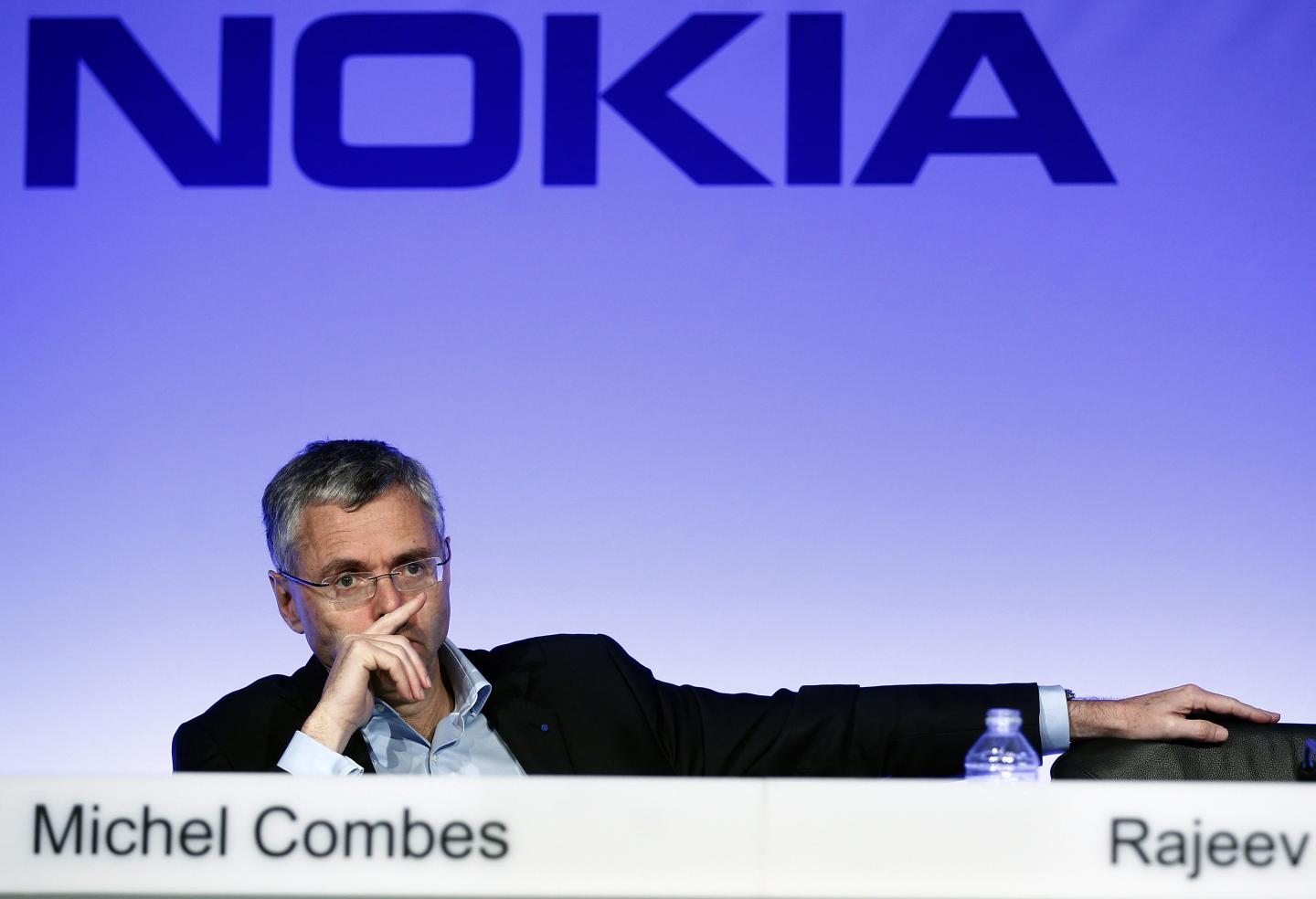
Nokia And Alcatel-Lucent hold  A Press Conference At Pavillon Gabriel In Paris
PARIS, FRANCE - APRIL 15: Telecommunications company Alcatel-Lucent's Chief Executive Officer Michel Combes attends a press conference, on April 15, 2015 in Paris, France. Michel Combes and Rajeev Suri have formalised the merger of the two companies after Nokia struck a 15.6-billion-euro deal to buy its rival Alcatel-Lucent to create the world's biggest supplier of mobile phone network equipment. (Photo by Chesnot/Getty Images)Chesnot—Getty Images

Two of the biggest names in telecommunications networking are merging. Finland’s Nokia is buying Franco-American network maker Alcatel-Lucent in an all-stock deal valued at 15.6 billion euros, or about $16.6 billion. The deal may be finalized in boardrooms in Helsinki and Paris, but the biggest impact of the merger will likely be felt among mobile operators in the United States.

Nokia is essentially buying its way into the U.S., where it has failed to make any sizable dent in one of the world’s largest and most important mobile communications markets. Alcatel-Lucent is a powerhouse when it comes to building wireline networks, but in the fast-growing mobile sector, it has seen its global fortunes decline. One of its last remaining areas of strength is the U.S., where relationships with Verizon, AT&T, and Sprint have landed it some of the biggest LTE contracts in the world.

The deal pairs one of Nokia’s biggest weaknesses with Alcatel-Lucent’s biggest strength. When it closes, the combined company will have a piece of every major 4G radio contract in the U.S. – but it won’t necessarily guarantee a bright future for Nokia on American soil. The deal will make Nokia an U.S powerhouse in the near term, but it will also upturn the longstanding competitive balance in the mobile industry.

Because of the sheer geographical and population size of the U.S., mobile carriers typically pick two to three vendors to build their networks, allowing them to fill out their nationwide footprints more quickly. After Alcatel-Lucent deal closes, the U.S. mobile industry will be left with an infrastructure market dominated by two companies: Ericsson and Nokia. Those companies will be competing for contracts that by necessity require at least two different suppliers. That will open the door for a new competitor, and more likely than not, that challenger will come from Asia.

A shakeup among the cell builders

Nokia expects the deal to close in late 2015 or early 2016, creating a company with 25.9 billion euros (U.S. $27.5 billion) in annual revenues, nearly all coming from telecom infrastructure and software. Nokia sold its handset division to Microsoft (MSFT) last year, and it revealed this week that it is weighing a sale of its other non-infrastructure business, its Here mapping division.

Nokia is offering 0.55 ordinary shares for every one share of Alcatel-Lucent stock, valuing Alcatel-Lucent at $16.6 billion based on its closing price Monday. The transaction will leave Alcatel-Lucent shareholders with a 33.5% ownership in the company and Nokia shareholders with 66.5%.

The company will remain headquartered in Helsinki and will have a major telecom presence in Europe, North America, China and the Asia Pacific region.

“Our innovation capability will be extraordinary, bringing together the R&D engine of Nokia with that of Alcatel-Lucent and its iconic Bell Labs,” Nokia CEO Rajeev Suri, who will remain CEO of the combined company, said in a statement. “We have hugely complementary technologies and the comprehensive portfolio necessary to enable the internet of things and transition to the cloud. We will have a strong presence in every part of the world, including leading positions in the United States and China.”

The merger will reinforce what is already tripartite mobile infrastructure market dominated by Nokia, Sweden’s Ericsson, and China’s Huawei. Previously there were half a dozen companies that could build a decent cellular base station, but the mobile data era triggered two big waves consolidation. Alcatel bought Lucent Technologies in 2006, while Nokia Networks merged with Germany’s Siemens a few months later. In 2011, Ericsson scooped up the wireless networking remnants of Nortel in 2011, while Nokia bought the infrastructure division of Motorola.

Carriers weren’t making as much money as they expected on mobile data services, at least compared to the windfall they saw from voice services. That, combined with the global recession of the last decade, triggered a price war that claimed many storied networking companies as its victims. Huawei took the most advantage of that economic situation, using a combination of inexpensive Chinese talent and manufacturing and technological prowess to undercut established powers in Europe and North America. Huawei is now the largest networking vendor in the world.

That dynamic didn’t play out in the U.S., though, due to security concerns about Huawei’s ties to the Chinese government. As long as the U.S. is worried about Huawei’s gear being used to spy on U.S. citizens, the Chinese vendor is pretty much banned from U.S. networks.

That creates a problem for U.S. carriers because it gives them little leverage in an a consolidating market. While Vodafone in Europe or Telus in Canada can pit Nokia or Ericsson against Huawei for better pricing or terms, Verizon and AT&T cannot. Unless another viable competitor emerges, Ericsson and the newly reborn Nokia will have a lock down on the U.S. market, each winning their respective halves of every major contract that comes available.

Enter Samsung

Samsung may be most known as the world’s biggest maker of Android phones and other consumer electronics, but the South Korean conglomerate has a sizable mobile networks division. Its success has largely been confined to Asia, but in recent years Samsung has branching out globally.

Samsung landed a portion of Sprint’s three-way LTE contract, and in 2012 it pushed its way into Europe, becoming the sole supplier for 3’s 4G network in the U.K. That year, a Samsung senior executive made the rather audacious claim that Samsung would join the ranks of the world’s top 3 mobile network vendors by the end of 2015. It’s highly doubtful Samsung will displace Nokia, Ericsson of Huawei by the end of the year, but if it still hopes to become an infrastructure powerhouse, the U.S. could be its best chance at succeeding. AT&T, Verizon, and T-Mobile will be much more receptive to a Samsung network bid in a post-Alcatel-Lucent world.

Don’t expect Samsung to emerge overnight as U.S. cellular sensation, though. As U.S. carriers add LTE capacity and coverage, they will build on top of their existing networks, meaning the incumbents that supplied the original gear are locked in. The big opportunity to oust an established power is when carriers shift to a new generation of mobile technology, which in the U.S. means 5G.

The mobile industry is looking to new bands and new radio technologies to move today’s multi-megabit 4G connections into the multi-gigabit range as well as build systems that can connect billions of devices in the internet of things. We won’t see the first commercial 5G system until the end of the decade, but Samsung is already establishing itself as earlier pioneer in 5G development. A Samsung networking powerhouse may not emerge until in the U.S. until 2020, but you can bet it’s already plotting its coup today.

About the Author
By Kevin Fitchard
See full bioRight Arrow Button Icon

Latest in Tech

Finance
Lorem ipsum dolor sit amet, consectetur adipiscing elit, sed do eiusmod tempor incididunt ut labore et dolore magna aliqua. Ut enim ad minim veniam
By Fortune Editors
October 20, 2025
Finance
Lorem ipsum dolor sit amet, consectetur adipiscing elit, sed do eiusmod tempor incididunt ut labore et dolore magna aliqua. Ut enim ad minim veniam
By Fortune Editors
October 20, 2025
Finance
Lorem ipsum dolor sit amet, consectetur adipiscing elit, sed do eiusmod tempor incididunt ut labore et dolore magna aliqua. Ut enim ad minim veniam
By Fortune Editors
October 20, 2025
Finance
Lorem ipsum dolor sit amet, consectetur adipiscing elit, sed do eiusmod tempor incididunt ut labore et dolore magna aliqua. Ut enim ad minim veniam
By Fortune Editors
October 20, 2025
Finance
Lorem ipsum dolor sit amet, consectetur adipiscing elit, sed do eiusmod tempor incididunt ut labore et dolore magna aliqua. Ut enim ad minim veniam
By Fortune Editors
October 20, 2025
Finance
Lorem ipsum dolor sit amet, consectetur adipiscing elit, sed do eiusmod tempor incididunt ut labore et dolore magna aliqua. Ut enim ad minim veniam
By Fortune Editors
October 20, 2025

Most Popular

Finance
Lorem ipsum dolor sit amet, consectetur adipiscing elit, sed do eiusmod tempor incididunt ut labore et dolore magna aliqua. Ut enim ad minim veniam
By Fortune Editors
October 20, 2025
Finance
Lorem ipsum dolor sit amet, consectetur adipiscing elit, sed do eiusmod tempor incididunt ut labore et dolore magna aliqua. Ut enim ad minim veniam
By Fortune Editors
October 20, 2025
Finance
Lorem ipsum dolor sit amet, consectetur adipiscing elit, sed do eiusmod tempor incididunt ut labore et dolore magna aliqua. Ut enim ad minim veniam
By Fortune Editors
October 20, 2025
Finance
Lorem ipsum dolor sit amet, consectetur adipiscing elit, sed do eiusmod tempor incididunt ut labore et dolore magna aliqua. Ut enim ad minim veniam
By Fortune Editors
October 20, 2025
Finance
Lorem ipsum dolor sit amet, consectetur adipiscing elit, sed do eiusmod tempor incididunt ut labore et dolore magna aliqua. Ut enim ad minim veniam
By Fortune Editors
October 20, 2025
Finance
Lorem ipsum dolor sit amet, consectetur adipiscing elit, sed do eiusmod tempor incididunt ut labore et dolore magna aliqua. Ut enim ad minim veniam
By Fortune Editors
October 20, 2025
Fortune Secondary Logo
Rankings
  • 100 Best Companies
  • Fortune 500
  • Global 500
  • Fortune 500 Europe
  • Most Powerful Women
  • World's Most Admired Companies
  • See All Rankings
  • Lists Calendar
Sections
  • Finance
  • Fortune Crypto
  • Features
  • Leadership
  • Health
  • Commentary
  • Success
  • Retail
  • Mpw
  • Tech
  • Lifestyle
  • CEO Initiative
  • Asia
  • Politics
  • Conferences
  • Europe
  • Newsletters
  • Personal Finance
  • Environment
  • Magazine
  • Education
Customer Support
  • Frequently Asked Questions
  • Customer Service Portal
  • Privacy Policy
  • Terms Of Use
  • Single Issues For Purchase
  • International Print
Commercial Services
  • Advertising
  • Fortune Brand Studio
  • Fortune Analytics
  • Fortune Conferences
  • Business Development
  • Group Subscriptions
About Us
  • About Us
  • Press Center
  • Work At Fortune
  • Terms And Conditions
  • Site Map
  • About Us
  • Press Center
  • Work At Fortune
  • Terms And Conditions
  • Site Map
  • Facebook icon
  • Twitter icon
  • LinkedIn icon
  • Instagram icon
  • Pinterest icon

Latest in Tech

Photo: Donald Trump
Big TechMarkets
With no end in sight, Trump considers new options in Iran war—including the ‘Dark Eagle’ hypersonic missile
By Jim EdwardsApril 30, 2026
23 minutes ago
Google Cloud revenue is now 18% of Alphabet’s business. Is this the beginning of the end of Google’s search identity?
Big TechGoogle
Google Cloud revenue is now 18% of Alphabet’s business. Is this the beginning of the end of Google’s search identity?
By Alexei OreskovicApril 29, 2026
9 hours ago
Man wearing a suit and tie and glasses
Big TechTech
Microsoft, Meta, and Google just announced billions more in AI spending. Only Google convinced investors it’s paying off
By Amanda GerutApril 29, 2026
9 hours ago
A man in a suit and tie
InvestingMeta
Meta just bumped its 2026 capex forecast up to as much as $145 billion for the AI boom—and investors flinched
By Amanda GerutApril 29, 2026
11 hours ago
How JPMorgan’s CIO is reshaping work at the bank with a $19.8 billion annual tech and AI budget
NewslettersCIO Intelligence
How JPMorgan’s CIO is reshaping work at the bank with a $19.8 billion annual tech and AI budget
By John KellApril 29, 2026
17 hours ago
hollywood
CommentaryMarketing
I spent 20 years learning to navigate an industry. Then I built a campaign for the man who’s dismantling it
By Matti YahavApril 29, 2026
21 hours ago

Most Popular

Apple cofounder Ronald Wayne—whose stake would be worth up to $400 billion had he not sold it in 1976—says that at 91, he has no regrets
Success
Apple cofounder Ronald Wayne—whose stake would be worth up to $400 billion had he not sold it in 1976—says that at 91, he has no regrets
By Preston ForeApril 27, 2026
3 days ago
‘Take the money and run’: Johns Hopkins economist Steve Hanke on why the UAE quit OPEC
Energy
‘Take the money and run’: Johns Hopkins economist Steve Hanke on why the UAE quit OPEC
By Shawn TullyApril 29, 2026
1 day ago
‘The cost of compute is far beyond the costs of the employees’: Nvidia executive says right now AI is more expensive than paying human workers
AI
‘The cost of compute is far beyond the costs of the employees’: Nvidia executive says right now AI is more expensive than paying human workers
By Sasha RogelbergApril 28, 2026
2 days ago
Jamie Dimon gets candid about national debt: ‘There will be a bond crisis, and then we’ll have to deal with it’
Economy
Jamie Dimon gets candid about national debt: ‘There will be a bond crisis, and then we’ll have to deal with it’
By Eleanor PringleApril 29, 2026
24 hours ago
‘They left me no choice’: Powell isn’t going anywhere—blocking Trump from another Fed appointee
Banking
‘They left me no choice’: Powell isn’t going anywhere—blocking Trump from another Fed appointee
By Eva RoytburgApril 29, 2026
16 hours ago
More than two-thirds of U.S. schools say they’re unable to afford the cost of student free lunch—and MAHA’s dietary guidelines may make it worse
Economy
More than two-thirds of U.S. schools say they’re unable to afford the cost of student free lunch—and MAHA’s dietary guidelines may make it worse
By Sasha RogelbergApril 29, 2026
1 day ago

© 2026 Fortune Media IP Limited. All Rights Reserved. Use of this site constitutes acceptance of our Terms of Use and Privacy Policy | CA Notice at Collection and Privacy Notice | Do Not Sell/Share My Personal Information
FORTUNE is a trademark of Fortune Media IP Limited, registered in the U.S. and other countries. FORTUNE may receive compensation for some links to products and services on this website. Offers may be subject to change without notice.