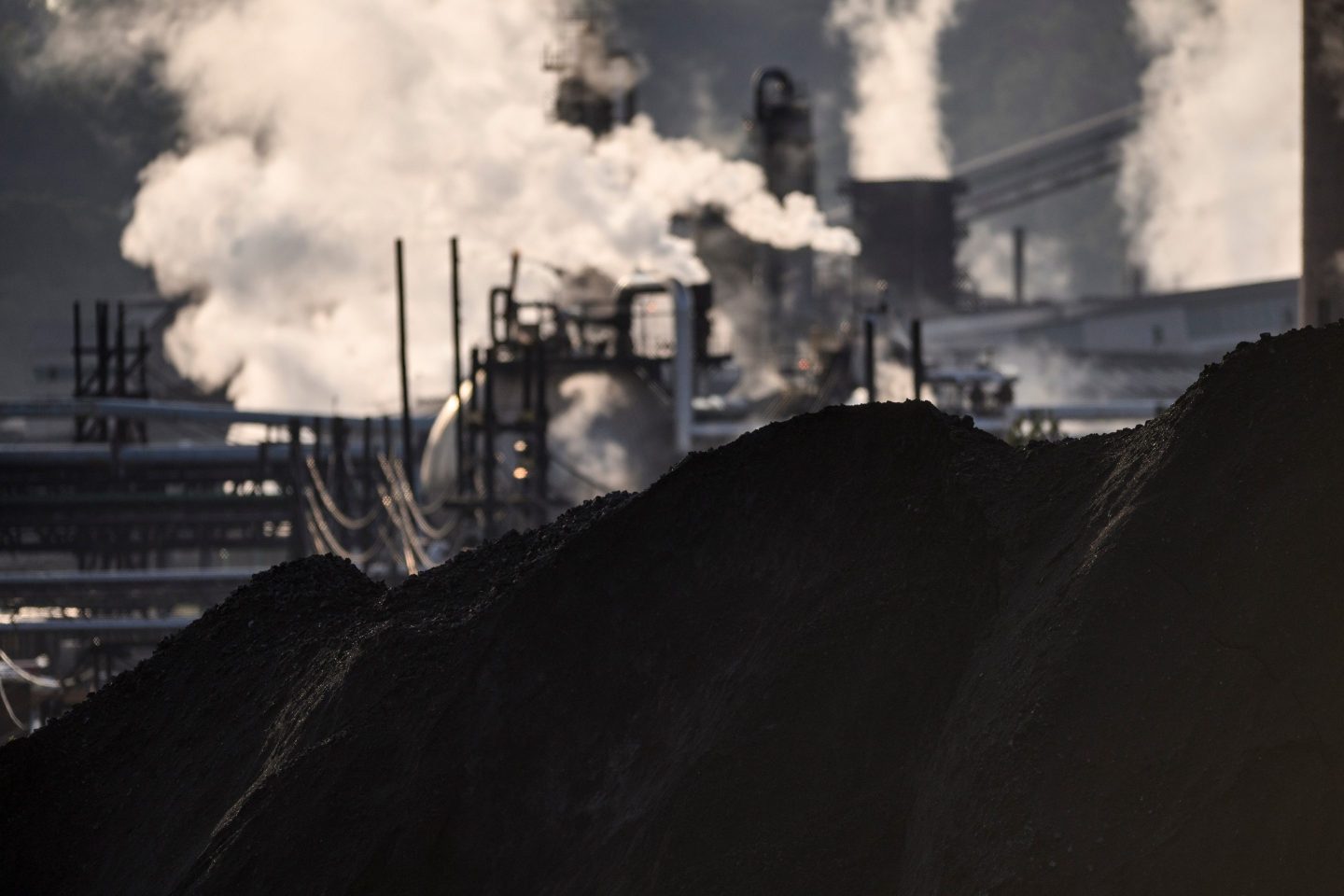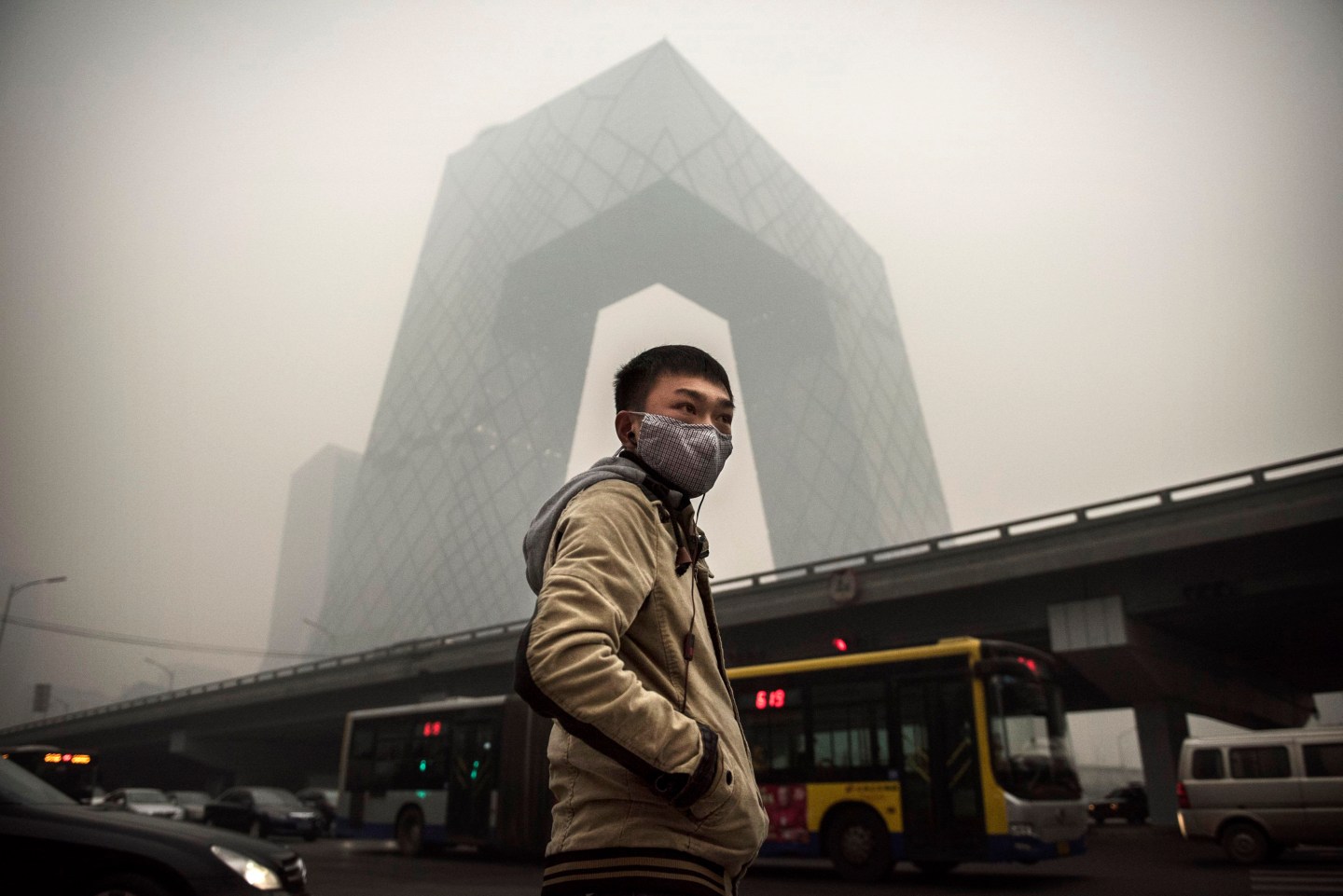
The hottest movie in China right now isn’t an action or sci-fi flick. It’s “Under the Dome,” a documentary that debuted last month about pollution in China. The response has been overwhelming; the film has gone viral, receiving more than 200 million views on video portals, and putting China’s air pollution crisis at the forefront ahead of the country’s annual legislative session. Last week, Chinese Premier Li Keqiang’s State of the Union Address discussed pollution; he called it “a blight on people’s quality of life and a trouble that weighs on their hearts.”
This response signals a significant shift. Pollution has reached grotesque proportions in many Chinese cities: a mega-screen was set up recently in Tiananmen Square i to show the sunrise, a phenomenon that is now rarely seen due to the thick smog; poor air quality has been estimated to reduce life expectancy up to five years; the groundwater is polluted, too, and 20% of China’s farmland is laced with toxic metals, which are absorbed by the crops. The elites seek tegong, crops grown at special non-polluted farms, which are not available for public purchase. And those who can afford it send their children abroad to more salubrious shores.
Until now, this environmental damage has been accepted as the price of China’s unprecedented growth. But now as economic growth slows down to its lowest level in a quarter century, China’s leadership feels increased pressure to deliver on sustainability. It may succeed, but the Communist state may have to accept some degree of Democracy in the process – at least if history is any guide.
In the 1820s, Britain was in a similar position as today’s China. Back then, the “workshop of the world” was not China, but Manchester. Britain’s industrial revolution, like China’s today, was marked by massive urbanization and industrialization. Severe environmental and public health problems resulted: heavy smog from coal-burning, and water-borne diseases emerged due to lack of sewers and sanitation. Like other fast-growing industrial cities, Manchester was so unsanitary that life expectancy at birth was only 27 years, compared to the British average of 41. Alexis de Tocqueville wrote about the city: “From this foul drain, the greatest stream of human industry flows out to fertilize the world.” Much the same could be said today of many of China’s industrial cities.
Britain entered the industrial revolution as an oligarchy, and came out a democracy. By the time the “Age of Reform” was over (1830-1884), all English male heads of households could vote. Despite Karl Marx’s prophesy of class struggle, this democratization happened peacefully. A reading of the historical evidence suggests that the democratization process was harmonious because environmental and health issues created elite support for it.
According to this argument, the urban elites suffered from the same industrialization-related diseases as the poor: typhus, cholera, and other sanitation-related epidemics. These problems could have been addressed by building sewers, paving roads, and regulating industrial activity. But the old political system was broken: it could not provide public health and environmental investments because it was captured by moneyed interests and focused on procuring benefits for the industrial barons. In time, the state of public health became so dire that the elites saw democratization as the only solution. Once government was held accountable to a broader cross-section of the population, it would be forced to provide much-needed public goods. This is in fact what happened. There is evidence that the age of reform ushered in a great increase in public goods spending by government.
Can the history of 19th century Britain offer insight into today’s China? Arguably, yes. Today’s Chinese elites are harmed by the pollution and public health problems. The situation is so bad that, soon, these elites may wish to make government more responsive to mass demand for clean air and water. To make this happen, the elites may see it as necessary to accept a degree of power devolution to the masses: democratization, perhaps under the guise of decentralization. The Chinese government fears change because it could bring internal conflict. But Britain’s history indicates that this kind of democratization can happen harmoniously, which should be reassuring.
In China, the phase of easy “catch-up” growth is coming to an end, and the environmental and public health challenges are growing worse. An evolution in the form of government is necessary to address these challenges. Premier Li Keqiang’s speech acknowledges the problems, but the elites are split as to the solution. In fact, last Friday, the documentary “Under the Dome” was pulled offline by the government just a week after it was posted. Despite this, the conditions exist for a democratization process to happen harmoniously, perhaps through decentralization. So in the end Karl Marx may be wrong — again. China’s governance need not change through class struggle, and it may yet be poised for its own age of reform.
Nicola Persico is a professor of managerial economics and decision sciences at Kellogg School of Management at Northwestern University. He is also the Director of the Center for Mathematical Studies in Economics & Management.