• Home
  • News
  • Fortune 500
  • Tech
  • Finance
  • Leadership
  • Lifestyle
  • Rankings
  • Multimedia
Nissan

Why Mexican auto dealers are moving north

By
Doron Levin
Doron Levin
Down Arrow Button Icon
By
Doron Levin
Doron Levin
Down Arrow Button Icon
February 10, 2015, 1:40 PM ET
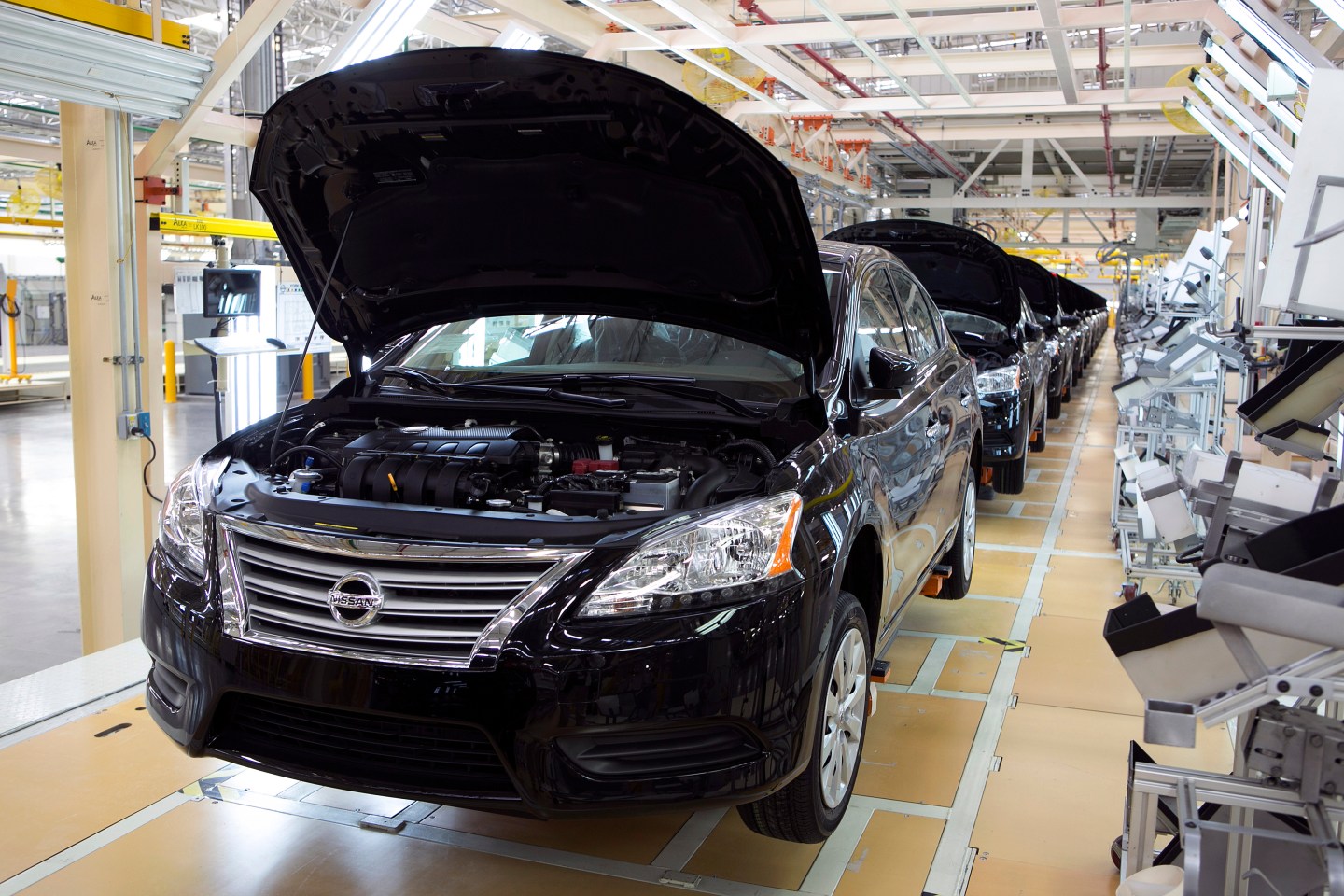
Nissan CEO Carlos Ghosn Attends Opening Of New $2 Billion Factory
Vehicles sit on the production line at the new Nissan Motor Co. assembly plant in Aguascalientes, Mexico, on Tuesday, Nov. 12, 2013. Nissan Motor Co., already the largest carmaker in Mexico, is accelerating operations as it opens a third assembly plant in the country to allow it to make 1 million vehicles annually within three years, chief executive officer Carlos Ghosn said. Photographer: Susana Gonzalez/Bloomberg via Getty ImagesPhotograph by Susana Gonzalez — Bloomberg via Getty Images

Mexico isn’t just breaking monthly records for automotive production and vehicle exports. Latin America’s second biggest economy after Brazil is showing it can market and sell cars, not just build and ship them to other countries.

Nissan Motor Co., the leading seller of cars in Mexico, said it is helping large Mexican dealer groups to buy Nissan stores in Houston, Los Angeles and in the San Francisco bay area. The strategy is using the expertise of Nissan dealers in Mexico to court more Hispanic consumers to the brand in the U.S. Nissan is Mexico’s retail market leader.

Among the first Mexican retailers to make inroads in the U.S. is Grupo Autofin Mexico, which has bought Nissan dealerships in San Juan Capistrano, Garden Grove and Irvine in Orange County, south of Los Angeles. Grupo Autofin’s sales totaled $1.4 billion from its 60 Mexican dealerships last year. Nissan is the country’s market leader.

Last month, Mexican auto production grew 6.8% to 266,424 cars and light trucks, as exports rose 15.2% to 204,907 vehicles, according to the industry’s trade group. Last year, production in the country topped three million for the first time.

Mexico’s status as the hemisphere’s rising automotive powerhouse, driven by lower costs and favorable trade agreements, has caused tremors in Canada and even in the U.S., two countries that haven’t seen the opening of a new assembly plant for five years. Many automotive parts suppliers are increasing investments in Mexico, while shutting down or trimming production in the north.

Factories in Mexico “can serve the southern U.S. market just as easily as we can service the northern U.S. market,” Paul Boothe, a professor at the University of Western Ontario told The Globe and Mail.

As the U.S. population migrates toward the Sunbelt, U.S. motorists and the new Mexican factories are moving closer to one another. Last year, automotive manufacturers announced $7 billion of new investment in the country, including $3.6 billion for three assembly plants, according to the Center for Automotive Research in Ann Arbor, Mich. Mexico accounted for 19% of North America’s production, compared with 14% for Canada, with the remainder in the U.S.

The latest announcement came in August from Kia, the South Korean affiliate of Hyundai, which said it will erect a $1 billion assembly plant near Monterrey that can produce 300,000 vehicles annually. By the end of the decade, Mexico will have the capacity to make four million vehicles annually.

Brazil, whose auto industry has been surpassed by Mexico’s, has ambitions of its own—despite the current economic recession—to add capacity and is in the midst of planning or finishing several new automotive manufacturing complexes. Fiat Chrysler’s new assembly plant in Pernambuco is expected to open this year.

Mexico’s flourishing automobile industry has been a feather in the cap of its president, Enrique Peña Nieto, who has unfurled the welcome mat to foreign automakers. The results have confirmed the confidence of companies from Audi to Toyota in the country’s industrial competitiveness.

About the Author
By Doron Levin
See full bioRight Arrow Button Icon

Latest in

NewslettersCFO Daily
Gen Z fears AI will upend careers. Can leaders change the narrative?
By Sheryl EstradaDecember 5, 2025
27 minutes ago
NewslettersTerm Sheet
Four key questions about OpenAI vs Google—the high-stakes tech matchup of 2026
By Alexei OreskovicDecember 5, 2025
54 minutes ago
Personal FinanceSavings accounts
Today’s best high-yield savings account rates on Dec. 5, 2025: Earn up to 5.00% APY
By Glen Luke FlanaganDecember 5, 2025
55 minutes ago
Personal FinanceCertificates of Deposit (CDs)
This CD still yields 4.18%—here are today’s best CD rates on Dec. 5, 2025
By Glen Luke FlanaganDecember 5, 2025
55 minutes ago
InvestingMarkets
Facing a vast wave of incoming liquidity, the S&P 500 prepares to surf to a new record high
By Jim EdwardsDecember 5, 2025
59 minutes ago
Ray Dalio attends the Fortune Global Forum Riyadh 2025 on October 27, 2025 in Riyadh, Saudi Arabia.
Economynational debt
Ray Dalio says ‘a little bit of everything’ is needed to prevent a debt crisis—but it won’t happen anyway
By Eleanor PringleDecember 5, 2025
1 hour ago

Most Popular

placeholder alt text
Economy
Two months into the new fiscal year and the U.S. government is already spending more than $10 billion a week servicing national debt
By Eleanor PringleDecember 4, 2025
1 day ago
placeholder alt text
Success
‘Godfather of AI’ says Bill Gates and Elon Musk are right about the future of work—but he predicts mass unemployment is on its way
By Preston ForeDecember 4, 2025
21 hours ago
placeholder alt text
Success
Nearly 4 million new manufacturing jobs are coming to America as boomers retire—but it's the one trade job Gen Z doesn't want
By Emma BurleighDecember 4, 2025
21 hours ago
placeholder alt text
Success
Nvidia CEO Jensen Huang admits he works 7 days a week, including holidays, in a constant 'state of anxiety' out of fear of going bankrupt
By Jessica CoacciDecember 4, 2025
20 hours ago
placeholder alt text
North America
Jeff Bezos and Lauren Sánchez Bezos commit $102.5 million to organizations combating homelessness across the U.S.: ‘This is just the beginning’
By Sydney LakeDecember 2, 2025
3 days ago
placeholder alt text
Economy
Tariffs and the $38 trillion national debt: Kevin Hassett sees ’big reductions’ in deficit while Scott Bessent sees a ‘shrinking ice cube’
By Nick LichtenbergDecember 4, 2025
19 hours ago
Rankings
  • 100 Best Companies
  • Fortune 500
  • Global 500
  • Fortune 500 Europe
  • Most Powerful Women
  • Future 50
  • World’s Most Admired Companies
  • See All Rankings
Sections
  • Finance
  • Leadership
  • Success
  • Tech
  • Asia
  • Europe
  • Environment
  • Fortune Crypto
  • Health
  • Retail
  • Lifestyle
  • Politics
  • Newsletters
  • Magazine
  • Features
  • Commentary
  • Mpw
  • CEO Initiative
  • Conferences
  • Personal Finance
  • Education
Customer Support
  • Frequently Asked Questions
  • Customer Service Portal
  • Privacy Policy
  • Terms Of Use
  • Single Issues For Purchase
  • International Print
Commercial Services
  • Advertising
  • Fortune Brand Studio
  • Fortune Analytics
  • Fortune Conferences
  • Business Development
About Us
  • About Us
  • Editorial Calendar
  • Press Center
  • Work At Fortune
  • Diversity And Inclusion
  • Terms And Conditions
  • Site Map

© 2025 Fortune Media IP Limited. All Rights Reserved. Use of this site constitutes acceptance of our Terms of Use and Privacy Policy | CA Notice at Collection and Privacy Notice | Do Not Sell/Share My Personal Information
FORTUNE is a trademark of Fortune Media IP Limited, registered in the U.S. and other countries. FORTUNE may receive compensation for some links to products and services on this website. Offers may be subject to change without notice.