• Home
  • Latest
  • Fortune 500
  • Finance
  • Tech
  • Leadership
  • Lifestyle
  • Rankings
  • Multimedia
Bacardi

Bacardi, exiled from Cuba in 1960, is hopeful for change

By
John Kell
John Kell
Contributing Writer and author of CIO Intelligence
Down Arrow Button Icon
By
John Kell
John Kell
Contributing Writer and author of CIO Intelligence
Down Arrow Button Icon
December 17, 2014, 2:20 PM ET
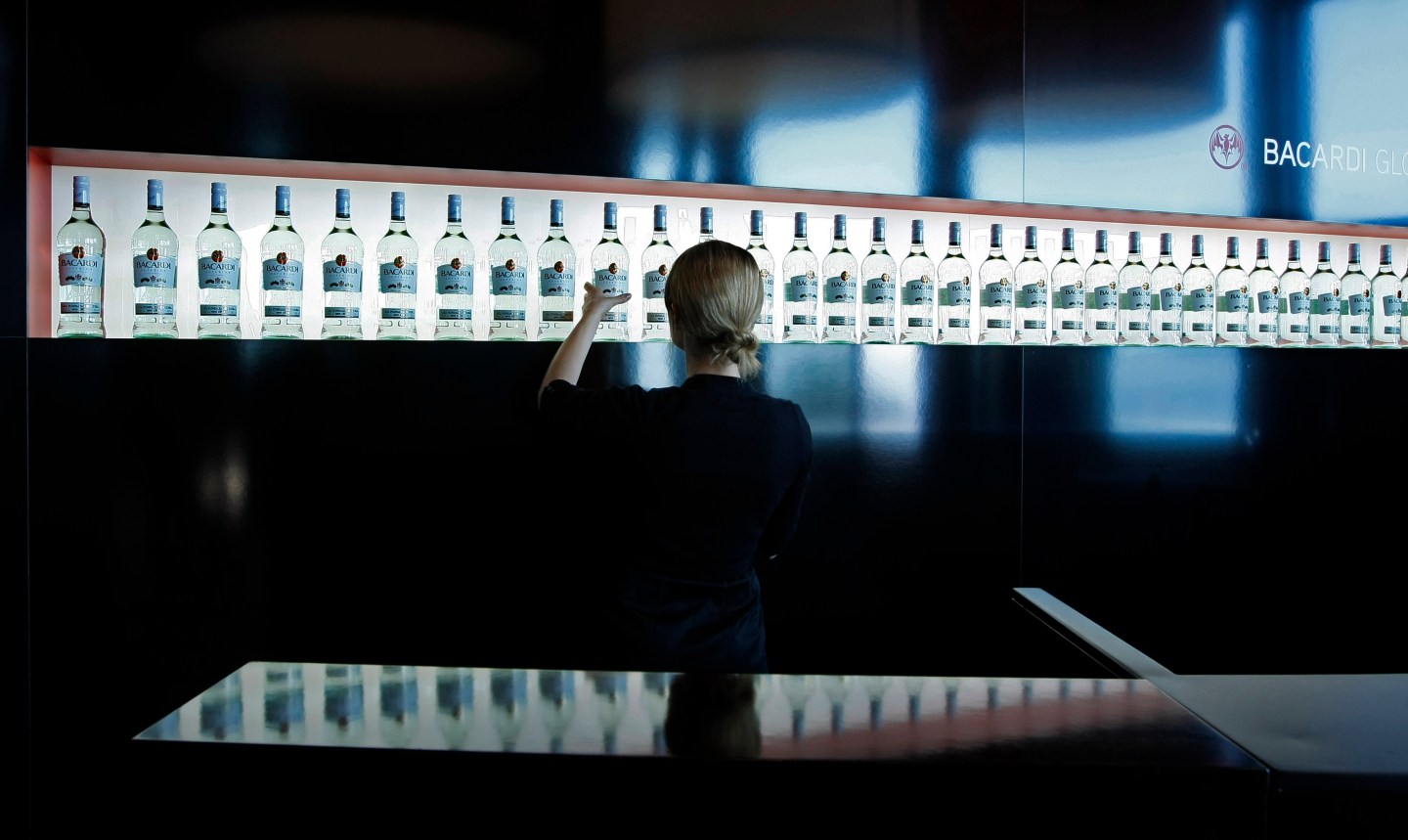
An exhibitor arranges Bacardi rum bottles during the TFWA exhibition in Cannes
An exhibitor arranges Bacardi rum bottles during the TFWA (Tax Free World Association) exhibition in Cannes, southeastern France, October 19, 2009.The TFWA is the World's largest Duty Free and Travel Retail Association, with a membership of around 400 brand-owning companies representing thousands of products supplied to the global duty free and travel retail markets. REUTERS/Eric Gaillard (FRANCE BUSINESS) - RTXPSFPPhotograph by Eric Gaillard — Reuters

Bacardi, the spirits maker that was founded in Cuba and later exiled from the country in 1960, says it hopes for better lives for Cubans following the Obama Administration’s decision to normalize diplomatic relations with the Caribbean island.

“We hope for meaningful improvements in the lives of the Cuban people and will follow any changes with great interest,” Bacardi said in an e-mailed statement. “In the meantime, we continue to support the restoration of fundamental human rights in Cuba.”

Bacardi says it’s taking a wait-and-see approach on Cuba after the United States on Wednesday said it would open an embassy on the island nation following the release of a U.S. government subcontractor from prison. It marked the most significant change in the U.S.-Cuba relationship in decades.

Bacardi, which makes rum, Dewar’s Scotch and Grey Goose vodka, has close historic ties to Cuba even though it hasn’t operated there for more than five decades. The company was founded in Santiago de Cuba in 1862, and in 1910, became the nation’s first multi-national company when it opened bottling operations in Spain.

When Prohibition started in 1920, Cuba and Bacardi benefited from increased influx of Americans to the island for a stiff drink.

But relations between the company and Cuba soured greatly in 1960, when Bacardi’s operations were nationalized by the government following the Communist takeover there. At that point, Bacardi had operations in five other countries, including the U.S. and Mexico, and was able to bounce back. The company is now headquartered in Bermuda, but still touts its Cuban history.

“Bacardi is proud of its Cuban roots,” a company representative said in a statement on Wednesday. “We have the utmost respect and sympathy for the Cuban people with whom we share a common heritage.”


About the Author
By John KellContributing Writer and author of CIO Intelligence

John Kell is a contributing writer for Fortune and author of Fortune’s CIO Intelligence newsletter.

See full bioRight Arrow Button Icon
0

Most Popular

Finance
Lorem ipsum dolor sit amet, consectetur adipiscing elit, sed do eiusmod tempor incididunt ut labore et dolore magna aliqua. Ut enim ad minim veniam
By Fortune Editors
October 20, 2025
Finance
Lorem ipsum dolor sit amet, consectetur adipiscing elit, sed do eiusmod tempor incididunt ut labore et dolore magna aliqua. Ut enim ad minim veniam
By Fortune Editors
October 20, 2025
Finance
Lorem ipsum dolor sit amet, consectetur adipiscing elit, sed do eiusmod tempor incididunt ut labore et dolore magna aliqua. Ut enim ad minim veniam
By Fortune Editors
October 20, 2025
Finance
Lorem ipsum dolor sit amet, consectetur adipiscing elit, sed do eiusmod tempor incididunt ut labore et dolore magna aliqua. Ut enim ad minim veniam
By Fortune Editors
October 20, 2025
Finance
Lorem ipsum dolor sit amet, consectetur adipiscing elit, sed do eiusmod tempor incididunt ut labore et dolore magna aliqua. Ut enim ad minim veniam
By Fortune Editors
October 20, 2025
Finance
Lorem ipsum dolor sit amet, consectetur adipiscing elit, sed do eiusmod tempor incididunt ut labore et dolore magna aliqua. Ut enim ad minim veniam
By Fortune Editors
October 20, 2025
Fortune Secondary Logo
Rankings
  • 100 Best Companies
  • Fortune 500
  • Global 500
  • Fortune 500 Europe
  • Most Powerful Women
  • Future 50
  • World’s Most Admired Companies
  • See All Rankings
Sections
  • Finance
  • Fortune Crypto
  • Features
  • Leadership
  • Health
  • Commentary
  • Success
  • Retail
  • Mpw
  • Tech
  • Lifestyle
  • CEO Initiative
  • Asia
  • Politics
  • Conferences
  • Europe
  • Newsletters
  • Personal Finance
  • Environment
  • Magazine
  • Education
Customer Support
  • Frequently Asked Questions
  • Customer Service Portal
  • Privacy Policy
  • Terms Of Use
  • Single Issues For Purchase
  • International Print
Commercial Services
  • Advertising
  • Fortune Brand Studio
  • Fortune Analytics
  • Fortune Conferences
  • Business Development
About Us
  • About Us
  • Editorial Calendar
  • Press Center
  • Work At Fortune
  • Diversity And Inclusion
  • Terms And Conditions
  • Site Map
Fortune Secondary Logo
  • About Us
  • Editorial Calendar
  • Press Center
  • Work At Fortune
  • Diversity And Inclusion
  • Terms And Conditions
  • Site Map
  • Facebook icon
  • Twitter icon
  • LinkedIn icon
  • Instagram icon
  • Pinterest icon

Most Popular

placeholder alt text
Success
Japanese companies are paying older workers to sit by a window and do nothing—while Western CEOs demand super-AI productivity just to keep your job
By Orianna Rosa RoyleFebruary 27, 2026
1 day ago
placeholder alt text
Success
Walmart exec says U.S. workforces needs to take inspiration from China where ‘5 year-olds are learning DeepSeek’
By Preston ForeFebruary 27, 2026
2 days ago
placeholder alt text
Personal Finance
Current price of gold as of February 27, 2026
By Danny BakstFebruary 27, 2026
1 day ago
placeholder alt text
Law
China's government intervenes to show Michigan scientists were carrying worms, not biological materials
By Ed White and The Associated PressFebruary 26, 2026
2 days ago
placeholder alt text
Economy
Come 2030, the U.S. deficit will be worth 5.9% of GDP—more than spending on Social Security, and equal to major health programs
By Eleanor PringleFebruary 26, 2026
2 days ago
placeholder alt text
Commentary
'The Pitt': a masterclass display of DEI in action 
By Robert RabenFebruary 26, 2026
2 days ago

© 2026 Fortune Media IP Limited. All Rights Reserved. Use of this site constitutes acceptance of our Terms of Use and Privacy Policy | CA Notice at Collection and Privacy Notice | Do Not Sell/Share My Personal Information
FORTUNE is a trademark of Fortune Media IP Limited, registered in the U.S. and other countries. FORTUNE may receive compensation for some links to products and services on this website. Offers may be subject to change without notice.



