• Home
  • Latest
  • Fortune 500
  • Finance
  • Tech
  • Leadership
  • Lifestyle
  • Rankings
  • Multimedia
Leadership

How to fix the broken market for middle-class jobs

By
Chris Matthews
Chris Matthews
Down Arrow Button Icon
By
Chris Matthews
Chris Matthews
Down Arrow Button Icon
November 12, 2014, 2:19 PM ET
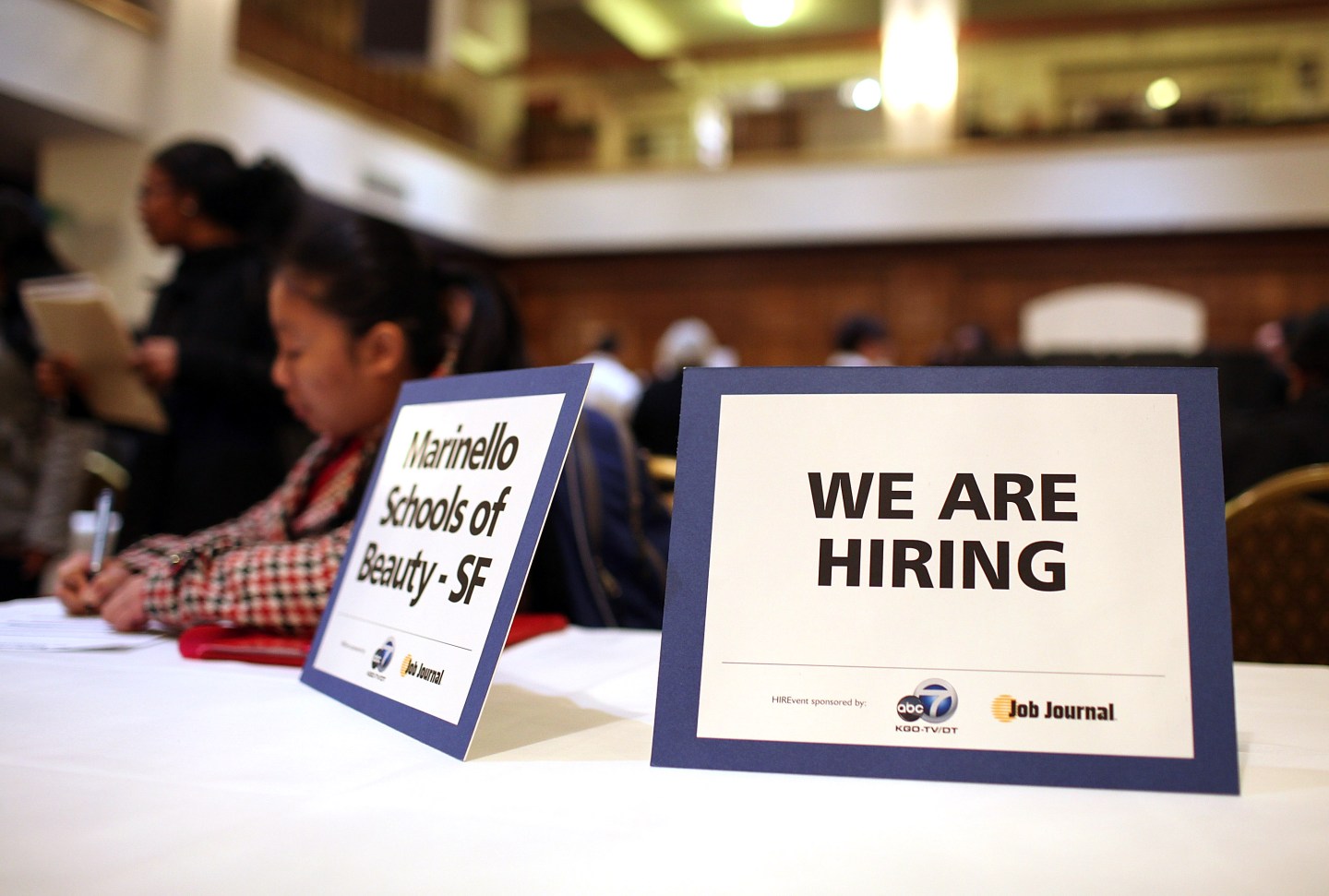
Job Seekers Attend Job Fair In San Francisco
SAN FRANCISCO, CA - MARCH 27: A "we are hiring" sign is displayed on a table during the San Francisco Hirevent job fair at the Hotel Whitcomb on March 27, 2012 in San Francisco, California. As the national unemployment rate stands at 8.3 percent, job seekers turned out to meet with recruiters at the San Francisco Hirevent job fair where hundreds of jobs were available. (Photo by Justin Sullivan/Getty Images)Photograph by Justin Sullivan — Getty Images

It’s one of the most heated debates in economics: Is there such a thing as the “skills gap”?

Yes, the unemployment rate has dropped significantly in recent months, but millions of Americans remain unemployed or have left the labor market altogether, and a startling number of Americans—1.1 million—have been without work for 27 weeks or more. Given these statistics, it does seem strange that employers consistently claim they can’t find good people these days.

Economists like Peter Capelli of Wharton argue that there isn’t so much a lack of skilled workers in the U.S. but that American companies have grown complacent after years of being able to easily outsource or convince American workers to do more for less, and that they are simply engaged in “an effort to secure policy changes that lower labor costs.” Employers are reluctant, Capelli argues, to simply offer wages that would attract necessary workers, or invest in training needed to get capable workers ready for the specific tasks employers need performed.

While there is some truth to Capelli’s argument, the fact remains that broader measures of unemployment remain abnormally high at the same time that job openings are at a 13-year high. Many of these openings are for good paying jobs that would enable low-income Americans or the unemployed to significantly raise their standards of living. This situation is benefitting neither the workers nor American companies, and perhaps what is called for is some novel thinking to solve a serious problem, rather than simply casting blame on lazy workers or miserly bosses.

That’s the approach Joe Fuller of Harvard Business School takes in a new report out Wednesday, released as part of HBS’ Competitiveness Project, in which he and his partners at Accenture and Burning Glass technologies surveyed both American employers and millions of resumes collected from recruiting agencies, job boards, and other intermediaries to study the modern American labor market. What he found was a classic “market failure” in which suppliers of jobs are unable to find the right people to fill those positions and the unemployed and underemployed are unable to climb into the middle class.

At the heart of this failure is the market for middle skill jobs, traditionally defined as jobs that require more education than a high school diploma but less than a four- year degree. These jobs include everything from administrative work to skilled manufacturing and healthcare services, and they often pay quite well. An entry level computer support specialist, for instance, earns an average salary of $44,000 per year, according to Burning Glass. And these jobs offer the ability to advance to managerial positions in the same field, which can earn workers nearly double that salary—well above the median American pay.

Unfortunately, these are the very same jobs that employers are wary of filling. According to Fuller, “employers appear reluctant to hire full-time workers if an alternative presents itself.” A related Competitiveness Project survey of HBS alumni showed that:

…46% of respondents agreed that their firms’ U.S. operations prefer to invest in technology to perform work rather than hire or retain employees, while only 25% disagreed. Second, 49% said that their firms preferred to rely on vendors to perform work that can be outsourced, while only 29% reported that their firms would rather hire additional workers and keep work in-house. Third, when choosing to hire, companies also indicated a distinct preference for relying on part-timers. Companies that increased their reliance on part-time workers over the past three years outnumbered those that had reduced their proportion of part-timers by two to one.

The average American worker doesn’t need a survey to tell him that companies are behaving this way. But Fuller argues that this tendency to rely on technology and part-time workers is a defensive reaction to a rapidly changing global marketplace, rather than a long-term strategy that will enable U.S. companies to compete on a global scale. Writes Fuller:

Many employers use a reactive approach to filling middle-skills needs. Too few engage in workforce planning; too many assume that workers will be available as needed. That leaves them exposed to the vagaries of the business cycle, when all competitors are presumably adding capacity. More importantly, by failing to anticipate which workforce capabilities are critical to their strategic health, companies risk requiring workers with skills in emerging areas for which there is limited or no supply. Employers need more rigorous middle-skills workforce planning in projecting their requirements and should share those needs with their staff as well as their existing sources of talent.

Employers, Fuller argues, need to approach the market for middle-skills talent like they would any other supply chain. They should start to develop an understanding of the true costs of relying on short-term fixes to employment needs and then develop long-term relationships with suppliers of middle-skills talent, like community colleges, or develop their own apprenticeship programs. He also recommends that policy makers and educators fulfill their side of the bargain by teaching the skills employers say they need from their workers. Fuller argues that community colleges and technical schools must do a better job teaching soft skills like work ethics, communication, teamwork, and leadership—skills that HR leaders specifically consider lacking among today’s job applicants.

The report offers the example of Grainger, an industrial supplies distributor, which has invested more than $2 million since 2006 in technical education programs and scholarships. Grainer has also teamed up with more than 100 community and technical colleges to teach students skills the firm needs from employees. Fuller also points to the State of Ohio’s OhioMeansJobs program, which offers an online database that helps the unemployed understand what skills are in demand and will lead to a path for career advancement, and help them plan to retrain for such jobs.

Perhaps the best piece of advice offered by the Harvard study is simply to treat the skills problem as a solvable challenge. The American economy underwent a revolution over the past generation, as the global economy has integrated new technologies and billions of upwardly mobile workers. Now, everyone—from employers, to educators, to workers themselves—needs to think about the employment market differently.


About the Author
By Chris Matthews
See full bioRight Arrow Button Icon

Latest in Leadership

Finance
Lorem ipsum dolor sit amet, consectetur adipiscing elit, sed do eiusmod tempor incididunt ut labore et dolore magna aliqua. Ut enim ad minim veniam
By Fortune Editors
October 20, 2025
Finance
Lorem ipsum dolor sit amet, consectetur adipiscing elit, sed do eiusmod tempor incididunt ut labore et dolore magna aliqua. Ut enim ad minim veniam
By Fortune Editors
October 20, 2025
Finance
Lorem ipsum dolor sit amet, consectetur adipiscing elit, sed do eiusmod tempor incididunt ut labore et dolore magna aliqua. Ut enim ad minim veniam
By Fortune Editors
October 20, 2025
Finance
Lorem ipsum dolor sit amet, consectetur adipiscing elit, sed do eiusmod tempor incididunt ut labore et dolore magna aliqua. Ut enim ad minim veniam
By Fortune Editors
October 20, 2025
Finance
Lorem ipsum dolor sit amet, consectetur adipiscing elit, sed do eiusmod tempor incididunt ut labore et dolore magna aliqua. Ut enim ad minim veniam
By Fortune Editors
October 20, 2025
Finance
Lorem ipsum dolor sit amet, consectetur adipiscing elit, sed do eiusmod tempor incididunt ut labore et dolore magna aliqua. Ut enim ad minim veniam
By Fortune Editors
October 20, 2025

Most Popular

Finance
Lorem ipsum dolor sit amet, consectetur adipiscing elit, sed do eiusmod tempor incididunt ut labore et dolore magna aliqua. Ut enim ad minim veniam
By Fortune Editors
October 20, 2025
Finance
Lorem ipsum dolor sit amet, consectetur adipiscing elit, sed do eiusmod tempor incididunt ut labore et dolore magna aliqua. Ut enim ad minim veniam
By Fortune Editors
October 20, 2025
Finance
Lorem ipsum dolor sit amet, consectetur adipiscing elit, sed do eiusmod tempor incididunt ut labore et dolore magna aliqua. Ut enim ad minim veniam
By Fortune Editors
October 20, 2025
Finance
Lorem ipsum dolor sit amet, consectetur adipiscing elit, sed do eiusmod tempor incididunt ut labore et dolore magna aliqua. Ut enim ad minim veniam
By Fortune Editors
October 20, 2025
Finance
Lorem ipsum dolor sit amet, consectetur adipiscing elit, sed do eiusmod tempor incididunt ut labore et dolore magna aliqua. Ut enim ad minim veniam
By Fortune Editors
October 20, 2025
Finance
Lorem ipsum dolor sit amet, consectetur adipiscing elit, sed do eiusmod tempor incididunt ut labore et dolore magna aliqua. Ut enim ad minim veniam
By Fortune Editors
October 20, 2025
Rankings
  • 100 Best Companies
  • Fortune 500
  • Global 500
  • Fortune 500 Europe
  • Most Powerful Women
  • Future 50
  • World’s Most Admired Companies
  • See All Rankings
Sections
  • Finance
  • Leadership
  • Success
  • Tech
  • Asia
  • Europe
  • Environment
  • Fortune Crypto
  • Health
  • Retail
  • Lifestyle
  • Politics
  • Newsletters
  • Magazine
  • Features
  • Commentary
  • Mpw
  • CEO Initiative
  • Conferences
  • Personal Finance
  • Education
Customer Support
  • Frequently Asked Questions
  • Customer Service Portal
  • Privacy Policy
  • Terms Of Use
  • Single Issues For Purchase
  • International Print
Commercial Services
  • Advertising
  • Fortune Brand Studio
  • Fortune Analytics
  • Fortune Conferences
  • Business Development
About Us
  • About Us
  • Editorial Calendar
  • Press Center
  • Work At Fortune
  • Diversity And Inclusion
  • Terms And Conditions
  • Site Map

Latest in Leadership

AIregulation
Actor Joseph Gordon-Levitt wonders why AI companies don’t have to ‘follow any laws’
By Nick LichtenbergDecember 15, 2025
1 hour ago
A close-up of Jeff Bezos' face
SuccessJeff Bezos
‘I had to take 60 meetings’: Jeff Bezos says ‘the hardest thing I’ve ever done’ was raising the first million dollars of seed capital for Amazon
By Dave SmithDecember 15, 2025
3 hours ago
Photo of Sergey Brin
AIchief executive officer (CEO)
Google cofounder Sergey Brin said he was ‘spiraling’ before returning to work on Gemini—and staying retired ‘would’ve been a big mistake’
By Marco Quiroz-GutierrezDecember 15, 2025
4 hours ago
Gen Z workers collaborate in the office.
SuccessGen Z
PwC U.K. is giving Gen Z grads ‘resilience’ training in their first 6 months on the job, to get better at handling criticisms and office politics
By Emma BurleighDecember 15, 2025
4 hours ago
Man picking beets
PoliticsEconomics
Rich Western countries face a stark choice: 6-day workweeks or more immigration, top economist warns
By Eva RoytburgDecember 15, 2025
4 hours ago
Photo of Bob Jordan
SuccessProductivity
Meetings are not work, says Southwest Airlines CEO—and he’s taking action, by blocking his calendar every afternoon from Wednesday to Friday 
By Preston ForeDecember 15, 2025
5 hours ago

Most Popular

placeholder alt text
Uncategorized
Transforming customer support through intelligent AI operations
By Lauren ChomiukNovember 26, 2025
19 days ago
placeholder alt text
Success
Sorry, six-figure earners: Elon Musk says that money will 'disappear' in the future as AI makes work (and salaries) irrelevant
By Orianna Rosa RoyleDecember 15, 2025
7 hours ago
placeholder alt text
Success
Apple cofounder Ronald Wayne sold his 10% stake for $800 in 1976—today it’d be worth up to $400 billion
By Preston ForeDecember 12, 2025
3 days ago
placeholder alt text
Success
40% of Stanford undergrads receive disability accommodations—but it’s become a college-wide phenomenon as Gen Z try to succeed in the current climate
By Preston ForeDecember 12, 2025
3 days ago
placeholder alt text
AI
Deloitte's CTO on a stunning AI transformation stat: Companies are spending 93% on tech and only 7% on people
By Nick LichtenbergDecember 15, 2025
10 hours ago
placeholder alt text
Politics
Trump admits he can't tell if the GOP will control the House after next year's elections. 'I don't know when all of this money is going to kick in'
By Jason MaDecember 14, 2025
24 hours ago

© 2025 Fortune Media IP Limited. All Rights Reserved. Use of this site constitutes acceptance of our Terms of Use and Privacy Policy | CA Notice at Collection and Privacy Notice | Do Not Sell/Share My Personal Information
FORTUNE is a trademark of Fortune Media IP Limited, registered in the U.S. and other countries. FORTUNE may receive compensation for some links to products and services on this website. Offers may be subject to change without notice.