• Home
  • News
  • Fortune 500
  • Tech
  • Finance
  • Leadership
  • Lifestyle
  • Rankings
  • Multimedia
China

Is the deflation bug spreading to China?

By
Geoffrey Smith
Geoffrey Smith
Down Arrow Button Icon
By
Geoffrey Smith
Geoffrey Smith
Down Arrow Button Icon
November 10, 2014, 5:17 AM ET
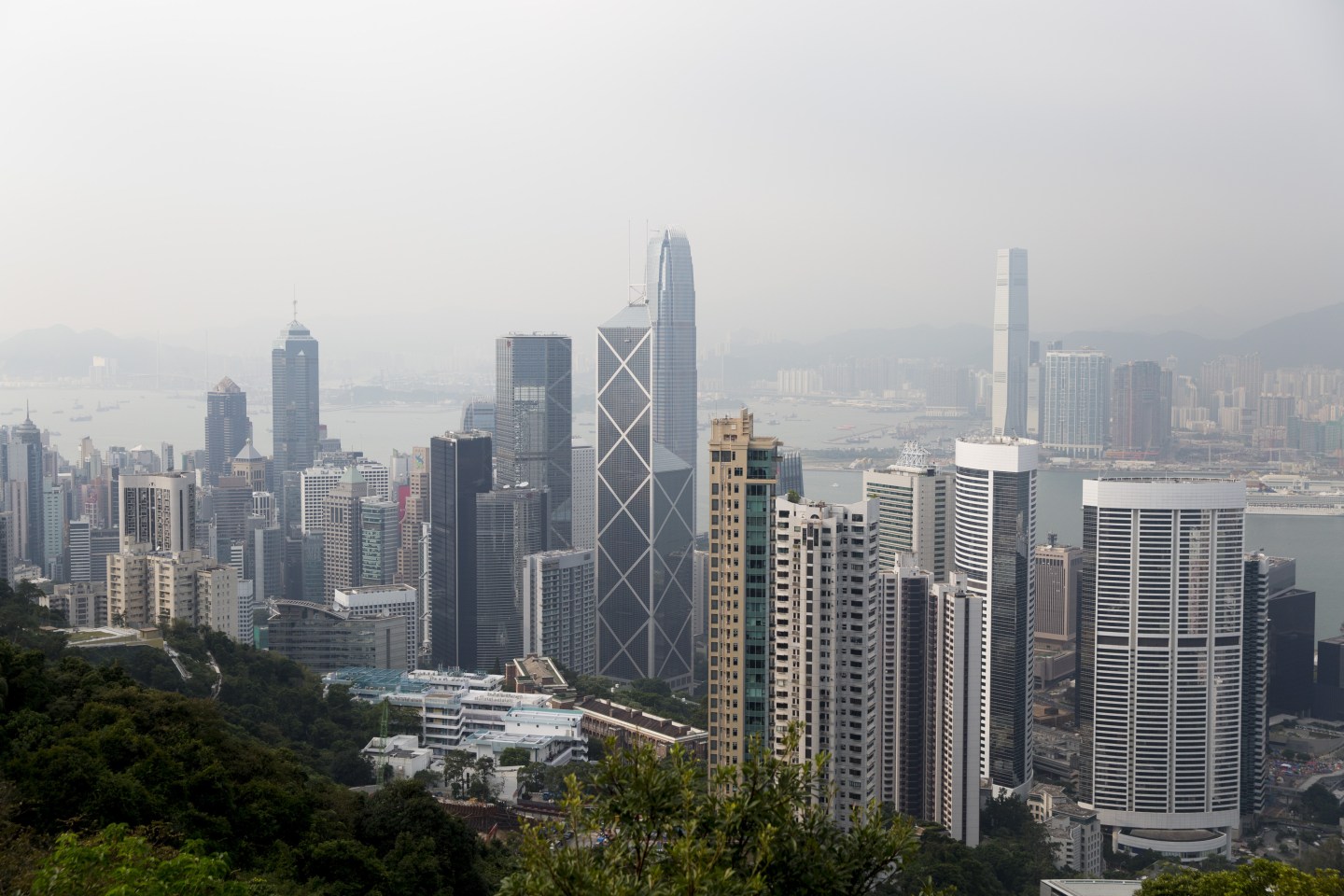
General Views Of Hong Kong Skyline As Protests Continue
Commercial and residential buildings stand in the central business district of Hong Kong, China, on Friday, Oct. 17, 2014. Talks between pro-democracy student leaders and the government tonight may offer the best chance of a peaceful ending to more than three weeks of demonstrations that have disrupted Hong Kong and divided its citizens. Photographer: Brent Lewin/Bloomberg via Getty ImagesPhotograph by Brent Lewin — Bloomberg/Getty Images

China’s economy gave another cough and splutter Monday, with a couple of price reports suggesting that it may not be immune to the deflation bug that has spooked Europe and Japan this year.

The National Bureau of Statistics said consumer prices stagnated in October after rising 0.5% in September, while factory gate prices fell for the 32nd month in a row, and are now down 2.2% on the year. Consumer inflation is now running at an annual 1.6%, its lowest since early 2010.

The figures come on the heels of others released Friday that showed almost all of China’s regions showing a slowdown in growth and missing their own targets.

The world’s second-largest economy is already growing at its slowest rate since 2009, with gross domestic product up “only” 7.3% in the year through the second quarter.

At the weekend, Chinese President Xi Jinping added to speculation that Beijing may formally lower its growth target for next year to 7%, telling an audience of business leaders at the Asia-Pacific Economic Cooperation summit in Beijing not to worry at the prospect of a slowdown.

“Some people are worried about a further slowdown in economic growth. They wonder if the economy would face a bumpy road ahead. Such risks indeed exist, but they aren’t so scary,” the South China Morning Post reported Xi as saying. “Even growth of around 7% would make China a leading economy in the world – in terms of either speed or size.”

Analysts at ANZ bank in Hong Kong said the risk of deflation, driven by the collapse of a housing boom and widespread over-capacity in industry after years of state-directed investment, has risen significantly.

China’s financial markets were unfazed by the news though. They were more focused on the announcement that a long-awaited link between the Hong Kong and Shanghai stock exchanges will go live November 17, effectively creating the world’s third-biggest stock market after the New York Stock Exchange and NASDAQ with a total capitalization of $5.6 trillion.

The link is the first scheme to allow institutional investors into mainland markets without having to get individual approval from regulators.

The scheme was first announced in April, but has been delayed for a number of reasons, most recently the pro-democracy protests in Hong Kong.

The Shanghai market rose 2.3% on the news, while the Hong Kong market rose 0.8%.

About the Author
By Geoffrey Smith
See full bioRight Arrow Button Icon
0

Most Popular

placeholder alt text
AI
Nvidia CEO says data centers take about 3 years to construct in the U.S., while in China 'they can build a hospital in a weekend'
By Nino PaoliDecember 6, 2025
22 hours ago
placeholder alt text
Real Estate
The 'Great Housing Reset' is coming: Income growth will outpace home-price growth in 2026, Redfin forecasts
By Nino PaoliDecember 6, 2025
1 day ago
placeholder alt text
Economy
The most likely solution to the U.S. debt crisis is severe austerity triggered by a fiscal calamity, former White House economic adviser says
By Jason MaDecember 6, 2025
18 hours ago
placeholder alt text
Big Tech
Mark Zuckerberg rebranded Facebook for the metaverse. Four years and $70 billion in losses later, he’s moving on
By Eva RoytburgDecember 5, 2025
2 days ago
placeholder alt text
Asia
Despite their ‘no limits’ friendship, Russia is paying a nearly 90% markup on sanctioned goods from China—compared with 9% from other countries
By Jason MaNovember 29, 2025
8 days ago
placeholder alt text
Success
Nvidia CEO Jensen Huang admits he works 7 days a week, including holidays, in a constant 'state of anxiety' out of fear of going bankrupt
By Jessica CoacciDecember 4, 2025
3 days ago
Rankings
  • 100 Best Companies
  • Fortune 500
  • Global 500
  • Fortune 500 Europe
  • Most Powerful Women
  • Future 50
  • World’s Most Admired Companies
  • See All Rankings
Sections
  • Finance
  • Leadership
  • Success
  • Tech
  • Asia
  • Europe
  • Environment
  • Fortune Crypto
  • Health
  • Retail
  • Lifestyle
  • Politics
  • Newsletters
  • Magazine
  • Features
  • Commentary
  • Mpw
  • CEO Initiative
  • Conferences
  • Personal Finance
  • Education
Customer Support
  • Frequently Asked Questions
  • Customer Service Portal
  • Privacy Policy
  • Terms Of Use
  • Single Issues For Purchase
  • International Print
Commercial Services
  • Advertising
  • Fortune Brand Studio
  • Fortune Analytics
  • Fortune Conferences
  • Business Development
About Us
  • About Us
  • Editorial Calendar
  • Press Center
  • Work At Fortune
  • Diversity And Inclusion
  • Terms And Conditions
  • Site Map

© 2025 Fortune Media IP Limited. All Rights Reserved. Use of this site constitutes acceptance of our Terms of Use and Privacy Policy | CA Notice at Collection and Privacy Notice | Do Not Sell/Share My Personal Information
FORTUNE is a trademark of Fortune Media IP Limited, registered in the U.S. and other countries. FORTUNE may receive compensation for some links to products and services on this website. Offers may be subject to change without notice.