• Home
  • Latest
  • Fortune 500
  • Finance
  • Tech
  • Leadership
  • Lifestyle
  • Rankings
  • Multimedia

Trendingnow

1

Jensen Huang made his $172 billion fortune on AI chips. His family's $75 million gift to Vanderbilt argues art decides what technology is for

2

The millennial generation has split, new Fed research shows: Those over 35 are edging toward boomer-style wealth, while everyone else falls behind

3

The $39 trillion U.S. national debt isn’t as high as Japan’s and Singapore’s relative to economy size—and yet it's still worse somehow

1

Jensen Huang made his $172 billion fortune on AI chips. His family's $75 million gift to Vanderbilt argues art decides what technology is for

2

The millennial generation has split, new Fed research shows: Those over 35 are edging toward boomer-style wealth, while everyone else falls behind

3

The $39 trillion U.S. national debt isn’t as high as Japan’s and Singapore’s relative to economy size—and yet it's still worse somehow
Total

After CEO’s tragic death, energy giant Total has a mountain to climb

By
Cyrus Sanati
Cyrus Sanati
Down Arrow Button Icon
By
Cyrus Sanati
Cyrus Sanati
Down Arrow Button Icon
October 22, 2014, 4:25 PM ET
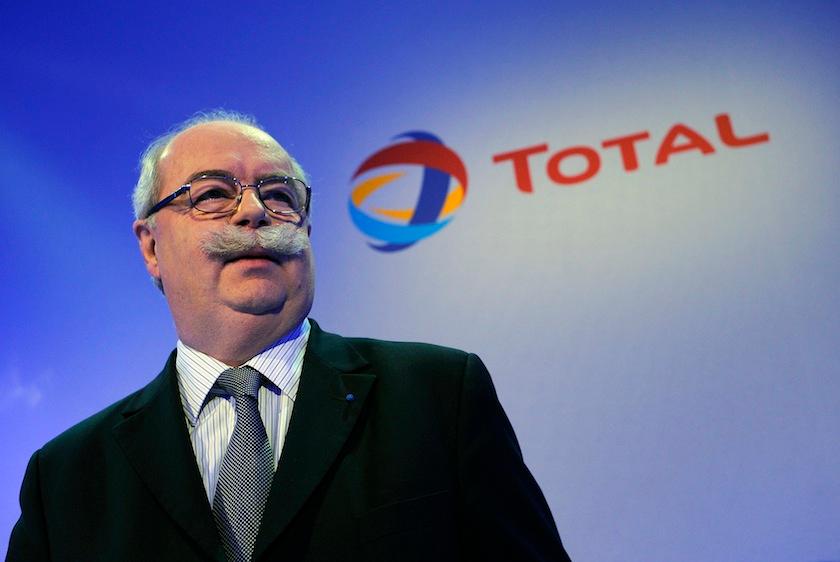
Total CEO Christophe de Margerie Dies in Plane Crash
Christophe de Margerie, chief executive officer of Total SA, pauses before a news conference in Paris, France, on Friday, Feb. 10, 2012. Total SA, Europe's third-largest oil producer, posted a 7 percent increase in profit on higher crude prices and said it would raise output and sell assets this year. Photographer: Fabrice Dimier/Bloomberg *** Local Caption ***Photograph by Fabrice Dimier—Bloomberg via Getty Images
Add Fortune on Google for similar content.

Patrick Pouyanné, the newly named chief executive of French energy giant Total, will need more than luck and a posh French accent to keep his company relevant on the world stage.

Pouyanné, who takes over the top job following the tragic death of former Chief Executive Christophe de Margerie this week in Russia, inherits a company with little raison d’etre and few choice drilling plays. Total’s (TOT) business strategy of doing deals with the devil has yielded nothing but heartache. It may be time for the company to scale back its ambitions to become a world oil giant and focus on things it has more control over.

The death of Christophe de Margerie this week came as a shock to the energy community—not so much that he died, death is nothing new to the oil industry, but rather how he died. The private plane carrying de Margerie apparently crashed into a massive snow plough while taking off from Moscow’s Vnukovo airport late in the evening on Monday, killing everyone onboard (the allegedly drunk snow plough operator walked away unharmed).

The crash at Vnukovo came a bit too close to home for those who do business in Russia, especially energy executives. Oil chieftains regularly fly in and out of Vnukovo dozens of times a year to meet with Russian officials and have done so for ages without an issue. One energy executive summed up the tragedy succinctly, telling Fortune the crash was simply nothing but “bad luck, which seems to be the theme at Total these days.”

Indeed, the loss of Total’s chief executive is just the latest bit of bad fortune that has hit the company in recent years. It seems that whatever move the company makes causes it to fall on its face. Year after year, the company has had to embarrassingly readjust its production projections downward due to errors made from the wellhead to the boardroom. The company’s so-called “high risk, high reward” strategy has backfired with only four out of 10 wells drilled last year yielding oil or gas, which is a pretty terrible record for a major oil company given today’s technology.

Part of Total’s problem has to do with the bad luck of being based in France, which has no oil or gas. This deprives Total of a safe and secure drilling platform available to most, if not all, of its competitors on the world stage. ExxonMobil (XOM), Chevron (CVX), and Conoco (COP) can always fall back on U.S. energy production, while Shell (RDSA) and BP (BP) can fall back on production from the North Sea or from their former colonies (including Canada).

Also, France isn’t as powerful as it once was on the world stage, so brokering choice deals with other nations isn’t as easy as it once was. China’s energy companies, for example, have the full backing of the Chinese money-making factory, allowing them to gain contracts through major “investments,” like roads, weapons or new palaces—all with the backing of the government in Beijing.

But Total, like Italy’s ENI, has managed to keep pumping and refining oil despite its handicap. It has done so by “going where the oil is,” a quote often used by de Margerie to explain the company’s dealmaking. This has meant taking secondary or tertiary positions in joint ventures with other oil companies in choice fields and taking on primary roles in places that other oil companies consider too risky. That means doing deals with Libya, Iran, Iraq, Russia, Venezuela, and Myanmar, with major investments in Kazakhstan and Nigeria.

Now, all the oil giants have stakes in one or two of these “fringe” petro-states but none have interests in all of them across the board like Total does. To do so would be taking on undue political risk as contracts with these nations can be pulled or revoked at any time. To complicate matters, Total has had to play a little dirty over the years to secure contracts in many of these states, bribing officials and bending the rules when it comes to sanctions and so forth. While they were successful in winning contracts, they also found themselves having to pay fines for violating the law, further dinging its bottom line.

Investment in fringe oil states can be profitable, nonetheless. That is, of course, unless things get too profitable; then the whole venture could blow up.

Total has had to “renegotiate” its contracts again and again over the years in places like Kazakhstan and elsewhere after oil prices jumped unexpectedly in favor of the company versus the state. This immediately attracted the attention of the dictator who wanted a bigger piece of the pie. This phenomenon has placed a ceiling on Total’s ability to profit from its overseas ventures and has put a cloud over its valuation in comparison to its rivals. Total’s shares trade at 9.5 times their 12-month future earnings estimates, which is far below U.S. rivals Chevron and ExxonMobil, which trade at 11.1 and 12.7 times forward earnings, respectively.

Pouyanné comes into the CEO’s office from the refining side of the business, so he hasn’t had to deal with the headache of trying to find new sources of oil like his predecessor. That may be why Total’s management committee held off from making him chairman of the board right away and gave that role to Total’s old chief executive, Thierry Desmarest. Before he left the company in 2010, Desmarest was responsible for negotiating many of the deals that are now going live today. Desmarest agreed to come out of retirement for a few months, though, and said the chairman job would be Pouyanné’s in 2015.

So, Pouyanné has some time to mull over how he wants to shape Total. Will he continue spending wildly on projects that carry a large amount of operational and political risks, or should he be more prudent with investor cash?

Investing in politically sensitive areas shouldn’t be off the table, but it should be minimized. In 2012, de Margerie promised investors that he would sell off around $30 billion worth of assets through 2017 to pump up the company’s sagging valuation. While the plan worked to stabilize Total’s valuation versus its European peers, the company remains dangerously exposed to a great deal of risky projects, which more than likely will not yield the great rewards they are hoping for.

For example, instead of exiting Russia, where new dollar investments are restricted under new U.S. and EU sanctions, de Margerie doubled down on the country, telling investors that he would try to raise the $27 billion in financing needed for its Yamal joint venture project in the Arctic in euros or renminbi. Sanctions and such aside, given Russia’s history of screwing over energy companies like Yukos and most recently BP, it is shocking that Total would consider raising the equivalent of one-fifth of its market value to fund a long-term project in the country. It is borderline negligent.

Meanwhile, Total is selling off safe assets, like its 25% stake in Cardinal Gas Services, a gas transport company in Ohio’s Utica shale region, for $450 million. Such an asset provides the type of safe cash flow Total needs to pay its bills. While it wouldn’t have made them rich, it gave them insight into a dynamic market inside a free country.

There is a great deal of uncertainty in the oil patch these days, especially with the recent dive in oil prices. Total needs to reevaluate what it means to be an energy company based in a marginally powerful country with no energy resources. Maybe it is time for Total to cut back and refocus its investments on its lucrative energy trading business or its budding alternative energy projects instead of battling it out with the jackals of the oil world and fighting over scraps with the other energy majors.

Total has around 15 major projects in the piepline, many of them in areas which seem way too risky for comfort. Redirecting that cash flow to support shale drilling projects in China, Poland, or even Argentina seem safer than sinking more cash into its investments in Kazakhstan or Northern Iraq. Taking the money it would have committed to developing LNG in Russia and doubling down on its LNG project in Qatar, which used to be run by Pouyanné, seems smarter, at least while the sanctions against Russia are in place.

About the Author
By Cyrus Sanati
See full bioRight Arrow Button Icon
Add Fortune on Google for similar content.

Latest in

Finance
Lorem ipsum dolor sit amet, consectetur adipiscing elit, sed do eiusmod tempor incididunt ut labore et dolore magna aliqua. Ut enim ad minim veniam
By Fortune Editors
October 20, 2025
Finance
Lorem ipsum dolor sit amet, consectetur adipiscing elit, sed do eiusmod tempor incididunt ut labore et dolore magna aliqua. Ut enim ad minim veniam
By Fortune Editors
October 20, 2025
Finance
Lorem ipsum dolor sit amet, consectetur adipiscing elit, sed do eiusmod tempor incididunt ut labore et dolore magna aliqua. Ut enim ad minim veniam
By Fortune Editors
October 20, 2025
Finance
Lorem ipsum dolor sit amet, consectetur adipiscing elit, sed do eiusmod tempor incididunt ut labore et dolore magna aliqua. Ut enim ad minim veniam
By Fortune Editors
October 20, 2025
Finance
Lorem ipsum dolor sit amet, consectetur adipiscing elit, sed do eiusmod tempor incididunt ut labore et dolore magna aliqua. Ut enim ad minim veniam
By Fortune Editors
October 20, 2025
Finance
Lorem ipsum dolor sit amet, consectetur adipiscing elit, sed do eiusmod tempor incididunt ut labore et dolore magna aliqua. Ut enim ad minim veniam
By Fortune Editors
October 20, 2025

Most Popular

Finance
Lorem ipsum dolor sit amet, consectetur adipiscing elit, sed do eiusmod tempor incididunt ut labore et dolore magna aliqua. Ut enim ad minim veniam
By Fortune Editors
October 20, 2025
Finance
Lorem ipsum dolor sit amet, consectetur adipiscing elit, sed do eiusmod tempor incididunt ut labore et dolore magna aliqua. Ut enim ad minim veniam
By Fortune Editors
October 20, 2025
Finance
Lorem ipsum dolor sit amet, consectetur adipiscing elit, sed do eiusmod tempor incididunt ut labore et dolore magna aliqua. Ut enim ad minim veniam
By Fortune Editors
October 20, 2025
Finance
Lorem ipsum dolor sit amet, consectetur adipiscing elit, sed do eiusmod tempor incididunt ut labore et dolore magna aliqua. Ut enim ad minim veniam
By Fortune Editors
October 20, 2025
Finance
Lorem ipsum dolor sit amet, consectetur adipiscing elit, sed do eiusmod tempor incididunt ut labore et dolore magna aliqua. Ut enim ad minim veniam
By Fortune Editors
October 20, 2025
Finance
Lorem ipsum dolor sit amet, consectetur adipiscing elit, sed do eiusmod tempor incididunt ut labore et dolore magna aliqua. Ut enim ad minim veniam
By Fortune Editors
October 20, 2025
Fortune Secondary Logo
Rankings
  • 100 Best Companies
  • Fortune 500
  • Global 500
  • Fortune 500 Europe
  • Most Powerful Women
  • World's Most Admired Companies
  • See All Rankings
  • Lists Calendar
Sections
  • Finance
  • Fortune Crypto
  • Features
  • Leadership
  • Health
  • Commentary
  • Success
  • Retail
  • Mpw
  • Tech
  • Lifestyle
  • CEO Initiative
  • Asia
  • Politics
  • Conferences
  • Europe
  • Newsletters
  • Personal Finance
  • Environment
  • Magazine
  • Education
Customer Support
  • Frequently Asked Questions
  • Customer Service Portal
  • Privacy Policy
  • Terms Of Use
  • Single Issues For Purchase
  • International Print
Commercial Services
  • Advertising
  • Fortune Brand Studio
  • Fortune Analytics
  • Fortune Conferences
  • Business Development
  • Group Subscriptions
About Us
  • About Us
  • Press Center
  • Work At Fortune
  • Terms And Conditions
  • Site Map
  • About Us
  • Press Center
  • Work At Fortune
  • Terms And Conditions
  • Site Map
  • Facebook icon
  • Twitter icon
  • LinkedIn icon
  • Instagram icon
  • TikTok icon
  • YouTube icon

Latest in

White House officially asks permission to change name of Penn Station after hinting it will be called ‘Trump’
North AmericaInfrastructure
White House officially asks permission to change name of Penn Station after hinting it will be called ‘Trump’
By Philip Marcelo and The Associated PressJuly 24, 2026
1 hour ago
t
EnergyWhite House
Trump promises cheaper power from data centers. Analysts say bills could jump 40%
By Josh Boak, Matthew Daly and The Associated PressJuly 24, 2026
2 hours ago
sc
PoliticsSupreme Court
Elena Kagan denies that Supreme Court is Trump’s ‘puppet,’ claiming they’ve checked him ‘on some big issues’
By Gene Johnson and The Associated PressJuly 24, 2026
2 hours ago
maine
LawMaine
Why did a Maine town fine a family that put up a giant metal rooster to support their daughter with autism?
By Holly Ramer, ROBERT F. BUKATY and The Associated PressJuly 24, 2026
2 hours ago
shop
EnergyInflation
Oil at $100 is pushing up costs from gas pumps to grocery aisles
By Cathy Bussewitz, Mae Anderson, Anne D'Innocenzio and The Associated PressJuly 24, 2026
2 hours ago
t
Arts & EntertainmentWhite House
Dodgers give Trump what looks like a World Series ring: ‘Wow. Do I have to report this? I don’t want to report this’
By Will Weissert, Darlene Superville and The Associated PressJuly 24, 2026
2 hours ago

Most Popular

Jensen Huang made his $172 billion fortune on AI chips. His family's $75 million gift to Vanderbilt argues art decides what technology is for
Big Tech
Jensen Huang made his $172 billion fortune on AI chips. His family's $75 million gift to Vanderbilt argues art decides what technology is for
By Sydney LakeJuly 23, 2026
1 day ago
The millennial generation has split, new Fed research shows: Those over 35 are edging toward boomer-style wealth, while everyone else falls behind
Real Estate
The millennial generation has split, new Fed research shows: Those over 35 are edging toward boomer-style wealth, while everyone else falls behind
By Nick LichtenbergJuly 22, 2026
2 days ago
The $39 trillion U.S. national debt isn’t as high as Japan’s and Singapore’s relative to economy size—and yet it's still worse somehow
Economy
The $39 trillion U.S. national debt isn’t as high as Japan’s and Singapore’s relative to economy size—and yet it's still worse somehow
By Sasha RogelbergJuly 23, 2026
23 hours ago
Spain lifted the World Cup, but the IRS still gets a cut of its $50 million pay day as players, coaches and refs all face complex U.S. “jock taxes”
Personal Finance
Spain lifted the World Cup, but the IRS still gets a cut of its $50 million pay day as players, coaches and refs all face complex U.S. “jock taxes”
By Joshua HongJuly 23, 2026
1 day ago
Current price of oil as of July 23, 2026
Personal Finance
Current price of oil as of July 23, 2026
By Joseph HostetlerJuly 23, 2026
1 day ago
Scott Bessent casually says the U.S. has more than $1 trillion in gold—and that it doesn’t matter for the dollar
Economy
Scott Bessent casually says the U.S. has more than $1 trillion in gold—and that it doesn’t matter for the dollar
By Sasha RogelbergJuly 22, 2026
2 days ago

© 2026 Fortune Media IP Limited. All Rights Reserved. Use of this site constitutes acceptance of our Terms of Use and Privacy Policy | CA Notice at Collection and Privacy Notice | Do Not Sell/Share My Personal Information
FORTUNE is a trademark of Fortune Media IP Limited, registered in the U.S. and other countries. FORTUNE may receive compensation for some links to products and services on this website. Offers may be subject to change without notice.