• Home
  • Latest
  • Fortune 500
  • Finance
  • Tech
  • Leadership
  • Lifestyle
  • Rankings
  • Multimedia

Trendingnow

1

Ed Sheeran asked Patriots owner Robert Kraft for $2 million aid donation after Macklemore was dropped from his tour for pro-Palestine comments

2

Anthropic billionaire cofounder Jack Clark studied literature, not code—and says liberal arts degrees will win in the AI age

3

Elon Musk’s DOGE swiped $329 million in humanitarian funding from Nepal, leaving a Gen Z tech revolution to transform the budding country’s economy

1

Ed Sheeran asked Patriots owner Robert Kraft for $2 million aid donation after Macklemore was dropped from his tour for pro-Palestine comments

2

Anthropic billionaire cofounder Jack Clark studied literature, not code—and says liberal arts degrees will win in the AI age

3

Elon Musk’s DOGE swiped $329 million in humanitarian funding from Nepal, leaving a Gen Z tech revolution to transform the budding country’s economy
FinanceEbola

How an Ebola crisis could strap the U.S. healthcare system

By
Lauren Silva Laughlin
Down Arrow Button Icon
By
Lauren Silva Laughlin
Down Arrow Button Icon
October 17, 2014, 4:33 PM ET
Health Care Worker In Dallas Tests Positive For Ebola Virus
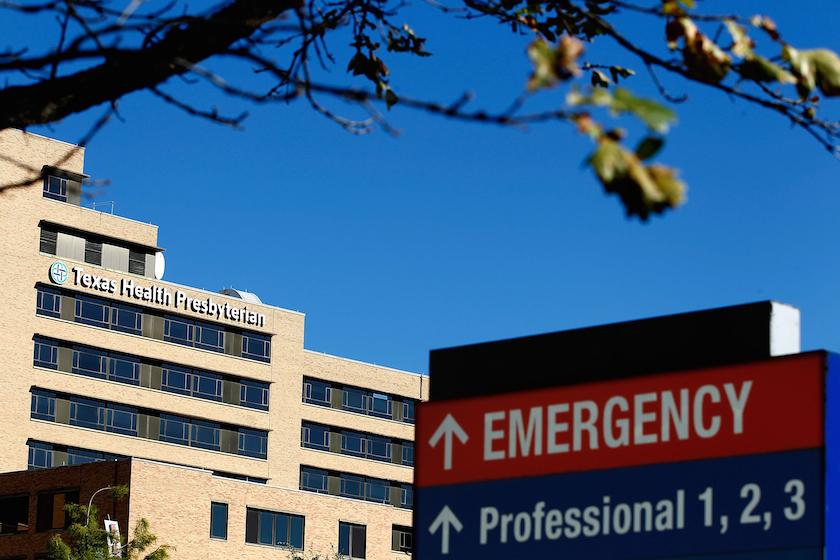
A general view of Texas Health Presbyterian Hospital where health care worker Nina Pham who provided treatment to Thomas Eric Duncan is being treated for the Ebola virus on October 14, 2014 in Dallas, Texas.Photograph by Mike Stone — Getty Images
Google source logo
Add Fortune on Google for similar content.

American hospitals are ramping up their Ebola preparedness after Dallas’ Texas Health Presbyterian has produced two new Ebola patients—both healthcare workers that treated Thomas Eric Duncan, who died on October 8. But it isn’t just the direct effects of the Ebola virus that will put pressure on the community. As crisis hits, hospitals and first responders quickly become constrained. Even just a few Ebola cases could render a healthcare system strapped.

U.S. hospitals are lean operations. According to a 2012 survey by Health Leaders, over 50% of healtchare professionals interviewed said that their hospitals felt congested. A 2010 survey from the American Hospital Association found that 50% of emergency departments are running “at” or “over” capacity.

ICU facilities—like those that Ebola patients are admitted into—suck up the most resources. They can account for as much as 40% of a hospitals’ cost while comprising less than 10% of the patient beds, according to a study from Columbia University. Often, each patient has their own nurse.

Ebola patients have particularly high needs. It’s hard to know for sure what resources Presbyterian used to care for Duncan, but contact tracing suggests that 70 people at the hospital had direct contact with the patient. In total, the hospital has only 866 beds.

Hospitals spend quite a lot of time and money trying to calculate how many beds they need during the daily course of business. They can’t afford to leave beds empty. Given the overall portion of the pie the ICU eats up, the mathematical exercise in this department is of utmost importance.

Hospitals often have something called “surge capacity,” meaning they can open more beds and call upon more doctors in a time of need. But using such resources is extremely expensive. Also, it’s unclear if hospitals can shoulder those costs long-term. A medical paper by Eric Toner of the UPMC Center for Health Security published in 2007 says a 1918-like pandemic would cause U.S. hospitals to absorb a net loss of $3.9 billion, or an average of $784,592 per hospital. “Policymakers should consider contingencies to ensure that hospitals do not become insolvent as a result of a severe pandemic,” according to the paper.

Daily demands at a city hospital—gun shot wounds, drunk driving accidents, critically ill elderly—don’t stop just because Ebola is in the neighborhood. Presbyterian Hospital has already had to reroute emergency cases to other hospitals because its resources have been spread thin. It doesn’t take long before a hospital’s first line of defense fails.

About the Author
By Lauren Silva Laughlin
See full bioRight Arrow Button Icon

Latest in Finance


Most Popular

Fortune Secondary Logo
Rankings
  • 100 Best Companies
  • Fortune 500
  • Global 500
  • Fortune 500 Europe
  • Most Powerful Women
  • World's Most Admired Companies
  • See All Rankings
  • Lists Calendar
Sections
  • Finance
  • Fortune Crypto
  • Features
  • Leadership
  • Health
  • Commentary
  • Success
  • Retail
  • Mpw
  • Tech
  • Lifestyle
  • CEO Initiative
  • Asia
  • Politics
  • Conferences
  • Europe
  • Newsletters
  • Personal Finance
  • Environment
  • Magazine
  • Education
Customer Support
  • Frequently Asked Questions
  • Customer Service Portal
  • Privacy Policy
  • Terms Of Use
  • Single Issues For Purchase
  • International Print
Commercial Services
  • Advertising
  • Fortune Brand Studio
  • Fortune Analytics
  • Fortune Conferences
  • Business Development
  • Group Subscriptions
About Us
  • About Us
  • Press Center
  • Work At Fortune
  • Terms And Conditions
  • Site Map
  • About Us
  • Press Center
  • Work At Fortune
  • Terms And Conditions
  • Site Map
  • Facebook icon
  • Twitter icon
  • LinkedIn icon
  • Instagram icon
  • TikTok icon
  • YouTube icon

    Latest in Finance


    Most Popular

    © 2026 Fortune Media IP Limited. All Rights Reserved. Use of this site constitutes acceptance of our Terms of Use and Privacy Policy | CA Notice at Collection and Privacy Notice | Do Not Sell/Share My Personal Information
    FORTUNE is a trademark of Fortune Media IP Limited, registered in the U.S. and other countries. FORTUNE may receive compensation for some links to products and services on this website. Offers may be subject to change without notice.