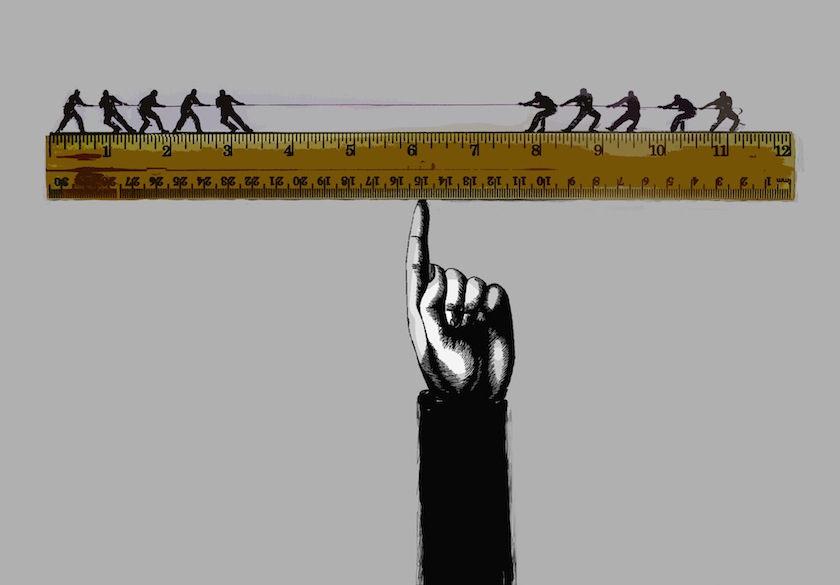
Dear Annie: I was recently transferred here from another part of the company and put in charge of developing a new product. It’s pretty exciting, or has the potential to be, but I’m running into a weird problem. The two teams responsible for collaborating on this project do not get along—each team thinks the other has set impossible deadlines, for one thing—and lately people have started coming into my office to make snide comments about the “other side.”
This sounds infantile, I know, but there is a longstanding culture here of everyone being nice and polite all the time (at least to each other’s faces), even when they can’t stand each other. Our HR department offers training in conflict resolution, but there is no actual conflict; just this atmosphere of antagonism and distrust. Do you or your readers have any suggestions on how to handle this? —In the Crossfire
Dear I.C.: It sounds as if the real problem here is that people are bringing their complaints to you instead of being honest with each other. That’s not unusual. In too many workplaces, says Yves Morieux, colleagues try to keep up a façade of niceness because it’s more pleasant. But friction, however stressful, is sometimes what a project needs.
“When people are arguing with each other, it’s not necessarily worse than ‘getting along,’” he says. “In fact, real cooperation depends on disagreements, tensions, and tradeoffs.”
A partner at Boston Consulting Group and co-author of a new book, Six Simple Rules, Morieux has worked with plenty of companies where too much harmony masked big problems that were only resolved once people started yelling at each other.
One example from the book: At a cell phone network where several engineering teams were at odds, senior management put them together—and put the least popular group in charge—so they’d have no choice but to hash out issues like unworkable deadlines. The discussions were unavoidably heated at times, but being forced to talk through everyone’s needs and constraints led to schedules that worked.
Morieux suggests you do something similar with your warring teams. He recommends starting with these three steps:
- Stop making confrontation taboo. This may take some patience, as the culture up until now has been built on avoiding conflict. But people have to see that you mean it, and that you will no longer tolerate snide remarks behind closed doors. “Bring the two sides together and ask them why there has been no solution yet to the disagreements between them,” he suggests. “Usually each side will blame the other—the other team is stubborn, inflexible, lazy, a bunch of prima donnas, whatever.” That’s fine. “It’s important to get tensions and even anger out on the table, where everyone can see them.”
- Objectify the issues. The only ground rule is a ban on personal attacks. Apart from that, honesty rules. “This is a business problem. How can we make this project work better? What are the specific problems that are standing in the way?” Morieux says. “Require that everyone stick with the facts. What is the ideal deadline for each of them? Then, what is actually achievable?”
- Dive into the details. “Ask each side why a particular sticking point is important to them—for instance, why they need the other team to meet a given deadline,” says Morieux. A disagreement will usually be resolved much faster, and with less resentment, if everyone understands why it matters.
These three steps could well be enough to get everyone pulling in the same direction. “Once the situation is presented as a business challenge, and people have a clear understanding of the real issues, they’ll usually come up with solutions,” Morieux notes.
What if they don’t? Morieux proposes a novel approach, beyond the usual management carrots and sticks. “Someone always bears the cost of failing to solve a problem,” he says. “Your job as a manager may be to make sure everyone knows in advance that, if a solution isn’t found because people haven’t been able to cooperate, the employee who is standing in the way will have to accept the consequences.”
An example, from Six Simple Rules: A major automaker’s cars were notoriously hard to repair since, for instance, the wiring was arranged so that replacing the headlights meant removing the engine. The company sent the engineers who had created the problem to work in the service department for a while and hear firsthand how their design decisions affected irate technicians and unhappy customers.
Says Morieux,“If people know beforehand that—if they can’t work out the deadline problem—they may have to explain themselves face-to-face with angry people later on, they are motivated to reach a solution.” Let’s hope it doesn’t come to that.
Talkback: Does your company encourage “getting along” even when being nice covers up important problems, or is conflict expected and encouraged? Leave a comment below.
Have a career question for Anne Fisher? Email askannie@fortune.com.