• Home
  • Latest
  • Fortune 500
  • Finance
  • Tech
  • Leadership
  • Lifestyle
  • Rankings
  • Multimedia

Trendingnow

1

FedEx CEO says we are in the middle of the biggest supply chain shift he’s seen in 35 years: ‘We are the referendum’

2

26 Meta employees accuse Mark Zuckerberg of using AI to target 8,000 layoffs against workers on medical, parental or family leave

3

He sold his last company to Palantir. Now he's betting $32 million that robots can fix construction's labor crisis

1

FedEx CEO says we are in the middle of the biggest supply chain shift he’s seen in 35 years: ‘We are the referendum’

2

26 Meta employees accuse Mark Zuckerberg of using AI to target 8,000 layoffs against workers on medical, parental or family leave

3

He sold his last company to Palantir. Now he's betting $32 million that robots can fix construction's labor crisis
FinanceIndia

Can India redefine capitalism?

By
Sanjay Sanghoee
Sanjay Sanghoee
Down Arrow Button Icon
By
Sanjay Sanghoee
Sanjay Sanghoee
Down Arrow Button Icon
June 17, 2014, 11:10 AM ET
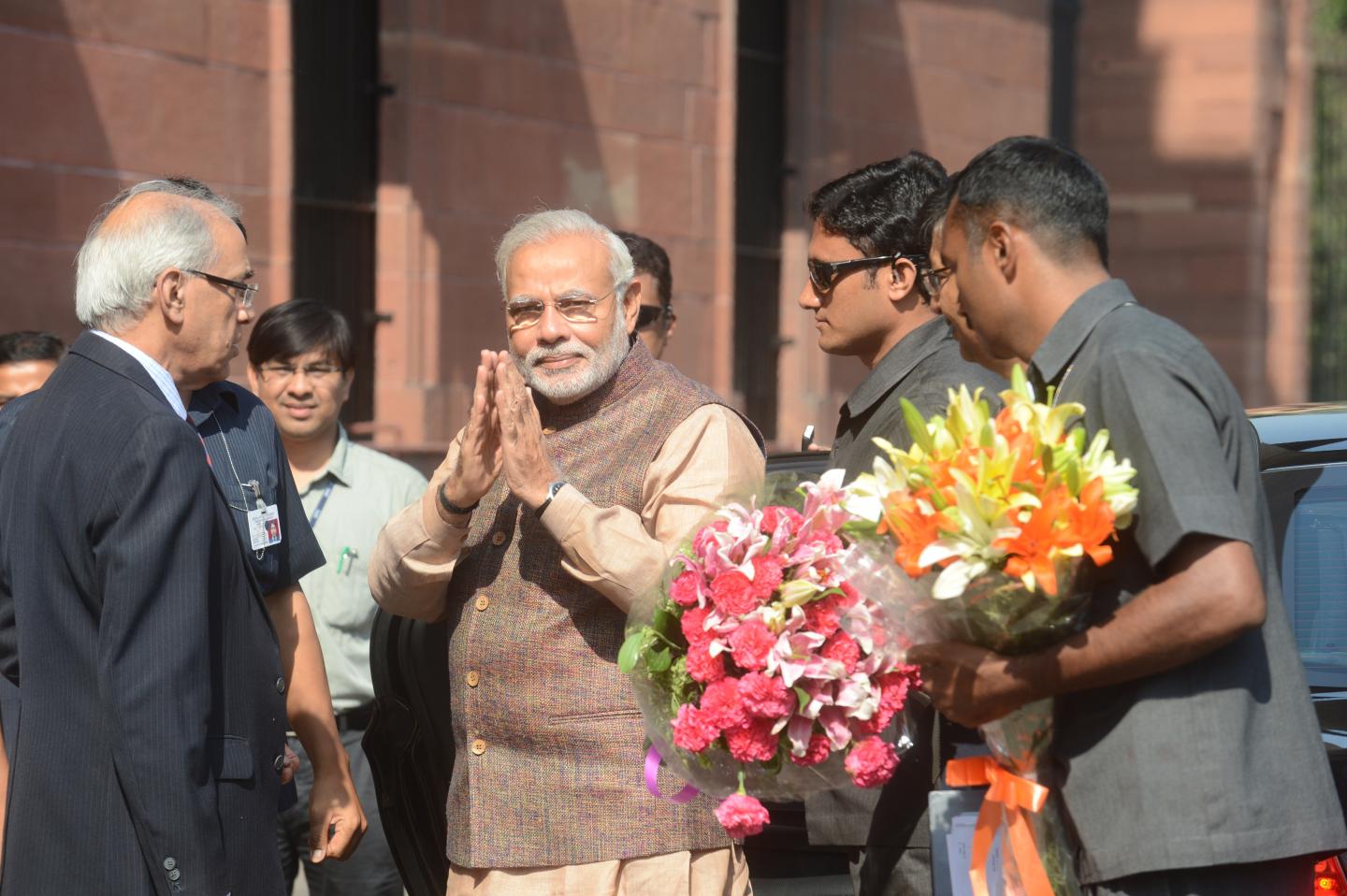
INDIA-POLITICS-MODI
India's new Prime Minister Narendra Modi gestures during his arrival at the Prime Minister's Office at South Block in New Delhi on May 27, 2014. RAVEENDRAN/AFP—Getty Images
Add Fortune on Google for similar content.

India’s historic opportunity to institute free market reform has excited the imagination of investors and economic analysts, but what should really enthuse everyone is the nation’s unique chance to redefine capitalism. With the election of new Prime Minister Narendra Modi, it’s positioned to create a brand of capitalism that fits the complex needs of the world’s largest democracy and therefore create a truly modern economy.

Unlike the more mature, but entrenched U.S. economy, India’s is in its infancy due to decades of financial and political missteps that have mired the nation in a quagmire of quasi-mercantilism, inefficiency, corruption and uneven growth. Despite the loosening of financial regulations in the 1990s, the country has continued to control key industries, such as agriculture and coal. It also places restrictions on foreign investment, which has starved the nation of much needed resources and compromised its business potential. These resources are now waiting at the door in the form of foreign investors clamoring to get in on a promising emerging market, as well as big domestic companies with hefty war chests and a hunger for growth.

It’s tempting for India’s prime minister to simply give these parties the freedom they want and let the markets do the rest, but that would be a mistake. The answer to India’s economic malaise is not necessarily the lifting of all restrictions on investment and business activity. Rather, it’s a careful opening of the door to free enterprise within a planned framework of new laws that encourage profit-making but not profiteering and which hold businesses to a higher standard of accountability. Both Indian and foreign companies should be encouraged to improve their performance on everything from workers’ rights and wage levels to environmental standards that can create a business environment that is both profitable and responsible.

Take, for example, the agriculture industry – specifically, wheat.  India currently produces 95 tons of wheat a year, but due to lack of proper storage facilities and poor transport systems administered by the government-run Food Corporation of India, almost 22% of the wheat is lost to spoilage. This not only creates a supply-demand imbalance and increases food prices for locals, but it also prevents India from being able to export more of its produce. And with rainfall forecast to be lower than usual this year, spoilage and mismanagement could put even more pressure on India’s farming sector, which accounts for 14% of its GDP.

To his credit, Modi has promised to modernize agriculture and improve the food distribution system in hopes of creating jobs and reining in food inflation of more than 9%. Those plans, however, will require heavy financial investment and the involvement of private sector solutions, including from companies in more technologically advanced nations like the U.S.

This is where Modi needs to proceed carefully and use the Monsato (MON) experience as a guide for the future. The St. Louis-based agrochemical and agricultural biotechnology company became a major player in the Indian seed market in 1988 when the World Bank forced India to deregulate the sector. It was perhaps an inevitable development for an inefficient market. However, Monsanto’s genetic modification of seeds and patenting of the same also enabled the company to create a system of rent-paying by poor farmers. When the company introduced a new type of cotton engineered to be more resilient, called Bt cotton, to India, the associated royalties raised the price of cotton seeds for farmers who hoped that the benefits of the crop would outweigh the cost.

It is hard to know whether the gamble paid off for individual farmers, but what is clear is that the company is currently under fire in several countries for this business model, which critics claim puts local farmers into deep debt and often leads to suicides, not to mention that the mixed track record of Bt cotton illustrates that these super seeds may not be as profitable as they seem. What’s more, Monsanto has been accused of paying sub-level wages to agricultural workers, especially women, and using child labor in India.

While Monsanto’s innovations can produce more resilient crops and more value for agriculture, they can also lead to the creation of super pests and weeds, harmful effects on consumers due to the unexpected consequences of genetic modification, as well as destroy profitability for growers due to patent payments. The point is that private sector solutions can also create unintended problems, especially for a vulnerable nation like India starting a new economic journey. So the Modi administration needs to evaluate the risks of letting the private sector take a bigger role (and guard against them) before opening the floodgates.

A more sensible policy would be for the Indian government to examine the dynamics of each sector, write new laws to protect workers, consumers and businesses in a more heated market, promote national infrastructure development, and then allow companies to enter based on well-defined requirements.

In the case of Monsanto, it would not be unreasonable to expect stricter adherence to genetic modification safety standards, a reduction in prices of patents to take into account the dire financial reality of rural farmers, and an investment in better food distribution systems to preserve the value of the crops produced by the company’s seeds. Such a policy might not conform to a completely free market, but it would be more realistic, safe and sustainable.

Given that many international businesses, including major corporations like Whole Foods (WFM), Google (GOOG), Volkswagen, and Disney (DIS) are themselves widening their view of capitalism and prioritizing corporate social responsibility, India would be justified in demanding balanced behavior from companies in exchange for the opportunity to profit from the nation’s economic potential.  It would be good for the people of India, good for its new government and ultimately good for business.

Sanjay Sanghoee is a political and business commentator. He has worked at investment banks Lazard Freres andDresdner Kleinwort Wasserstein, as well as at hedge fund Ramius. Sanghoee sits on the Board of Davidson Media Group, a mid-market radio station operator. He has an MBA from Columbia Business School and is also the author of two thriller novels. Follow him @sanghoee.

About the Author
By Sanjay Sanghoee
See full bioRight Arrow Button Icon
Add Fortune on Google for similar content.

Latest in Finance

Finance
Lorem ipsum dolor sit amet, consectetur adipiscing elit, sed do eiusmod tempor incididunt ut labore et dolore magna aliqua. Ut enim ad minim veniam
By Fortune Editors
October 20, 2025
Finance
Lorem ipsum dolor sit amet, consectetur adipiscing elit, sed do eiusmod tempor incididunt ut labore et dolore magna aliqua. Ut enim ad minim veniam
By Fortune Editors
October 20, 2025
Finance
Lorem ipsum dolor sit amet, consectetur adipiscing elit, sed do eiusmod tempor incididunt ut labore et dolore magna aliqua. Ut enim ad minim veniam
By Fortune Editors
October 20, 2025
Finance
Lorem ipsum dolor sit amet, consectetur adipiscing elit, sed do eiusmod tempor incididunt ut labore et dolore magna aliqua. Ut enim ad minim veniam
By Fortune Editors
October 20, 2025
Finance
Lorem ipsum dolor sit amet, consectetur adipiscing elit, sed do eiusmod tempor incididunt ut labore et dolore magna aliqua. Ut enim ad minim veniam
By Fortune Editors
October 20, 2025
Finance
Lorem ipsum dolor sit amet, consectetur adipiscing elit, sed do eiusmod tempor incididunt ut labore et dolore magna aliqua. Ut enim ad minim veniam
By Fortune Editors
October 20, 2025

Most Popular

Finance
Lorem ipsum dolor sit amet, consectetur adipiscing elit, sed do eiusmod tempor incididunt ut labore et dolore magna aliqua. Ut enim ad minim veniam
By Fortune Editors
October 20, 2025
Finance
Lorem ipsum dolor sit amet, consectetur adipiscing elit, sed do eiusmod tempor incididunt ut labore et dolore magna aliqua. Ut enim ad minim veniam
By Fortune Editors
October 20, 2025
Finance
Lorem ipsum dolor sit amet, consectetur adipiscing elit, sed do eiusmod tempor incididunt ut labore et dolore magna aliqua. Ut enim ad minim veniam
By Fortune Editors
October 20, 2025
Finance
Lorem ipsum dolor sit amet, consectetur adipiscing elit, sed do eiusmod tempor incididunt ut labore et dolore magna aliqua. Ut enim ad minim veniam
By Fortune Editors
October 20, 2025
Finance
Lorem ipsum dolor sit amet, consectetur adipiscing elit, sed do eiusmod tempor incididunt ut labore et dolore magna aliqua. Ut enim ad minim veniam
By Fortune Editors
October 20, 2025
Finance
Lorem ipsum dolor sit amet, consectetur adipiscing elit, sed do eiusmod tempor incididunt ut labore et dolore magna aliqua. Ut enim ad minim veniam
By Fortune Editors
October 20, 2025
Fortune Secondary Logo
Rankings
  • 100 Best Companies
  • Fortune 500
  • Global 500
  • Fortune 500 Europe
  • Most Powerful Women
  • World's Most Admired Companies
  • See All Rankings
  • Lists Calendar
Sections
  • Finance
  • Fortune Crypto
  • Features
  • Leadership
  • Health
  • Commentary
  • Success
  • Retail
  • Mpw
  • Tech
  • Lifestyle
  • CEO Initiative
  • Asia
  • Politics
  • Conferences
  • Europe
  • Newsletters
  • Personal Finance
  • Environment
  • Magazine
  • Education
Customer Support
  • Frequently Asked Questions
  • Customer Service Portal
  • Privacy Policy
  • Terms Of Use
  • Single Issues For Purchase
  • International Print
Commercial Services
  • Advertising
  • Fortune Brand Studio
  • Fortune Analytics
  • Fortune Conferences
  • Business Development
  • Group Subscriptions
About Us
  • About Us
  • Press Center
  • Work At Fortune
  • Terms And Conditions
  • Site Map
  • About Us
  • Press Center
  • Work At Fortune
  • Terms And Conditions
  • Site Map
  • Facebook icon
  • Twitter icon
  • LinkedIn icon
  • Instagram icon
  • Pinterest icon

Latest in Finance

Kalshi pulls plug on planned flight cancellation contracts
BankingKalshi
Kalshi pulls plug on planned flight cancellation contracts
By Jeff John RobertsJuly 16, 2026
2 hours ago
The global rich like Peter Thiel are eyeing the exit door. Argentina wants to be a ‘serious contender’ in the migration game
InvestingPeter Thiel
The global rich like Peter Thiel are eyeing the exit door. Argentina wants to be a ‘serious contender’ in the migration game
By Mia OsmonbekovJuly 16, 2026
3 hours ago
Donald Trump looks at Xi Jinping and puts a hand on his arm.
Economysupply chains
Trump has tried to decouple from China, but ending U.S. reliance on the country would cost America nearly $14 trillion, EY warns
By Sasha RogelbergJuly 16, 2026
4 hours ago
lj
SuccessLeBron James
The $500 million LeBron James sweepstakes: 5 cities race for the right to boost their economy with the chosen one
By Joshua HongJuly 16, 2026
4 hours ago
Jamie Dimon surrounded by construction workers.
SuccessCareers
JPMorgan CEO Jamie Dimon says 300,000 workers are needed to rebuild American shipbuilding—with jobs paying $100,000 without a college degree
By Preston ForeJuly 16, 2026
5 hours ago
Europe optimized its supply chains for cost. Now it must pay for resilience  
Commentarysupply chains
Europe optimized its supply chains for cost. Now it must pay for resilience  
By Richard SaynorJuly 16, 2026
6 hours ago

Most Popular

FedEx CEO says we are in the middle of the biggest supply chain shift he’s seen in 35 years: ‘We are the referendum’
C-Suite
FedEx CEO says we are in the middle of the biggest supply chain shift he’s seen in 35 years: ‘We are the referendum’
By Fortune EditorsJuly 15, 2026
1 day ago
26 Meta employees accuse Mark Zuckerberg of using AI to target 8,000 layoffs against workers on medical, parental or family leave
Law
26 Meta employees accuse Mark Zuckerberg of using AI to target 8,000 layoffs against workers on medical, parental or family leave
By Barbara Ortutay, Alexandra Olson and The Associated PressJuly 15, 2026
1 day ago
He sold his last company to Palantir. Now he's betting $32 million that robots can fix construction's labor crisis
Innovation
He sold his last company to Palantir. Now he's betting $32 million that robots can fix construction's labor crisis
By Lily Mae LazarusJuly 15, 2026
1 day ago
MacKenzie Scott, Melinda French Gates, and Lauren Sánchez Bezos are rewriting the rules of billionaire giving—one quietly, one strategically, one very publicly
Newsletters
MacKenzie Scott, Melinda French Gates, and Lauren Sánchez Bezos are rewriting the rules of billionaire giving—one quietly, one strategically, one very publicly
By Sydney LakeJuly 14, 2026
2 days ago
Jamie Dimon understands why people are anti-rich: 'We have, in fact, left the lower-income folks behind' and 'that's kind of annoying'
Economy
Jamie Dimon understands why people are anti-rich: 'We have, in fact, left the lower-income folks behind' and 'that's kind of annoying'
By Eleanor PringleJuly 15, 2026
1 day ago
Trump's 'American Flag Blue' in the Lincoln Memorial pool is already gray — and the Olympic canoer 'vandal' is fighting his arrest
Politics
Trump's 'American Flag Blue' in the Lincoln Memorial pool is already gray — and the Olympic canoer 'vandal' is fighting his arrest
By Matthew Daly and The Associated PressJuly 16, 2026
8 hours ago

© 2026 Fortune Media IP Limited. All Rights Reserved. Use of this site constitutes acceptance of our Terms of Use and Privacy Policy | CA Notice at Collection and Privacy Notice | Do Not Sell/Share My Personal Information
FORTUNE is a trademark of Fortune Media IP Limited, registered in the U.S. and other countries. FORTUNE may receive compensation for some links to products and services on this website. Offers may be subject to change without notice.