While violence explodes in Iraq between the brutal al-Qaeda-type Sunni Islamists and the Shiite-led government, there are five million Iraqis for which the unfolding disaster looks set to bring big benefits, as well perhaps as the world’s newest oil state—the Kurds.
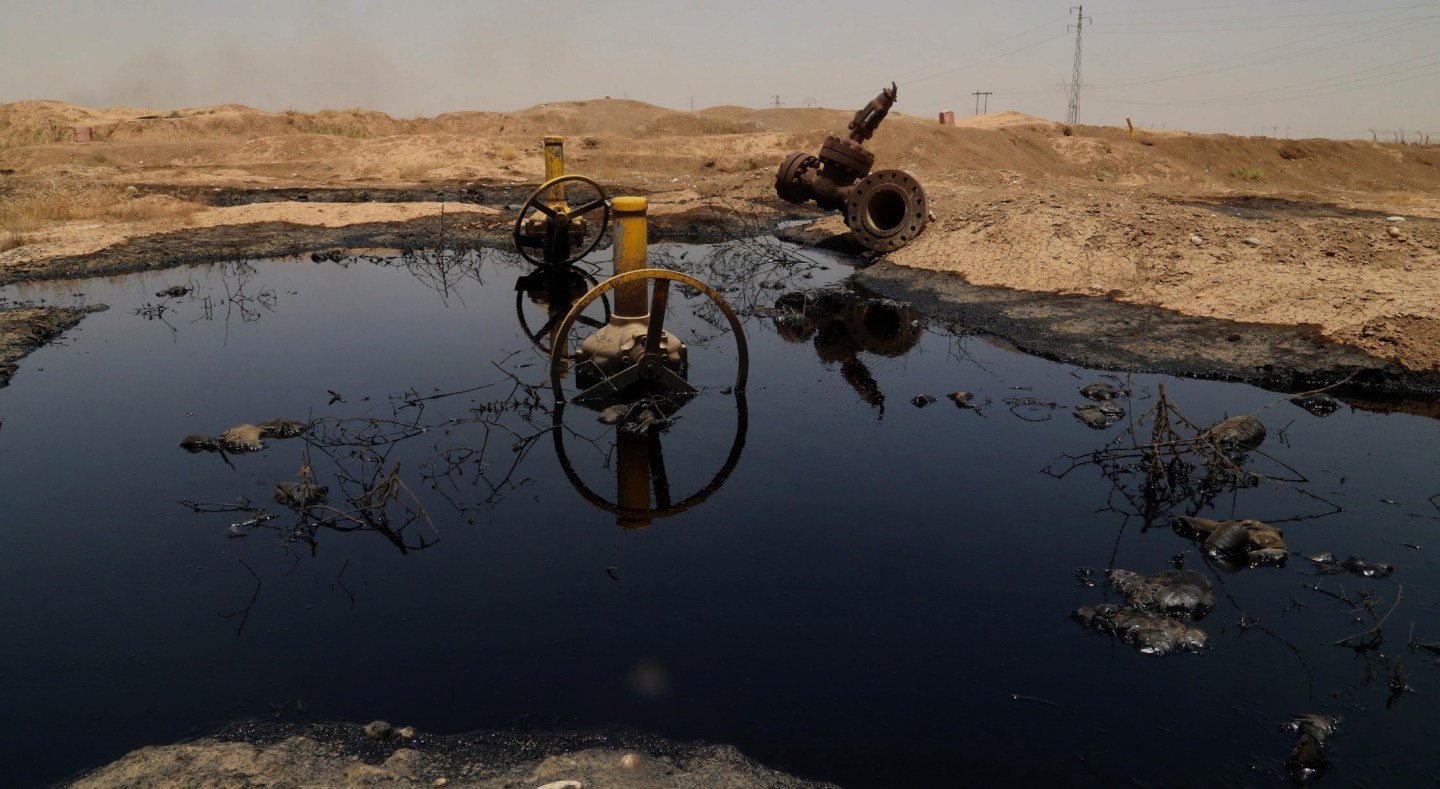
Little more than a year ago, Fortune traveled to Iraq’s autonomous northern region as Kurdistan to describe how the deal between ExxonMobil (XOM) and the Kurdish Regional Government, or KRG, could spark civil war in Iraq, as different factions waged battle for control over the country’s immense oil riches. At the time, Kurdish officials said they were thrilled that the world’s biggest oil company was about to start drilling in their autonomous region, which the International Energy Agency says has 4 billion barrels of proven oil reserves, but which the KRG estimates could in reality be closer to 45 billion barrels. Still, Kurdish officials warned last year that Washington’s muddled, misguided Iraq policy was a disaster in the making. “The U.S. policy is, ‘We got out, finished. Box checked. Move on,’ ” Qubad Talabani, a senior Kurdistan official who became the KRG’s Deputy Prime Minister last month, told me at the time in Kurdistan’s capital Irbil. One major problem, according to Talabani (who was previously KRG representative in Washington) and other officials, was that U.S. officials were determined to keep Iraq as a unified intact country, despite the bitter schisms between the Shiite-dominated government in Baghdad, Iraq’s Sunni minority, and the Kurdish community, which has dreamed of having their own state for decades. “The U.S. still wants Iraqis to be Iraqis first,” Talabani said. “It’s like, if they say it enough it will be so. But it won’t.”
Now Talabani’s words sound eerily prophetic. With the past six days’ violence, Iraq appears to be hurtling towards a three-way breakup: A Sunni-dominated western Iraq dominated by hardline militant jihadist groups; a northern Kurdish territory, and a southern and central Shiite Iraq. With the potential for disintegration comes major upheaval in Opec’s second biggest oil producer and one of the world’s biggest oil nations—and a huge victory for the Kurds.
Just to recap: Iraq’s crisis, which has bubbled all year, exploded into view last Wednesday when militants from Islamic State of Iraq and Syria, or ISIS, stormed into Iraq’s second city Mosul and seized it with barely a fight; government soldiers fled, abandoning an arsenal of U.S. weaponry worth tens of millions of dollars, including armored vehicles, attack helicopters and machine guns with which the U.S. had equipped Iraq’s military, ironically to fight Islamic insurgents. Instead, ISIS fighters took to the sky in a U.S. helicopter and rumbled south laden with American armor, quickly taking Saddam Hussein’s hometown of Tikrit and edging towards the outskirts of Baghdad. On Sunday it also seized Tal Afar, a town of about 200,000 people west of Mosul.
The horrific reality on the ground emerged on Sunday when ISIS posted macabre photographs and messages on Twitter (since removed) claiming that their fighters had executed about 1,700 Iraqi forces in Tikrit. Since there are almost no independent journalists working in the ISIS-held territory, the images are difficult to verify. But the gruesome scenes fueled calls for revenge among Shiites, thousands of whom have rushed to join militias in recent days.
Seen from the prism of Kurdistan—Iraq’s mountainous northern region hemmed between Syria, Turkey and Iran, which enjoys some political autonomy from Baghdad, but which is forbidden to export its own oil—the stunningly quick implosion has been a potential godsend, in effect, sorting out years of deadlocked arguments with Baghdad.
As Iraqi forces abandoned the hugely oil-rich town of Kirkuk last Thursday, Kurdish soldiers, called peshmerga, moved in swiftly, seizing control of an area which on its own has nearly 9 billion barrels of oil reserves. That places Exxon’s new bloc solidly in Kurdish hands rather than in some fuzzy contested territory that both Kurds and Baghdad claim. Kirkuk has been intensely disputed since Saddam drove out the Kurds during the 1980s and 1990s in a brutal ethnic-cleansing campaign, and the Kurds have been determined to recapture it for decades.
Since the U.S. occupation ended in 2012, Iraqi Prime Minister Nouri al-Maliki has made it that the government would blacklist any oil company operating in territory the Kurds claimed was theirs, and shut it out of southern Iraq’s supergiant fields; Exxon effectively ignored the threat, calculating (correctly) that it was too big to shut out. And meanwhile, the Kurds have over the past months quietly opened its own export pipeline to Turkey, steadily putting in place the building blocks of a new country.
Now that new state looks like a reality in all but name. Cunningly, the KRG is unlikely to declare real independence soon. With Iraq in havoc, it hardly needs to. “It’s become very clear to the Kurds that events in the past few days will enable them to declare independence at some point,” Ayham Kamel, Middle East director of the Eurasia Group, told Fortune on Monday. “We are definitely moving in the direction of statehood, but it will not be declared in 2014.”
When I traveled to Kirkuk last year, my Kurdish guide, Hoshang Ishmail, the community development manager for the United Arab Emirates-based Crescent Petroleum, told me that Kurds would readily fight if Baghdad every blocked them from drilling for oil. “Nothing binds us to Iraq except the status quo,” he said. Now that status quo has been ripped apart. And little binds the Kurds and their oil fields to the chaos raging around them.
WATCH: Iraq situation causes worldwide oil price uncertainty