• Home
  • Latest
  • Fortune 500
  • Finance
  • Tech
  • Leadership
  • Lifestyle
  • Rankings
  • Multimedia

Trendingnow

1

Despite a $500 million net worth, Shaq just finished his fourth degree. He warns graduates: 'Your character will take you further than your resume'

2

Jeff Bezos wants the bottom half of earners to pay zero income tax—he says nurses making just $75K should save $12K a year

3

Bolt CEO says he let go of his entire HR team for creating problems that didn’t exist: ‘Those problems disappeared when I let them go’ 

1

Despite a $500 million net worth, Shaq just finished his fourth degree. He warns graduates: 'Your character will take you further than your resume'

2

Jeff Bezos wants the bottom half of earners to pay zero income tax—he says nurses making just $75K should save $12K a year

3

Bolt CEO says he let go of his entire HR team for creating problems that didn’t exist: ‘Those problems disappeared when I let them go’ 
Fortune Data

Cropping up on every farm: Big data technology

By
Katherine Noyes
Katherine Noyes
Down Arrow Button Icon
By
Katherine Noyes
Katherine Noyes
Down Arrow Button Icon
May 30, 2014, 2:00 PM ET
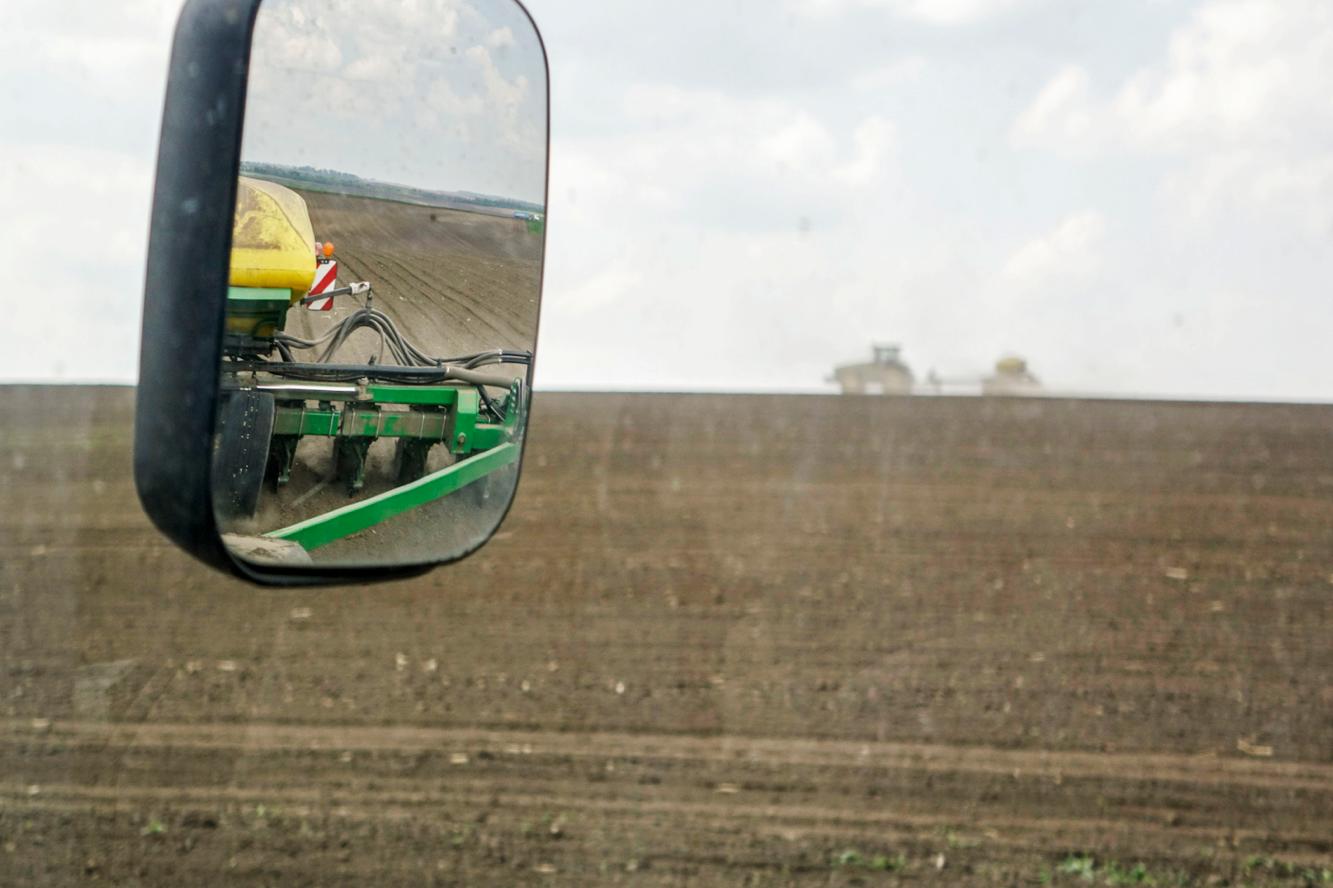
A farmer sows a field of corn seeds in the countryside outside Ternopil, Ukraine, on Friday, May 2, 2014.
A farmer sows a field of corn seeds in the countryside outside Ternopil, Ukraine, on Friday, May 2, 2014.Vincent Mundy/Bloomberg/Getty Images

FORTUNE — Picture a farmer harvesting a crop in a sunny Iowa field. The word “data” probably isn’t one of the things that come to mind.

But against the backdrop of that bucolic imagery, the modern agriculture industry is as wired up as any other.

Thanks in large part to a concept known as precision agriculture, fields are now mapped with GPS coordinates. “We know a lot about variables like soil and elevation,” said David Fischhoff, chief scientist at Climate Corp., which was acquired by Monsanto (MON) last year for nearly $1 billion. With finely tuned planting tools, farmers “can monitor in real time — while they’re planting — where every seed is placed,” he said. “When they come back at harvest time, they have yield monitors, allowing the combine to measure the yield every meter of the way.”

In other words, there’s no shortage of data. “I’m not sure people appreciate how much data farmers have,” Fischhoff said. “The challenge has been: What do you do with it? How can it help the farmer make decisions?”

Monsanto, John Deere (DE) and DuPont Pioneer (DD) are among the companies scrambling to help farmers do more with their exploding volumes of data. Big data and data analytics technology, known better for its increasing presence in office buildings and storefronts, is just as present in the amber waves of grain (and other crops) across the United States.

An extra $100 per acre in profit

Monsanto’s Climate Corp., for example, offers a suite of decision support tools known as Climate Pro designed to help farmers increase yields, decrease costs and save time. One of those tools is Nitrogen Advisor, which tracks the available nitrogen at the field level and offers projections, alerts, and recommendations. Priced at $15 per acre, Climate Pro can offer as much as $100 per acre of increased profits, the company says.

Later this year Climate will roll out FieldScripts, a service that will advise growers at the sub-field level how much corn seed to plant in each section of their land.

“In a typical corn field, there are 35,000 to 40,000 corn seeds planted per acre, but not all parts of the field support as much growth and yield as other parts,” Fischhoff said. “FieldScripts breaks down and treats each of those little parts as if it was a field unto itself.”

The resulting “prescriptions” for farmers are developed through statistical models and algorithms. They get downloaded from the cloud to an iPad in the farmer’s tractor. That tablet computer in turn communicates with the tractor’s planting machine, telling it how to vary the density of the seeds it plants as it drives along at five or six miles per hour.

“We see this whole area of data science and decision support as really having the possibility of changing the face of agriculture,” Fischhoff said.

$500 million in annual return

DuPont Pioneer is no less optimistic.

“To stay competitive, growers need to closely manage their operations to get the most out of every resource,” spokeswoman Jane Slusark told Fortune. “There’s an enormous amount of data coming out of the fields — if we can make tools for growers that make the data actionable, then it has value for them.”

Toward that end, DuPont Pioneer began offering decision services about a decade ago, when yield monitors began appearing. Variable-rate seeding prescriptions came a few years later, she said.

“In 2012 we mapped more than 20 million acres within the U.S.,” Slusark said, “and growers implemented more than 1.5 million acres of variable-rate seeding prescriptions.”

This year, the company launched Encirca, a suite of brand-neutral decision services delivered through local certified agents, who work directly with farmers to analyze and customize recommendations. DuPont Pioneer expects some $500 million in annual return within the next 10 years from its decision services efforts, Slusark said.

‘It will be electrifying’

There are a number of other data technology providers to the agriculture industry. Across the globe, for instance, CropIn uses big-data analytics to provide insight at the level of individual farms, clusters of farms, districts, states, or even the whole country of India, said Krishna Kumar, the company’s founder and CEO.

“In India, there are 500 million farmers spread across the country in remote areas,” adding up to roughly a billion acres, Kumar said.

Traditionally, farmers have been “on their own” managing their land, but “imagine if we can collect every micro bit of data from each farm and run analytics — imagine if we can process these data in real time,” he said. “It will be electrifying.”

Kumar is particularly optimistic about big data’s role in answering global food-security concerns. “By 2050 the world population will hit 9.2 billion,” he said. “If we produce food at the current rate, we will not be able to feed the world.

“The moment we start getting real-time data from these farms and cloud algorithms run the big-data analytics in real time and farmers get all the right math on their fingertips, we will change the scenario in agriculture,” he said.

‘Why don’t they pay me?’

In general, there is support from the greater farming industry for data-driven technology.

“We’re very excited about this technology,” Mary Kay Thatcher, senior director for congressional relations at the American Farm Bureau Federation, told Fortune. “We’ll be able to save input costs, it’s good for the environment since you don’t need as much pesticides and chemicals, and you can also improve yields by 5 or 10 bushels an acre.”

In short, more yields and fewer inputs equals more profitability. But who owns that data? The issue is thorny, Thatcher said.

“I suspect any company will say the farmer owns the data,” Thatcher said. At the same time, “I may own it, but once they give it to DuPont and aggregate it, it’s not my data anymore. I gave up control.”

For that reason, “we want to make sure at contract that it’s very clear what the farmer is signing and that you’ll know you’re giving who the data, that you’ll get some money for the data,” she explained. “A lot of farmers say, ‘It’s my data, why am I paying the companies to take it and analyze it — why don’t they pay me?'”

‘They could play the market’

There are also concerns about the possibility of market manipulation based on that data.

“If you picture a thousand combines going across the field in Iowa on one day and the data is coming off John Deere tractors into the cloud, whoever sees it will have more information about that harvest than anyone else at the moment — they could go play the market,” Thatcher said.

The AFBF is seeking data usage assurances and standardization across the industry, Thatcher said. “Think how awful it would be if you have John Deere equipment but planted Dow seeds and used Monsanto fertilizer, and you have to read all their privacy policies,” she said. “We need to standardize so farmers can understand what they’re up to.”

The technology can be robust and farmers can be comfortable; the two are not mutually exclusive, Thatcher said. Given the rapid rate at which the technology is evolving, “we think we have probably about a year to figure things out,” she said. “Next year will be much bigger.”

About the Author
By Katherine Noyes
See full bioRight Arrow Button Icon

Latest in

Finance
Lorem ipsum dolor sit amet, consectetur adipiscing elit, sed do eiusmod tempor incididunt ut labore et dolore magna aliqua. Ut enim ad minim veniam
By Fortune Editors
October 20, 2025
Finance
Lorem ipsum dolor sit amet, consectetur adipiscing elit, sed do eiusmod tempor incididunt ut labore et dolore magna aliqua. Ut enim ad minim veniam
By Fortune Editors
October 20, 2025
Finance
Lorem ipsum dolor sit amet, consectetur adipiscing elit, sed do eiusmod tempor incididunt ut labore et dolore magna aliqua. Ut enim ad minim veniam
By Fortune Editors
October 20, 2025
Finance
Lorem ipsum dolor sit amet, consectetur adipiscing elit, sed do eiusmod tempor incididunt ut labore et dolore magna aliqua. Ut enim ad minim veniam
By Fortune Editors
October 20, 2025
Finance
Lorem ipsum dolor sit amet, consectetur adipiscing elit, sed do eiusmod tempor incididunt ut labore et dolore magna aliqua. Ut enim ad minim veniam
By Fortune Editors
October 20, 2025
Finance
Lorem ipsum dolor sit amet, consectetur adipiscing elit, sed do eiusmod tempor incididunt ut labore et dolore magna aliqua. Ut enim ad minim veniam
By Fortune Editors
October 20, 2025

Most Popular

Finance
Lorem ipsum dolor sit amet, consectetur adipiscing elit, sed do eiusmod tempor incididunt ut labore et dolore magna aliqua. Ut enim ad minim veniam
By Fortune Editors
October 20, 2025
Finance
Lorem ipsum dolor sit amet, consectetur adipiscing elit, sed do eiusmod tempor incididunt ut labore et dolore magna aliqua. Ut enim ad minim veniam
By Fortune Editors
October 20, 2025
Finance
Lorem ipsum dolor sit amet, consectetur adipiscing elit, sed do eiusmod tempor incididunt ut labore et dolore magna aliqua. Ut enim ad minim veniam
By Fortune Editors
October 20, 2025
Finance
Lorem ipsum dolor sit amet, consectetur adipiscing elit, sed do eiusmod tempor incididunt ut labore et dolore magna aliqua. Ut enim ad minim veniam
By Fortune Editors
October 20, 2025
Finance
Lorem ipsum dolor sit amet, consectetur adipiscing elit, sed do eiusmod tempor incididunt ut labore et dolore magna aliqua. Ut enim ad minim veniam
By Fortune Editors
October 20, 2025
Finance
Lorem ipsum dolor sit amet, consectetur adipiscing elit, sed do eiusmod tempor incididunt ut labore et dolore magna aliqua. Ut enim ad minim veniam
By Fortune Editors
October 20, 2025
Fortune Secondary Logo
Rankings
  • 100 Best Companies
  • Fortune 500
  • Global 500
  • Fortune 500 Europe
  • Most Powerful Women
  • World's Most Admired Companies
  • See All Rankings
  • Lists Calendar
Sections
  • Finance
  • Fortune Crypto
  • Features
  • Leadership
  • Health
  • Commentary
  • Success
  • Retail
  • Mpw
  • Tech
  • Lifestyle
  • CEO Initiative
  • Asia
  • Politics
  • Conferences
  • Europe
  • Newsletters
  • Personal Finance
  • Environment
  • Magazine
  • Education
Customer Support
  • Frequently Asked Questions
  • Customer Service Portal
  • Privacy Policy
  • Terms Of Use
  • Single Issues For Purchase
  • International Print
Commercial Services
  • Advertising
  • Fortune Brand Studio
  • Fortune Analytics
  • Fortune Conferences
  • Business Development
  • Group Subscriptions
About Us
  • About Us
  • Press Center
  • Work At Fortune
  • Terms And Conditions
  • Site Map
  • About Us
  • Press Center
  • Work At Fortune
  • Terms And Conditions
  • Site Map
  • Facebook icon
  • Twitter icon
  • LinkedIn icon
  • Instagram icon
  • Pinterest icon

Latest in

himanshu
CommentaryLayoffs
I’ve led companies through every major tech disruption. AI washing is the same mistake, every time
By Himanshu PalsuleMay 22, 2026
28 minutes ago
You wouldn’t put your entire 401(k) in one stock. Why are you doing it with your credit card points?
Personal FinancePersonal Finance Evergreen
You wouldn’t put your entire 401(k) in one stock. Why are you doing it with your credit card points?
By Catherina GioinoMay 22, 2026
2 hours ago
Gabrielle Judge, a content creator known as “Ms. Anti Work"
SuccessWorkplace Innovation Summit
Founder of Ms. Anti Work says her ‘lazy girl job’ allowed her to only work a few hours a day—and she built her media company on the side
By Emma BurleighMay 22, 2026
2 hours ago
cowen
Future of Workdisruption
Top economist Tyler Cowen on the biggest problem of the AI age: not mass unemployment but adjusting to a new reality
By Nick LichtenbergMay 22, 2026
2 hours ago
Current refi mortgage rates report for May 22, 2026
Personal FinanceReal Estate
Current refi mortgage rates report for May 22, 2026
By Glen Luke FlanaganMay 22, 2026
2 hours ago
Current ARM mortgage rates report for May 22, 2026
Personal FinanceReal Estate
Current ARM mortgage rates report for May 22, 2026
By Glen Luke FlanaganMay 22, 2026
2 hours ago

Most Popular

Despite a $500 million net worth, Shaq just finished his fourth degree. He warns graduates: 'Your character will take you further than your resume'
Success
Despite a $500 million net worth, Shaq just finished his fourth degree. He warns graduates: 'Your character will take you further than your resume'
By Preston ForeMay 20, 2026
2 days ago
Jeff Bezos wants the bottom half of earners to pay zero income tax—he says nurses making just $75K should save $12K a year
Success
Jeff Bezos wants the bottom half of earners to pay zero income tax—he says nurses making just $75K should save $12K a year
By Preston ForeMay 21, 2026
18 hours ago
Bolt CEO says he let go of his entire HR team for creating problems that didn’t exist: ‘Those problems disappeared when I let them go’ 
Workplace Culture
Bolt CEO says he let go of his entire HR team for creating problems that didn’t exist: ‘Those problems disappeared when I let them go’ 
By Preston ForeMay 19, 2026
3 days ago
Pay transparency is exposing a bigger problem: Most companies can't explain why they pay what they pay
Workplace Culture
Pay transparency is exposing a bigger problem: Most companies can't explain why they pay what they pay
By Sydney LakeMay 20, 2026
2 days ago
A 'proudly autistic' workplace expert says putting neurodivergent employees in a typical office is like dropping a polar bear in Austin, Texas
Conferences
A 'proudly autistic' workplace expert says putting neurodivergent employees in a typical office is like dropping a polar bear in Austin, Texas
By Tristan BoveMay 20, 2026
2 days ago
Meet a 21-year-old community college student who's going to China as the first American woman welder in the trades Olympics
Future of Work
Meet a 21-year-old community college student who's going to China as the first American woman welder in the trades Olympics
By Mike Householder and The Associated PressMay 17, 2026
5 days ago

© 2026 Fortune Media IP Limited. All Rights Reserved. Use of this site constitutes acceptance of our Terms of Use and Privacy Policy | CA Notice at Collection and Privacy Notice | Do Not Sell/Share My Personal Information
FORTUNE is a trademark of Fortune Media IP Limited, registered in the U.S. and other countries. FORTUNE may receive compensation for some links to products and services on this website. Offers may be subject to change without notice.