FORTUNE — The Federal Reserve may come to regret running its stimulus programs at full blast.
By deciding not to taper its bond purchases, the Fed risks exposing the U.S. economy to a number of ailments, which could ultimately lead to years of financial misery for the American people — far worse than anything they have ever experienced. But the decision has clearly been made by the Fed to focus solely on short-term gains — the future be damned. Investors would be wise to take shelter just in case the roof caves in.
It was supposed to be a done deal. Analysts and market commentators had gotten into their (thick) heads that the Fed would definitely be pulling back the reins on its unprecedented stimulus program, subtracting some $10 to $15 billion from its monthly $85 billion bond buying tab. The economy wasn’t growing like gangbusters, but the markets, understandably, believed that things were going well enough that it didn’t warrant the “emergency” measures that the Fed has been employing for the last three years — or so they thought.
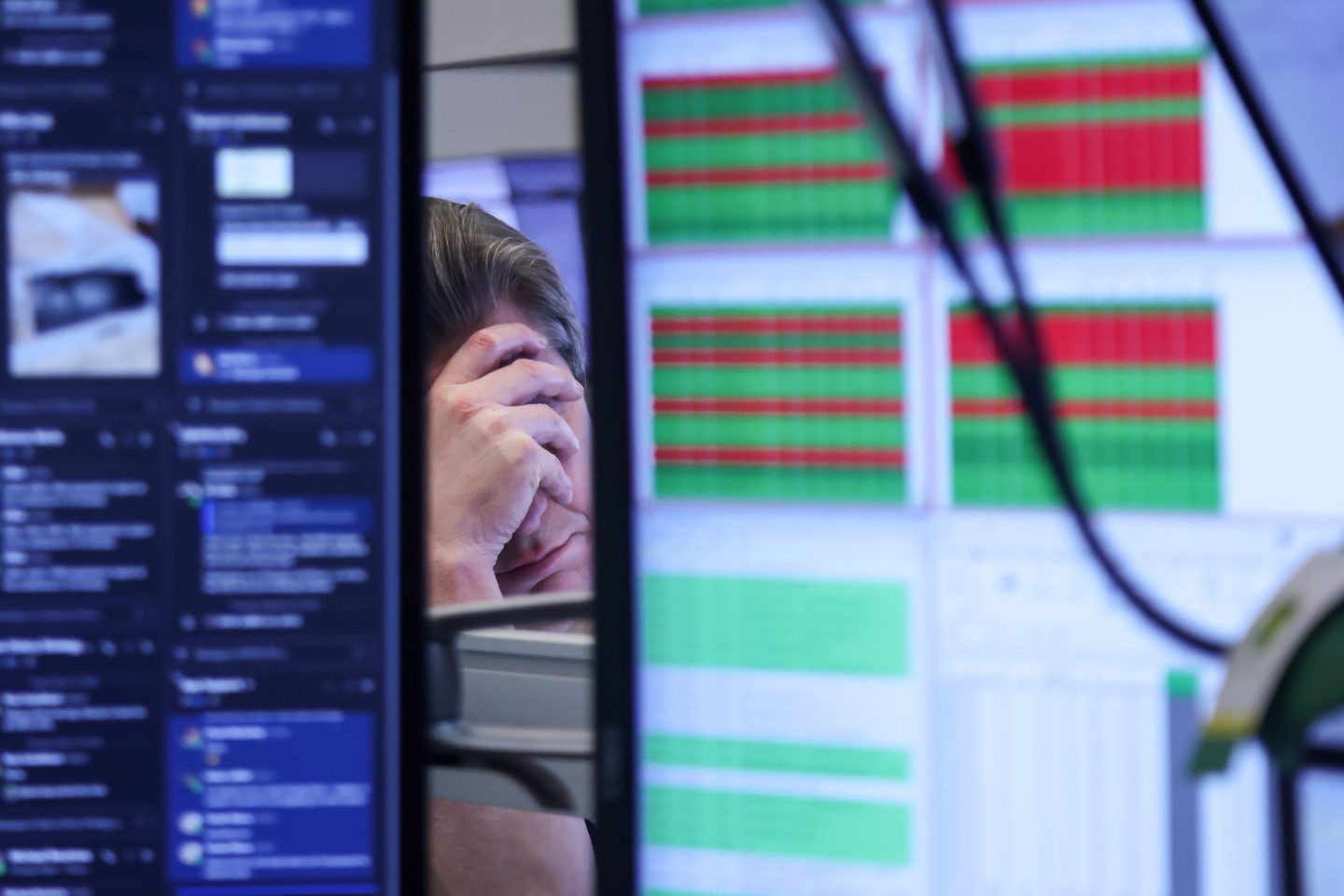
So when the Fed announced on Wednesday that it wasn’t cutting the program at all, the markets went nuts. The equity markets shot up on the news, with the S&P 500 index (SPX) actually hitting a record high for the day, closing up some 1.2% at 1,725.
Now, that might seem puzzling given that the reason the Fed said it kept the program going was because it felt the economy was in rough shape. Usually investors seek shelter in such a scenario — as in away from equities and into bonds and commodities. But investors actually hedged their bets — gold, oil, and bond prices jumped significantly along with stocks, defying the usual “risk on,” “risk off” dynamic in the market.
MORE: Fortune’s 40 under 40
What is going on here is indicative of the mood right now in the markets — one of certain uncertainty. The Fed is confusing the markets by sending out mixed messages. While the economy is growing, it apparently isn’t growing fast enough to warrant a reduction in stimulus. That basically means that the Fed isn’t going to be rocking the boat. One can say that this sort of thinking is “dovish,” but it is simply dangerous instead, as any economic gain the country enjoys now will need to be paid back with lots of pain down the road.
To understand the dangers of continuing stimulus, we must first understand what the Fed is doing with its bond-buying program. The Fed would say that it is simply making a swap with the commercial banks — it is buying (back) government bonds from the banks and compensating them by enlarging their cash accounts with the Fed.
Where does the Fed get the money to pay for those bonds? It essentially creates it out of thin air. The Fed says this doesn’t constitute “printing money” because the banks are being “encouraged” to keep the money it receives for their bonds locked up in their accounts with the Fed. Why would the banks do that? Well, those Fed accounts pay 0.25% interest, which the Fed thinks is enough to make the banks not want to take that money and invest it elsewhere.
Ultimately, this reduces the amount of Treasury bonds on the market, causing interest rates in the general economy to fall. This encourages investors to take greater risks with their money as they can’t get a decent return by just parking their money at the banks anymore. This then stimulates the economy as it pushes more money out from people’s bank accounts and into stocks, bonds, and other higher-yielding investments.
Ah ha! That’s why investments are going up across the board. Money that would normally be on the sidelines in safer investments is being funneled into riskier assets. This explains, partially, why the stock market is up 155% since the Fed introduced its stimulus program nearly five years ago. It also explains why there has been a deluge of cash thrown into commodities and junk bonds too.
So the Fed has been successful in getting cash out of people’s bank accounts and into other investments. So where’s the growth? Oh, that’s a problem, says the Fed. Why? Because all this “stimulus” seems to just be inflating asset prices without really doing anything positive for the general economy. Does this sound familiar? Ah, yes — the housing market. This sort of “easy money” policy is what encouraged the housing bubble to inflate in the first place. The Fed never allowed that market to truly deflate; to do so would have been too painful, so it bought up mortgage-backed paper at full value from the banks and traded it with Fed funny money. It took the risky mortgage-backed securities out of the economy but it replaced it with fresh cash — cash that is now swirling around the equity and bond markets.
Now, the Fed isn’t some evil, maniacal organization. It really thinks it is doing the best it can under the circumstances. The U.S. economy is in terrible shape, and it has been able to create a veneer of stability that has kept many off the food lines. But it is time to start letting the air out of this market bubble before it pops — and it will pop if we don’t act quickly. The effectiveness of the bond buying program is faltering. Bond yields have doubled in the last year even though the Fed’s stimulus has remained constant.
The impact of a market bubble explosion is hard to quantify, but one can start by erasing most of the gains we have seen in stocks as investors run for the hills and buy gold bars. But there are bigger implications — what about all that Fed funny money being held in the banks’ Fed accounts? You remember, the money that the Fed said it didn’t print to buy those bonds? What if a bank run forces the banks to draw down those reserves, thus leaking billions of dollars into the economy?
MORE: 50 Best Small and Medium-Size Companies to Work For
It is hard to tell what the damage would be there, but it would certainly have an impact on the value of the dollar. Inflation has been kept at bay because real wage growth and labor participation is down, but the infusion of billions of dollars of cash all at once into a shaky economy would negate those anti-inflationary points. Add in the billions that would come out of the markets as the equity market crashes, and you have a recipe for a true economic disaster. The Fed would then have no choice but to raise interest rates to ruinous levels to undo all of the “stimulus” it has injected into the economy.
The Fed has used all its ammo and then some to try and ease the pain of the housing crisis. It had hoped that the economy would have grown to such a degree by this point that it didn’t need the stimulus and it could begin tapering. Growth would decrease as a result, but it would be worth it — it was willing to trade tomorrow’s boom for today’s mediocre economy — this way, no one would get hurt.
It is one thing to try and mitigate losses, but it is another to attempt to cheat fate. This is what the Fed is doing by continuing stimulus. It is inflating new asset bubbles and setting the country up for a fall. While the Fed’s intentions are good, they are also very short-term oriented. It’s time to start legitimately paying for our past sins so the economy can finally grow without fear. That can’t happen unless the Fed backs off.