FORTUNE — Market fears concerning a possible U.S. strike on Syria seem overdone. An attack, which could reportedly occur as early as Thursday, would most likely be limited in both scale and scope, ultimately having little to no impact on the outcome of the now two-year-long Syrian civil war.
At this point, the U.S. and its allies, including Great Britain, are simply looking to punish Syrian forces for using chemical weapons and are not committed to overthrowing the regime. Any attack will most likely consist of small surgical strikes on Syria’s chemical weapon arsenal and would avoid other military targets. While such strikes are both serious and scary, they are a far cry from the so-called shock and awe tactics that led to the disastrous and financially draining occupation of neighboring Iraq in 2003 and are unlikely to have a negative impact on the world economy or oil flows.
The markets weren’t too happy to learn on Monday that the U.S. was possibly gearing up for a military assault on Syria. The Dow Jones Industrial Index (INDU) shed over 200 points on the week while oil prices rallied to their highest level since February of 2012. Traders — those who aren’t on vacation this week — are concerned that the U.S. is about to get itself, once again, wrapped up in a growth-killing and cash-sucking war. They also seem concerned that such an engagement could negatively impact the flow of oil out of the Middle East.
Such sharp moves in the equity and commodity markets make it seem as if the U.S. was preparing for a large-scale invasion and occupation of the war-torn country, but that doesn’t seem to be the case here. The U.S. military never does things piecemeal. If it were truly gearing up for the type of invasion that the markets fear could be at hand, then it would have moved a great deal more troops into neighboring Jordan.
MORE: Don’t give up on an Egyptian democracy
Indeed, at this point it is far more likely that the U.S. is gearing up for a limited air assault with no intention of moving in ground troops. One doesn’t have to be a military expert to figure this out; the Pentagon has already outlined two possible courses of action in a July 19th letter to the Senate Armed Services Committee. The two scenarios both call for limited air engagements, with Plan A solely targeting Syria’s chemical weapons arsenal and maintaining a no-fly zone, while Plan B would hit a wider array of targets aimed at crippling the Syrian government’s ability to fight the civil war.
It appears all but certain at this point that the U.S. is opting for Plan A and will just be targeting Syria’s chemical weapons complex. Plan A is far cheaper than plan B, costing just $1 billion a month to maintain a no fly zone in the country compared to the billions needed to take Syria’s government completely out from the air.
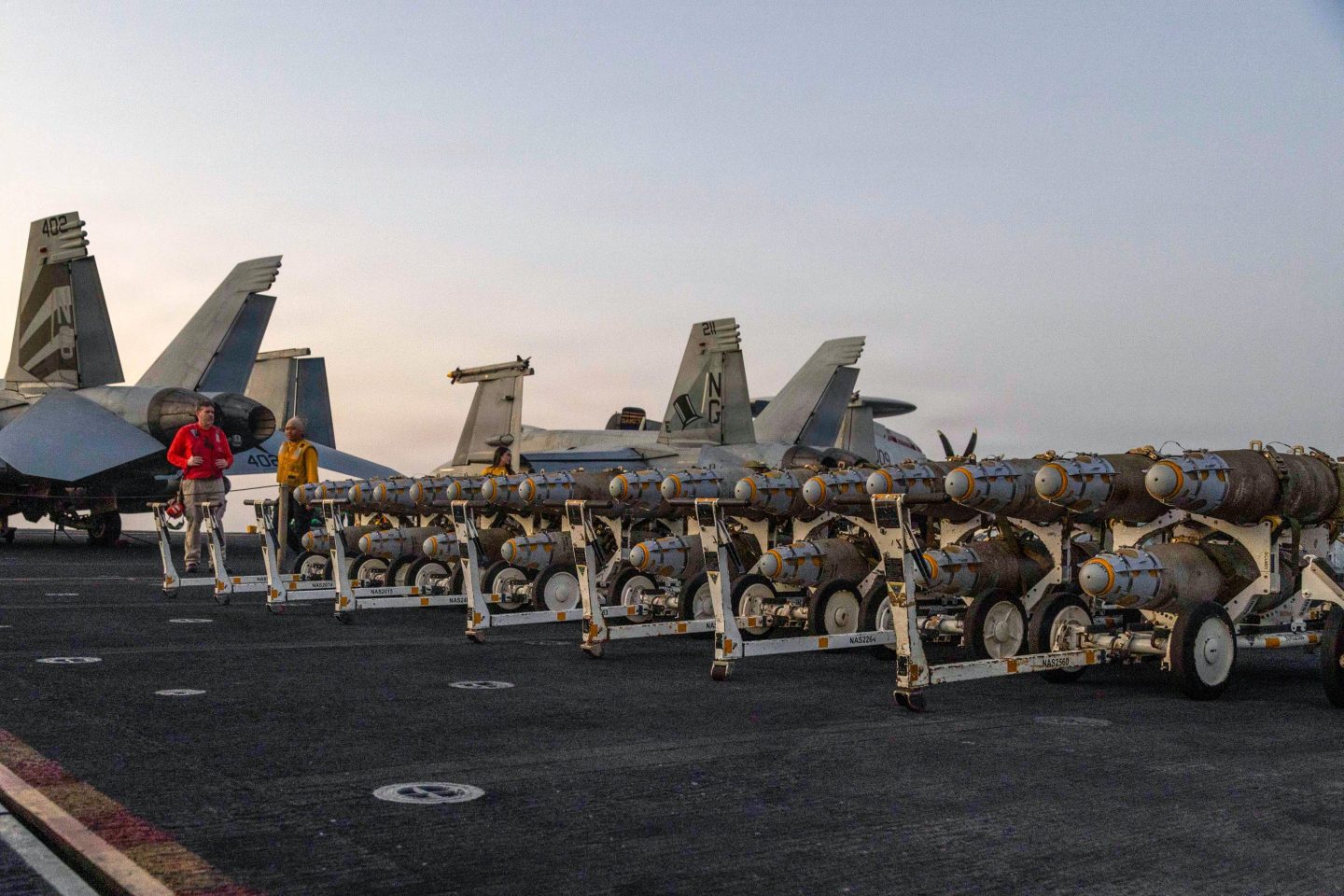
To be sure, Plan A is no walk in the park. Nevertheless it is unlikely that Syria could mount an effective defense against the hundreds of cruise missiles coming from the four U.S. warships currently in the eastern Mediterranean. Nor could they even detect the B-2 stealth bombers that could use bunker-busting bombs to knock out underground chemical weapon storage lockers throughout the country.
The Obama administration is clearly hesitant to get bogged down in yet another conflict in the Middle East, especially in a country with little in the way of bankable resources, i.e. oil. Furthermore, a total invasion would need the support of Russia as it maintains a strong relationship with Syria’s current government. Russia is Syria’s closest ally outside the Middle East and it maintains a naval base in the country. At this point Russia remains unwilling to support regime change, making it very difficult for many European countries to jump on the U.S. bandwagon as they fear it would jeopardize their relationship with their largest neighbor.
MORE: More trouble ahead for emerging markets
Meanwhile, fears of Syrian reprisals are totally overblown. Indeed, Syrian leaders are unlikely to launch a counterattack against their neighbors (Israel) or the U.S. as such a response would only serve to weaken the government’s position vis-a-vis the Syrian opposition. Syria has stood by and taken its lumps as Israel launched limited attacks on its soil over the last two years as it knows that any counterattack would unleash a world of pain. The Syrian government has its hands full fighting its own people; it can’t take on the world as well.
Therefore, the markets would be wise to ignore Syria’s propaganda machine, which claims that a Western attack on its soil would instantly inflame the region. The reality is that Syria has no allies left in the region, save for probably Iran, but even that relationship is a tenuous one. There is pretty much zero chance that Iran would attack U.S. forces on behalf of Syria — it simply isn’t worth it. Besides, contrary to popular belief, Iran would probably welcome the fall of the Bathist regime in Syria as it would almost certainly be replaced with one with a (democratically elected) Islamist government that the Mullahs in Tehran could more easily control, as is currently the case with Iraq.
At the same time, the U.S. and Europe already have a strict oil embargo against Iran, so Tehran has no economic leverage to prevent an attack. Sure, Tehran could threaten to stop selling oil into the international markets, driving up oil prices across the world, but, again, it just isn’t worth it. Iran can’t afford to lose one dime of oil revenue since the West tightened sanctions last year. It needs that money to support the economically crippling subsides that Iranians have come to expect. Any further pullback could ignite a popular revolt inside Iran, something that the Mullahs are deathly afraid of.
The Syrian government is hanging on by a nail — a loose and rusty one. A U.S. assault on its chemical weapons pile will take an unstable element out of what has become a nasty civil war. Sure, Syria and the U.S. will try to scare one another in the coming weeks with talk of big attacks and counterattacks but the markets should know better.