• Home
  • Latest
  • Fortune 500
  • Finance
  • Tech
  • Leadership
  • Lifestyle
  • Rankings
  • Multimedia

Current fiscal policy harms U.S. competitiveness

By
April 11, 2013, 2:04 PM ET

FORTUNE — Political dysfunction in D.C. has led to the American public being barraged by continuous media reports about the fiscal cliff, the debt ceiling, and the sequester. But the political skirmishes and impasses around these short-term events are distracting us from the real danger ahead: Our reckless fiscal trajectory that threatens America’s competitiveness.

For the nation to prosper, we must remain an attractive location for companies to pay competitive wages consistent with high and rising living standards. This requires targeted investments by the government, especially in physical and informational infrastructure, education and training, and scientific research. But the bad measurements used by the government are keeping the public in the dark about how needed investments for the future are being crowded out by the government’s enormous debt and other obligations.

The nation’s reported debt has almost tripled — to over $16.6 trillion — just since 2000, and the interest on this debt will be paid every year into the future. This obligation, however, is not the real problem. The U.S. actually is in a much deeper financial hole, and one that is not evident on the federal balance sheet.  The nation’s off-balance sheet obligations include our country’s promises for future Medicare and Social Security payments which, as of fiscal 2012, totaled nearly $50 trillion. These off-balance sheet obligations also include other promises, such as the unfunded pension and retiree health benefits for civilian and military personnel, and for various contingent commitments like guarantees for student loans, home mortgages and corporate pension benefits.

MORE: 3 reasons why it’s different for Japan this time

Adding up all these governmental obligations brings total debt and unfunded obligations to about $70 trillion, more than four times our current GDP, and up from about $20 trillion at the end of fiscal 2000. And, lacking any current action this number grows by $350 billion every month.

Bill Clinton observed in 1992 that the government is “spending more on the present and the past, and building less for the future.” Yet during the past 20 years this problem has gotten far worse. Paying for interest on the public debt and meeting our unfunded obligations and promises will drive mandatory governmental spending to unsustainable levels. The mandatory spending in the federal budget — which includes social insurance programs, federal employee retirement benefits, and interest on the national debt — was 49% of the budget in 1972, 64% of the budget in 2012, and projected by the Congressional Budget Office to become 76% in 2023. As mandatory spending increases, fewer funds are available for discretionary governmental spending, especially on the critical investments that ensure and increase America’s competitiveness.

Investments in the future are being crowded out by mandatory spending on the past and the present.

Economist Paul Krugman and others argue that the government should take advantage of today’s very low interest rates to borrow to stimulate our current economy since the risk of crowding out private investment is negligible. But their analysis ignores the balance sheet effects of borrowing to pay for today’s consumption. Every trillion dollars we borrow today will require much higher mandatory interest payments when the debt is inevitably refinanced in the future. This will worsen future government’s ability to invest for competitiveness and higher living standards. Every 1% (100 basis point) increase in future interest rates adds over $165 billion in annual interest to future mandatory spending.

MORE: Summer hiring is expected to rise sharply

To keep the government on a sustainable fiscal path, with the discretion to make investments that benefit our children and grandchildren, we must solve both the short-term economic and the long-term structural debt challenges simultaneously. But solutions that focus only on the government’s reported debt ignore the much, much higher total of future government obligations. The gap in what is measured as the federal debt and what should be measured distracts people from taking sensible actions today.

We believe that setting a goal to stabilize the total debt as a percentage of GDP at a reasonable and sustainable level would lead to a consensus on the best way to address our short- and long-term fiscal challenges. With everyone on the same page, a fiscal “Grand Bargain” by Congress and President Obama becomes more realistic. The “Grand Bargain” could allow for targeted stimulus investment to shore up an economy that is still weak and vulnerable while beginning to make intelligent and targeted cuts in discretionary spending on current consumption. But the agreement must also include changes in law that dramatically slows the growth of future mandatory spending commitments. These actions, combined with comprehensive tax reform, can put us on a more prosperous and sustainable fiscal path.

The President and the Congress should strive to solve our long-term fiscal challenge and also begin to shift the government’s spending mix more for the future and less on the present and the past. Changing how we keep score and focusing on a realistic ultimate fiscal goal can help make this happen sooner rather than later.

David Walker served as United States Comptroller General from 1998 to 2008, and is Founder and CEO of the Comeback America Initiative. Robert Kaplan is a Professor Emeritus at Harvard Business School and co-developer of both activity-based costing and the Balanced Scorecard.



Latest in

Finance
Lorem ipsum dolor sit amet, consectetur adipiscing elit, sed do eiusmod tempor incididunt ut labore et dolore magna aliqua. Ut enim ad minim veniam
By Fortune Editors
October 20, 2025
Finance
Lorem ipsum dolor sit amet, consectetur adipiscing elit, sed do eiusmod tempor incididunt ut labore et dolore magna aliqua. Ut enim ad minim veniam
By Fortune Editors
October 20, 2025
Finance
Lorem ipsum dolor sit amet, consectetur adipiscing elit, sed do eiusmod tempor incididunt ut labore et dolore magna aliqua. Ut enim ad minim veniam
By Fortune Editors
October 20, 2025
Finance
Lorem ipsum dolor sit amet, consectetur adipiscing elit, sed do eiusmod tempor incididunt ut labore et dolore magna aliqua. Ut enim ad minim veniam
By Fortune Editors
October 20, 2025
Finance
Lorem ipsum dolor sit amet, consectetur adipiscing elit, sed do eiusmod tempor incididunt ut labore et dolore magna aliqua. Ut enim ad minim veniam
By Fortune Editors
October 20, 2025
Finance
Lorem ipsum dolor sit amet, consectetur adipiscing elit, sed do eiusmod tempor incididunt ut labore et dolore magna aliqua. Ut enim ad minim veniam
By Fortune Editors
October 20, 2025

Most Popular

Finance
Lorem ipsum dolor sit amet, consectetur adipiscing elit, sed do eiusmod tempor incididunt ut labore et dolore magna aliqua. Ut enim ad minim veniam
By Fortune Editors
October 20, 2025
Finance
Lorem ipsum dolor sit amet, consectetur adipiscing elit, sed do eiusmod tempor incididunt ut labore et dolore magna aliqua. Ut enim ad minim veniam
By Fortune Editors
October 20, 2025
Finance
Lorem ipsum dolor sit amet, consectetur adipiscing elit, sed do eiusmod tempor incididunt ut labore et dolore magna aliqua. Ut enim ad minim veniam
By Fortune Editors
October 20, 2025
Finance
Lorem ipsum dolor sit amet, consectetur adipiscing elit, sed do eiusmod tempor incididunt ut labore et dolore magna aliqua. Ut enim ad minim veniam
By Fortune Editors
October 20, 2025
Finance
Lorem ipsum dolor sit amet, consectetur adipiscing elit, sed do eiusmod tempor incididunt ut labore et dolore magna aliqua. Ut enim ad minim veniam
By Fortune Editors
October 20, 2025
Finance
Lorem ipsum dolor sit amet, consectetur adipiscing elit, sed do eiusmod tempor incididunt ut labore et dolore magna aliqua. Ut enim ad minim veniam
By Fortune Editors
October 20, 2025
Fortune Secondary Logo
Rankings
  • 100 Best Companies
  • Fortune 500
  • Global 500
  • Fortune 500 Europe
  • Most Powerful Women
  • Future 50
  • World’s Most Admired Companies
  • See All Rankings
Sections
  • Finance
  • Fortune Crypto
  • Features
  • Leadership
  • Health
  • Commentary
  • Success
  • Retail
  • Mpw
  • Tech
  • Lifestyle
  • CEO Initiative
  • Asia
  • Politics
  • Conferences
  • Europe
  • Newsletters
  • Personal Finance
  • Environment
  • Magazine
  • Education
Customer Support
  • Frequently Asked Questions
  • Customer Service Portal
  • Privacy Policy
  • Terms Of Use
  • Single Issues For Purchase
  • International Print
Commercial Services
  • Advertising
  • Fortune Brand Studio
  • Fortune Analytics
  • Fortune Conferences
  • Business Development
  • Group Subscriptions
About Us
  • About Us
  • Editorial Calendar
  • Press Center
  • Work At Fortune
  • Diversity And Inclusion
  • Terms And Conditions
  • Site Map
  • About Us
  • Editorial Calendar
  • Press Center
  • Work At Fortune
  • Diversity And Inclusion
  • Terms And Conditions
  • Site Map
  • Facebook icon
  • Twitter icon
  • LinkedIn icon
  • Instagram icon
  • Pinterest icon

Latest in

Schools across America are quietly admitting that screens in classrooms made students worse off and are reversing years of tech-first policies
InnovationEducation
Schools across America are quietly admitting that screens in classrooms made students worse off and are reversing years of tech-first policies
By Marco Quiroz-GutierrezApril 10, 2026
26 minutes ago
Dario Amodei
NewslettersTerm Sheet
What Anthropic’s too-dangerous-to-release AI model means for its upcoming IPO
By Beatrice NolanApril 10, 2026
31 minutes ago
Eva Longoria says she refused to be a ‘struggling actor’—so she worked part time as a headhunter, closing deals from her soap opera dressing room
SuccessThe Promotion Playbook
Eva Longoria says she refused to be a ‘struggling actor’—so she worked part time as a headhunter, closing deals from her soap opera dressing room
By Orianna Rosa RoyleApril 10, 2026
1 hour ago
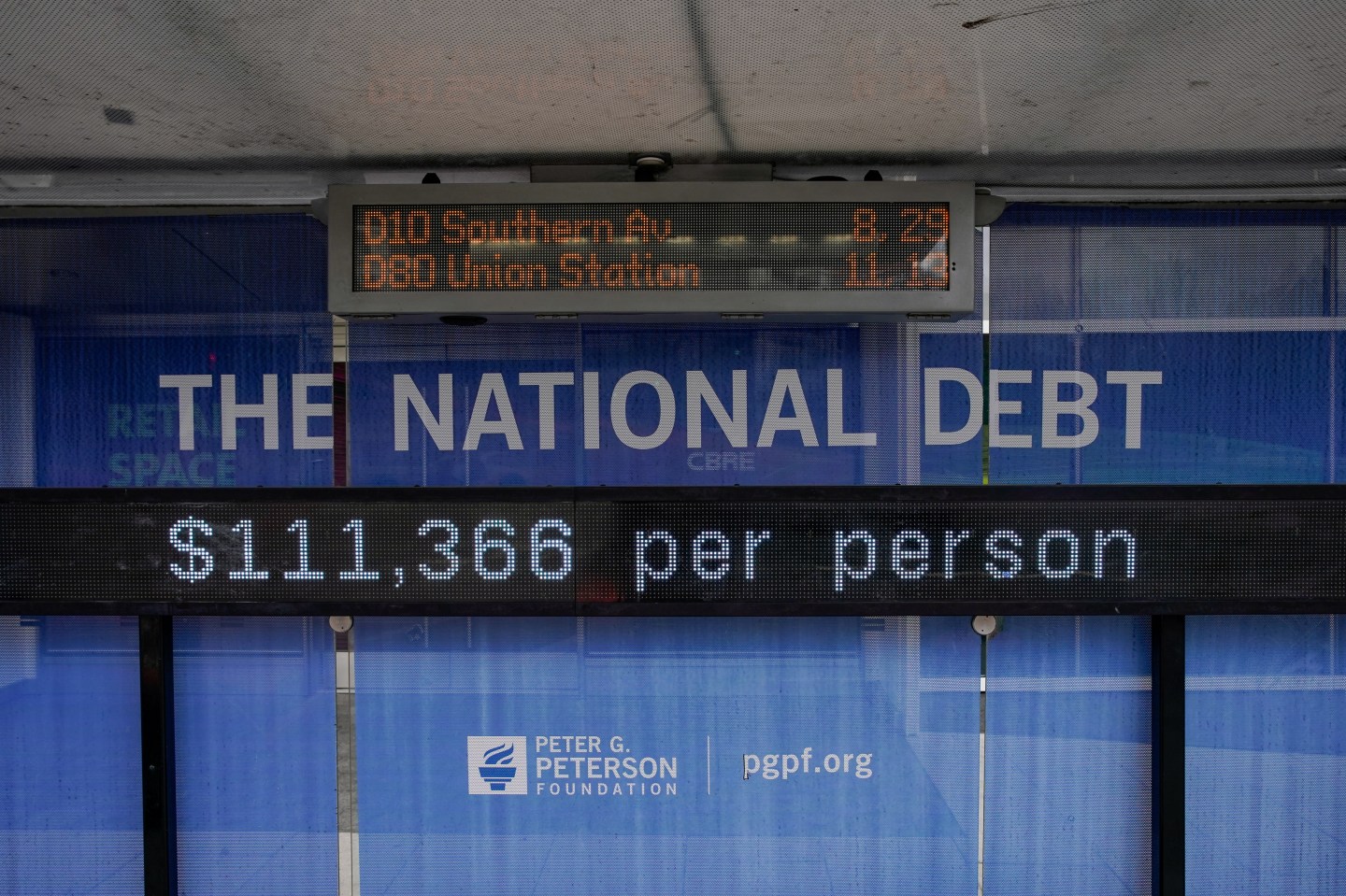
A view of a bus shelter at Pennsylvania Avenue and 22nd Street NW where an electronic billboard and a poster display the current U.S. National debt per person and as a nation at 38 Trillion dollars on October 28, 2025 in Washington, DC.
Economynational debt
‘We owe it to the next generation’ to get national debt under control, says think-tank boss, as U.S. borrowing hits $1.2 trillion in just six months
By Eleanor PringleApril 10, 2026
1 hour ago
Mortgage rates today, April 10, 2026
Personal Financemortgages
Mortgage rates today, April 10, 2026
By Glen Luke FlanaganApril 10, 2026
1 hour ago
Current refi mortgage rates report for April 10, 2026
Personal FinanceReal Estate
Current refi mortgage rates report for April 10, 2026
By Glen Luke FlanaganApril 10, 2026
1 hour ago

Most Popular

The U.S. government is spending $88 billion a month in interest on national debt—equal to spending on defense and education combined
Economy
The U.S. government is spending $88 billion a month in interest on national debt—equal to spending on defense and education combined
By Fortune EditorsApril 9, 2026
21 hours ago
A Meta employee created a dashboard so coworkers can compete to be the company's No. 1 AI token user—and Zuckerberg doesn't even rank in the top 250
AI
A Meta employee created a dashboard so coworkers can compete to be the company's No. 1 AI token user—and Zuckerberg doesn't even rank in the top 250
By Fortune EditorsApril 9, 2026
24 hours ago
Gen Z doesn't want your full-time job. They want several part-time roles, and it's reshaping the entire workforce
Success
Gen Z doesn't want your full-time job. They want several part-time roles, and it's reshaping the entire workforce
By Fortune EditorsApril 9, 2026
1 day ago
White-collar workers are quietly rebelling against AI as 80% outright refuse adoption mandates
AI
White-collar workers are quietly rebelling against AI as 80% outright refuse adoption mandates
By Fortune EditorsApril 9, 2026
22 hours ago
Gen Z workers are so fearful AI will take their job they’re intentionally sabotaging their company’s AI rollout
AI
Gen Z workers are so fearful AI will take their job they’re intentionally sabotaging their company’s AI rollout
By Fortune EditorsApril 8, 2026
2 days ago
2 years ago, Saudi Arabia quietly canceled the ‘petrodollar’ deal with America that wired the world economy for 50 years. Then war broke out in Iran
Energy
2 years ago, Saudi Arabia quietly canceled the ‘petrodollar’ deal with America that wired the world economy for 50 years. Then war broke out in Iran
By Fortune EditorsApril 7, 2026
2 days ago

© 2026 Fortune Media IP Limited. All Rights Reserved. Use of this site constitutes acceptance of our Terms of Use and Privacy Policy | CA Notice at Collection and Privacy Notice | Do Not Sell/Share My Personal Information
FORTUNE is a trademark of Fortune Media IP Limited, registered in the U.S. and other countries. FORTUNE may receive compensation for some links to products and services on this website. Offers may be subject to change without notice.